Thirty-three years ago Rich and I inconvenienced our nearest and dearest by getting married two days after Christmas, requiring them to make all sorts of awkward travel arrangements just when everyone really wanted to be home by the fire playing with their new toys. Ever since then, our anniversary has been squeezed into a social calendar revolving around Yuletide celebrations, New Year’s Eve, and Spain’s grand finale on January 6: Three Kings Day, which in Seville involves a spectacular parade as a prelude to exchanging gifts.
In the midst of so much revelry, our anniversary celebrations tend to be modest. Researching traditional gifts, I discovered the US and UK don’t even list anything for the 33rd anniversary; apparently so few hit that benchmark nobody could be bothered. Spain, Italy, and Germany observe the occasion with tin, which didn’t help. A can of tuna? A couple of Budweisers? A tin cup? One website suggested a spiritual-themed gift. Why? “33 is an important religious number; it’s the numerical equivalent of AMEN, i.e., 1+13+5+14=33; it’s the age of Christ and also the number of miracles that he performed and it’s also the numerical representation of the star of David.” Sorry, still not inspired. A tin crucifix somehow didn’t strike the right note.
Luckily Rich had a better idea: a train trip to Valencia on Spain’s east coast. He found a trendy yet cozy hotel called Maria Berger, which on arrival we learned had just opened the day before. As you can imagine, everything was sparkling clean and I could probably have eaten off of any surface in the room, including the TV remote control (although I did not put this to the test). When Rich mentioned we were celebrating our anniversary, the desk clerk immediately sent a bottle of cava to our room. “I could get used to this,” I said.
As it happened,
Valencia’s Fine Arts Museum
was having an exhibition of one of my favorite painters,
Joaquín Sorolla
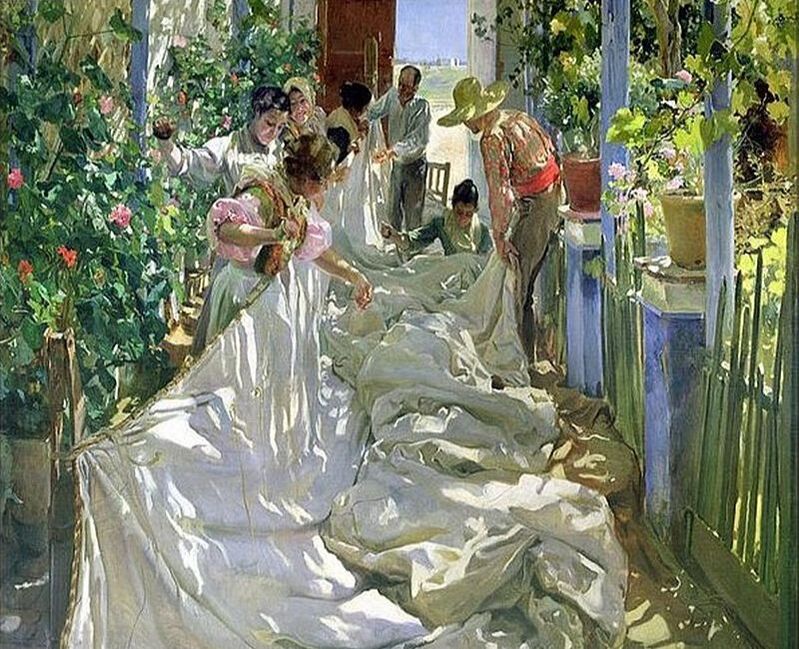
. A hundred and twenty years ago he was breaking all the rules by painting everyday subjects in this fluid, colorful style:
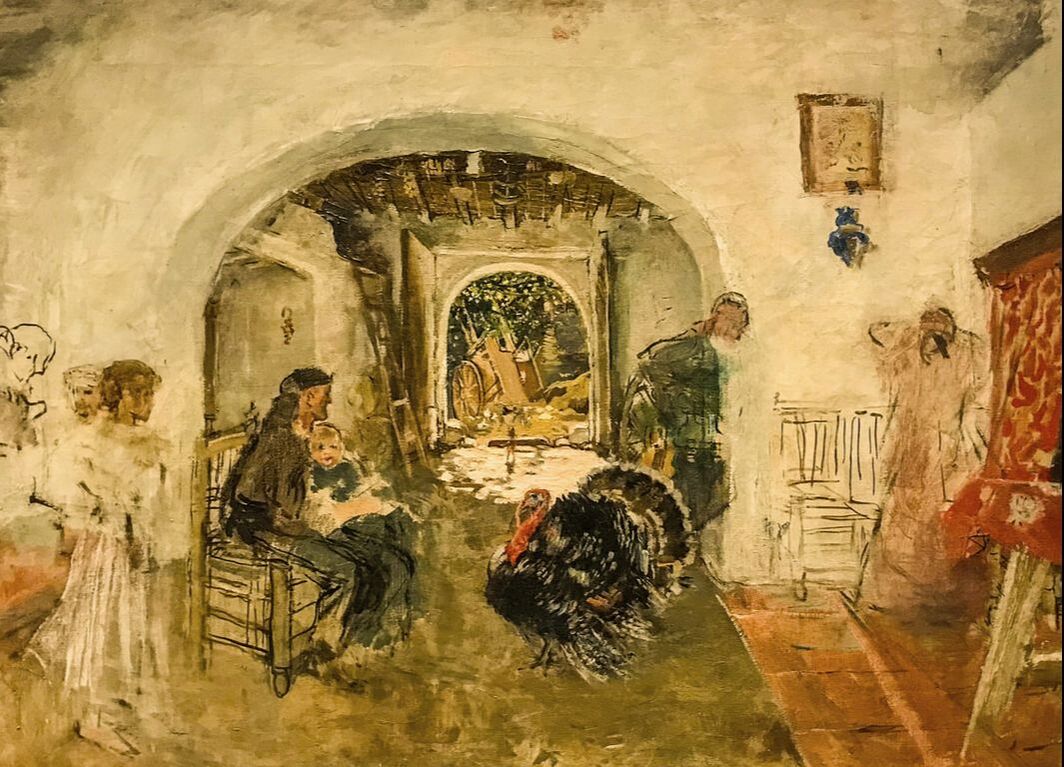
That one wasn’t in the exhibition, but lots of wonderful works were, and I was ambling around admiring Sarolla’s brushwork when this one stopped me in my tracks.
The painting isn’t all that remarkable, but the subject was the stuff of family legend.
When I was a teenager, my Aunt Beverly stunned everyone by packing up her family and moving to Valencia, Spain. Her letters home were eagerly anticipated and read aloud; everything, including cooking a holiday dinner, became an epic drama. For instance, when she wanted to serve a roast turkey, Aunt Beverly consulted the girls from the village who helped her around the house. They said they knew where to get one and returned the next day — with a living bird. My aunt, whose softhearted attitude to animals made St. Francis of Assisi look like Cruella de Vil, instantly bonded with the turkey and refused to consider cooking and eating her new pal.
An uproar naturally ensued. The family demanded their dinner. Aunt Beverly stood firm. Eventually, as it was five forceful personalities to one, she gave in — but she refused to participate directly. Standing outside the kitchen door, she called out instructions for stuffing and roasting the creature, all the while weeping for its fate. I’m not sure, but that may have been the year she became a vegetarian for life. The story took its place in our family lore, and I suspect the villagers are still telling the tale of the crazy American who didn’t want to eat a turkey because it was her
amigo
.
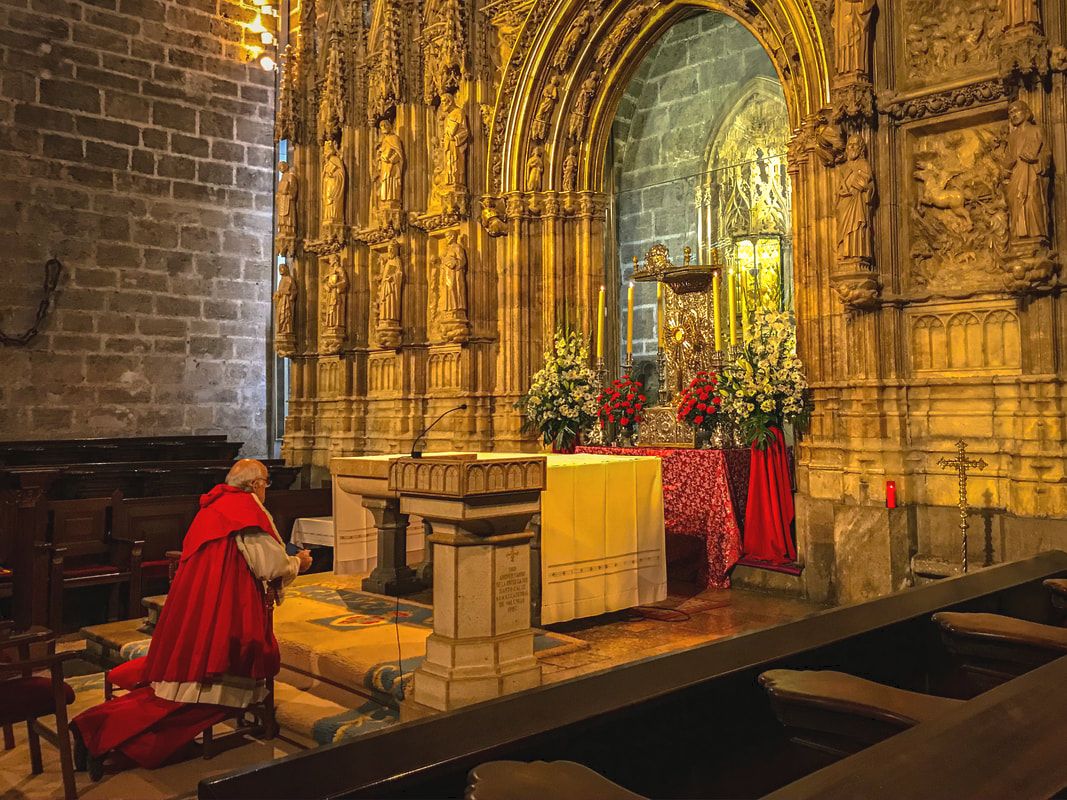
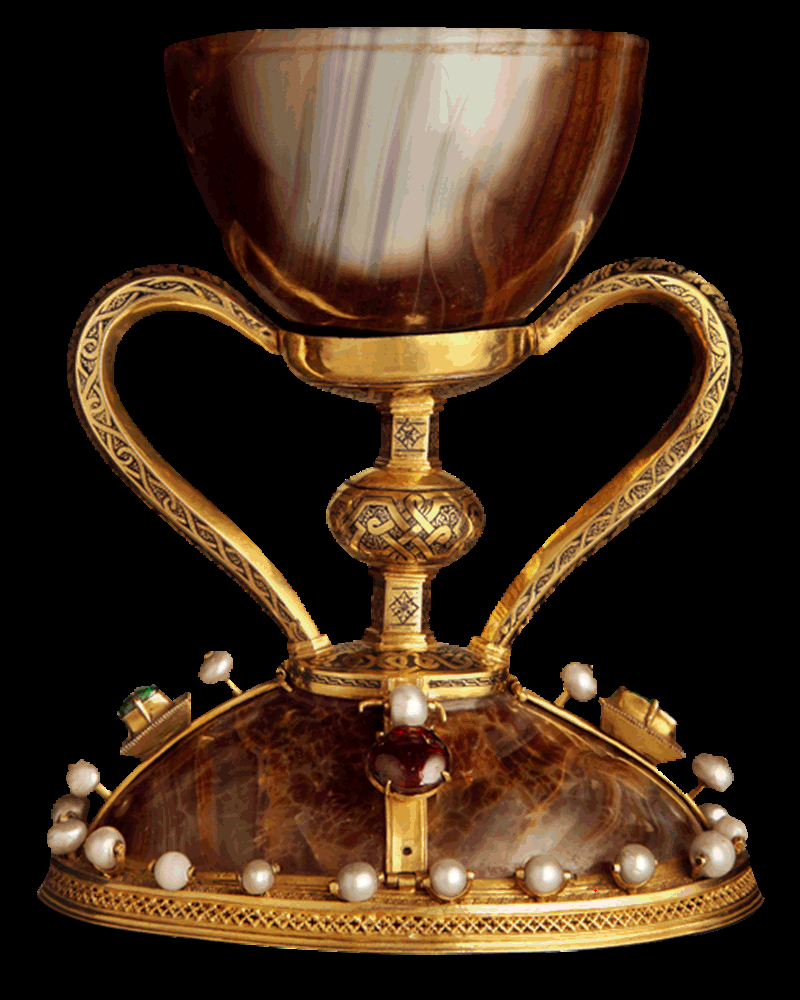
Seeing Aunt Beverly’s legendary Spanish turkey in a Sarolla painting wasn’t the only astonishing discovery of the trip. Although I had visited Valencia twice in the past, somehow it had escaped my notice that its cathedral housed the Holy Grail — yes, the actual cup used during the Last Supper.
Some naysayers question the authenticity of Valencia’s Grail, pointing to the 200 other claimants to the title scattered across the globe. But this one has better credentials than most, being very old and very simple, made of carved agate polished with myrrh —a carpenter’s cup. Of course, no records exists of its early years; all we really know is that it was taken from the Holy Land, passed on to the Pope in Rome, and later given to Spanish royalty for safekeeping in turbulent times.
Is this the real deal? Every Catholic church contains holy relics, sacred remnants of saints’ bodies or personal possessions, which the faithful believe can work miracles. In medieval times high-profile relics were sold for fabulous sums, and not surprisingly, many have now turned out to be very dubious indeed.
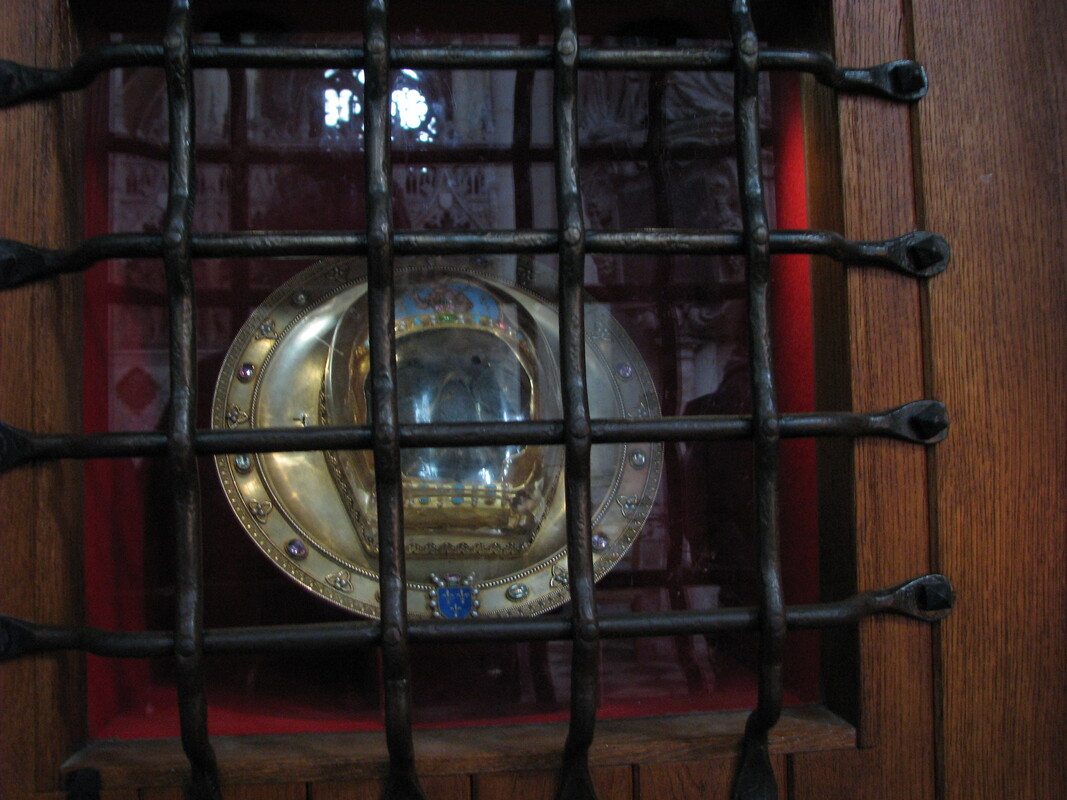
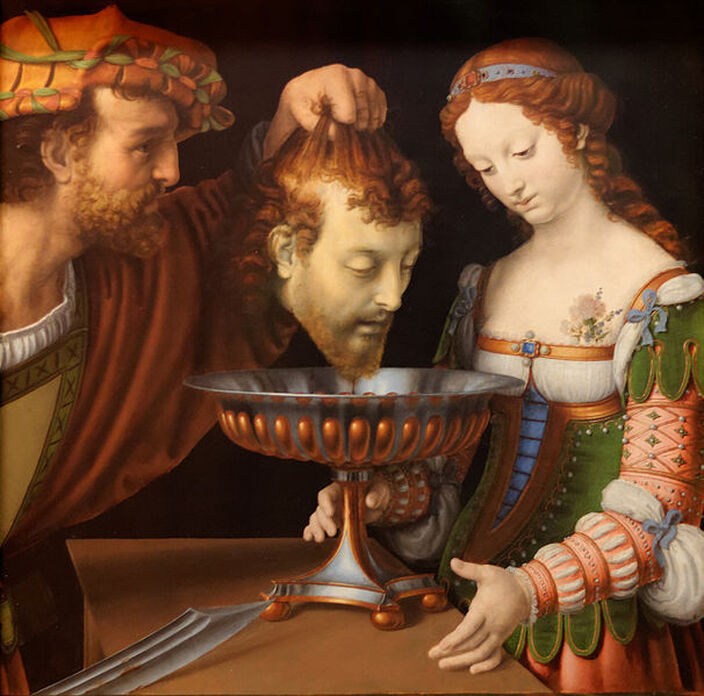
I’m no expert, but having seen the right hand of John the Baptist in Istanbul’s Topkapi Palace, I had to wonder how his right hand could also be on display in the Serbian Orthodox Cetinje Monastery in Montenegro and the Romanian Monastery of the Forerunner. In other news, John the Baptist’s six heads are displayed in the Umayyad Mosque in Damascus, San Silvestro in Capite in Rome, the Residenz Museum in Munich, Amiens Cathedral in France, Antioch, Turkey, and in a parish church in Tenterden, Kent. How many skulls and right hands can one man have?
No one will ever be able to prove the cup in Valencia is — or isn’t — the genuine Holy Grail. But the sight of such a revered object makes even the most time-pressed tourist slow down and fall into respectful silence, while confirmed skeptics like myself pause to consider the nature of truth. In the end, I’m not sure how much its authenticity really matters. For the faithful of Valencia, possession of this treasure is a miracle in itself, and to be in its presence is to be touched by glory.
Growing up Catholic, I accepted saints and relics and miracles as part of everyday life. And while time, experience, and John the Baptist’s six heads have made me question everything I was told as a child, I understand that the universe is entirely too big and complicated for me to define the limits of its possibilities. Sometimes, as the nuns used to tell us, you just have to live with the mystery.
One thing I do know for certain: the excursion to Valencia was a wonderful way to celebrate our 33rd anniversary. Perhaps that website’s suggestion of a spiritual-themed gift wasn’t so far off the mark after all. Our time in Valencia made me laugh, and think, and contemplate the nature of reality. And I think we can all agree, that’s a lot better gift than a can of tuna or a tin cup.
YOU MIGHT ALSO ENJOY
THE SIX-HEADED SAINT OF GENOA
FRENCH VILLAGE THAT INSPIRED DAVINCI CODE
HOW TO MAKE PERFECT PAELLA
Leave a Reply