As you can imagine, the dark tourism industry has a bit of a public relations problem. For a start, the “dark” part of the name conjures up visits to torture chambers, mass graves, and other creepy places. And sadly, the word “tourism” now implies inappropriate selfies that offend the laws of God and man, to say nothing of the boundaries of good taste and personal safety. Roll it all together and it spells trouble.
The term “dark tourism” was coined in 1996 by John Lennon — no, sorry, not the famous singer-songwriter speaking to us from beyond the grave, but rather a Glasgow academic by the same name who, with colleague Malcom Foley, wrote a book called
Dark Tourism: The Attraction of Death and Disaster
. Their work makes a thoughtful and intelligent point: no place is purely historical. We arrive at any famous site already steeped in a social, political, cultural, and media-inspired context that shapes our experience. And that’s especially true when we stand in places where history — red in tooth and claw — produced a cataclysm on such an epic scale that its reverberations still make us tremble today.
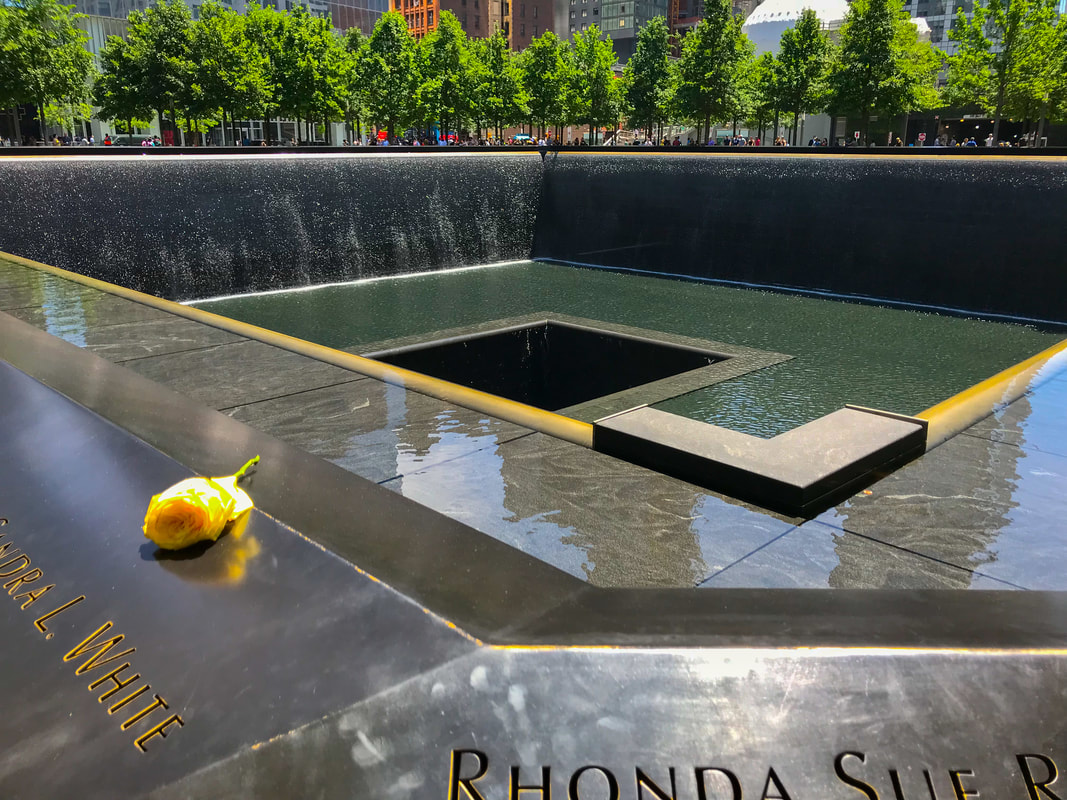
Those of us who remember the day the Twin Towers fell arrive at the
National September 11 Memorial
with our hearts full and our minds replaying news footage that’s permanently imbedded in our psyches. When I visited, I found the memorial’s pools an oasis of silent respect. A Spanish friend told me over lunch last Sunday that he’d had a different experience. “I went to Ground Zero and wanted to get one clear photo of the memorial. But everyone was pushing in front of me, and like —” He pantomimed taking a grinning selfie. “It was crazy. I finally gave up and left.” I suspect those were younger visitors, for whom the site was ancient — not personal — history.
Lack of respect is a constant theme in the Dark Tourism world. It’s not easy to publicize disasters without attracting ghouls and morbid thrill seekers. The
Dark Tourism website
opens with the plea, “PLEASE NOTE from the start: dark tourism, as understood on this site, does NOT include anything voyeuristic (like ‘slum tourism’), NOR does it include ‘war tourism’ (travel to current war zones) or other ‘danger tourism’, NOR ‘ghost hunts’ or anything ‘paranormal’ … It furthermore distances itself from disrespectful tourist behavior such as selfie-taking at sites of tragedy.” Clearly not everyone is taking the high road.
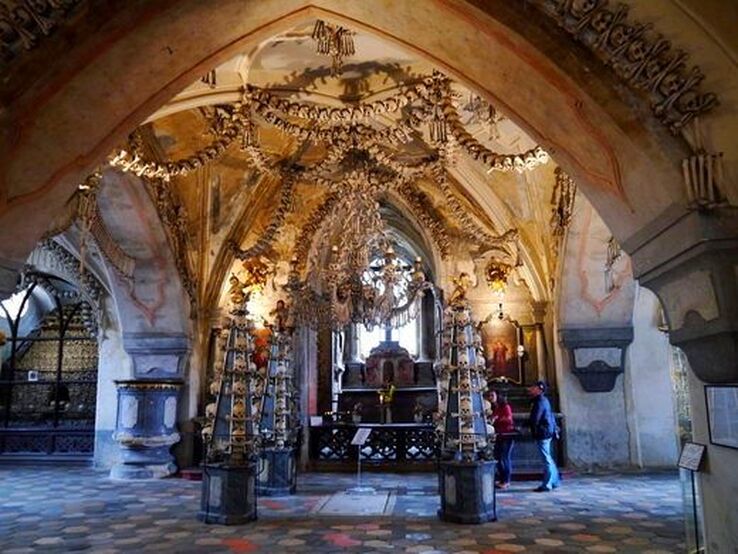
Visitors snapping
inappropriate selfies with the dead
recently sparked drastic steps at the Sedlec Ossuary chapel in the Czech Republic. To be honest, the chapel was a bit macabre right from the start, decorated with bones from nearly 60,000 human bodies. A nineteenth-century artist was commissioned to arrange them in columns of skulls, a literal coat of arms, and most famously a chandelier that includes every type of bone in the human skeleton. But adding sunglasses and baseball caps to the skulls and taking grinning selfies of yourself kissing them — yes, I think we can all agree that’s a bit much. Ossuary officials have declared that you now need to apply for a photo permit three days in advance, and they beg you to treat the bones with the decency you’d demand if they were your own.
To be fair, it’s not easy to know how to behave around 60,000 dead bodies. I suspect the high jinks spring from the bewildering rush of unfamiliar emotions sparked by being in such weird surroundings. Placing ourselves in circumstances that shake us out of our usual habits of thought and behavior is one of the great benefits of travel,. But of course, it can go too far.
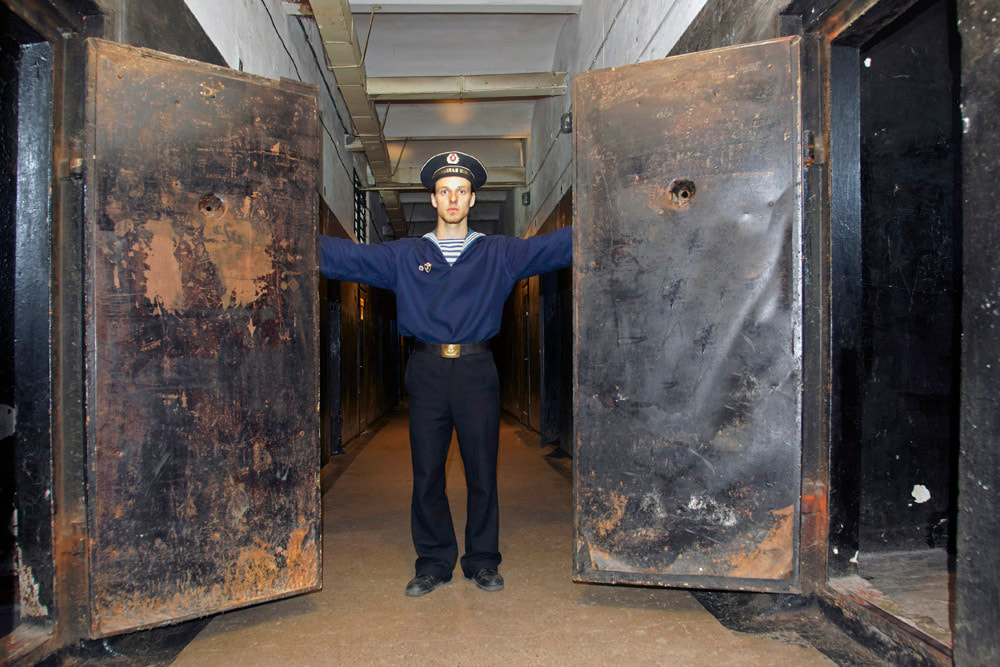
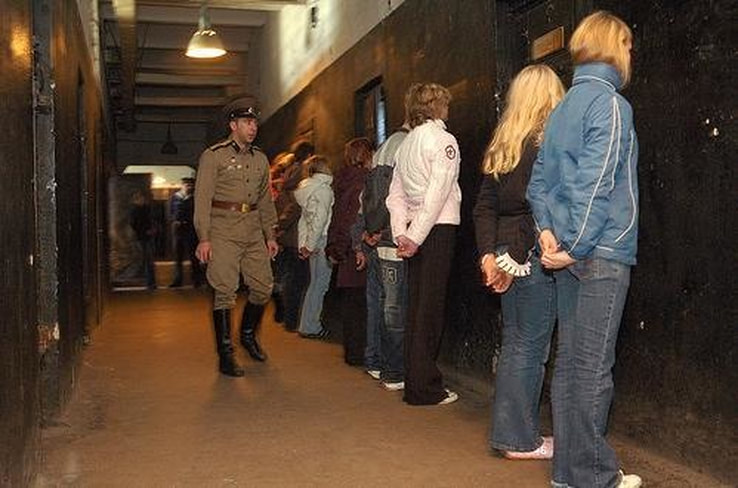
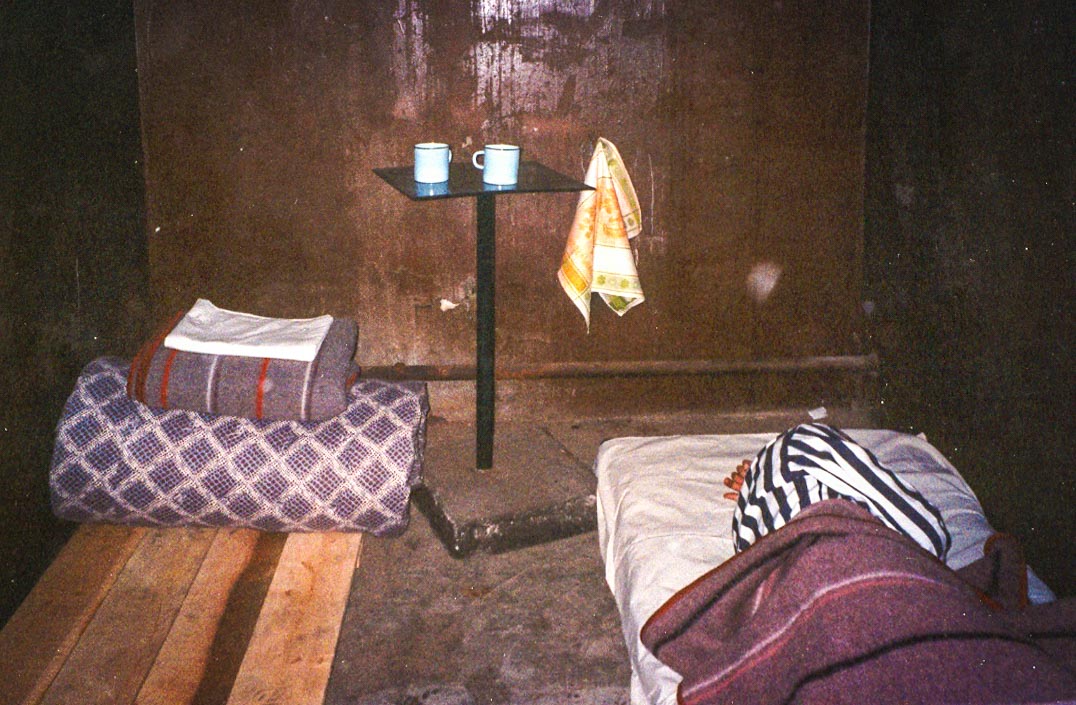
During a visit to Riga, Latvia, I was stunned to learn about Karosta, the old
Soviet prison hotel offering a full immersion experience
. You’re yelled at by guards, dragged outside to do exercises in the yard, and, if you pay extra, you get to wear a prison uniform, sleep in a cell on a wooden slab, and suffer interrogations and punishments all night.
“Why would anybody in their right mind want to do that?” I asked a Latvian schoolteacher over dinner.
She laughed. “I take my students there every year.”
“How old are they?” I asked, aghast, imagining first graders handcuffed to radiators while burly guards screamed abuse at their little heads.
“Teenagers. They love it.” She explained that kids born in post-Soviet Latvia are eager to discover how they would handle themselves under hardships like those suffered by their parents and grandparents.
“Don’t even think about it,” Rich said. To be honest, it didn’t take much for him to dissuade me. They lost me at sleeping on wooden planks under a thin blanket. And I didn’t even want to think what the bathrooms (if any) were like.
It’s easy to scoff at the more excessive forms of dark tourism, but the fact is every traveler spends times at places where death and disaster have left their mark. The question is whether we’ll find a way to learn from our experiences. Like the Riga teenagers, we need to confront the specters of our common past if we are to figure out how to live with the horrors of the present day.
I recently returned to Seville’s Inquisition Museum, which I’d visited eleven years ago when it first opened. At the time, I’d found it pretty underwhelming. Clearly city officials had said, “Look, we need something about the Inquisition, but for heaven’s sake, put a positive spin on it!” And lord knows they tried. The site is long on talk about tolerance and human rights, and gives only the haziest information about the horrors that lasted from 1478 to 1834.
The second time around, I was shocked to discover the museum had fallen into near total disrepair. Water leaked from the ceiling into buckets. Parts of the floor buckled dangerously. Most of the screens were blank. Whole displays had been removed, leaving just a single wall with posters about famous figures of the Inquisition. There was almost no one around, just a few stray tourists gazing bewildered at the blank walls.
And I realized this is what happens when you water down history: it becomes meaningless.
I don’t need to tell you what a scary world we’re living in. Wrapping my mind around the wilder aspects of our collective past reminds me how tough times can get, but also how resilient and creative human beings are. We survived the Inquisitors, the Soviets, the Nazis, and countless others who were determined to remold the world to fit their narrow image of how it ought to be. “In the depth of winter,” said Albert Camus, “I finally learned that within me there lay an invincible summer.” Dark tourism can lead us into the depths we need to visit if we’re to find our own invincible summer.
Have you visited any dark tourism sites? What did you discover?
YOU MIGHT ALSO ENJOY
LOONEY LATVIA
BOSNIA’S ROADSIDE ATTRACTIONS
THE DEVIL’S FOOTPRINT
JOIN MY READERS’ CIRCLE HERE

Leave a Reply