The decision to move abroad often comes as a sudden, blinding, rapturous epiphany, when you realize you actually can — you should! — you will! — boldly change the course of your life forever. I’ll never forget Rich sitting me down at a sidewalk café in Seville and earnestly trying to persuade me that we should live here “for a year” while I kept attempting to break into his monolog long enough to gasp “Hell, yes!” But, as the Buddhists are fond of saying, “After the ecstasy, the laundry.” When the first giddy thrill wears off, the mundane details need to be addressed.
Which brings us to the subject of residency visas.
Spain, like many countries, requires you to get a
non-lucrative residency visa
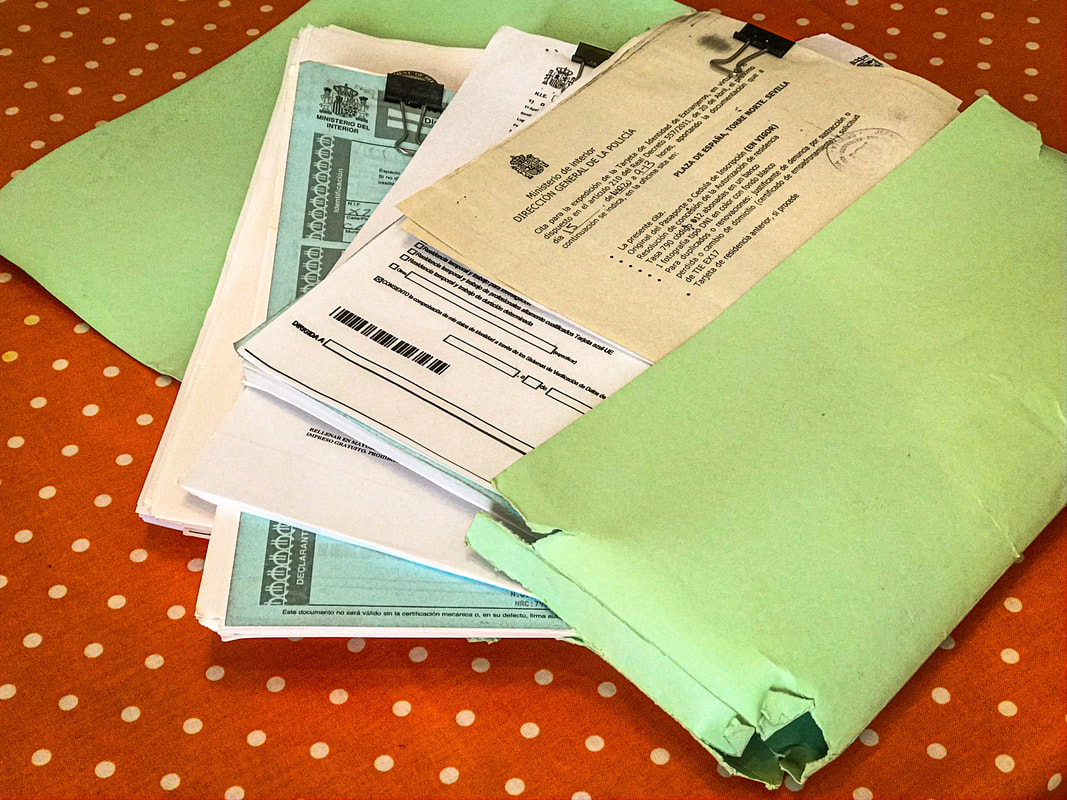
to live there, without working, for more than 90 days. When asked about the visa process, expats tend to shudder and remark through gritted teeth that it “involves a fair amount of paperwork.” Which is like saying that the Great Wall of China is long, that Mount Everest is high, or that the Spanish Inquisition caused a bit of inconvenience. So last year, when my brother Mike and his wife, Deb, announced they were moving to Spain, I did my best to prepare them for what was in store. I believe “a nightmare of Biblical proportions” may have been mentioned.
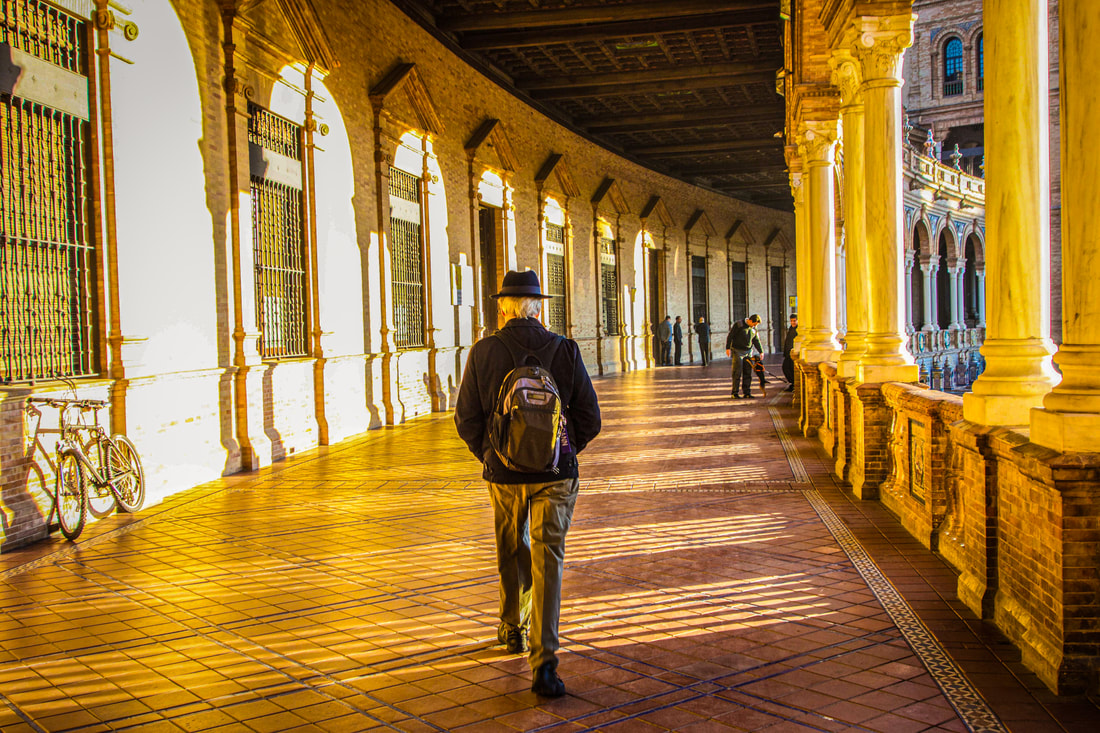
Rich and I first went through the process fifteen years ago, in the dark days before everything was online. Shocking but true: we actually had to actually pick up paper forms and make appointments in person, then spend hours waiting in an airless office at the Foreigners’ Office in Seville’s Plaza de España. I used to bring snacks, a bottle of water, a newspaper, and a paperback to pass the time.
Fast forward to February 2020. Mike and Deb booked the appointment online and were seen in less than twenty minutes. Mike handed over a tidy stack of papers. The clerk reviewed the documents, took their fingerprints, and told them they could pick up their residency visa cards in mid March.
Rich and I were gobsmacked. Our original, one-year visa took nearly 12 months of repeat visits, misinformation, missed deadlines (on their part), and total confusion (on ours). By the time it was finally sorted, we had to start prepping for renewal.
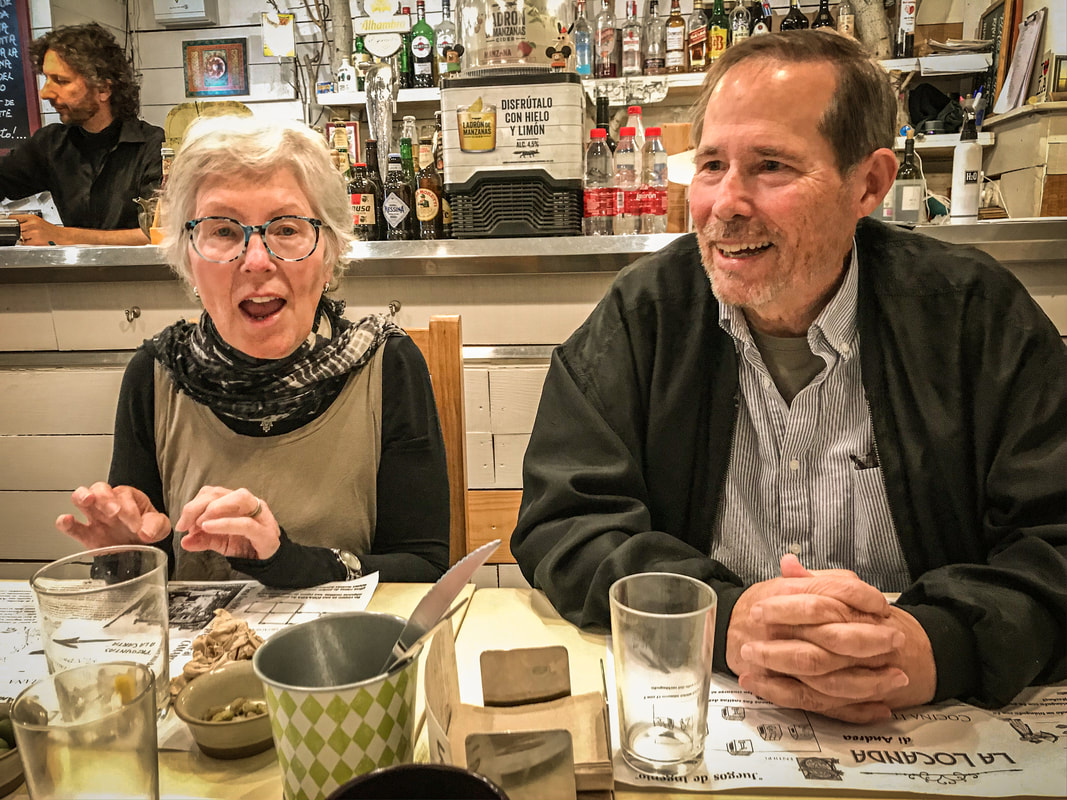
“How did you organize all this?” I asked. They agreed to reveal all, and this week we met up at a café for a full debriefing.
“The process is a three-legged stool,” Deb explained. “Legal, medical, and financial. The legal takes the most time.”
“But first you need an appointment at the Spanish consulate in the US that’s nearest your home,” said Mike. “We booked online in May; the first available appointment was in October. You download the forms, starting with a background check with the police or FBI. You submit fingerprints; we did ours at a UPS store. Deb’s were sent directly from there. But they couldn’t get a good set of my prints so I had to make an appointment at the police station to have them re-taken there.”
“The background check lasted weeks,” Deb recalled. “Meanwhile we had to get our marriage certificate re-issued so we could submit an original, not a copy. And when we finally had everything, we had to submit the whole kit and caboodle to the US Secretary of State for an
apostille
, which certifies everything is legal and correct.”
“The tricky part is,” said Mike, “that all of your documents need to be less than 90 days old when you bring them to the consulate. So we had to wait until July to start all this.”
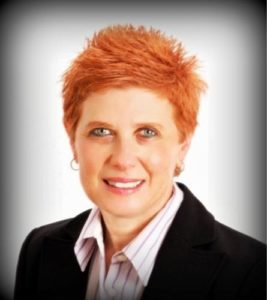
Immigration attorney Debora Eizips-Dreymann
“You mentioned an immigration lawyer,” I said. “How did you find her?”
“We Googled immigration lawyers in our area and her name came up:
Debora Eizips-Dreymann
.” He grinned. “At first we kept saying, ‘Yeah, that’s good advice but we could have figured it out ourselves.’ By the end of the process, we were saying, ‘Wow, absolutely worth it!’”
“She began,” put in Deb, “by explaining that every consulate is different, every destination city is different, so you really have to know the very specific rules that apply in your case.”
“Here’s one small example,” said Mike. “When we got the police report back, it wasn’t signed. We didn’t know that this mattered, but the lawyer immediately spotted that it was a problem; it couldn’t be
apostilled
, and so would be rejected by the consulate. She knew the specific guy to email to ask for a signed version of the report. Who knows how long it would have taken us to figure all that out on our own?”
“What about the medical stuff?” I asked.
“You need your doctor to sign a document, in Spanish and English, with an official stamp, saying that you are in good health and can travel,” he explained. “The wording is dictated by the Geneva Convention. They want to know you don’t have the plague and a few other things that would make you a burden on the system.” The list includes smallpox, polio, Ebola, and a dozen other grisly diseases; no doubt coronavirus will soon be added. “Luckily we don’t have any of that.”
“Good to know!” I said. “So the final leg? Financial?”
“Actually, that was the easiest,” Deb said. “As soon as they heard Mike had a 401k, they were satisfied. They wanted to see a steady income. The actual amount didn’t seem to be a big concern.”
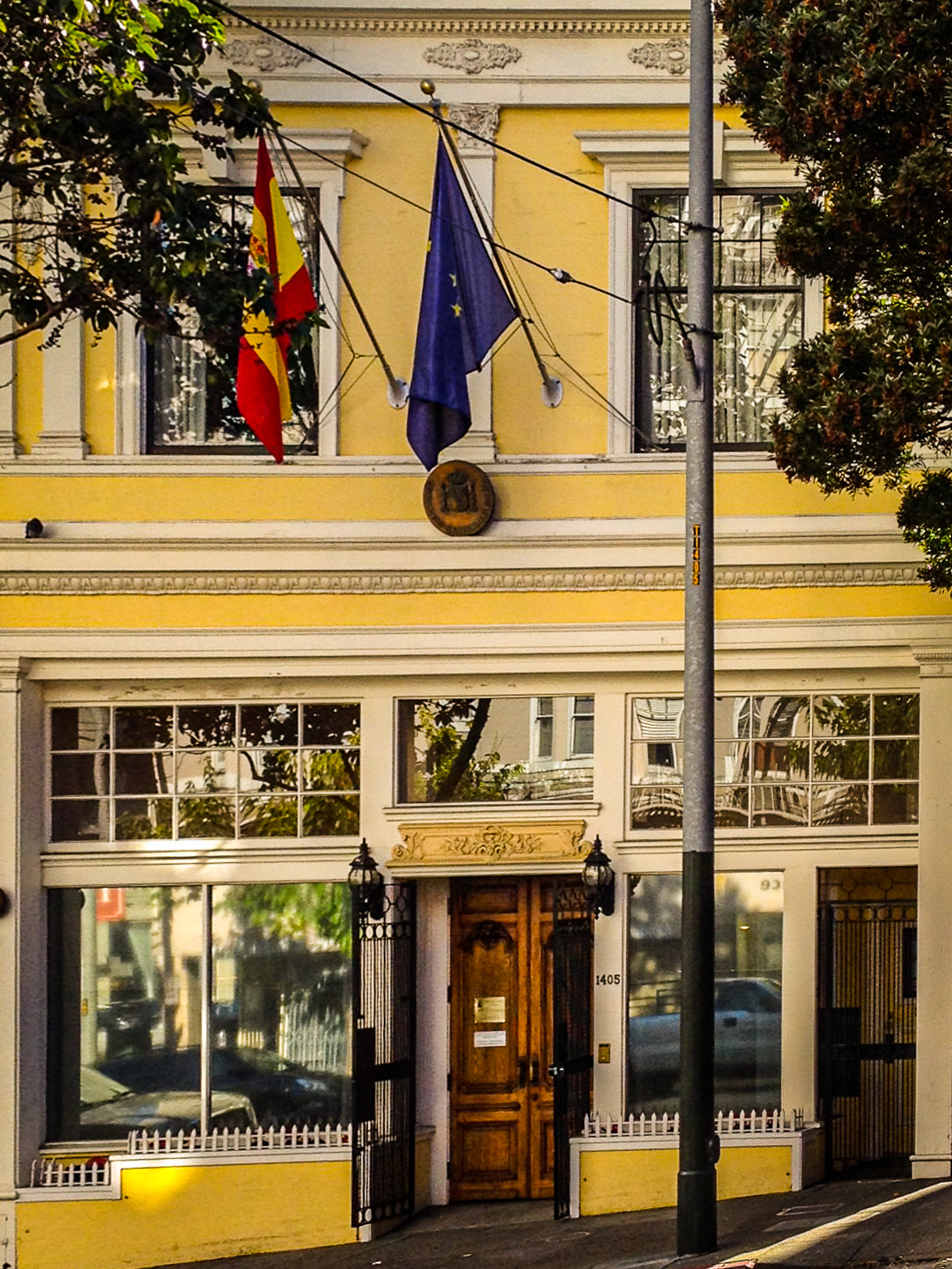
“The lawyer reviewed all the documents, had us fix a bunch of small stuff, and told us how to arrange everything,” Mike said. “In October, when we arrived at the Spanish consulate in San Francisco, they seemed stunned to find our papers in perfect order. They said that never happens.”
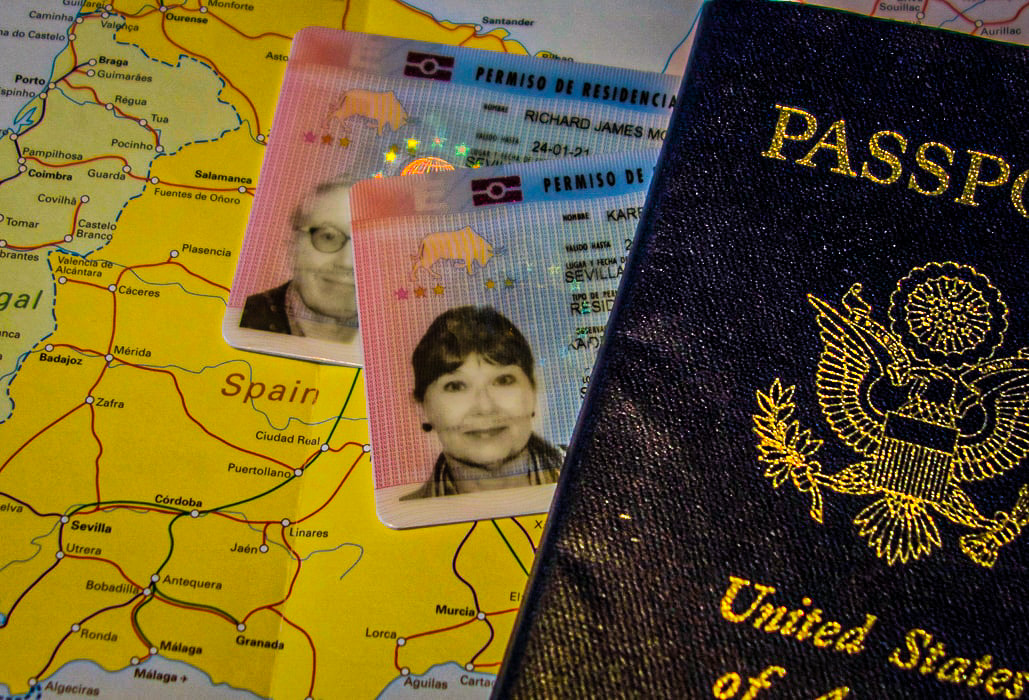
Four weeks later their passports were returned stamped with a visa. But the process couldn’t be completed until Deb and Mike arrived in Seville with two final forms: an application and the payment voucher. As the website didn’t specify where to pay the small processing fee, they simply visited every bank until one said, “Sí” and took their money. They’d already made an appointment with Seville’s Foreigners’ Office, booking online using a letter drafted by their lawyer. You know the rest: they’ll be collecting their residency cards in two weeks.
“How many hours did you two spend working on this?” I asked.
Mike considered. “About 200 total hours.”
I figure Rich and I spent about that much time, too, although our process included far more befuddlement and pandemonium.
Motivational speaker Zig Ziglar liked to say, “A goal properly set is halfway reached.” I can assure you that this is not the case with residency cards. Setting the goal is 1%, and without the 99% perspiration, not much is going to happen. Is it worth all that effort? It certainly has been for me. As for the newest expats in the family, Mike is growing a beard and Deb is getting her first tattoo. Somehow I think they’re going to do just fine here.
YOU MIGHT ALSO ENJOY
MY BOOK ON MOVING TO SEVILLE
RETIRING OVERSEAS: MORE LIVING FOR LESS MONEY
PRACTICAL TIPS FOR MOVING ABROAD
Don’t miss out on a single loony adventure, useful tip, or comfort food recipe! Sign up for updates.
YES, SEND UPDATES!
Leave a Reply