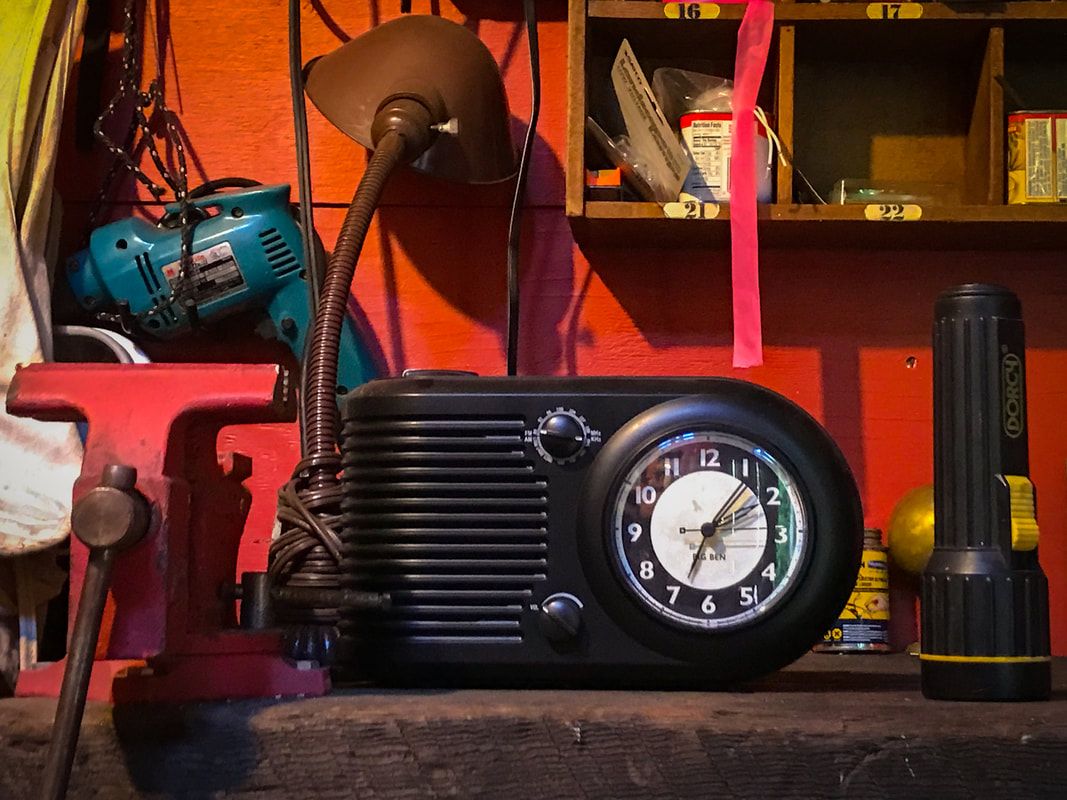

When country relatives came for lunch last Thursday, naturally the first thing we did was ask them to sniff the inside of our tool shed. As regular readers will recall,
last week Rich and I were struggling
to identify and eradicate the hideous smell coming from under that shed. A powerful pest repellant had driven away the skunks foraging in the garden, but now we had this new problem to solve. Or was it actually the same problem?
“Skunks,” Andrea and Matt said in unison.
“But it doesn’t smell like skunk spray,” I objected.
“It’s not spray. This is how the animals themselves smell,” said Matt.
We all staggered out into the fresh air, wiping our eyes and taking deep breaths.
“Any ideas —” I began.
“Talk radio,” Matt replied promptly. “Drives them nuts. Doesn’t have to be loud, just continuous. They can’t stand it.”
“Just like that restaurant in Ohio — remember, Rich?” I said. “It got rid of teens loitering in the parking lot by playing classical music.” I reached into the shed and flipped on the radio. An NPR host was discussing the Delta Variant. “Take that, varmints!”
For the next several days I pictured our skunks huddled under the shed with their paws over their ears gasping, “Stop! Stop! No more!”
I suspect the story that really drove them over the edge was the one about Brazil’s President Jair Bolsonaro.
Bolsonaro’s efforts to help Covid spread (Brazil’s infection rate is second only to the USA’s!) included mocking masks and telling everybody
the vaccine would turn people into crocodiles or bearded ladies
. Luckily, people realized this was malicious nonsense and wisely turned to a more reliable source: the viral music video
Vacina Butantan
. Filmed in one of Brazil’s top biomedical research facilities, the hypnotic tune makes inoculation look so cool that people are flocking to clinics. Bolsonaro is now wearing a mask and telling anyone who will listen he has always supported the vaccine 100%.
You see the kind of fun stuff you can learn on talk radio? And yet, after a mere 40 hours of non-stop human yakity-yak, our irritated, sleep-deprived skunks gave up and stomped away. We kept NPR going another day and a half for good measure, then shut off the radio. Into the sweet-smelling silence I said, “It’s like a miracle.”
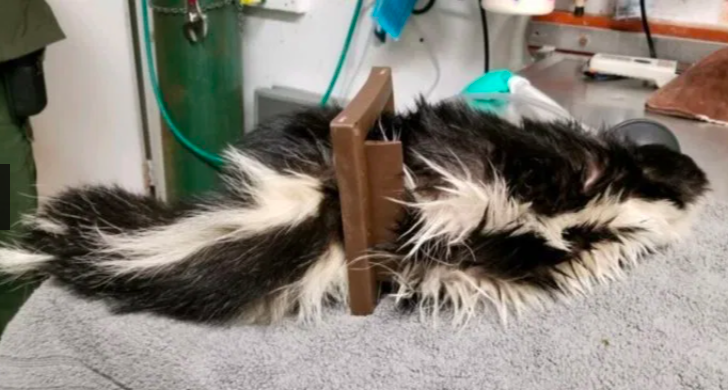
Yes, I am counting my blessings, especially after reading about a couple in nearby Mill Valley who found a skunk that had been stuck in their dryer vent for days.
This being softhearted Marin County, experts tenderly extricated the exhausted, dehydrated animal and nursed him back to health. Come to think of it, they never revealed where they released him afterwards. San Anselmo, perhaps? Could this be our visitor?
In a normal year (remember those?) skunks were exceedingly rare in our village, but with so much of the state going up in flames — more than 900,000 acres so far this year — everybody’s habitat is changing. Including ours. Rich and I see all sorts of wildlife around now: deer, bobcats, wild turkeys, raccoons. Earlier this summer
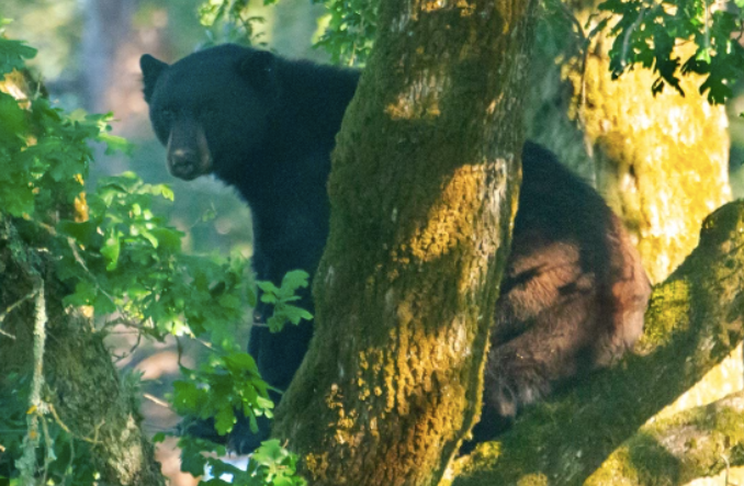
a bear was discovered in my neighbor’s tree
, creating pandemonium as officers escorted him back to the wild. Shortly afterwards my sister’s dog got loose, and we were all running through the village shouting the dog’s name, not pausing to reflect that cries of “Bear! Bear!” might incite general panic. Luckily Rich found Bear (the dog) before anyone called 911 or the news media.
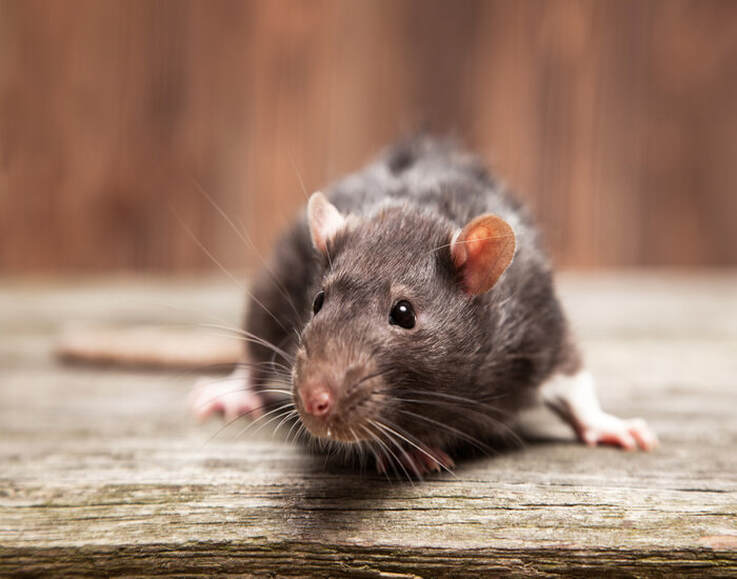
Close encounters with the animal kingdom always brings back memories of our days in semi-rural Ohio, where our home was constantly invaded by bats, snakes, squirrels, moles, mice, roof rats, wolf spiders, and more insects than we encountered in the Amazon jungle. On several memorable occasions, mice got trapped in an inaccessible section of one wall, where they’d scrabble around frantically for what seemed an eternity before expiring and decomposing. Obviously this was far worse for the mice, but it was pretty distressing for us as well, and one morning, when we awoke to the sound of frenzied scratching, Rich sat up and said, “That’s it. No more.”
He flung on some clothes, strode outside, and came back with a crowbar. “Take this towel,” he said, pulling one off the hook. “When I open up the wall, catch the mouse.”
“Catch the mouse?” I pictured myself flailing around with the towel, snagging the creature, and dealing with the business end of its teeth and claws. “Are you nuts?”
He shrugged. “OK, fine.” And raised the crowbar.
The crowbar smashed a hole in the wall. Instantly the mouse shot out, flying right past my head, landing on the floor, and taking off at a dead run. “You are the luckiest mouse in Ohio,” I called after it.
Peering in, we saw the hazard: a hole in the horizontal 2×4 left behind when some wires were moved. Generations of unsuspecting mice had trotted across the 2×4 only to plummet through the hole and become trapped between the framing and the drywall. The carnage in that space … no, even now I cannot bring myself to speak of it. We cleaned everything and plugged the hole, making that 2×4 safe for mousekind. And incidentally saving the noses and sensibilities of the house’s human residents.
Getting closer to nature and the animal kingdom always sounds so romantic, but in reality it’s a messy business. We share this planet with 8.7 million other species, and it can be tricky to co-exist peacefully with the mice, skunks, and bears that wander into our lives — to say nothing of the viruses. Luckily for us, our fellow sentient beings haven’t yet figured out we’re the ones altering the landscape, heating the atmosphere, burning their habitats, flooding their dens, and generally wreaking havoc. With the possible exception of our NPR-listening skunks, most creatures aren’t aware of what’s coming. Sometimes I wish I wasn’t either.
On Monday
234 UN scientists sounded the alarm
: we’ll soon blow past the degree of global warming that marks
“code red for humanity.”
Climate change is happening now, it’s bad and getting worse, and there’s “nowhere to run, nowhere to hide,” said the report’s co-author Linda Mearns. Some governments are embracing inaction, hoping for an eleventh-hour technological fix — the cosmic equivalent of Rich’s crowbar opening up a way out. Oh come on, political leaders; do you really think we’ll be that lucky? Senior climate adviser Ko Barrett says, “It is still possible to forestall many of the most dire impacts.” Which is rather like saying, “We can’t get rid of the skunks under the shed, but we can keep them out of your house and maybe your garden.” And that’s what passes for good news now.
In the midst of all this, I keep thinking of
Rich’s happiness course
, which suggests it’s all about helping others and gratitude. I’ll say this for hard times: they offer plenty of opportunities for being kind and appreciating the little things. Today I’m grateful for a shed that smells of nothing in particular. And that’s enough to celebrate for now.
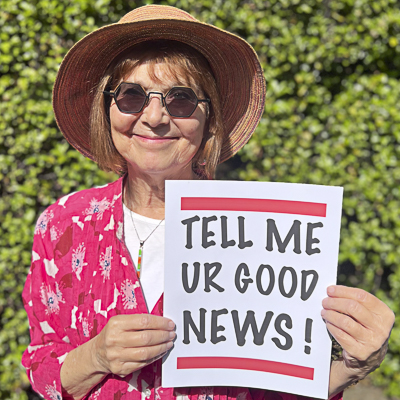
What are you celebrating these days? How are you adapting to our changing climate? Let me know in the comments section below.
YOU MIGHT ALSO ENJOY
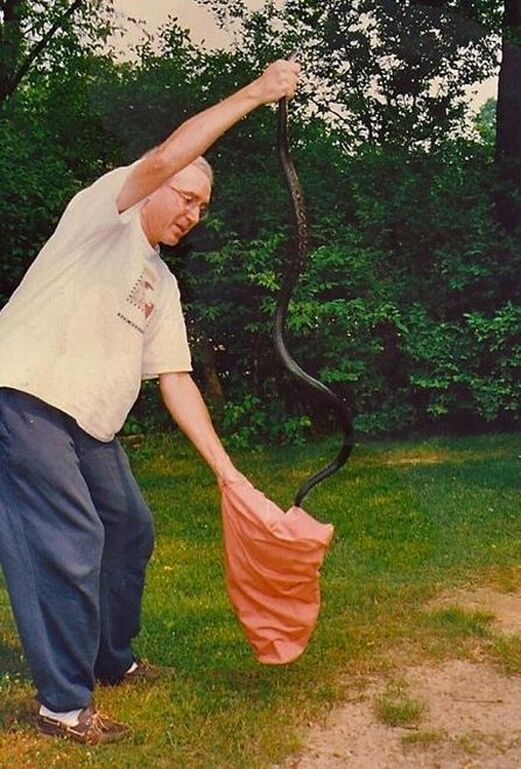
RICH CAPTURES A GIANT SNAKE ON OUR BED
A BEAR CLIMBS MY NEIGHBOR’S TREE
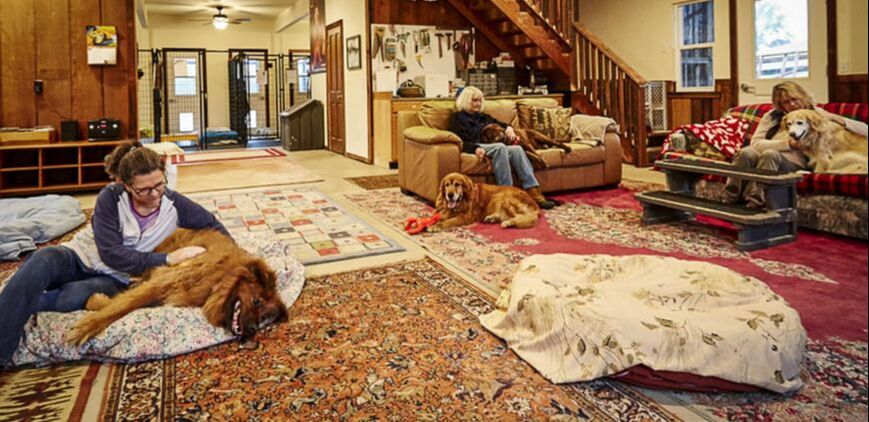
I PLANNED TO JOIN THE DOG CUDDLE CLUB
CLICK HERE
to sign up for my weekly travel tips and commentary about pandemic life, road trips, and happiness.
FEEL FREE TO SHARE
this article with family, friends, colleagues, and anyone who has ever dealt with “a stench of skunks” (to use the proper collective noun).
https://www.enjoylivingabroad.com/my-blog/yakity-yak-non-stop-talk-radio-sent-varmints-fleeing
Leave a Reply