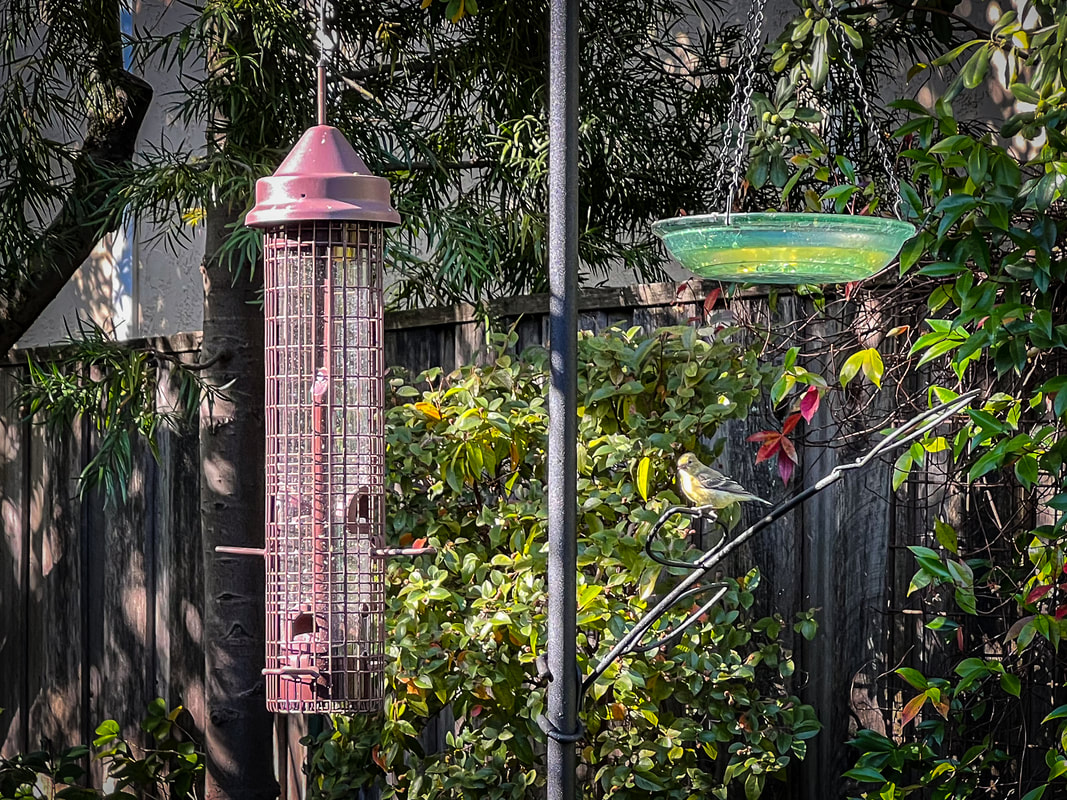
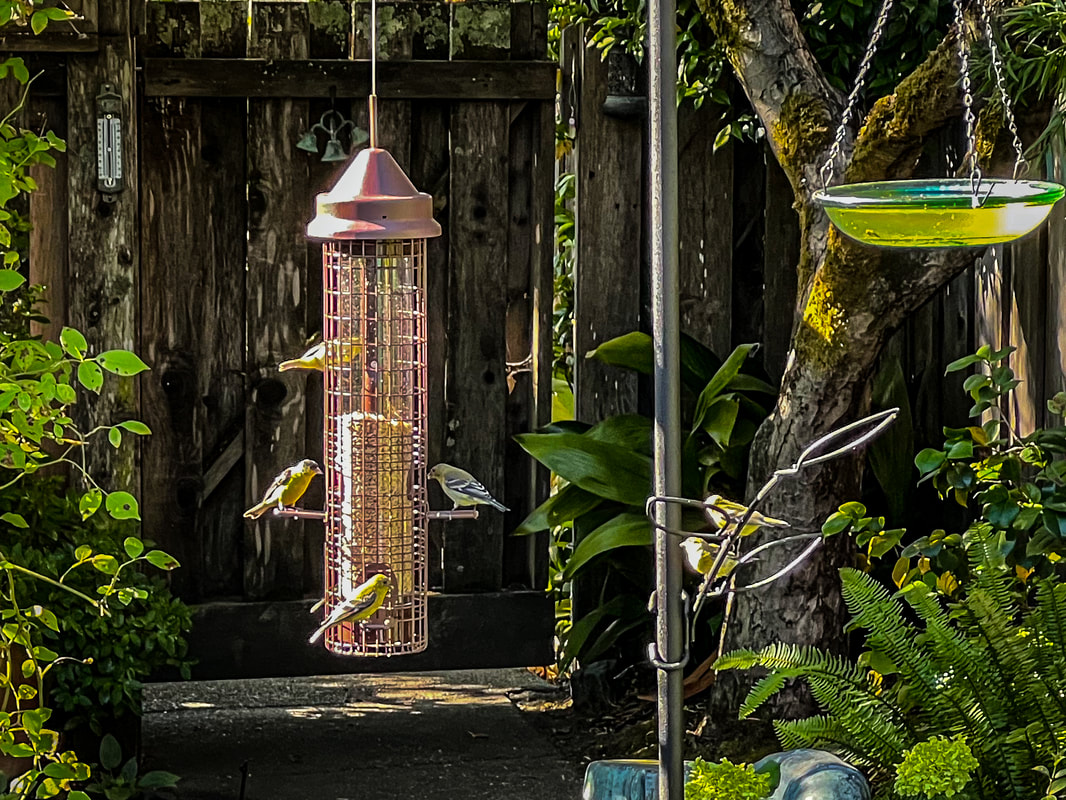
Are you sitting by a window? Look outside. See any birds? If so, let me ask you this: Do you trust them? Because I’ve just learned some worrying facts about the wild birds in my garden — yes those innocent-looking chickadees, finches, and titmice — and I’m not sure what to do.
It all started innocently enough, when Rich took up birdwatching. This summer he put up a second songbird feeder and splurged on upscale feed, making him a hero — a god, almost — to birdkind. Then I saw that a nearby bird and animal rescue center was finally re-opening to the public; I knew Rich would love to visit their courtyard to see what kind of wild birds they were nursing back to health.
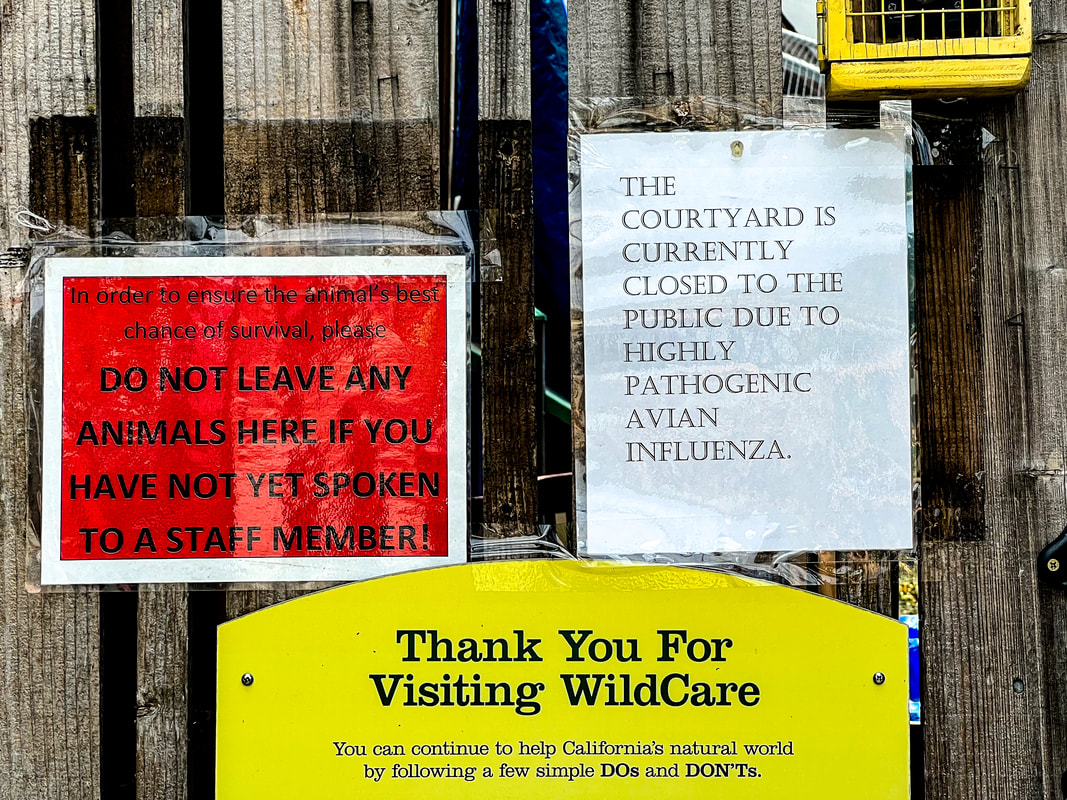
I expected a serene sanctuary and arrived to find the place in a state of considerable alarm. A notice posted out front warned about
Highly Pathogenic Avian Influenza
.
“What’s going on?” I asked. “Is bird flu back?”
“It’s not back exactly,” she said. “But yes, it’s here again.” The distinction was way too subtle for me to grasp.
“So where are all the birds?” I asked.
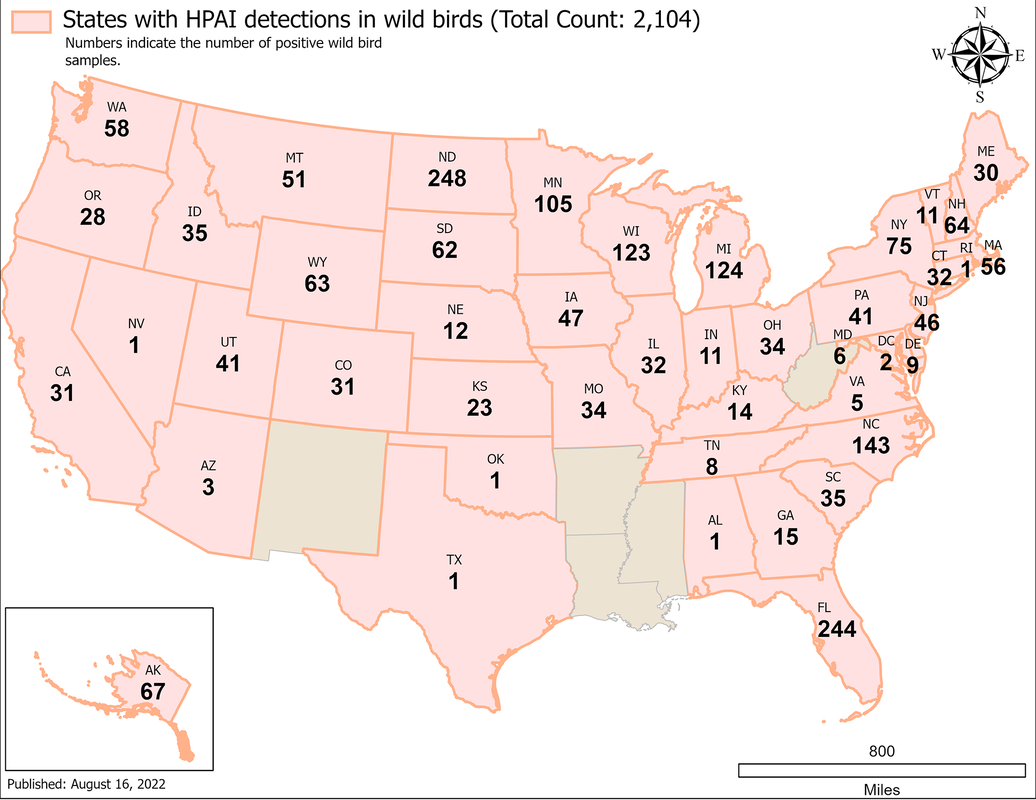
“We’ve removed them. A highly contagious strain of avian flu is spreading across the country. It’s everywhere.”
“
If you have backyard birdfeeders, get rid of them,” the staffer continued urgently. “Where birds congregate, the flu spreads.
You’re going to be seeing birds falling out of the sky. Swans swimming in circles.”
The woman next to me had just handed over a hummingbird she’d transported to the center in a cardboard box. Another woman ran in from the street calling out, “I’ve got an injured cormorant in the car.” Two staff members appeared in hazmat gear and sprinted across the street to the woman’s SUV. Yes, of course we followed them. One of the hazmat-wearing staffers scooped up a blanket-wrapped bundle and dashed off, presumably to the avian emergency room.
Yikes! Before I could panic properly, Rich was shaking his head. “No, I’m sorry,” he said. “I’ve got catastrophe fatigue. I just can’t worry about this, too. ”
He had a point.
Even by California standards, this summer has been overloaded with potential emergencies and disasters. We’ve had horrendous wildfires. “Used to be,” a firefighter said in a Zoom meeting, “a 100,000 acre fire was a career-defining moment. Now we’re getting million-acre fires.” A major earthquake is predicted within the decade. We’re 22 years into the worst drought in 1200 years. But what has us reeling right now is the news that one day, possibly soon, we’re going to be hit with
a megastorm of biblical proportions
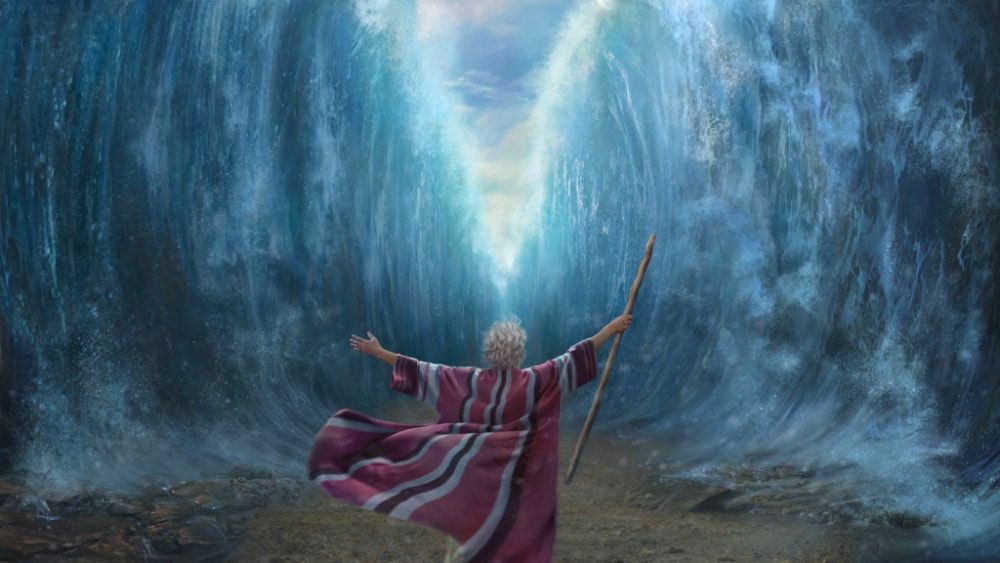
. How biblical? Think of the parting of the Red Sea — not the bit about the Israelites crossing dry-shod to safety, but the part where the walls of water closed over the heads of the Egyptians.
In this megastorm, the West Coast will be hit by a vapor plume hundreds of miles wide and 1200 miles long. I know, vapor doesn’t sound too scary, but when it crashes into the mountains it will fly upwards, cool, and turn into rain and snow. The deluge will likely last forty days and forty nights, causing thousands of deaths and $725 billion in damage. Does anybody think we should we start building an Ark?
I could see why Rich felt he didn’t have the bandwidth to worry overmuch about whether wild swans were swimming in circles. But we agreed that we’d stop filling our birdfeeders for the duration.
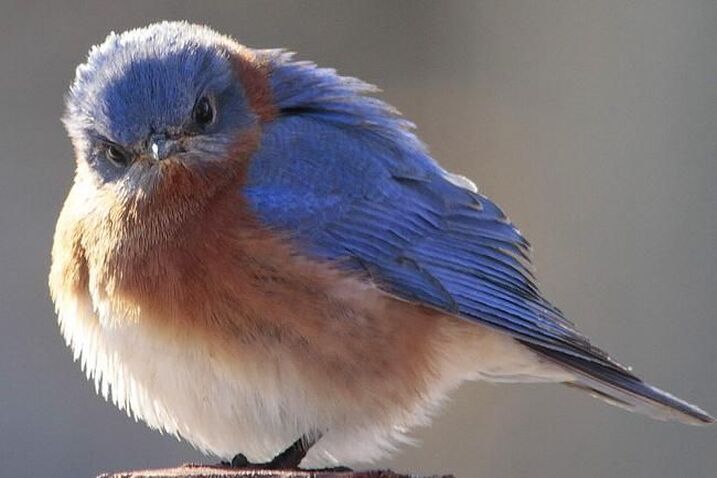
It’s been brutal for everybody. Our once cheerful feathered friends are morosely circling the empty feeders in silence, landing on nearby branches to stand glaring at us.
“I’m not sure I can take the pressure,” I said to Rich yesterday. “You don’t think they’re massing for an attack, do you?”
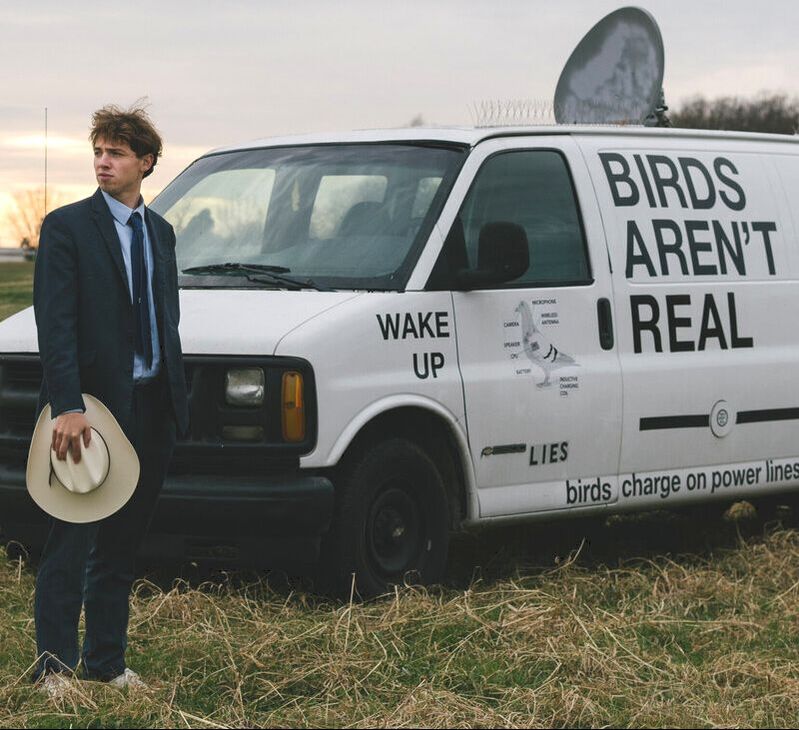
“Do you think we should break it to them that birds aren’t real?” Rich asked.
He was referring to the famous “
Birds Aren’t Real
” movement, launched in a prankish moment by young Peter McIndoe in 2017. A new president had been elected, emotions were running high, and having grown up a rebel in a hyper-conservative community rife with conspiracy theories, he felt inventing one would express something of the absurdity and angst embedded in the moment. En route to a protest in Memphis, McIndoe scribbled the absurdist statement “Birds Aren’t Real” on some cardboard and took his sign to the streets. A friend’s casual video went viral. McIndoe created a backstory involving avian genocide and the rise of spy drones masquerading as birds. Incredibly, despite frequent tell-all interviews, many of McIndoe’s fans refuse to believe it’s a satire.
“McIndoe says more than
a million people now call themselves bird truthers
,” reported
CBS News
. “They’ve flocked to rallies around the country. In front of Twitter’s headquarters, they demanded the company drop its bird logo… In an age of outrage, Peter McIndoe is hoping to drown out the chorus of crazy in this country. With a little crazy of his own.”
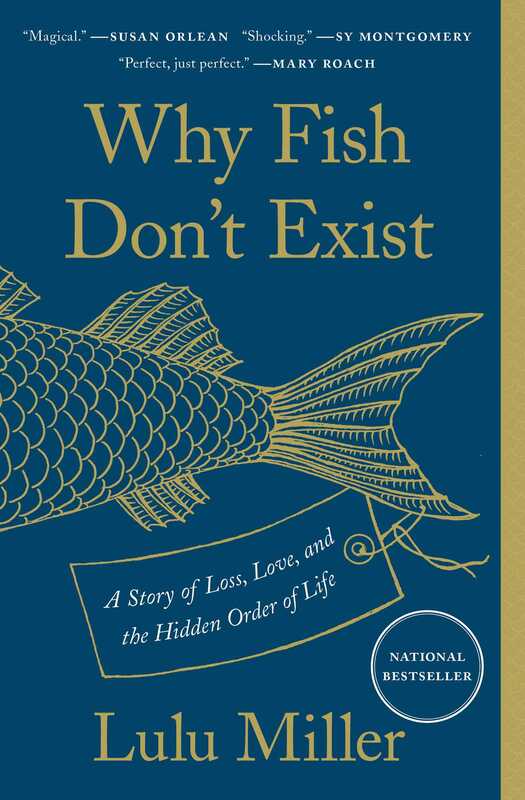
These days it’s not easy to out-crazy anyone or to distinguish fact from fiction. My own world view was shaken by Lulu Miller’s book
Why Fish Don’t Exist.
It explains that taxonomists, the scientists tasked with classifying the natural world in an orderly and sensible manner, completely blew it when it came to aquatic creatures.
You probably learned in school that whales and porpoises are not fish but marine mammals, but beyond that we all got the impression every other scaly aquatic creature was a legitimate fish. However, scientific grouping requires tracing things back to a common ancestor, and that’s where things get dicey. The lungfish, for instance, is technically more closely related to a cow, because they both have lungs, than it is to a salmon, which doesn’t. In short, the whole 33,000-species classification system is a disaster and someone is going to have to untangle it. This has been clear since the 1980s, but ichthyologists, the scientists studying fish, find the idea so counterintuitive and depressing they are largely choosing to ignore it.
So we live in a world where fish don’t exist, birds do but people think they don’t, and the weather is turning biblical on us. In the midst of all this chaos, one fact has emerged with searing clarity: Rich and I are going to keep feeding our wild birds.
It turns out songbirds don’t fall ill with avian flu, although they can be carriers. Minnesota’s Raptor Center, which in spring advised taking down birdfeeders as a precaution, now says this isn’t necessary. And as we all know, raptors are the total bad-asses of the bird world; I am not about to second-guess them.
Besides, according to astrologists, “keeping food and water for birds, or feeding a dog or a cow on regular basis,
increases one’s prosperity, eliminates conflicts
, lessens the impact of past life sins, and brings victory in court cases.” And with luck it will generate enough good karma to keep us out of harm’s way until we return to Spain next month.
Are you feeding any backyard birds? Have you figured out how to get yours to start social distancing to avoid spreading the avian flu?
YOU MIGHT ALSO ENJOY
FINDING GOOD MEDICAL CARE FAR FROM HOME
RICH’S MEMORY COURSE AND … WHAT WAS I SAYING?
WHY “BIRDBRAIN” SHOULD BE A COMPLIMENT
WANT TO KNOW WHEN I’M PUBLISHING NEW STUFF?
My automatic sign-up form is on the fritz. Again.
If you would like to subscribe to my blog and get notices when I publish,
just send me an email. I’ll take it from there.
[email protected]
Thanks for understanding.
Technology. What can I say?
Leave a Reply