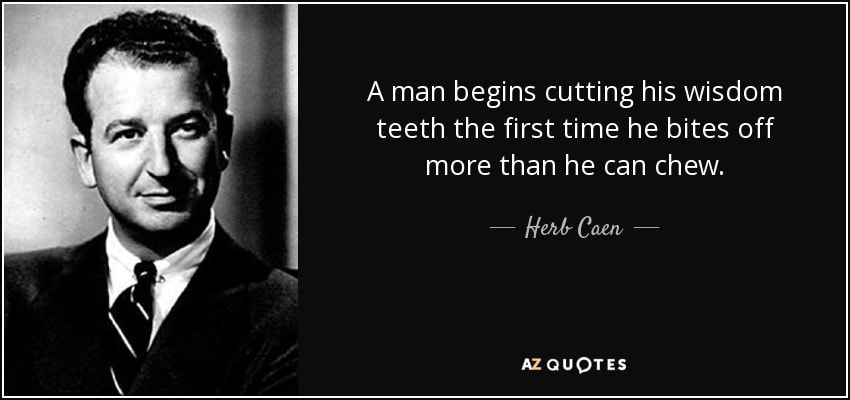
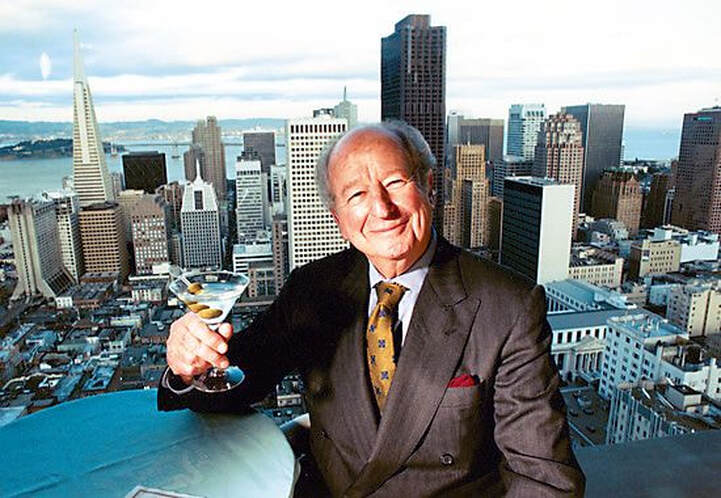
“One day if I do go to heaven,” wrote columnist Herb Caen, “I’ll look around and say, ‘It ain’t bad, but it ain’t San Francisco.’”
I don’t know if he’d be pleased or outraged by the headline, “
Much-Maligned San Francisco Ranked 7th Best City in the World
.
” Clearly Mr. Caen would vote for his city to be proclaimed top banana; the rest of us are just relieved to get an honest assessment that doesn’t suggest it’s already in the dumpster.
“Despite San Francisco’s meticulously documented challenges, job opportunities and infrastructure buildout pave the way as the world continues to rush in like it always has,” says Resonance Consultancy’s
2024 World’s Best Cities Report
. “High salaries that draw global workers,” make it the “number one place for start-up innovation.”
I’m convinced much of San Francisco’s bad press is due to readers being fed up with 175 years of journalists gushing about the city’s charm, creativity, and get-rich-quick opportunities. With all due respect to Mr. Caen, claiming that San Francisco surpasses Paradise itself may be a slight exaggeration. But there’s no denying that ever since the Gold Rush of 1849, the city has offered new arrivals the chance to build a better life. And among the earliest and most successful of those newcomers were the Italians.
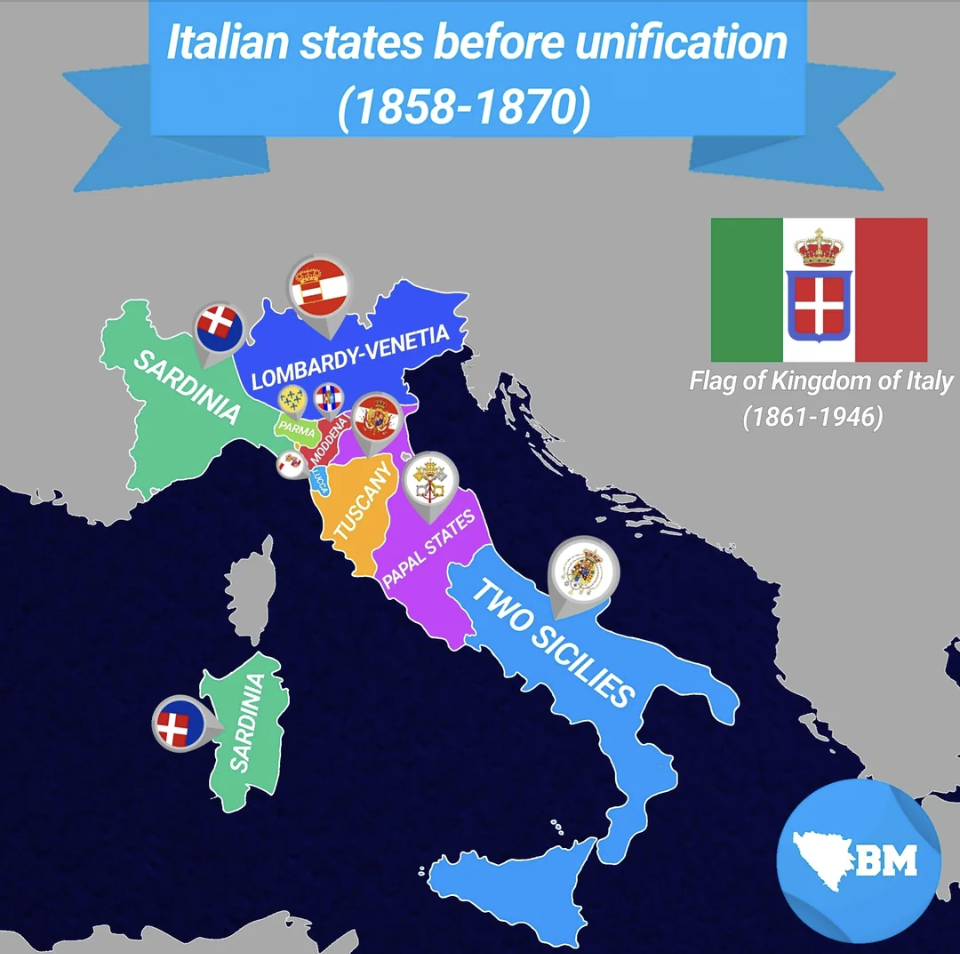
Of course, technically they weren’t Italians at the time. Unifying the kingdoms and city states of the Italian peninsula was still under discussion — by which I mean there was a power grab of Biblical proportions, with wars, insurrections, and revolutions wreaking havoc across the land, destroying property, crops, and economies, to say nothing of human life. Thousands of sensible families chose to leave the chaos behind and seek their fortune in the New World.
“They were lured to California by the Gold Rush,” wrote historian Michael LeMay, “but instead of mining, most became wine growers, vegetable farmers, and merchants, giving rise to the Italian American folklore that ‘the miners mined the mines, but the Italians mined the miners.’” Many opened businesses in San Francisco’s North Beach district, soon dubbed “Little Italy,” and got to work introducing their new neighbors to the joys of espresso, biscotti, pizza, and chianti.
Soon the city’s Italian-Americans were making headlines: baseball legend Joe DiMaggio, chocolatier Domingo Ghirardelli, mayor Joseph Alioto, singer and entrepreneur Antonietta Alessandro, poet and City Lights proprietor Lawrence Ferlinghetti, Joe Finocchio whose Prohibition speakeasy featured drag shows that put some extra roaring into the 1920s … there are so many to be proud of.
These are the immigrant stories I was raised on: tales of everyone’s ancestors who arrived, often with nothing, to become part of the free nation George Washington called “the last great experiment for promoting human happiness.” Every Fourth of July, as we celebrate that experiment, I wonder what Washington and Jefferson would think of us now.
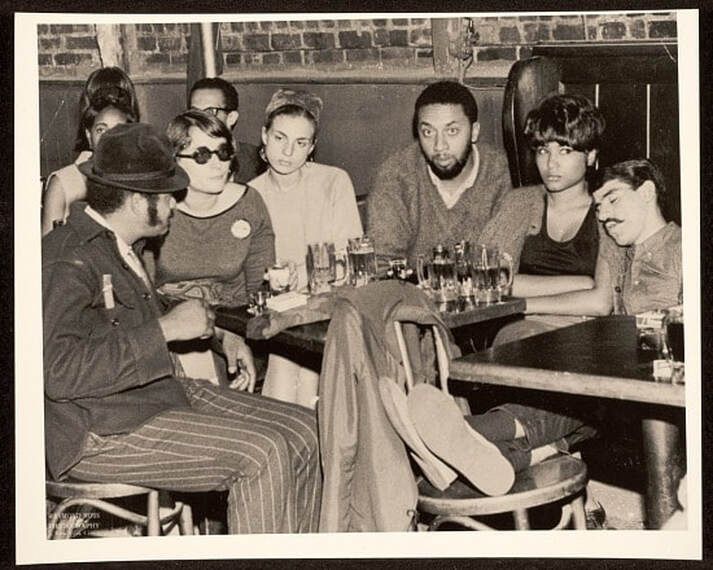
In the mid twentieth century, North Beach became home base to the Beat Generation — or, as San Franciscans dubbed them, “beatniks,” a mashup of “beat” and the ending of “sputnik.” (For younger readers, sputnik was the first artificial satellite to circle earth, launched in 1957 by the Soviets, igniting the Cold War’s Space Race.).
If you’re thinking the beatniks and the Italians made strange bedfellows, think again. Along with recipes for ossobuco and gelato, some arrived carrying passionate beliefs about the dangers of materialism, the value of the individual, and the sanctity of intellectual freedom. The Beats didn’t invade Little Italy, they grew up in its coffee houses, late-night bars, and home-style eateries like Mama’s on Washington Square.
Rich was never a beatnik, but he does claim to be a quarter Italian on the Costello side of the family; perhaps that’s is why, in his youth, he spent so many Saturday mornings in North Beach eating at Mama’s. “Best breakfast in town,” he told me. “Let’s see what they offer for lunch.” But first, we had a few stops to make.
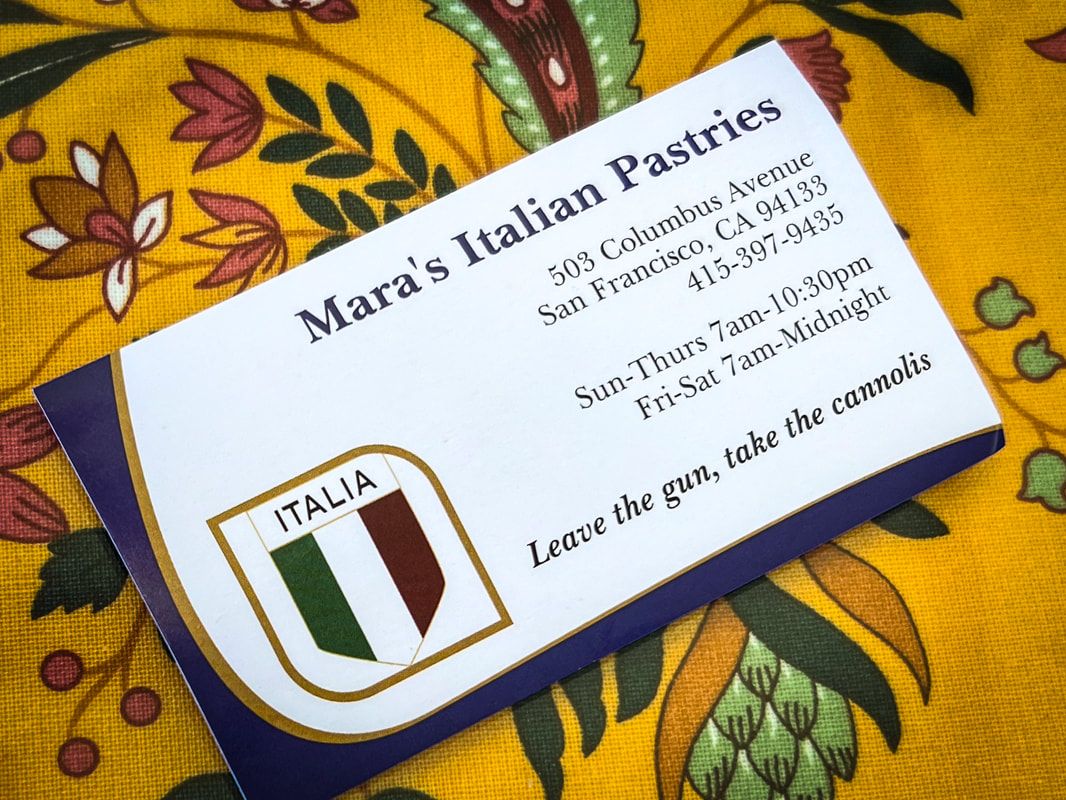
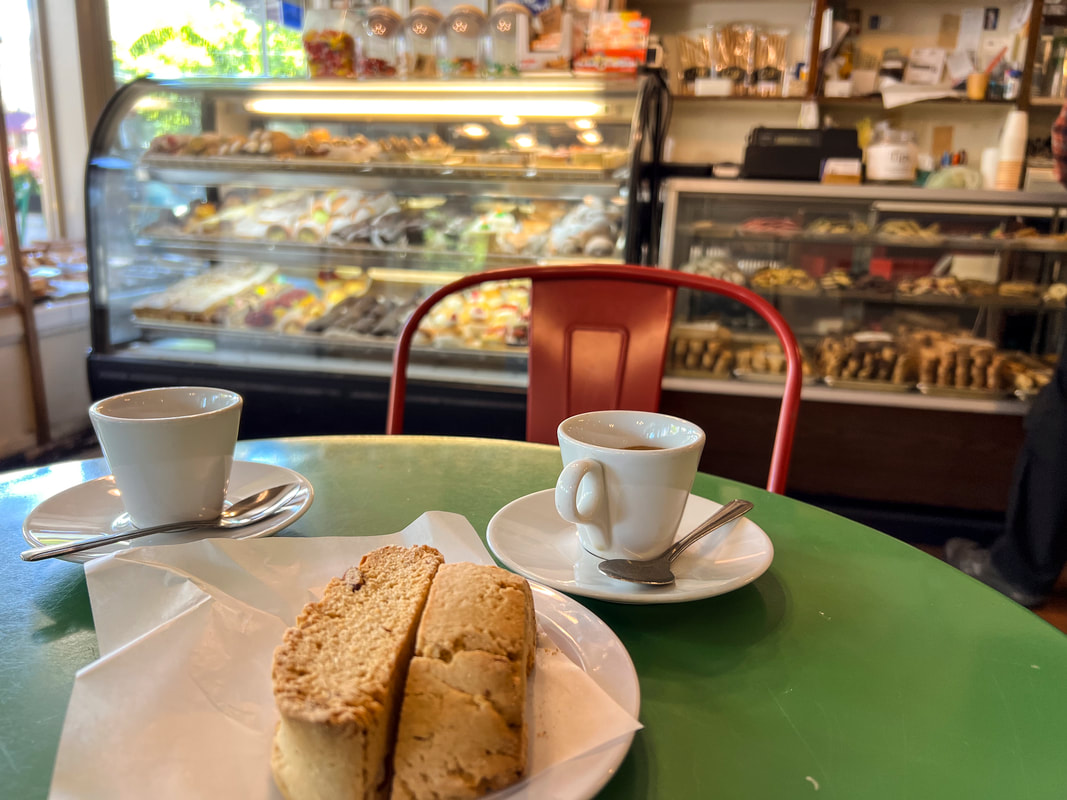
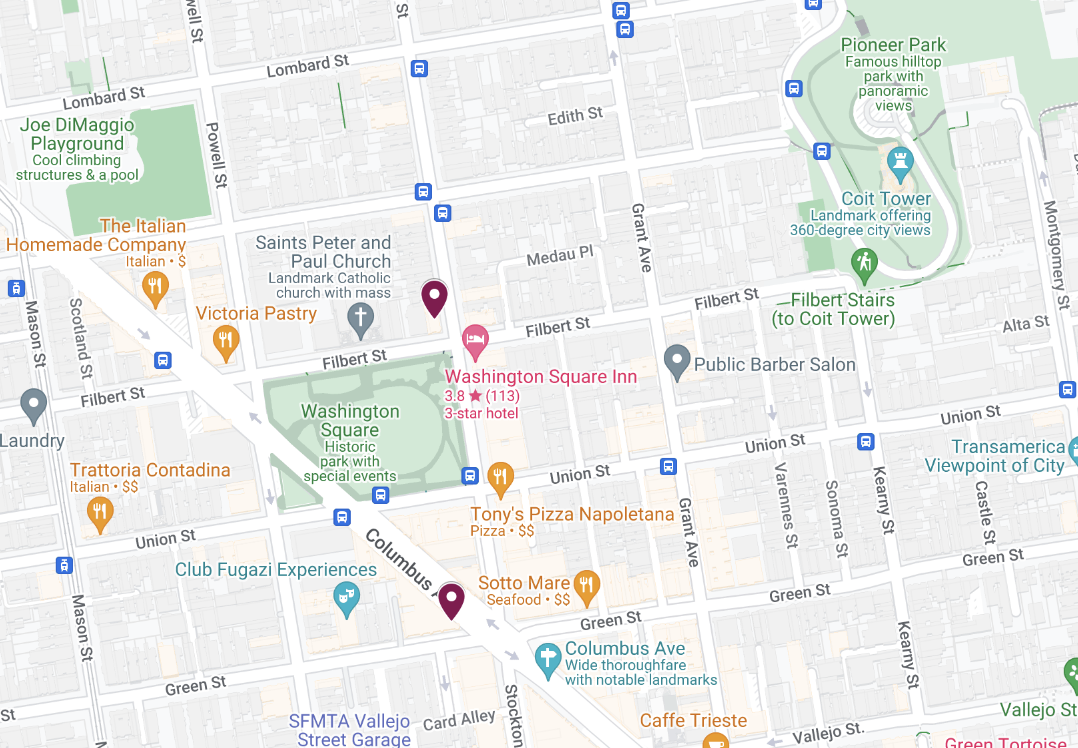
If I’ve learned anything from living in Spain, it’s that it takes good, strong coffee to properly launch any excursion, and the area around Washington Square, the big, grassy park in North Beach, offered plenty of choices. We wandered into Mara’s, an old school bakery with two tiny tables, a dozen kinds of biscotti, and espresso powerful enough to make your eyes pop.
The proprietor and a few old friends were taking their ease at the back table, chatting in Italian. After serving us, he returned to his conversation, and Rich and I settled at the other table, feeling as if we’d been magically transported to the old country.
Nearby, across Washington Square, stood Saints Peter and Paul Church, located, rather ominously, at 666 Filbert Street. (For atheist readers, 666 is “the number of the beast” in the Bible’s Book of Revelation. Scholars differ on its exact significance but agree it’s got such dreadful karma that they invented a special term for fearing this number:
hexakosioihexekontahexaphobia.
(Don’t ask me to pronounce it.)
Undaunted, when we’d drained our last drops of espresso, Rich and I walked over to check out the church. Movie buffs might recognize it from the sniper scene in
Dirty Harry
and from
San Andreas
, where it was pulverized by an earthquake and tidal wave. Which is ironic, as the original 1884 building actually
was
destroyed in the earthquake of 1906. After it was rebuilt in 1924, it survived five separate bombing attacks by anti-Catholic anarchists. That’s some wonky karma!
After strolling about the neighborhood a while, we eventually fetched up at Mama’s, which was bright, cheerful, and packed with people of every age, race, and background, all talking at once. I stood at the counter to place my order with a tall, robust man who turned out to be the original owners’ grandson.
“I used to come here fifty years ago,” Rich told him.
Our host grinned. “Welcome back!” he said warmly, a publican with enough experience — and kindheartedness — to make it sound authentic.
As we sat down, I asked Rich, “Is it as good as you remembered?”
“Hasn’t changed a bit,” he said happily.
I was delighted to hear it, as revisiting old haunts can be tricky, infused as they are with unreliable memories. “San Francisco isn’t what it used to be, and it never was,” said Herb Caen. “But when there’s a good bar across the street, almost any street, and a decent restaurant around almost any corner, we are not yet a lost civilization.”
In 1997, San Francisco marked Mr. Caen’s passing with a spectacular fireworks display over Aquatic Park that ended with a pyrotechnic image of the manual typewriter he called his “Loyal Royal.” And everyone imagined him standing at the Pearly Gates, looking around, saying, “It ain’t bad, but …”
WHY I WON’T BE POSTING NEXT WEEK
I’m taking time off to celebrate the Fourth of July in the traditional California manner: refurbishing
our go bags
and restocking our
Apocalypse Chow Food Locker
. Wildfire season is upon us, and we’re currently on a Red Flag Alert for possible evacuation. Wish me luck!
SUBSCRIBERS
If you miss a post announcement, please check your spam folder. Internet security is in a frenzy these days.
This post is part of my ongoing series
OUT TO LUNCH IN
CHEAP & CHEERFUL SAN FRANCISCO
My goal is to discover some of San Francisco’s most colorful neighborhoods so I can check out what’s really going on in this zany town. Are we in a doom loop? Already on the rebound? Still fabulous? And where should we eat afterwards? These and other questions will be explored in upcoming posts.
BROWSE PREVIOUS POSTS HERE
DON’T MISS OUT!
If you haven’t already, take a moment to subscribe so I can let you know when I publish my weekly posts.
Just send me an email and I’ll take it from there.
[email protected]
And check out my
best selling travel memoirs & guide books
here
.
PLANNING A TRIP
?
Enter any destination or topic, such as packing light or road food, in
the search box
below
. If I’ve written about it, you’ll find it.
Leave a Reply