
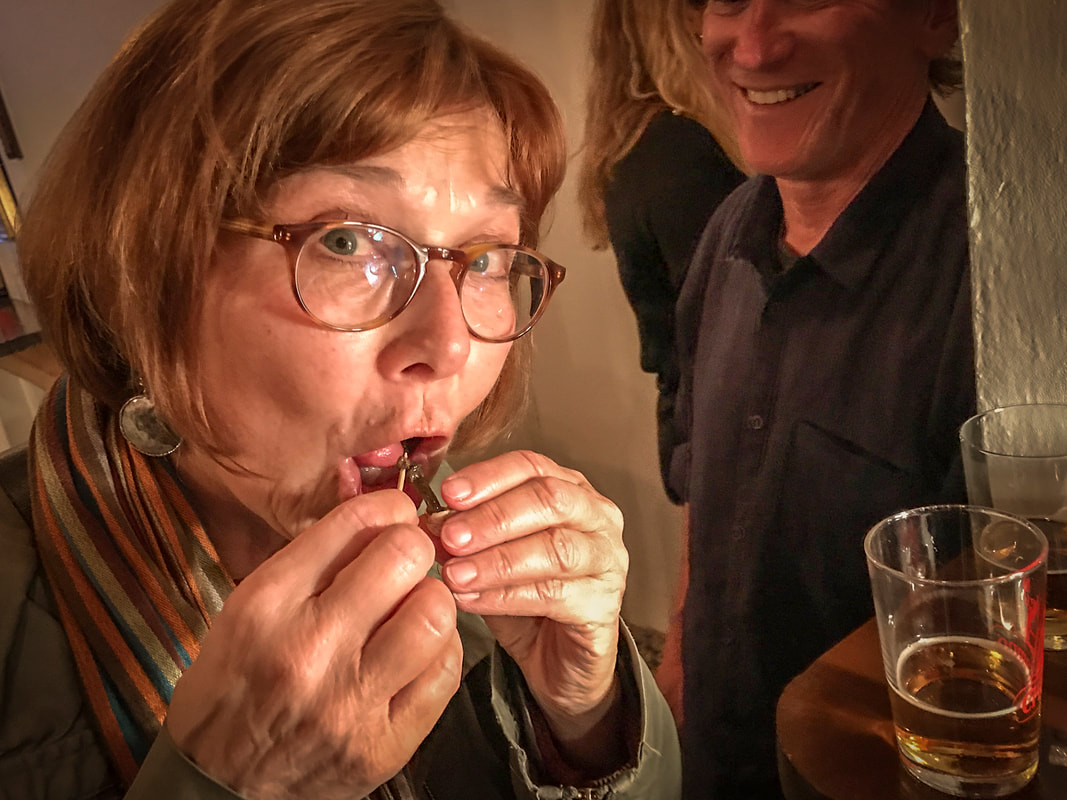
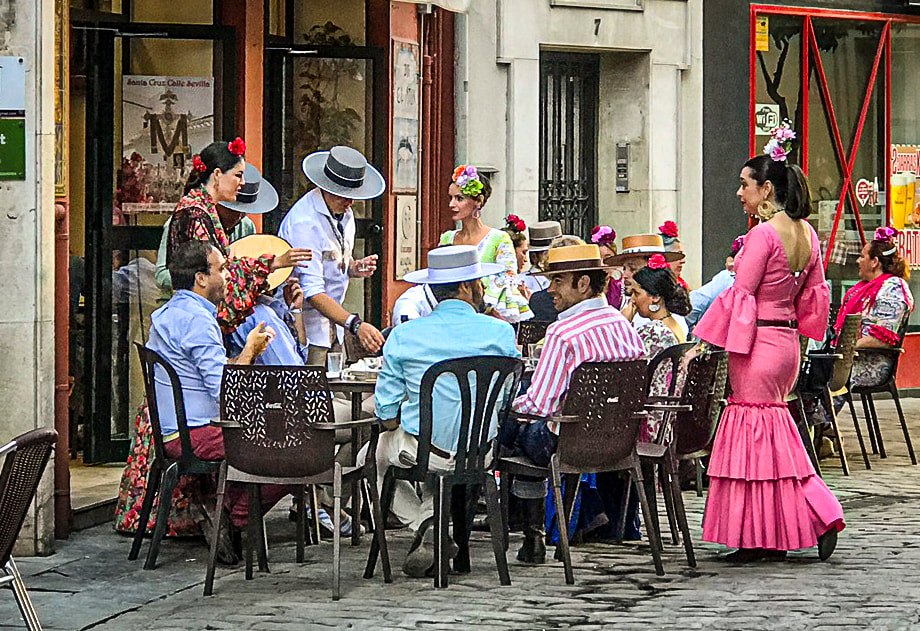
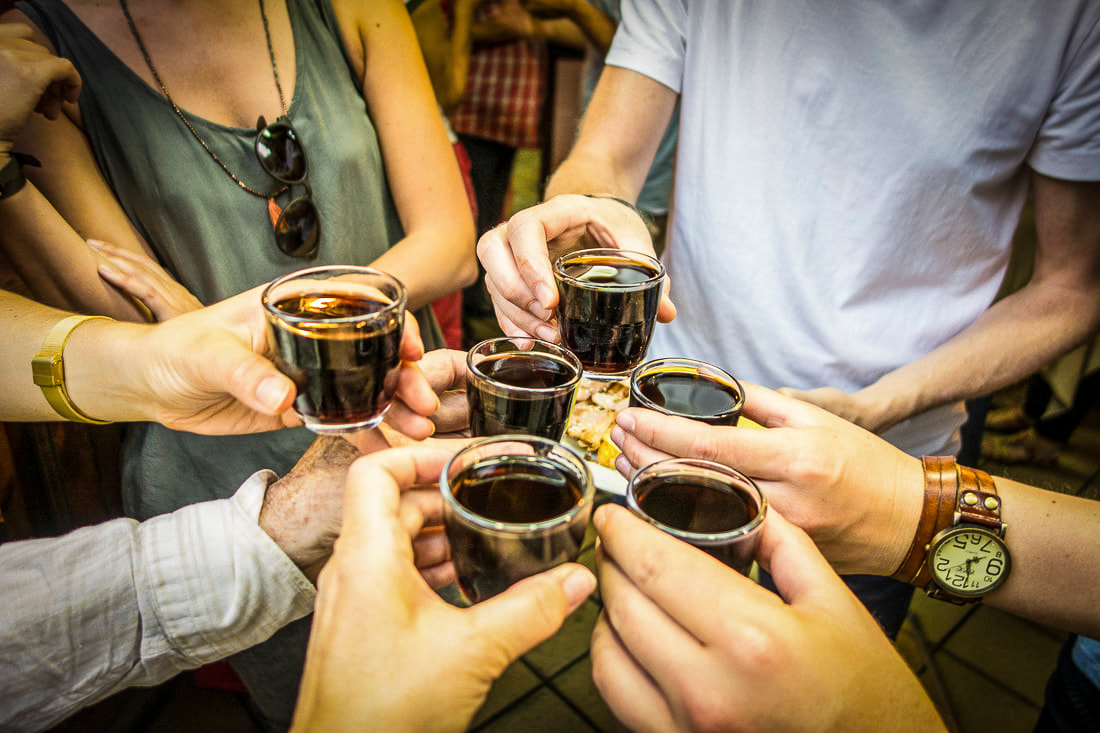
“What surprises people most when they first move here?” I asked my friend Gabrielle — Gaye, for short — as we lingered over late-morning coffee in one of Seville’s back street cafés this week. Having moved from the US to Spain in 1963, marrying a Sevillano, and raising a family here, Gaye has been my go-to expert in cultural matters ever since we met in book club two decades ago.
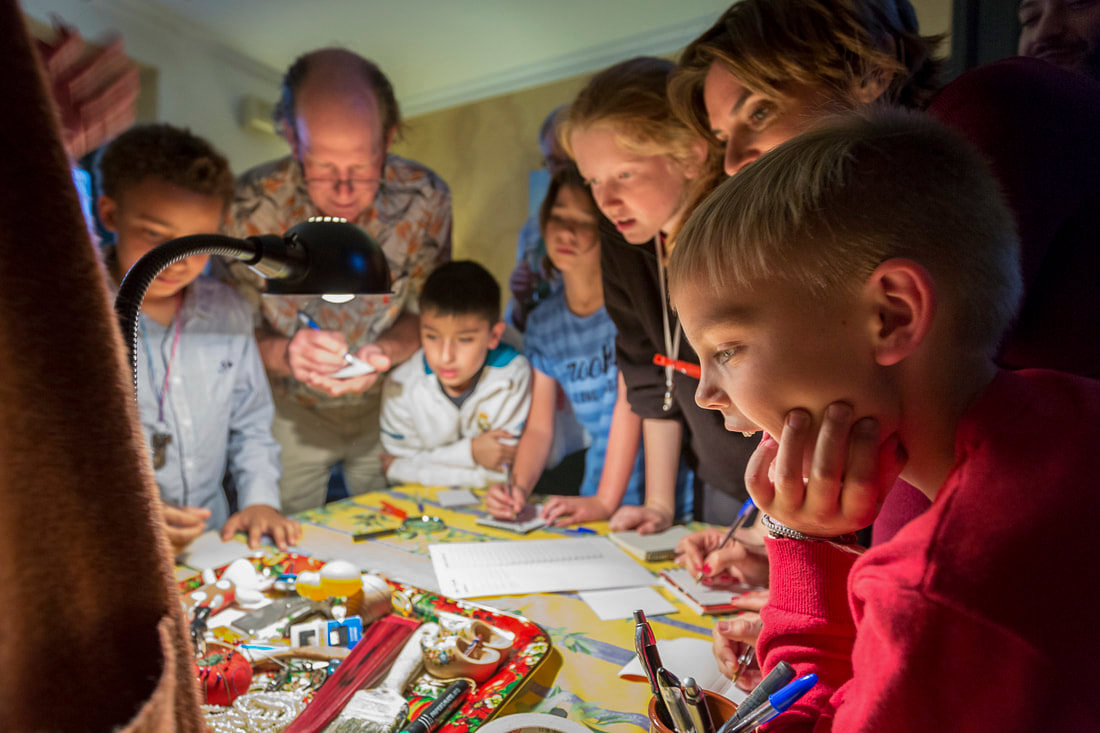
“That people take children everywhere, even late at night to bars,” she answered promptly.
I had to laugh, thinking how often I’d fielded the horrified questions “What is that little kid doing in a
bar
? At
this
hour?” You’d think we were frequenting an opium den or particularly sordid brothel instead of a café-bar where somebody’s grandmother was cooking a late supper in the back.
“My visitors freak out,” I told her, “when they see little kids running around playgrounds at midnight. They keep insisting children should be in bed at that hour, no matter how often I point out that in these sizzling temperatures they need to exercise when it won’t give them heatstroke.”
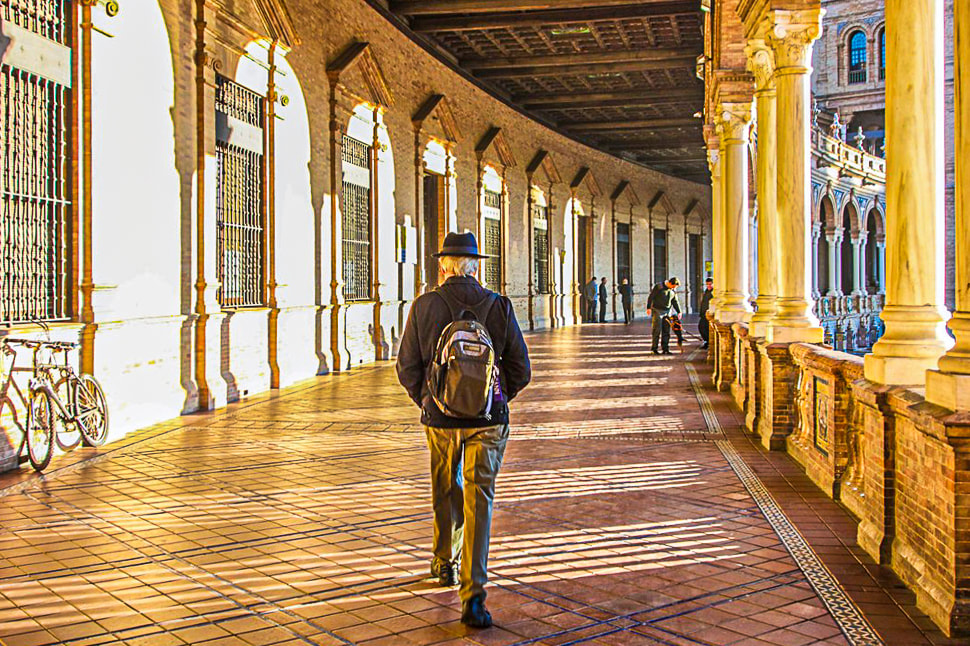
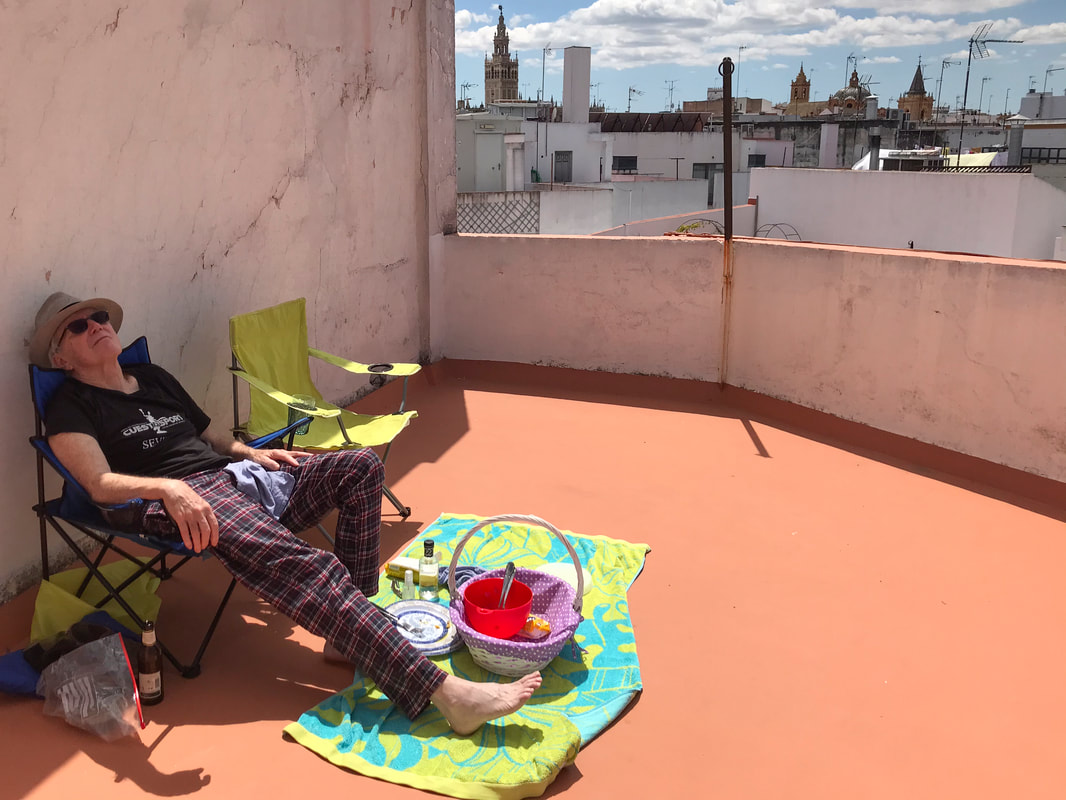
Seville is the hottest city in continental Europe, with heat waves so severe meteorologists now name them, like hurricanes. For much of the year, it’s only sensible to siesta in the afternoon and venture out after dark. But it’s not easy to convince American guests that taking children to a playground at night is a practical necessity, not parental neglect.
In vain do I point out that
Spain is the most family friendly country in Europe
, according to
US News and World Report
; worldwide it’s second only to New Zealand. The US was ranked an underwhelming 26th, just below Turkey and Thailand. Who are we to judge other people’s childrearing techniques?
Letting go of our pre-conceived notions of How Things Are Supposed to Work is one of the first and most essential challenges expats and travelers must grapple with. We have to mentally unpack our bags and throw out great gobs of assumptions we’ve been carrying around for years. This makes room for fresh introspection and, with luck, greater clarity about who we are and what we’re doing in the world.
And that, according to a recent report in the
Harvard Business Review
, is a very good thing.
The Harvard report analyzed six studies involving 1,874 participants to see how living abroad affects people. Not surprisingly, the authors found it generally makes you more creative, tolerant, and competent.
They zeroed in on something they called “
self-concept clarity
,” which means having a deeper, keener, and more consistent understanding of yourself. Apparently this quality blossoms during the expat experience and offers all sorts of benefits, such as boosting psychological well-being, job performance, and the ability to cope with stress.
At the end of their report, the authors rather surprisingly included this lovely quote from Michael Crichton, “who captures the spirit of our research in his autobiographical book,
Travels
: ‘Often I feel I go to some distant region of the world to be reminded of who I really am … Stripped of your ordinary surroundings, your friends, your daily routines … you are forced into direct experience [which] inevitably makes you aware of who it is that is having the experience.’”
You don’t need to move abroad to have more direct experiences, of course, but it helps. Everything around us is so new and interesting it’s easy to put away our cellphones and simply be here now (something the Buddhists have been advising for centuries).
While Spaniards love digital devices as much as anyone, they use them considerably less. Spanish 18-to-24-year-olds are on their smartphones 3 hours and 40 minutes a day — which seemed a whopping number until I learned American youngsters are on them
half their waking hours
.
One reason for the difference in cellphone use: Spanish families don’t assume kids will disappear into their rooms and their devices when relatives gather. Youngsters are expected to spend time with various generations of adults, holding up their end of the conversation, and giving grandparents proper attention and respect. (I know; what a concept!)
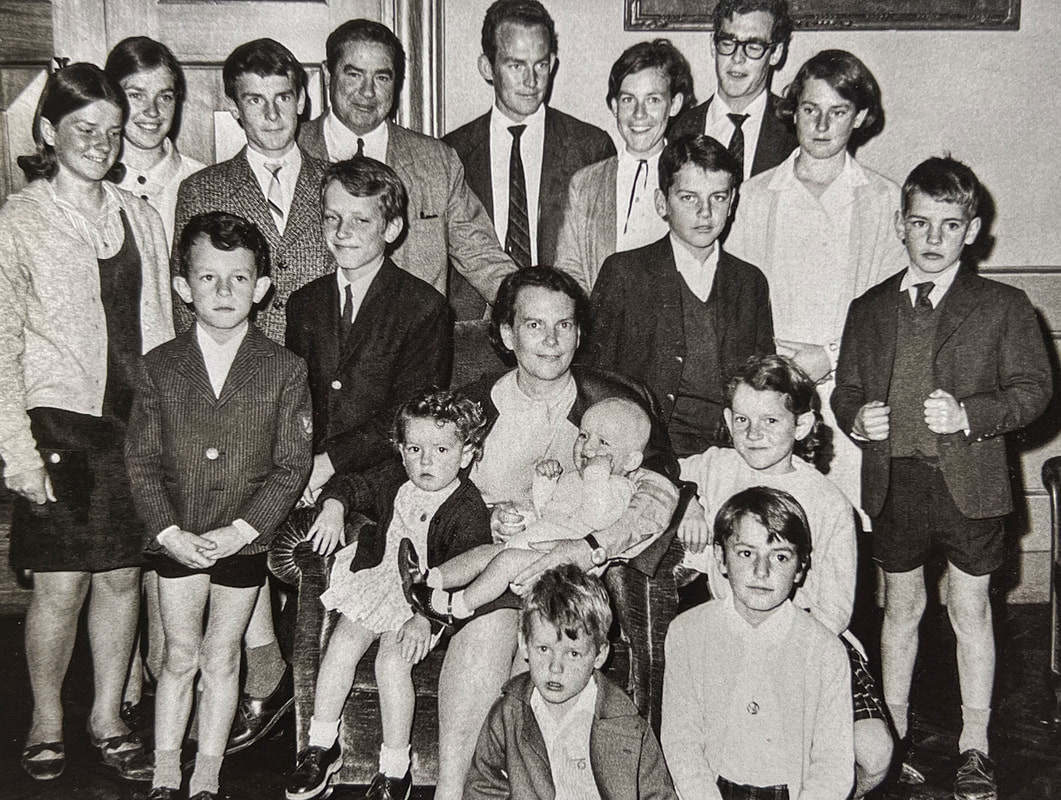
But times, and Spanish families, are a-changing. For a start, the birthrate has dropped to 1.19 per woman, the lowest since record-keeping began in 1941. It was nearly triple that back in the 1960s and early 1970s, when birth control, abortion, and divorce were illegal, and the government and the Catholic Church promoted childbirth as a civic and spiritual duty.
“During the Franco era,” Gaye recalled, “they used to give prizes for large families. Fourteen or fifteen kids, that wasn’t uncommon.”
Spanish homes may be less crowded now, but they remain the cornerstone of the culture, and the matriarchs who run them often command serious respect. Today nearly half of Spanish women (47%) work outside the home, and more than half the parliamentary posts are held by women, giving the government “a marked feminist accent,” said Prime Minister Pedro Sánchez.
Comparing modern Spain to the Franco era she first knew, Gaye said, “There’s more equality now. You can see it, for example, in the clothing. Clothes were much more expensive in the past, so there was a big difference in what was worn by the very well-to-do and by the working class. Now everyone dresses the same.”
She gestured toward the window, where we could see people strolling past in the international uniform of jeans, t-shirts, and sneakers — a look equally at home anywhere from Seville to Singapore to San Francisco. “When I first came here,” she added, “women wore dresses or skirts — never pants except for sports or the beach. Blue jeans?” She glanced down at her denim-clad legs. “Never.”
Nobody blends seamlessly into a new culture. I wore all the wrong stuff to all the most important occasions for years. I remember sitting next to the only other non-Spanish member of my painting class at a Christmas party, both of us hopelessly overdressed. She said with a sigh, “I will never get this right.” Maybe, but it does get better. And let’s face it, we provide our new Spanish friends with a lot of innocent amusement at our expense.
Of course, the real guffaws come at the way we butcher the language. I’m reliably informed that nowadays my vocabulary is decent, my grammar occasionally shaky, and my accent appalling. Having made all the classic bloopers — using
embarazada
to indicate embarrassed when in fact it means pregnant, for instance — I have become nimble at delivering graceful apologies and quickly changing the subject.
Learning a new language and culture creates countless opportunities for error, but also for reaching out to those around you for advice and assistance. You rely on the kindness of strangers every day and receive lifesaving support from neighbors, colleagues, and your fellow befuddled foreigners. Perhaps the biggest surprise of expat life comes the day that you realize you are no longer alone; the former strangers around you are fast becoming true
amigos
.
THE AMIGOS PROJECT
This post is part of my ongoing exploration of how living and traveling abroad can not only enrich our lives but help us learn how to avoid the isolation that’s become a global epidemic.
DON’T MISS OUT!
If you haven’t already, take a moment to subscribe so I can let you know when I publish my weekly posts.
Just send me an email and I’ll take it from there.
[email protected]
SUBSCRIBED BUT NOT GETTING POSTS?
If you ever miss a post announcement, please
check your spam folder
. Internet security is in a frenzy these days.
WANT MORE?
My best selling travel memoirs & guide books
Best of Cheap & Cheerful San Francisco
Cozy Places to Eat in Seville
GOING SOMEWHERE?
Enter any destination or topic, such as packing light or road food, in
the search box
below
. If I’ve written about it, you’ll find it.
Leave a Reply