There’s a famous urban legend about a woman vacationing in Tijuana who adopts a stray chihuahua puppy. She takes it home and discovers — surprise! — it’s actually a sewer rat. (Why she doesn’t notice this until she gets home is never quite explained. Maybe she’d forgotten to pack her eyeglasses.)
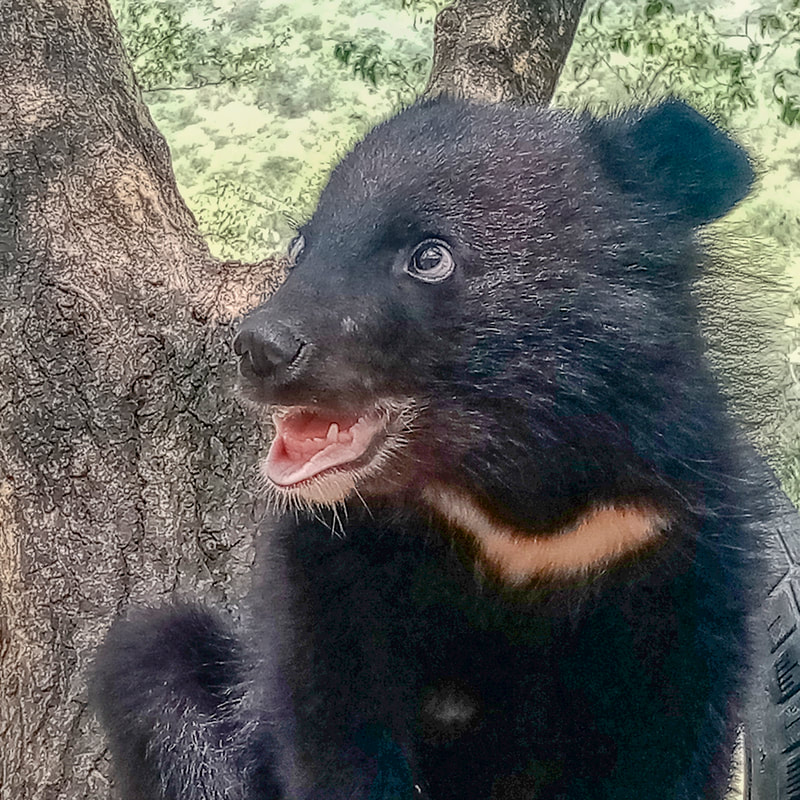
National Geographic reported an even stranger puppy adoption story from China. Su Yun had always wanted one of those big, fluffy Tibetan mastiffs, and while she was on vacation she met a guy selling a purebred puppy by the side of the road — for a really good price. (Because that’s not suspicious at all.)
She took her puppy home and soon noticed he had an enormous appetite, wolfing down a carton of fruit and two buckets of noodles a day. He grew incredibly fast; within two years he weighed a hefty 250 pounds. When he started walking around on his hind legs, Su could no longer ignore the truth: her pet dog was actually an Asian Black Bear.
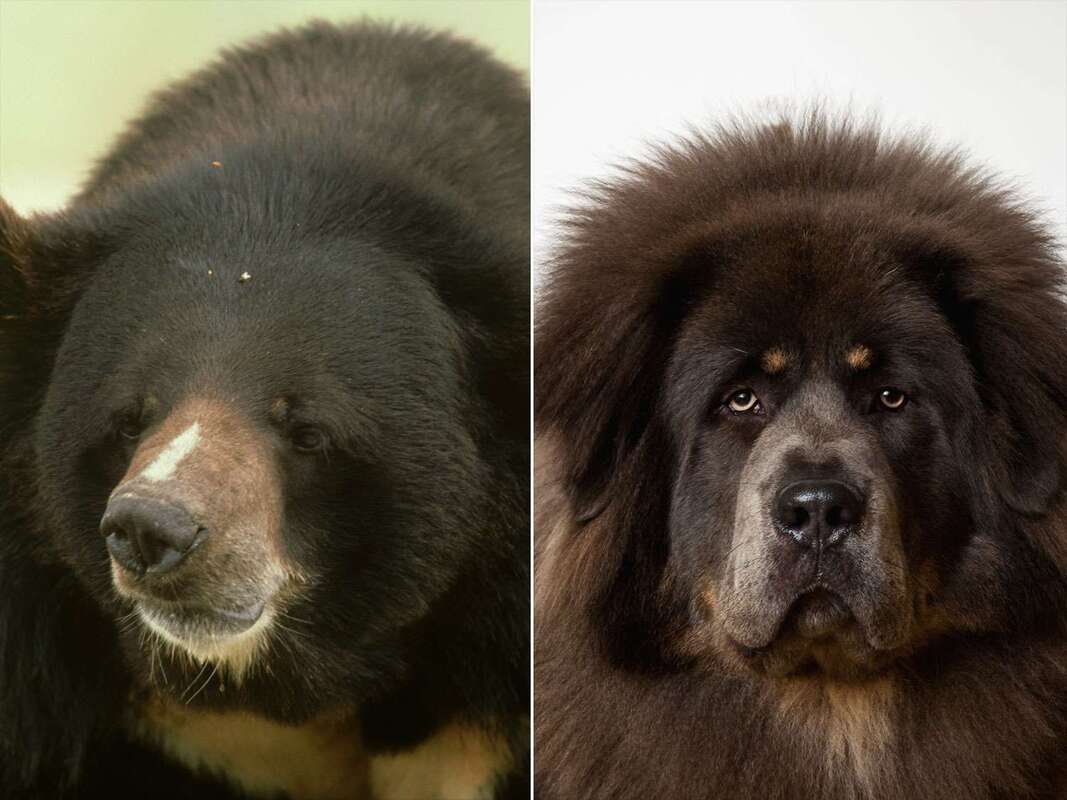
Admitting she was “a little scared of bears,” Su turned him over to a wildlife rescue center.
Good call, Su. As countless lurid online videos attest, sewer rats, bears, and other wild animals rarely make safe or comfortable companions. And yet, we humans can’t seem to resist trying to befriend all manner of furred, feathered, and scaled critters. We have a deep-seated need for pets that remind us we’re part of the vast web of life on this planet. Scientists call it biophilia, the profound love of every living thing. It reassures us that we’re not alone.
On days when human society seems to be running particularly amok, I find it soothing to take a little vacation in the animal kingdom. This week I did it via a visit to WildCare, a nearby rescue center, so I could hang out with some of the residents.
It’s a busy place; life in the great outdoors is hazardous, especially now with climate change upping natural disasters and disrupting habitats. About 30 staff and 200+ volunteers care for ill, injured, and orphaned creatures from 200 species. Every year 3500 clients arrive, and some, unable to survive on their own, make WildCare their forever home.
A kindly human volunteer, Dianne, introduced me to this 74-year-old tortoise named Mohave — Mo for short.
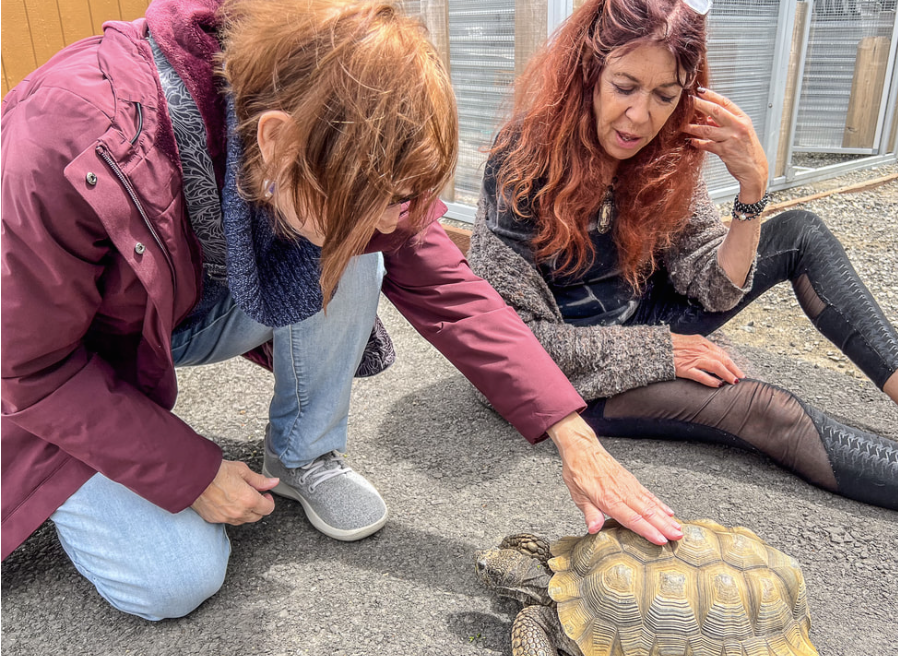
Mo was found wandering around Mendicino’s wine country, far from his native desert habitat. I like to think he’d just enjoyed a weekend of the kind of riotous excess we saw in movies like Sideways and Hangover, but chances are he was an abandoned pet. He couldn’t be released into the wild because captive tortoises can carry harmful diseases and pathogens into the wild population, which are an endangered species.
Mo looks like something from the age of dinosaurs, with enormous foreclaws designed for digging desert burrows. Because cool, dark burrows are prime real estate in the Mojave desert, uninvited roommates are always sneaking in. Tortoises like Mo often find themselves sleeping with rattlesnakes (yikes) as well as woodrats, burrowing owls, and other desert dwellers.
To retain moisture in the harsh, hot, arid climate, the Mojave tortoise has a body that’s 40% bladder, with a complicated fluid recycling system; Mo could go a year without peeing. Imagine the convenience!
As Dianne introduced me to a dozen other creatures, I soon learned that every one of them had a weird and colorful backstory.
Take the Virginia opossum, the only marsupial native to North America. They’re born the size of a honey bee and immediately climb into their mother’s pouch, where each one latches on to one of 13 teats and stays fixed there for 2 ½ months. They then crawl onto their mother’s back, where they ride around for much of the next month or so before falling off and heading out on their own.
These moms should be nominated for sainthood!
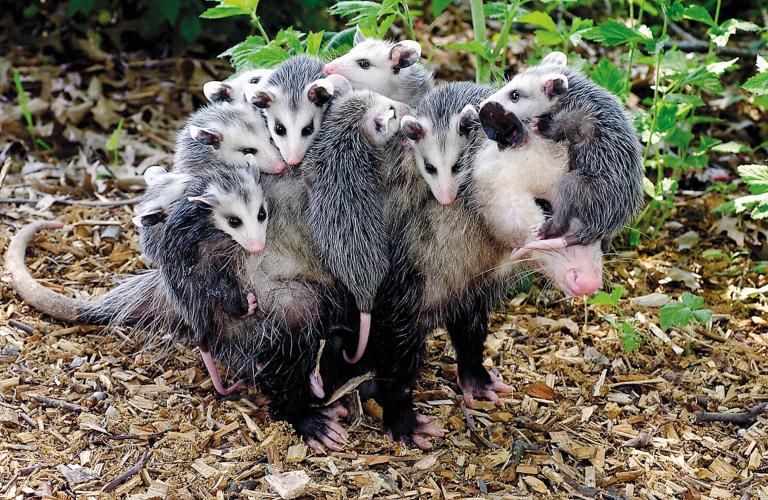
Almost as soon as she’d gained her independence, the opossum Didi got mauled by a cat. While treating her wounds, vets discovered the young opossum has hip dysplasia, poorly fitted joints that would slow her down fatally in the wild. Like Mo, she’s now a permanent resident of WildCare.
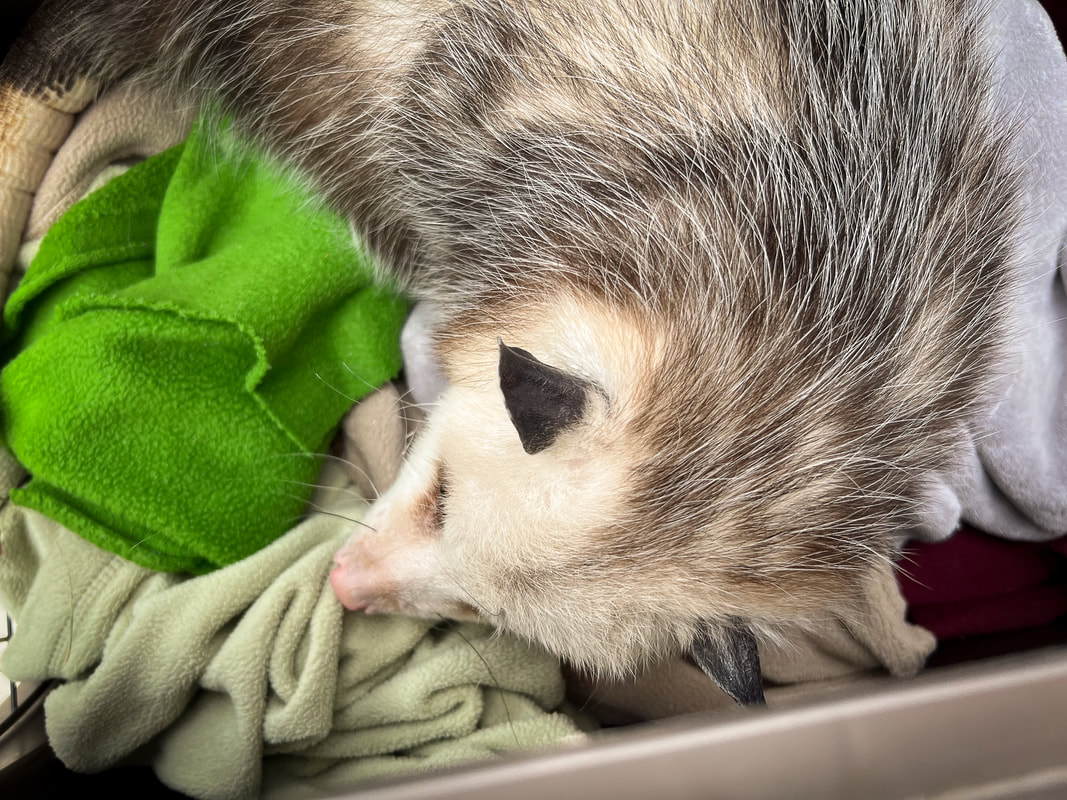
Didi, Mo, and all the other residents owe their lives to the kindness of strangers who found them and brought them in for treatment. However it’s not always easy to tell if a baby animal truly needs to be rescued.
I once accidentally kidnapped a puppy I found wandering through our Ohio neighborhood. After I took him home with me and phoned the number on the collar, I learned it had just been adopted by my neighbor three doors down, and I’d “rescued” the puppy from its own front yard! Oops.
Every spring, well-meaning people “kidnap” healthy young fawns, jackrabbits, baby birds and others, taking them to rescue centers. WildCare’s 5 Cs checklist offers guidelines for determining if help is required.
1. Is he Crying?
2. Is he Cold?
3. Is he Coming toward you (approaching people)?
4. Is he Covered in fluff (for baby birds) or Crawling with blood or insects?
5. Has he been Caught by a cat or a dog?
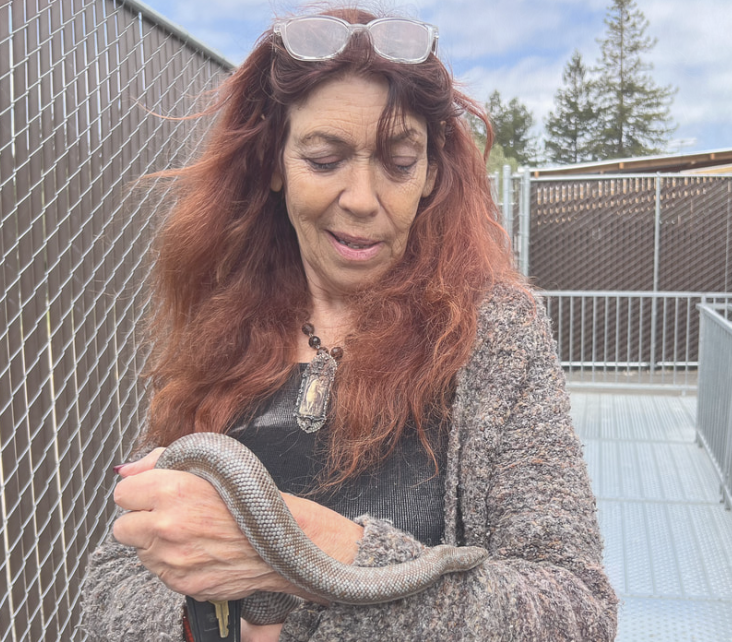
Reptiles, especially snakes, are harder to evaluate; when in doubt, leave them alone. But I don’t need to tell you that; humans are hardwired to avoid serpents.
Rich once bought an inflatable snake that was supposed to be the humane way to frighten vermin away from our garden. I alerted various visitors and workmen in advance, but for the next two days everyone arrived at my door white-faced and trembling with fright. We soon deflated that snake and banished it to a back shelf in the garage.
Humans have always struggled to figure out how to live in harmony with nature. Right now, with the US government poised to rescind nearly all environmental protections, it’s clear the responsibility for that effort is falling upon the citizens.
Luckily, compassion cannot be eliminated with the stroke of a legislator’s pen. There will always be Good Samaritans who stop by the roadside to assist a lost tortoise, a wounded opossum, or something that might be a puppy, a bear, or even a rat. Fortunately, too, there are volunteers and professionals around the country, ready to treat the critters’ illnesses, bandage their wounds, and find them a safe haven where they can heal.
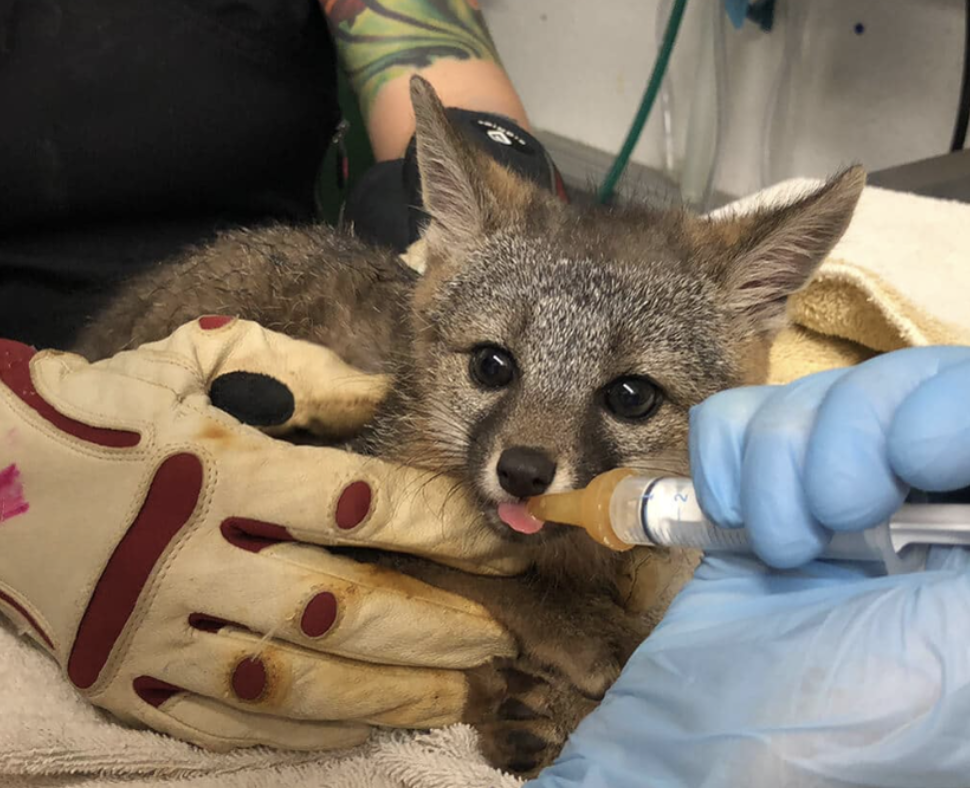
We all need that kind of healing at times, and according to the Japanese, one of the best remedies is forest bathing (shinrin-yoku). After soaking up the atmosphere of the natural world, we find ourselves shaking off our headline worries and tech-boom burnout, restored in body and soul, our eyes once again open to the beauty around us.
Or as this ancient Hebrew wisdom puts it: “You will go out in joy and be led forth in peace; the mountains and hills will burst into song before you, and all the trees of the field will clap their hands.” Kind of like this:

Leave a Reply