
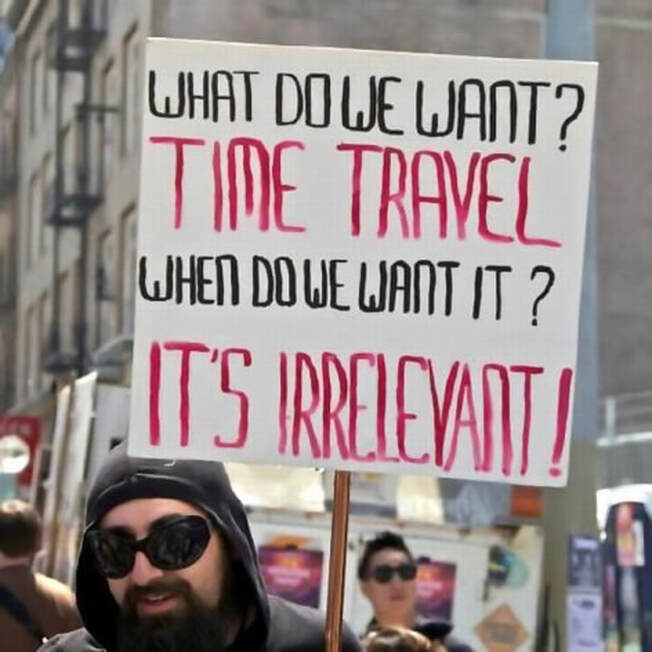
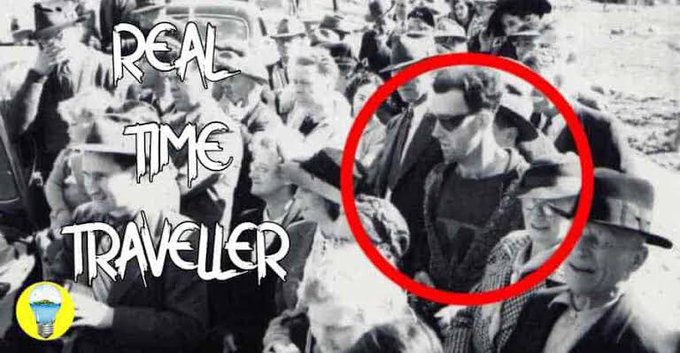




Show of hands: who believes time travel is possible? If you said yes, you’re in the minority (39% of Americans) but in good company that includes Albert Einstein, Stephen Hawking, and NASA. “People like us, who believe in physics,” said Einstein, “know that the distinction between past, present and future is only a stubbornly persistent illusion.” Very zen, Al. Very zen indeed.
Time travel science is way above my pay grade (I hear it involves going
faster than the speed of light
via
cosmic strings
, traversable
wormholes
, and something called
Alcubierre drives
). It’s still largely theoretical and baffles our best minds. “If time travel is possible,” Stephen Hawking once asked, “where are the tourists from the future?” Well, I can tell you where some of them are, Steve; at county fairs like the one I just attended. If Napa Town & Country Fair wasn’t time travel, it was very, very close. I felt I’d jumped back half a century.
When was the last time you saw Kool-Aid on tap, ate a funnel cake, or spun madly on a ride? When you were twelve? Twenty? At the gate, I asked the burly young security guard with the shaved head if he had any recommendations, and he leaned forward confidentially. I leaned in, expecting to hear about the tattoo booth or a motorcycle demo. “Don’t miss the quilt exhibit. It’s really wonderful!” Wow, did not see that coming!
Among the joys of travel are the constant surprises and the sensation of journeying back in history. Old-fashioned railway carriages, Victorian mansions, Gothic cathedrals, medieval castles, ancient pyramids — and, yes, county fairs — all conjure up our collective past and let us indulge in some cozy nostalgia.
“Would you travel back to the past if you could?” I asked Rich yesterday.
“Not permanently. The dentistry alone…” he said with a shudder. Recent work on his teeth has convinced him (as if any more proof were needed) of the value of modern pain killers. “And remember how dangerous air travel used to be?”
The so-called “Golden Age of Air Travel” may have been more elegant, but it was risky business; the year 1959 saw
40 fatal accidents
per one million flights; today it’s around 0.1 per million. Statistically you have more chance of being killed riding a bicycle or getting hit by lightning. When Rich was a kid, there was one horrifying, freakish two month period (December 1951 to January 1952) when
three separate planes crashed down on the town of Elizabeth
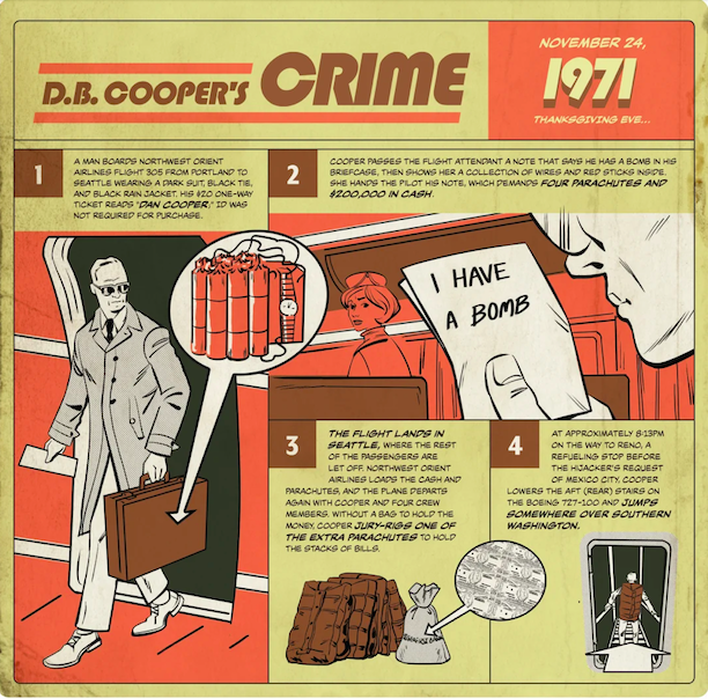
, New Jersey, just 25 miles from Rich’s home. Airports began installing kiosks selling flight insurance. And in the 1960s and 1970s there were so many hijackings — 225 attempted, 115 of them successful — that “
Take me to Cuba
” became a standard punchline for comedians.
“If I could travel in time,” Rich told me, “I’d much rather see the future.”
As it happens, most Americans agree; if we could move safely through time, 53% of us would go forward, while only 40% would head back to the past. Where the other 7% would go is a cosmic mystery; a parallel universe, perhaps? Cuba? An armchair in front of the TV?
Curiosity about the future is part of our DNA; no doubt our protohuman ancestors sat around caves by those newfangled fires speculating about where the bison would head next and how long the rain would last. Zipping ahead to modern times, we’re overrun with futurists who are, as the saying goes, “Often wrong, never in doubt.”
One of the most famous prognosticators is
Ray Kurzweil
, an inventor who helped give us optical character recognition, text-to-speech synthesis, and the transhumanist movement, which advocates using technology to enhance humans by mechanizing parts of our bodies and brains. Because what could possibly go wrong with that? Kurzweil is 74, so we can check his track record over time, and 86% of his predictions — the fall of the Soviet Union, the growth of the Internet, computers beating humans at chess — have come to pass. So what’s next?
”2029 is the consistent date I have predicted for when an AI will pass a valid
Turing test
and therefore achieve human levels of intelligence,” says Kurzweil. By 2045, he says, we’ll have Singularity — the moment when technology becomes smarter than humans, moves beyond our control, and becomes irreversible.
I know, but please, try not to panic. Because if history has taught us anything, it’s that nobody, not even Kurzweil, is always right.
During the first half of the twentieth century, leading minds dismissed
such “fads” as electricity, automobiles, telephones
, musical recordings, and television. In 1955, the president of a vacuum cleaner company said confidently, “
Nuclear-powered vacuum cleaners
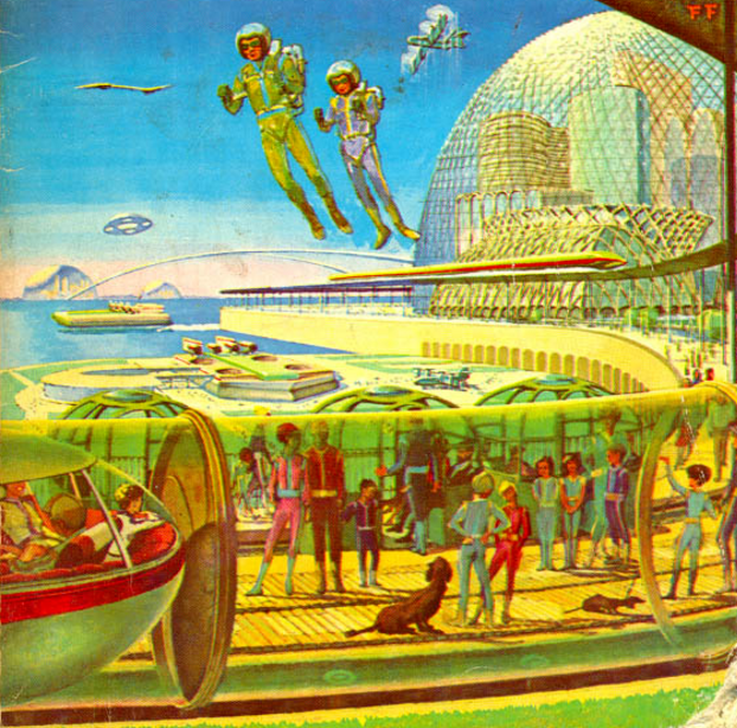
will probably be a reality in 10 years.” In 1966 Reader’s Digest insisted by 1999 we’d have rocket packs on our belts, flying cars, and climate-controlled cities under glass domes. And in 1997, Wired magazine demanded that Apple admit it was “out of the hardware game.”
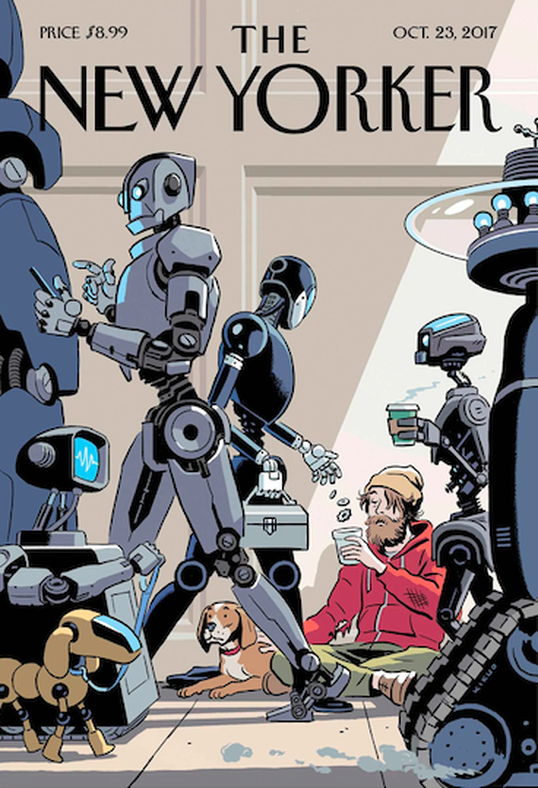
So how can we get our arms around tomorrow? “Begin by looking back. As it turns out, futurists are closet historians,” says a report on the Technological Summit of the 2021 World Economic Forum. “Don’t predict the future, predict several of them.” It adds, somewhat consolingly, “Our historical, and projected, capacity to create game-changing solutions — from stone tools through to quantum computing — gives us an edge in responding to emergent perils.” In other words, we may be able to survive, even thrive, in the coming robot apocalypse. I mean the Singularity. Or whatever actually happens.
As for the question about where are the time travelers of the future, they’re all over
YouTube
and
. The really surprising part is that no futurist in any era predicted the deluge of obvious hoaxers, hucksters, and loons who would try to pass themselves off as being from the next phase of human history. Time travelers’ predictions, such as the American Civil War of 2015, usually fail to happen.
And that’s for the best. As much fun as it would be to fast forward, it’s probably enough, for now, to live in the present moment and advance through time as humans have always done: one second per second. “We all have our time machines, don’t we,” said H.G. Wells. “Those that take us back are memories … And those that carry us forward, are dreams.” Sweet dreams, everyone!
Well, that was entertaining!
YOU MIGHT ALSO ENJOY
WHAT THE FORTUNETELLER TOLD ME
ALL TRAVEL IS TIME TRAVEL
FLAT-EARTHERS, MAGELLAN & ME
WANT TO KNOW MORE ABOUT THE FUTURE?
LIKE WHEN I’M PUBLISHING NEW STUFF?
My automatic sign-up form is on the fritz. Again.
If you would like to subscribe to my blog and get notices when I publish,
just send me an email. I’ll take it from there.
[email protected]
Thanks for understanding.
Technology. What can I say?

Leave a Reply