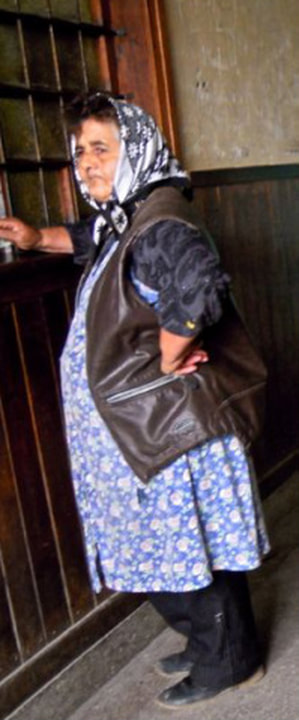
Woman in the Augustin train station
Sitting around a Transylvania dinner table, one of the British guests told me he’d recently met some Texans in London who, upon learning he was heading to Romania, said apprehensively, “But is it
safe
?”
Romania
is
a wild place, but having spent some weeks here, it seems to me you’d have to go out of your way to incite actual trouble. Oh sure, we had momentary doubts when we arrived at the train taking us to rural Augustin and discovered it was packed to bursting with large, sinister-looking fellows in rough country clothing. Men in fedoras and cloth caps were shouting over a card game, cigarettes dangling from their lips. The pungent tobacco smoke provided a welcome counterpoint to the eye-watering scent of unwashed bodies. Babies wailed in their mothers’ arms, and somebody was playing tinny folk music on what sounded like a transistor radio but was probably a cheap phone.
“This is fabulous,” I said to Rich as the train jolted over the tracks. “It’s the closest I’m likely to get to riding in a gypsy wagon.”
When the conductor came around for tickets and everyone learned where we were headed, several people – including Rich’s seatmate, who looked like a hired assassin and was reading a Bible – volunteered to make sure we got off at the right station. By the time Rich passed around some mints, we were all fast friends – or at least the kind of acquaintances that you no longer worry will rob or kill you.
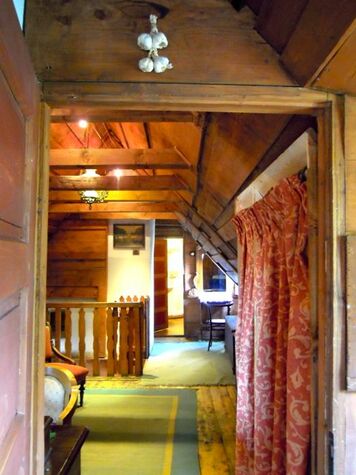
Garlic over the door of our room in Miklósvár
Feeling safe with strangers is a relatively new thing in Transylvania. Over the last 2000 years, this lovely part of the world has been dominated by Romans, Carpi, Visigoths, Huns, Gepids, Avars, Slavs, Bulgarians, Magyars, Hungarians, the Ottoman Empire, the Hapsburgs, the Austro-Hungarian Empire, the Nazis, the Communists, and now global modernization, to name but some of the highlights. Getting a grip on Transylvanian history is like trying to unravel the plot of the tv series
Lost.
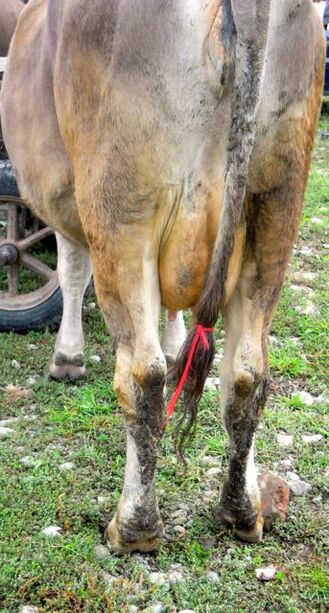
Suffice to say that anything that will ward off evil, such as putting a red thread in your livestock’s hair or nailing garlic over the doorway, is still seen as a pretty good idea.
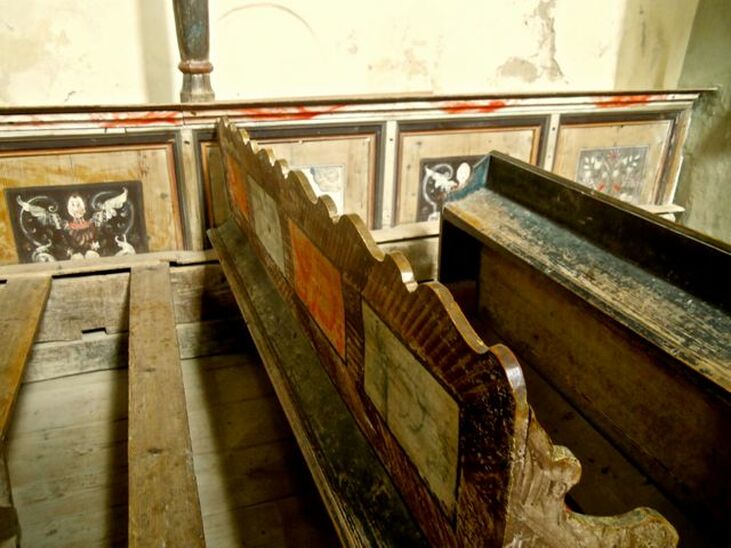
In the old days, churches were heavily fortified, and during services Saxon congregations required the men to sit along the outer walls of the room, forming a protective circle around the women and children. “The young girls sat in the back,” our guide explained. “As they aged, women moved up closer and closer to the altar; the oldest ones sat in these front pews, with the black angels painted on the walls.” Even today, the oldest women in these villages are referred to as “sitting with the black angels.”
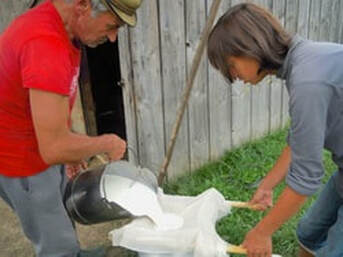
Father and daughter straining sheep’s milk
Today’s young women aren’t sitting in the back pews, they’re out getting educations and jobs. Even such long-standing male bastions as shepherding have changed with the times. We met a teenage girl apprenticing with her father, who with another shepherd lives much of the year on a hillside with the flock, milking 400 sheep three times a day. The raw milk is processed into cheese in a nearby hut, under hygiene conditions that frankly made me blanch. When we were offered samples of extremely fresh cheese, it was all I could do not to ask, “But is it
safe
?” Evidently it was, because I am still among the living.
Things change slowly in rural Transylvania. We were staying in the village of Miklósvár (established in 1211, population 512, not counting us) and our favorite moment of the day was watching the cows come home. The local cowherd collects each family’s cow at sunrise and takes them all into the hills to graze. At sunset, they all amble slowly up the village’s main street, each cow turning into her home gate where the family waits to greet her.
Romanian farmers tie red string on their animals to ward off the evil eye.
Two goats bring up the rear of the procession, sometimes pausing to snack in various gardens along the way. One evening, one was standing right in the middle of the road when a truck came zooming up behind it. “Looks like we’ll be having goat for dinner,” Rich remarked. But the goat had other ideas. He didn’t even deign to glance around, just planted all four hooves and stood there. The truck honked, braked, honked again, and finally slewed wildly to the left. At the last possible second, the goat moved off to the right, giving a little kick of his heels as if to say, “Take that, modern world.”
I love this attitude, and it breaks my heart to know that the traditional Transylvanian culture is not safe; it’s sitting with the black angels, destined to disappear from the face of the earth very soon. But for now, I take comfort in knowing that every day at sunset, as I close my computer and head out for a beer with friends, the cows of Miklósvár are ambling along the street, finding their way home, where their families are waiting for them.

Leave a Reply