“Grab your toothbrush,” said Rich. “We’re getting out of town.”
Reeling from weeks of harrowing headlines, Rich and I realized we needed some serious attitude adjustment to pull together the tattered shreds of our mental equilibrium. It didn’t take us long to choose the geographic solution favored by so many great minds from Marco Polo to the fraternity brothers in
Animal House
: road trip!
Rich and I each threw a scant handful of toiletries and a change of undergarments into a single, shared backpack and left our Seville apartment on foot early the next morning. Rich had made some mysterious arrangements — he loves the element of surprise — so I had no idea where we were headed until we arrived at the train station and I heard him ask for tickets to Jerez de la Frontera.
Just an hour south of Seville, Jerez — or as the Moors called it,
Sharīsh —
gave the world
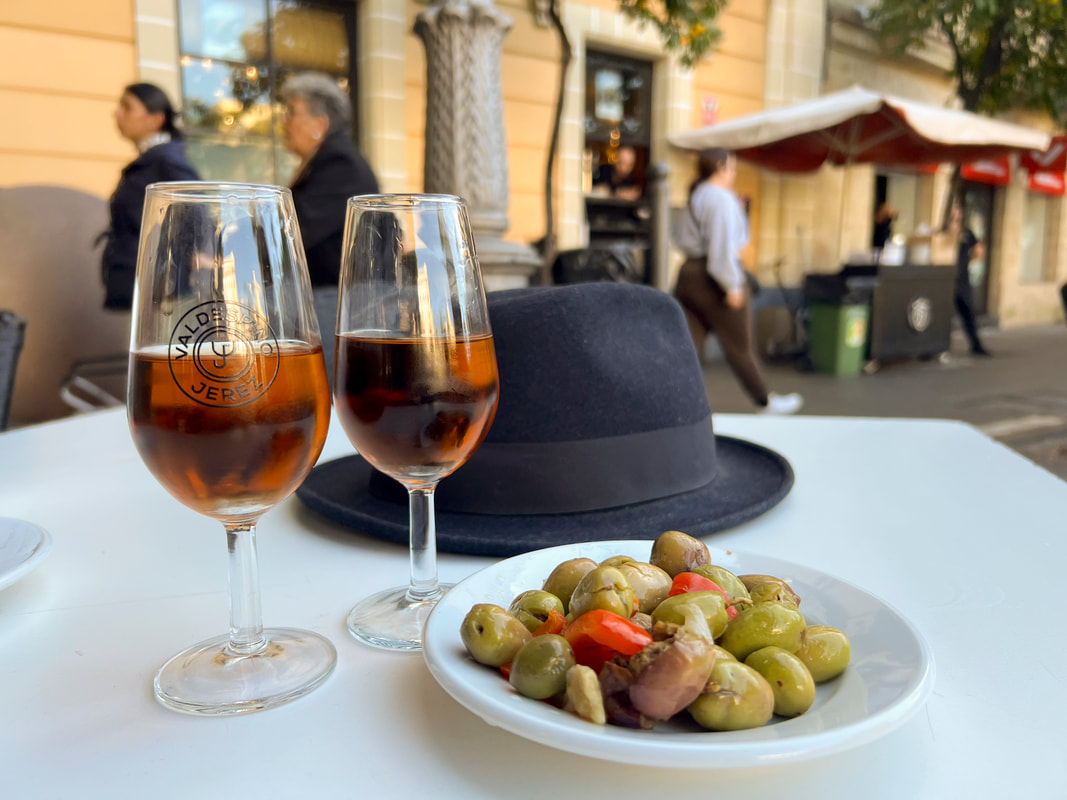
the fortified wine we know as sherry. (Thanks, Jerez; nice work!) Bodegas are dotted about the landscape, and the streets are redolent of rich, damp fermentation, the scent wafting out of open windows and tasting room doors.
The food was extraordinary. At Bar Juanito Rich and I sampled sherry, artichokes poached in
fino
(dry sherry), and bluefin tuna fresh from the nearby Atlantic. During the day we explored ancient monuments and little backstreets. In the evening we joined what seemed to be all 212,879 of the city’s residents crowding the downtown plazas, celebrating the simple pleasure of being together on a warm Friday evening with the holidays just ahead.
I returned home to Seville the next day feeling a renewed lightness of being thanks to thirty hours free from news headlines and from the burden of extraneous possessions.
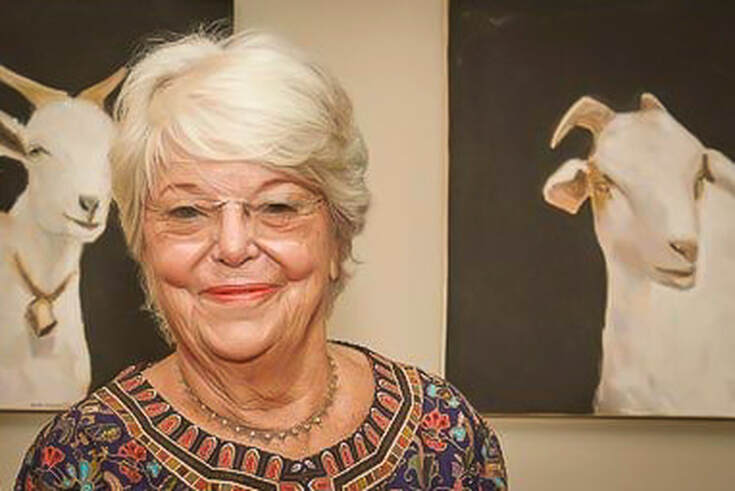
“Less is more,” architect Mies Van Der Rohe famously said in 1886. But how much less stuff can we have and still live full, rich, reasonably comfortable lives? My Dutch friend Bettine Flesseman tested those limits to the max when she and her husband, Eric, impulsively moved to rural Portugal in 1969.
“Our friends in Holland said we were crazy,” she told me.
Those friends might have had a point.
Bettine and Eric were in their mid-twenties with babies one and two years old. Fed up with their native Holland’s predictability, the couple had decided to emigrate to Canada. But first, they took a two-week vacation in a country they’d never visited: Portugal.
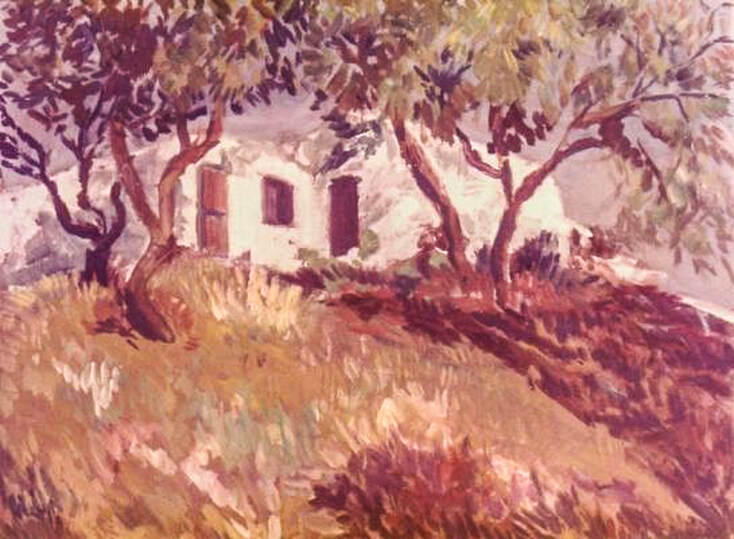
They fell in love with the people, climate, and countryside. Before the two weeks were up, they’d bought five acres of land with a roofless cottage for the equivalent of $18,000. They had absolutely no idea what they were going to do with it.
I’ve watched people make similar moves in Spain, and I can tell you, it nearly always ends in tears. Amazingly it didn’t this time.
The intrepid couple returned in May with their babies and a rented caravan holding basic bedding, kitchenware, and tools. Before they could drive up to
Caliço, as the cottage was called,
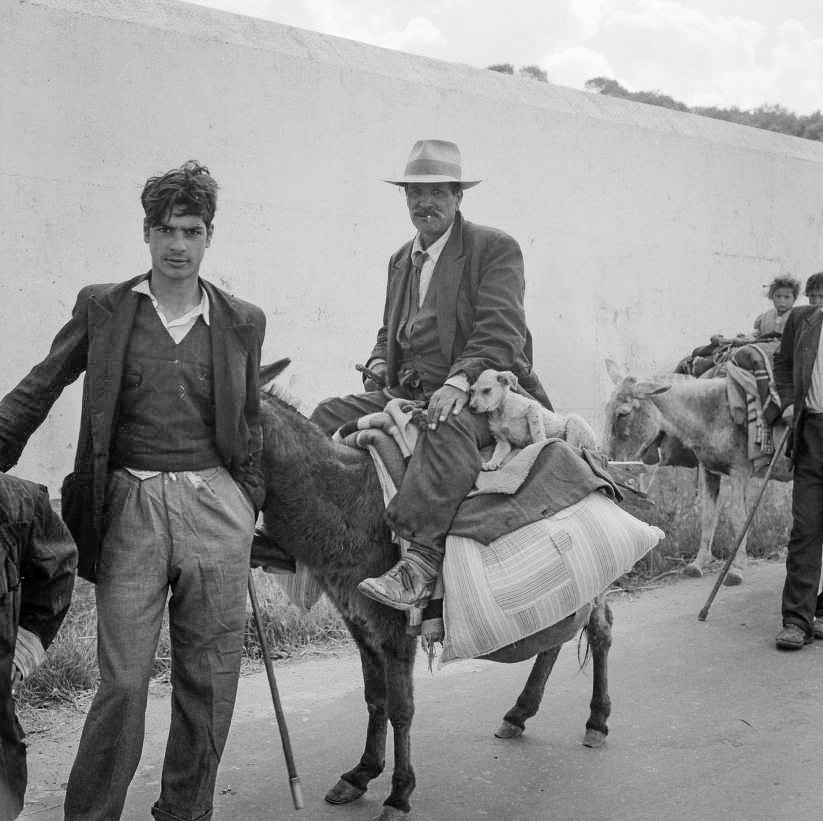
they had to widen the only access: a kilometer-long donkey track. Cars were an exotic rarity there at the time; everyone was illiterate, so they couldn’t pass the test to get a driver’s license. The only three cars in the district belonged to Bettine’s family, the taxi driver, and the doctor.
The only others who could read and write were the couple running the tiny village shop. They handled correspondence for the villagers, kept accounts on an abacus, and didn’t bother to stock toilet paper, sanitary napkins, disposable diapers, or toothpaste — because who needed that fancy, costly stuff?
“Nobody brushed their teeth,” said Bettine. “When children got married, a standard wedding present from their parents was a denture.” As for more basic functions, she added, “The Portuguese had no bathrooms but did whatever they had to do behind a certain tree or bush and cleaned up with grass or leaves. The hot sun took care of drying the stuff and the wind took care of the rest.”
Yikes! Kind of puts things in perspective doesn’t it?
But 200 years ago, that’s how 85% of human beings lived; by 1980 it was 40% and today it’s just 9%. Whenever I feel gloomy about the state of the world, I look up these statistics on the website
Gapminder
. Right now, 85% of the world population has access to food, water, basic toilets, electricity, schooling (for girls too), and health care. It may not always feel like it, but humanity is making progress. Yes, we are!
Bettine and Eric didn’t adopt the local lifestyle completely. They traveled to nearby cities for toothpaste and other modern essentials, painting supplies for Bettine’s fledgling career as an artist, and conveniences such as a chemical toilet and a bucket-style shower.
The children made their own games and toys and played with the family menagerie: cats, a dog known as Mosca (“fly”) because he couldn’t resist chasing flies, chickens, rabbits, and a donkey that appeared docile until the bellyful of wine the seller had given him wore off and his surly nature emerged.
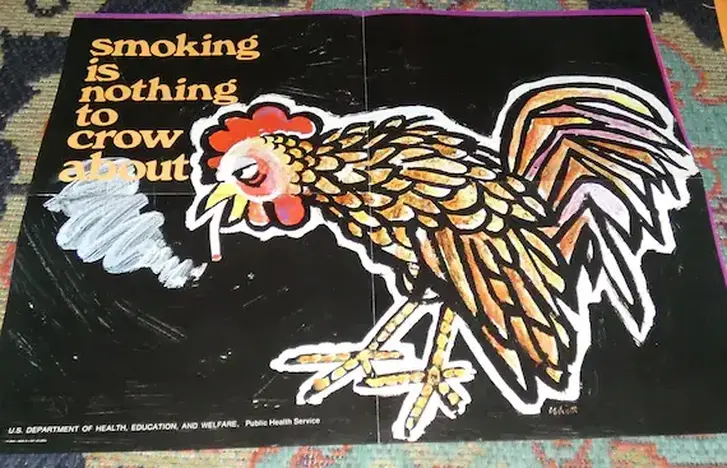
“Kloris the Rooster always sat on my shoulder,” recalled Bettine, “and helped me to stop smoking. He hated the smoke and snatched the cigarette out of my mouth. He won the battle…”
Portugal’s progress took a giant leap forward in 1974 when the Carnation Revolution brought the socialists into power.
“Before that,” Bettine told me, “it was really a very right-wing dictatorship. And as you know, with dictators, they are not very interested in schooling.” In 1964, the dictatorship had opened schools providing education through fourth grade, but the sketchy literacy acquired there was soon forgotten. “
The girls all became seamstresses and the boys bricklayers or fishermen.”
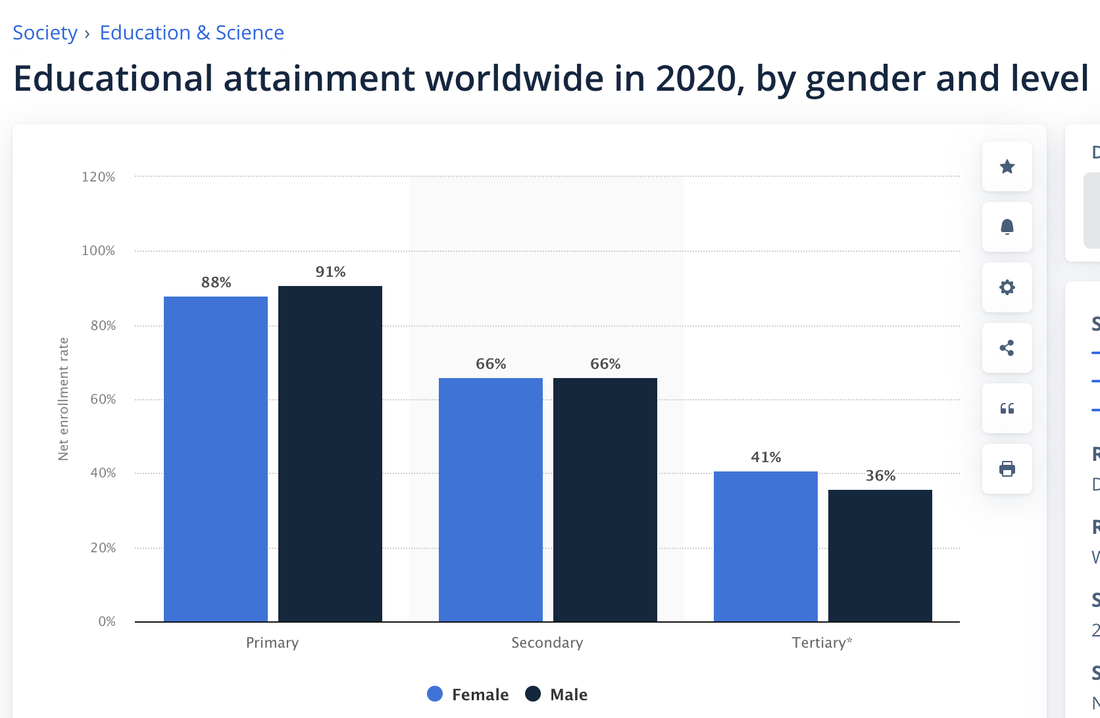
After the revolution, kids stayed in school until the age of 18; years later university educations became available. Portugal’s literacy rate is now 96.78%. (By comparison,
America’s literacy is 79%
;
worldwide it’s 86%
). Overall, the lifestyle has improved so much that
Portugal ranked in the top ten
on InterNation’s
Quality of Life Index 2024
.
“After the revolution,” Bettine added, “the people got the right to have a holiday. What sort of holiday does one plan when one has no money? A camping holiday of course!” This was a stroke of good luck for Bettine and Eric, who had decided to turn their property into a holiday campsite, which they ran successfully for nine years before moving on to other adventures.
I asked Bettine if she had advice for readers who might be considering a move to Portugal today.
“Well, I wouldn’t wait too long to come here, because it’s become very popular. And especially with the situation in the United States, lots of Americans are looking around. It’s still one of the cheapest countries in Europe, but when there’s so much demand, prices are going up. So if people are interested to come, they should not wait too long.”
WANT TO KNOW MORE?
Bettine is kindly offering my readers a free download of her memoir
The Path to Cali
ç
o
(in pdf format) about moving to Portugal in 1969.
It’s a delight and a real eye-opener!
CLICK HERE FOR YOUR
FREE DOWNLOAD OF BETTINE’S MEMOIR
THE
AMIGOS
PROJECT
This post is part of my ongoing exploration of how living and traveling abroad can enrich our lives and help us find fellowship, avoiding the isolation that’s become a global epidemic.
See all my Amigos Project posts here.
DON’T MISS OUT!
If you haven’t already, take a moment to subscribe so I can let you know when I publish my weekly posts.
Just send me an email and I’ll take it from there.
[email protected]
SUBSCRIBED BUT NOT GETTING POSTS?
Check your spam folder
.
Internet security is in a frenzy these days. If you still can’t find it, please let me know.
WANT MORE?
My best selling travel memoirs & guide books
Best of Cheap & Cheerful San Francisco
Cozy Places to Eat in Seville
GOING SOMEWHERE?
Enter any destination or topic, such as packing light or road food, in
the search box
below
. If I’ve written about it, you’ll find it.
Leave a Reply