
As part of her ongoing (and largely futile) efforts to civilize her six children, my mother would occasionally round us up and herd us into
San Francisco’s de Young Museum
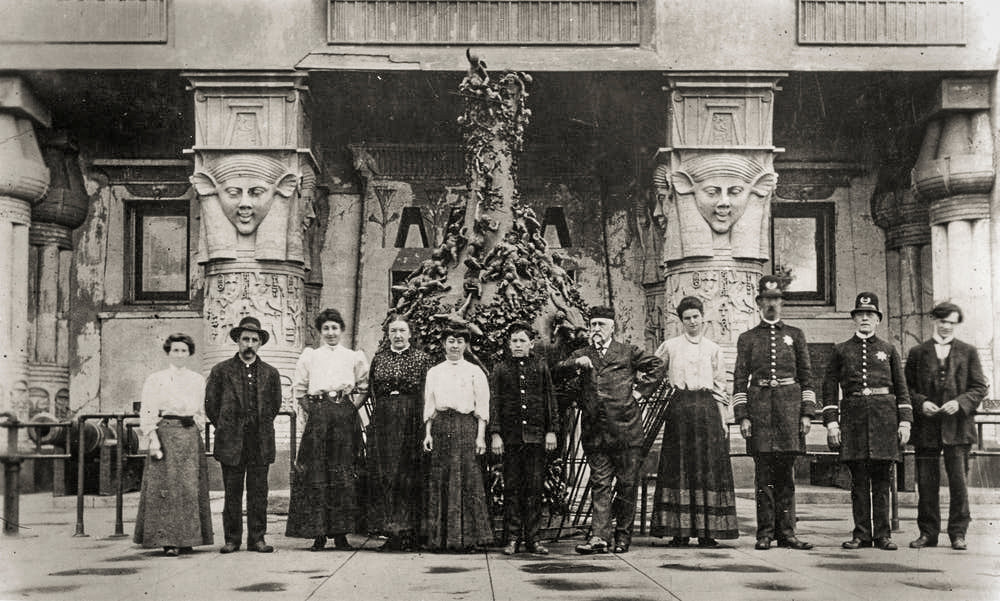
to appreciate Art. The museum opened in 1895 to show the snobs back East that we Westerners had culture. Yes, we did, dammit! And we weren’t afraid to show it off in a building created in Egyptian Revival style, because nothing says class like images of Hathor the cow goddess.
The building, thriftily repurposed from an international exhibition the year before, didn’t last long. They say earthquakes are caused by the laughter of the Egyptian earth god Geb, and the museum suffered mightily during Geb’s great guffaw of 1906. The next iteration, created in a flamboyant Spanish-Plateresque style that delighted me as a child, survived until the 1989 quake.
I could hardly wait to see what the city would come up with next.
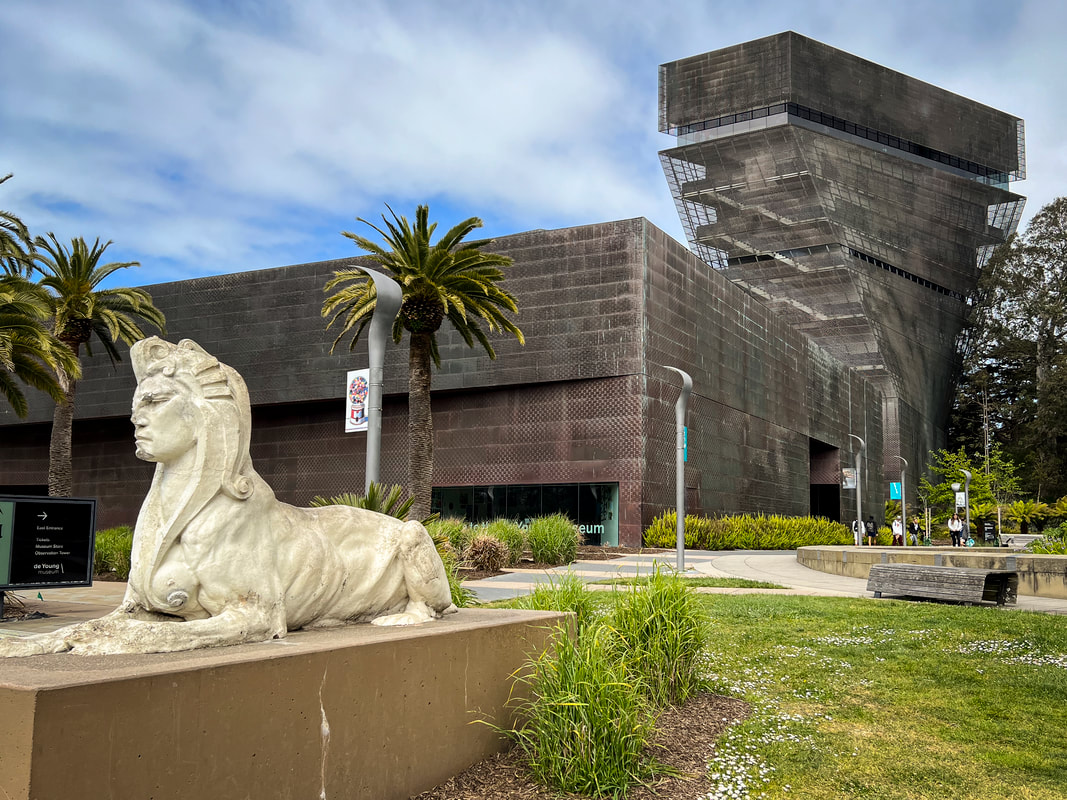
In 2005, we got this.
Beholding it for the first time, I thought, “Is this one of God’s little pranks? One of those quirky impulses that keeps Her amused at our expense?” Because otherwise why would anyone design a fine arts museum to look like a dystopian bunker, the sort of place humanity’s last, pitiful remnants will someday hunker down, eating rats and quarreling among themselves while waiting their inevitable extermination by [fill in the blank]?
I gazed sympathetically at the two disgruntled-looking sphynxes out front, leftovers from Hathor’s reign. This must be so embarrassing for them.
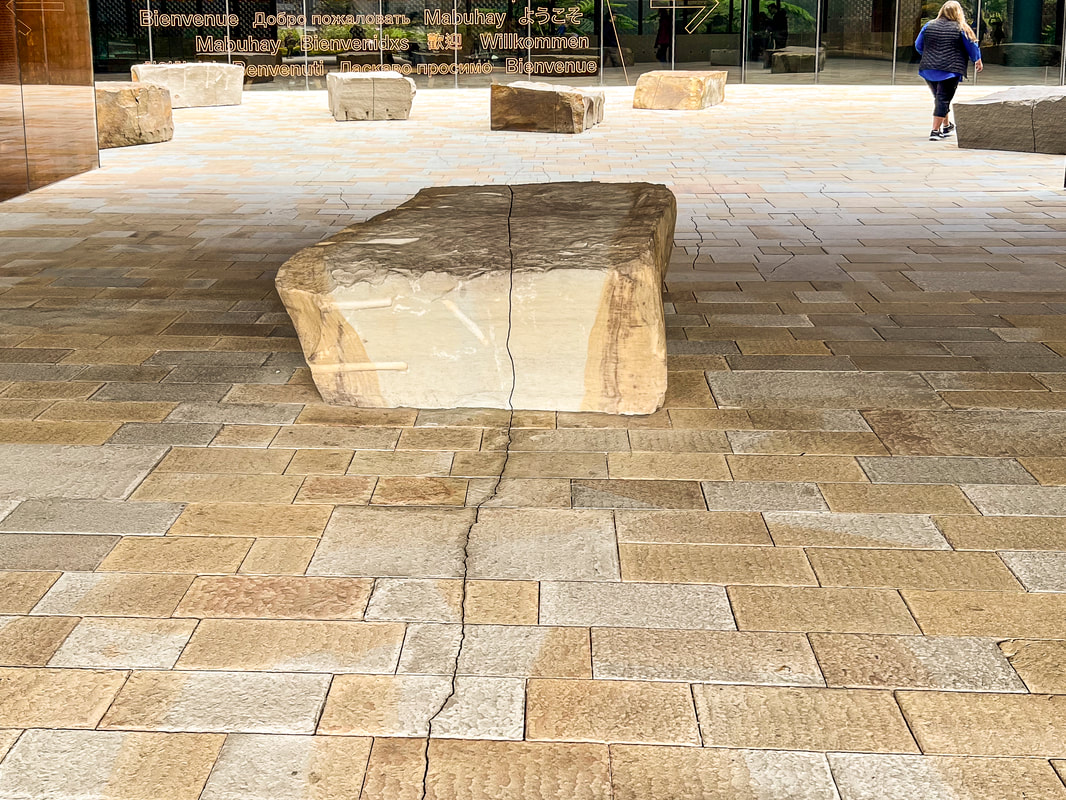
You enter the museum through a courtyard, stepping over cracks in the paving stones that you soon realize are carefully crafted faux fault lines that appear to cleave in half eight great blocks of Yorkshire stone. The German visitor beside me seemed a bit unnerved by this reminder of California’s frisky tectonic history.
Inside the museum, the art is breathtaking.
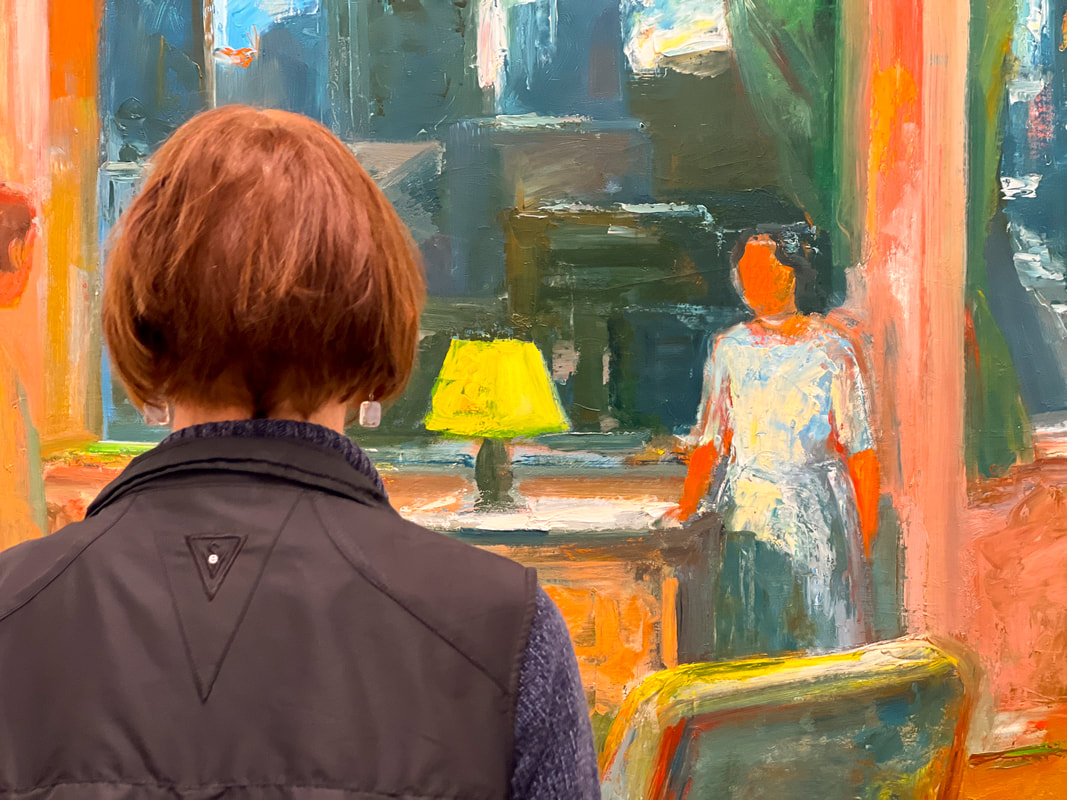
Visiting this week, I paid homage to many favorites, including landscape paintings by European artists enraptured by the New World’s spectacular vistas. Call me old old-fashioned, but I still love representational art, which is a fancy name for stuff that looks like something in the real world.
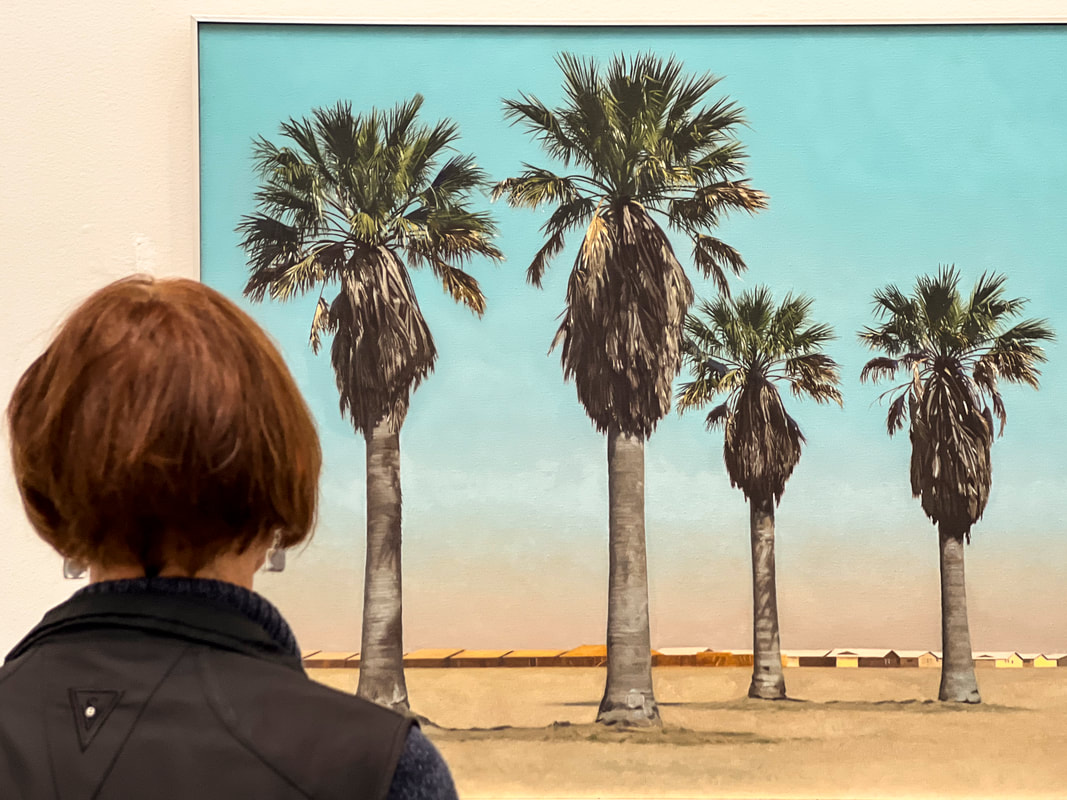
Contemporary artists favor more nuanced social commentary. Robert Bechtle’s
Four Palm Trees
seems like a happy place until you notice the background: a treeless suburban development overhung with smog.
While palms are native here, the write-up explains, “Most were imported, and planted by real estate developers to convey a mythic ideal of California as a bountiful, Edenic paradise. Their presence … evokes the constant conflict in California between nature and development.” True, but a bit of a buzzkill, I thought.
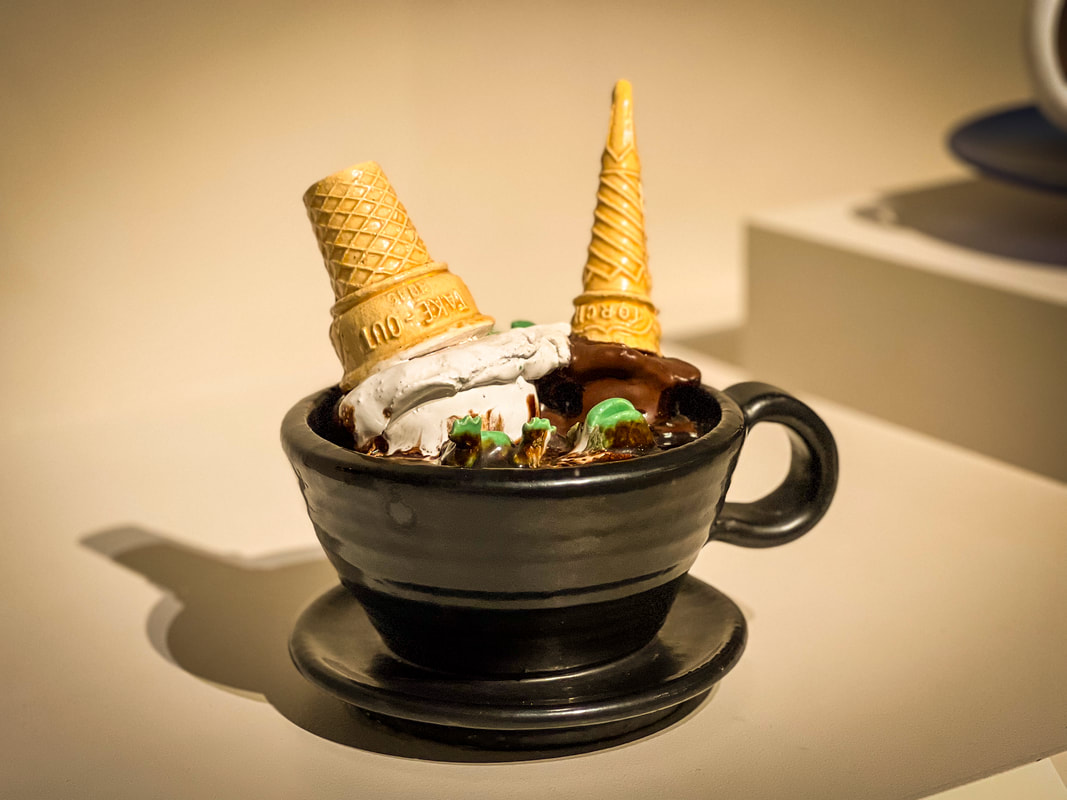
Ideal Way to Make European Coffee
had a more lighthearted attitude. It was created by Bay Area artist David Gilhooly, a leader of the bohemian underground Funk Art movement of the 1960s.
At the time, everyone was raving about Jackson Pollack and other abstract expressionists, inspiring Gilhooly and his mates to insist there was still room in the contemporary scene for representational art. Hear, hear! To me this piece embodies Einstein’s words, “Creativity is intelligence having fun.”
But of all the works hanging in the de Young Museum, none is as talked-about as this one.
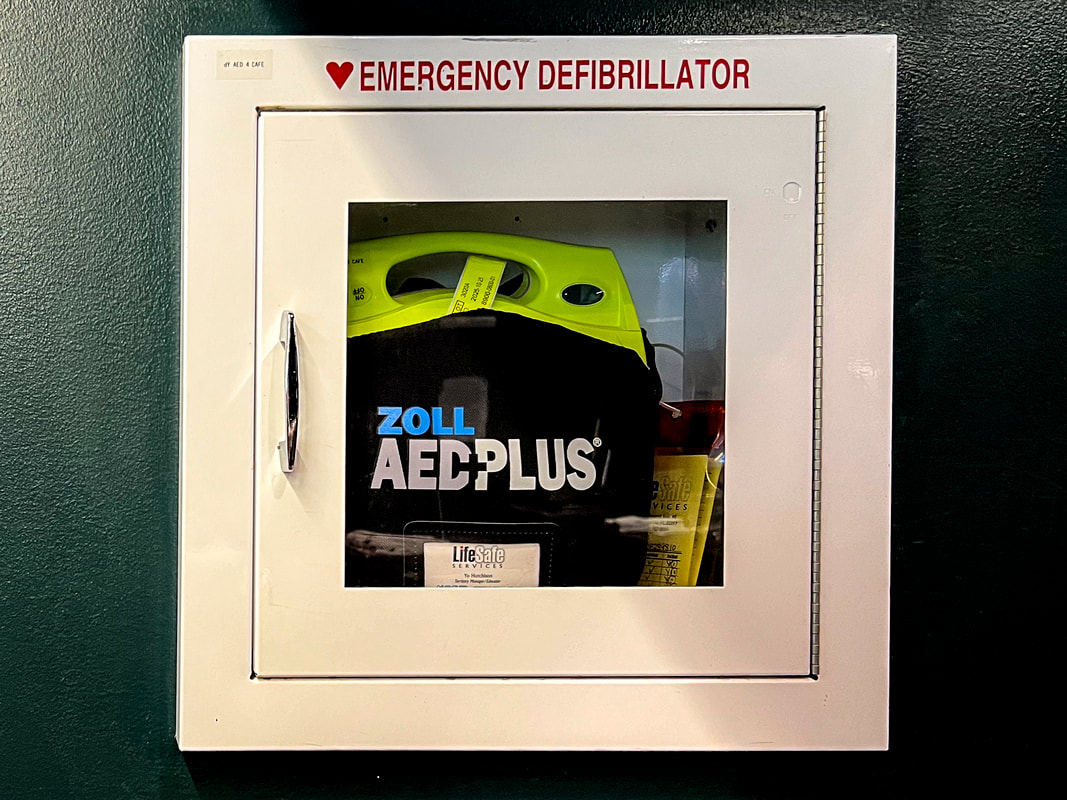
Last November, Gary Hobish spent his final moments dancing 100 feet from the de Young’s entrance at the weekly Lindy in the Park. When Hobish collapsed, a nurse started CPR, and Hobish’s friend Tim O’Brien raced to the museum’s front desk calling for an AED, an automated external defibrillator. The desk person didn’t know what that was. A security guard suggested O’Brien try the basement. The staff member in the basement had a defibrillator but hesitated to hand it over; policy said it wasn’t supposed to leave the museum.
“I thought — ‘He’s dying. His heart has collapsed. We are doing CPR,’” O’Brien recalled later. “’We need this immediately. Can you run?’ He’s like ‘I need to check in.’ We got the ‘no’.” By the time he returned empty-handed ten minutes after his friend’s collapse, O’Brien found paramedics arriving at the scene, but Hobish was past help.
The museum has vowed to update policies, retrain staff, and buy more defibrillators, but there has been, as you can imagine, considerable uproar.
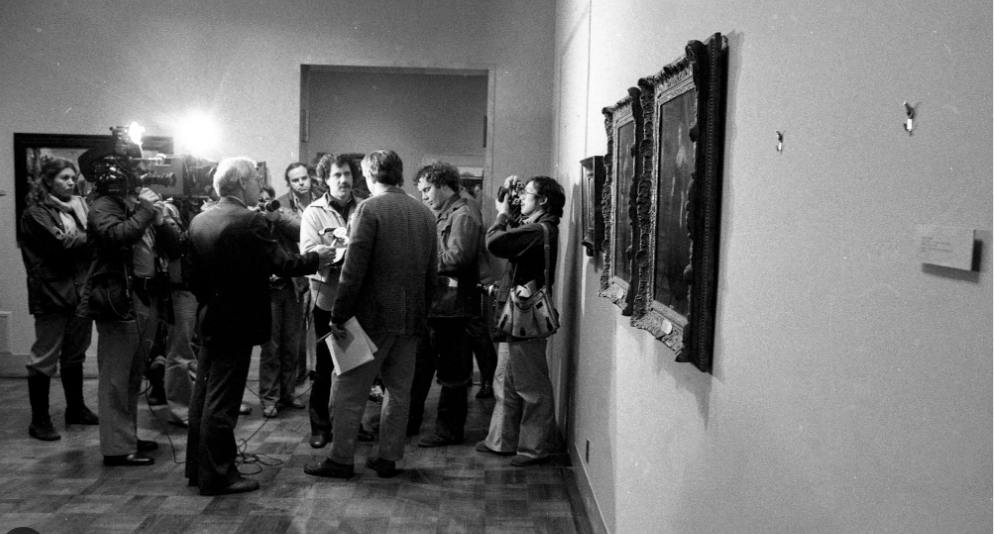
Like all major institutions, the de Young has weathered its share of crises over the years. Take the heist on Christmas Eve, 1978. Thieves dropped through a skylight and grabbed four 17th century Dutch paintings, including Rembrandt’s
The Rabbi
.
Unfortunately for the thieves, art historians then discovered the painting wasn’t actually a Rembrandt (or a rabbi, for that matter), and its value plummeted. Even so, when it was anonymously returned 21 years later, everyone was aghast to see a botched attempt to clean it had removed much of the face. These were not the criminal masterminds we’d come to expect from
The Thomas Crown Affair
and
This is a Robbery
.
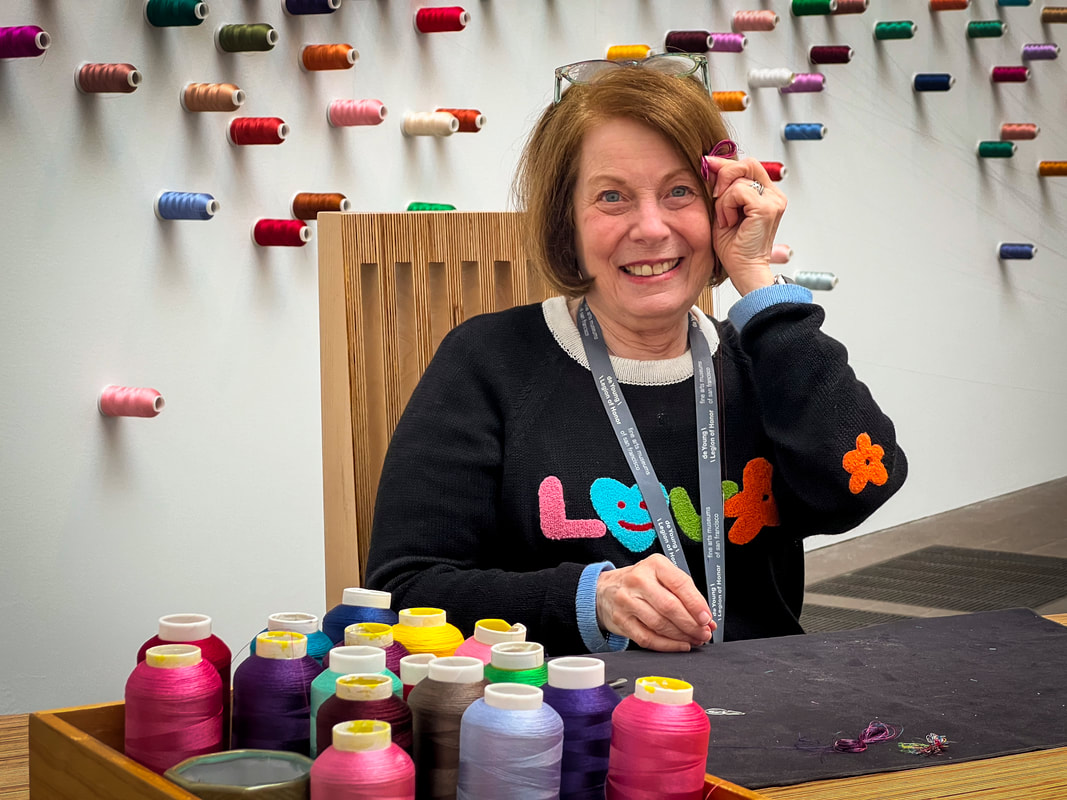
Wandering on, I found myself in a large room with spools of thread on the wall and a long table where the docent, Nancy, offered to adorn my clothing with a thread bow. Why?
Nancy explained this was part of
Rituals of Care
, a participatory art project by Lee Mingwei. “It’s about sewing as a means of connection.”
Seeing I was still confused she added, “I can tell you what inspired it in three sentences.”
“Please.”
“On 9/11, Lee was home and his husband was working in the Twin Towers when they fell. There was no way to reach him or find out what had happened to him, so Lee began doing all his mending to keep himself occupied while he waited. Six hours later he heard a key in the lock, and there’s his husband, blood on his face, with another person, who also had blood on his face, but — alive.”
All these years later, Lee still spends time in his installation, sewing in homage to that moment.
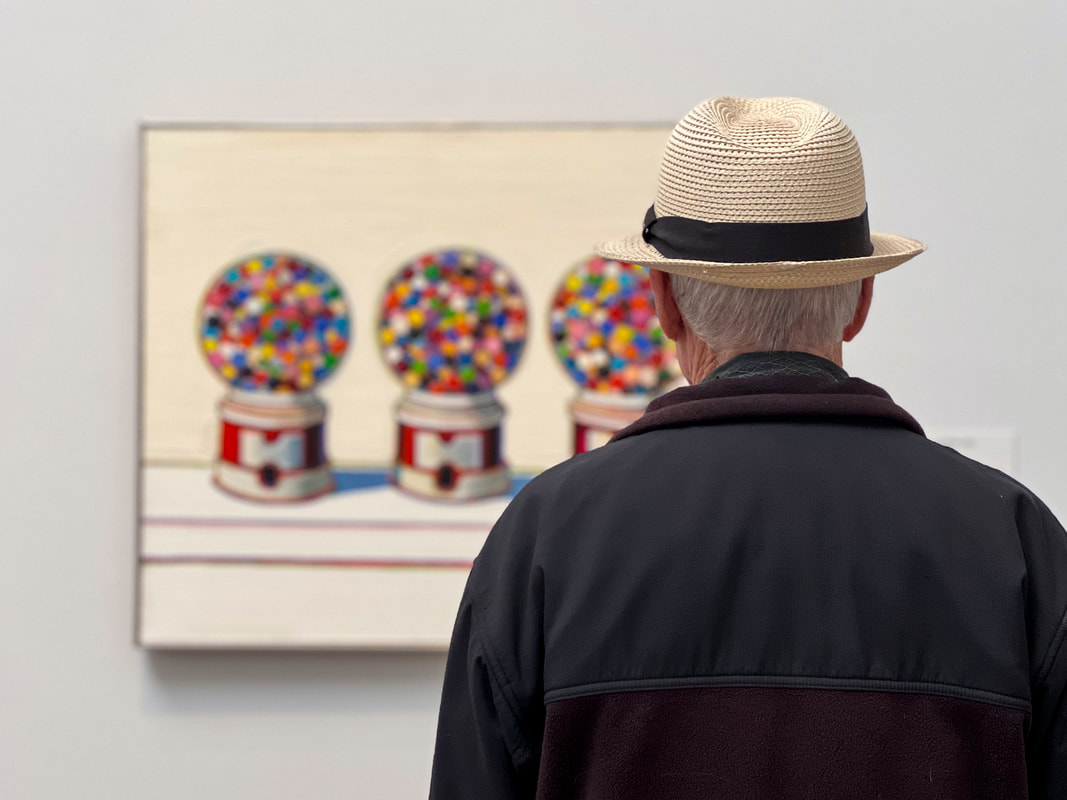
A few minutes later, standing in front of Wayne Thibault’s painting of three gumball machines, Rich — possibly inspired by the subject matter — said, “How about some lunch?”
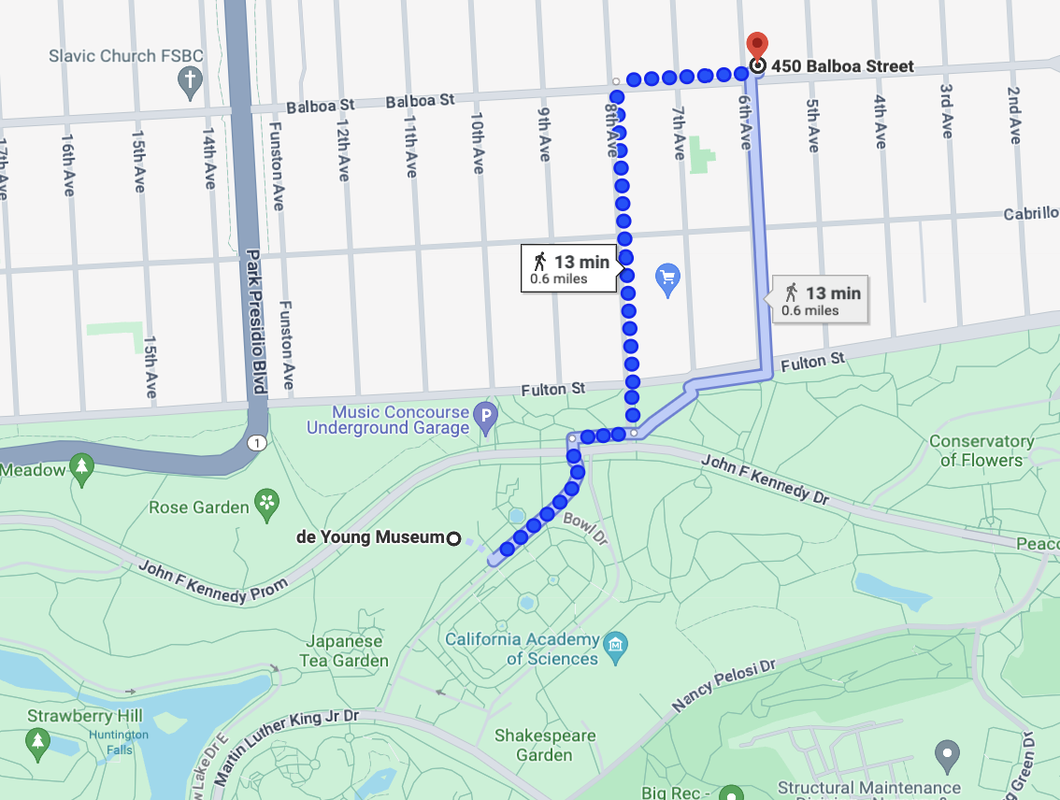
The museum’s café has good but pricey food ($25/sandwich), so in keeping with our cheap-and-cheerful theme, we walked a few blocks north to Balboa Street in the Richmond District. There, nestled between a Russian bakery and a sushi house, we found the
Foghorn Taproom
, a no-frills neighborhood hangout.
Sampling the craft beers, I chose the mellow June Shine Desert Cooler with hard Kombucha ($4/4-oz miniglass). My chicken Caesar pita ($12) was outstanding, the bread thick and warm, the chicken toothsome, the lettuce fresh and crisp. A work of art by anyone’s definition.
In the Uber back to the ferry, Rich and I continued to keep a lookout for signs of the doom loop, but we saw no crime or sidewalk encampments and only two or three unhoused people.
Where did all this dystopian talk come from in the first place? And then it struck me: from the de Young’s apocalyptic exterior. People have always regarded San Francisco as being on the cutting edge, and they naturally assumed the de Young’s designers had inside knowledge about the future. Let’s hope they’re wrong!
This post is part of my new series
OUT TO LUNCH IN SAN FRANCISCO
My goal is to discover cheap and cheerful eateries in some of San Francisco’s most colorful neighborhoods while I check out what’s really going on in this zany town. Are we in a doom loop? Already on the rebound? Still fabulous? Stay tuned! These and other questions will be explored in upcoming posts.
DON’T MISS OUT!
If you haven’t already, take a moment to subscribe so I can let you know when I publish my weekly posts.
Just send me an email and I’ll take it from there.
[email protected]
And check out my
best selling travel memoirs & guide books
here
.
PLANNING A TRIP
?
Enter any destination or topic, such as packing light or road food, in
the search box
below
. If I’ve written about it, you’ll find it.

Leave a Reply