Remember the
chicken dance
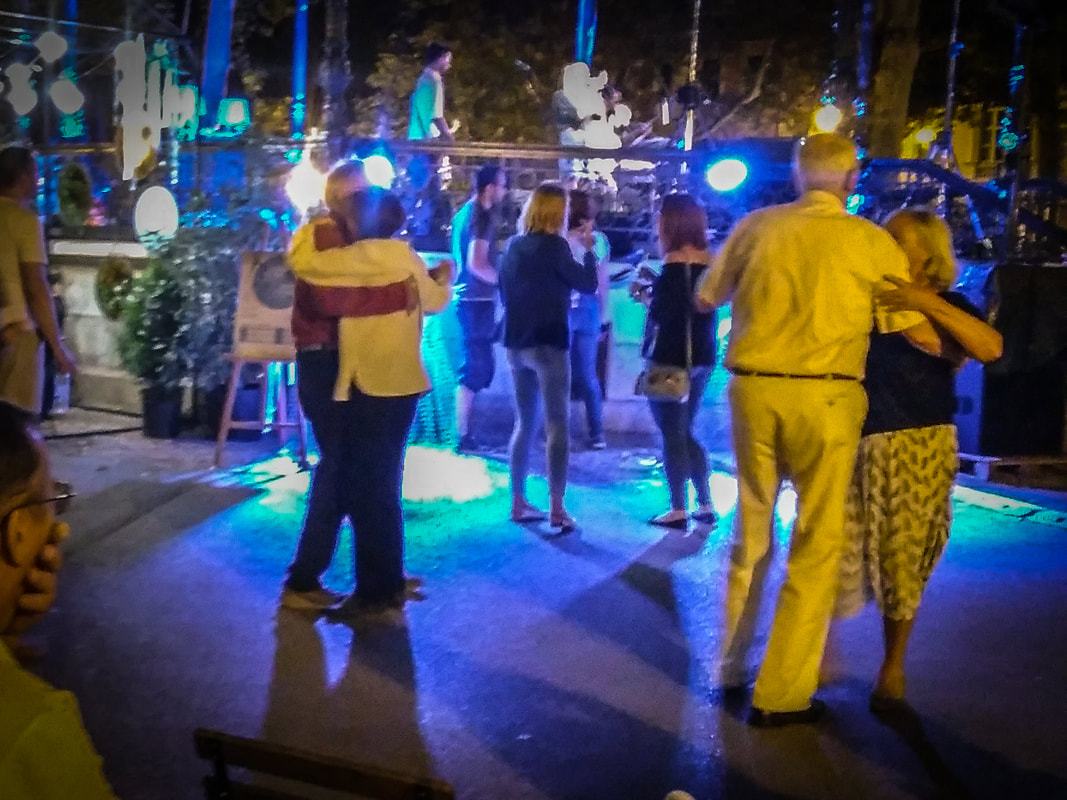
? The one where you flap your wings and shake your tail feathers? When was the last time you did it walking down the street in a foreign city? Yeah, I can’t remember either; maybe never — until last Monday night in Zagreb, Croatia. That’s when Rich and I heard the chicken dance song coming from the bandstand in Zrinjevac Park and found it too infectious to resist. Fortunately for what remains of my dignity, we weren’t the only ones flapping wings and shaking tail feathers down the sidewalk, under the amused gazes of passing drivers and fellow pedestrians. We hurried toward the bandstand, coming to roost just as the tune ended.
No matter. There’s music every night this week and next, mostly foot-taping golden oldies like the Drifters’
“Under the Boardwalk”
and I-love-this-one heartwarmers like Louis Armstrong’s
What a Wonderful World
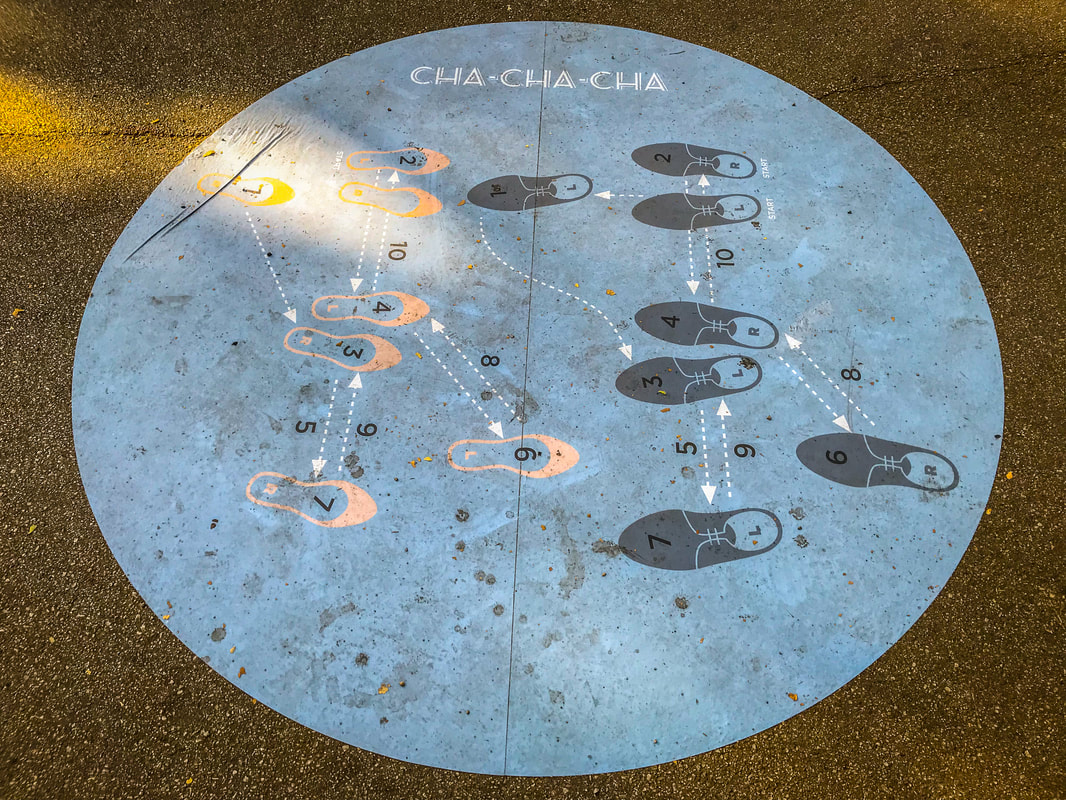
. The first time we went, Rich and I settled at one of the tiny wooden tables placed around the bandstand and looked around at the small crowd. On a nearby lawn, kids were chasing each other through the twilight, jugglers were practicing under the trees, and women on park benches were languidly cooling their faces with paper fans. Beneath the lights strung in the branches overhead, people were dancing. And pretty soon, we were too.
“It feels like Hometown, USA,” I said to Rich. “It’s like the best part of every summer I can remember.”
That nostalgia was precisely what city officials were trying to spark when they started the
Zagreb Time Machine
project, which for many years has sponsored summer dances, street theater, and other public entertainments designed to “bring the romantic spirit of past times to life.” I’d somehow missed all the other activities but fell instantly in love with the Dance Evenings.
Zagreb’s Time Machine is set to the mid-20th century, but local history dates back a great deal farther than that. The city was founded in Roman times, expanded during the medieval and industrial eras, survived Nazi occupation, became an economic powerhouse in the former Yugoslavia, and today serves as the capital of independent Croatia — to mention but a few highlights. Through all the changes, one thing has proved constant: this is a city that loves its comfort food.
When Rich and I reconnected with Lidija and Mladen, Croatian friends we’d met during an
EatWith dinner
during
our 2016 visit
to the city, we told them about our
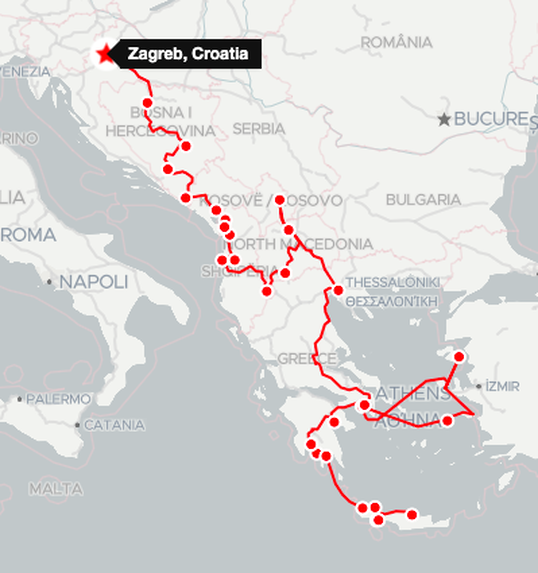
Mediterranean Comfort Food Tour
. They instantly responded with a flood of suggestions about what we should be eating while we’re in town.
“
Strukli
, of course,” Lidija mused aloud. “And
mlinci
. Have you tried deer goulash? The best place to find such dishes is
Zagorje
.” Setting off in Mladen’s car, we soon found ourselves on the winding roads of Zagorje, a rural area north of Zagreb that needed no government-funded entertainments to give the impression we’d traveled backward in time. Around each curve we discovered families raising cows, grapes, and corn on small farms in sleepy valleys presided over by Medieval castles.
“This was the center of the Peasant Revolution of 1573. It all started right here,” Lidija told me. “The nobility demanded that each family contribute food to them. People were living on the edge of hunger, but the lord had an army, and they had to pay. Like today we are forced to pay taxes. So the peasants staged a revolt. It lasted only 12 days. And they took the leader of the rebellion, Matija Gubec, and said to him, ‘You wanted to be king. Here is your crown.’ And they put upon his head an iron crown that was heated red-hot in the fire.” Yikes! “And then they tore him into four pieces.” Quadruple yikes! Gubec became a folk hero, inspiring various political movements, the first Croatian rock opera, and
Josip Broz Tito
, who was born in a humble Zagorje farmhouse and went on to become president of Yugoslavia.
As you can imagine, Zagorje’s cuisine is designed to fortify hard-working agricultural families attempting to subsist on what’s left after the powerful have taken the lion’s share of everything produced on the land. Traditional fare is hearty, made from fresh, inexpensive local ingredients, and bristling with the fats and carbs you’d need for long hours of physical labor. Not exactly health food, but it is a glorious indulgence you’ll never regret.
“Here we will eat štrukli,” said Lidija, pulling up at a 1938 country inn called Villa Zelenjak Ventek. When the staff learned this was to be our first tasting of štrukli, Dora, a young, English-speaking manager, arrived to tell us about the treat in store. It seems you make a basic dough, roll it so thin that it completely covers the tabletop, stuff it with a mix of cottage cheese, eggs, sour cream, and salt, and bake it into a sort of cheese strudel. Dora kindly shared photos and the recipe, so that I could pass the legendary dish on to my readers.
[See
štrukli
recipe and photos here.]
After lunch, we worked off a few calories strolling around
Kumrovec
, a charming village of restored nineteenth-century homes centered around Tito’s birthplace and a museum honoring his legacy. While many regarded him as a ruthless dictator, others look back with what’s now known as “Yugonostalgia,” fond memories of simpler times when everyone had a job, a place to live, and enough to eat.
“Were you better off then?” I asked Lidija.
“In many ways, yes,” she said, with a philosophical shrug. “Things are much harder for us now.”
Our final stop of the day was
Gresna Gorica
, a rustic restaurant nestled in vineyards below the fairytale towers of
Veliki Tabor
castle. Sitting outside among the vines, we sampled lard laced with bacon, cottage cheese topped with crème fraiche, deer goulash, beans drizzled with pumpkin seed oil, and duck served over something called mlinci, a mysterious dish that appeared to be pasta but inexplicably wasn’t. I may have been a bit muddled by the staggering heat and the natural exhaustion following a day’s vigorous sightseeing, but I simply couldn’t seem to grasp Lidija’s explanation of how mlinci is prepared. It’s a kind of bread and you boil it? Really?
“Come to my house and I will make it for you,” Lidija said. “Then you will see how it works.”
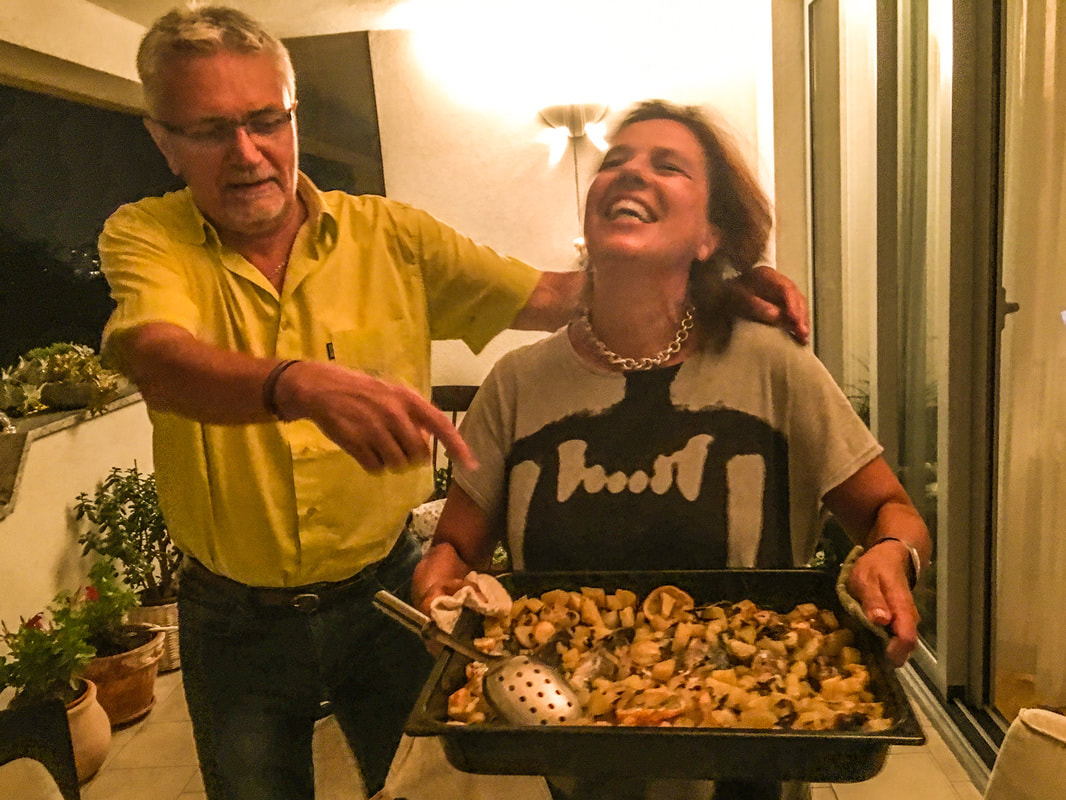
How good was it? It was so yummy Rich and I started doing the chicken dance right there at the dinner table. Luckily our Croatian friends were familiar with this silly tradition, so they didn’t think we were completely insane. (Or if they did, they were too polite to say so.) We all stuffed ourselves and then sat for a long time, blissfully picking over the remains of the mlinci.
[Get mlinci recipe here.]
“One thing is clear,” I said to Rich said on the way home. “If we’re going to keep eating like this, we’re going to have to do the chicken dance a lot more often.”
Rich just made happy clucking sounds and kept on walking.
See all posts about the Mediterranean Comfort Food Tour.
See all recipes and videos.
Don’t miss a single loony adventure or the next mouthwatering recipe. Sign up below for updates.
YES! SEND ME UPDATES!
Thanks for joining us on the journey.

Leave a Reply