



Nowadays, everybody’s writing glowing articles about Seville, and unfortunately it’s pretty clear some haven’t even researched the city, much less visited it. Here’s a gem from
Vogue
:
“
Nicknamed ‘The Frying Pan of Europe,’ this Andalusian hotspot (literal hotspot) is drenched with baking heat for 3,000 hours on an annual basis… However, if you look beyond Seville’s near-idyllic vacation weather…”
Near-idyllic? This makes it sound like an absolute hellhole! Who wants to spend their vacation in a frying pan, which (I looked it up) is typically 480 degrees Fahrenheit? And is the author implying this intolerable temperature lasts for 3000 straight hours a year? He goes on to mix metaphors in the phrase “drenched with baking heat,” implying the city is as hot as an oven (350 degrees) while somehow being both wet and dry. And for the record, nobody calls Seville “The Frying Pan of Europe.” The author is confusing it with the town of
Écija
85 km away, nicknamed
la sartén de Andalucía
(the frying pan of Andalucía) for its sizzling hot summers.
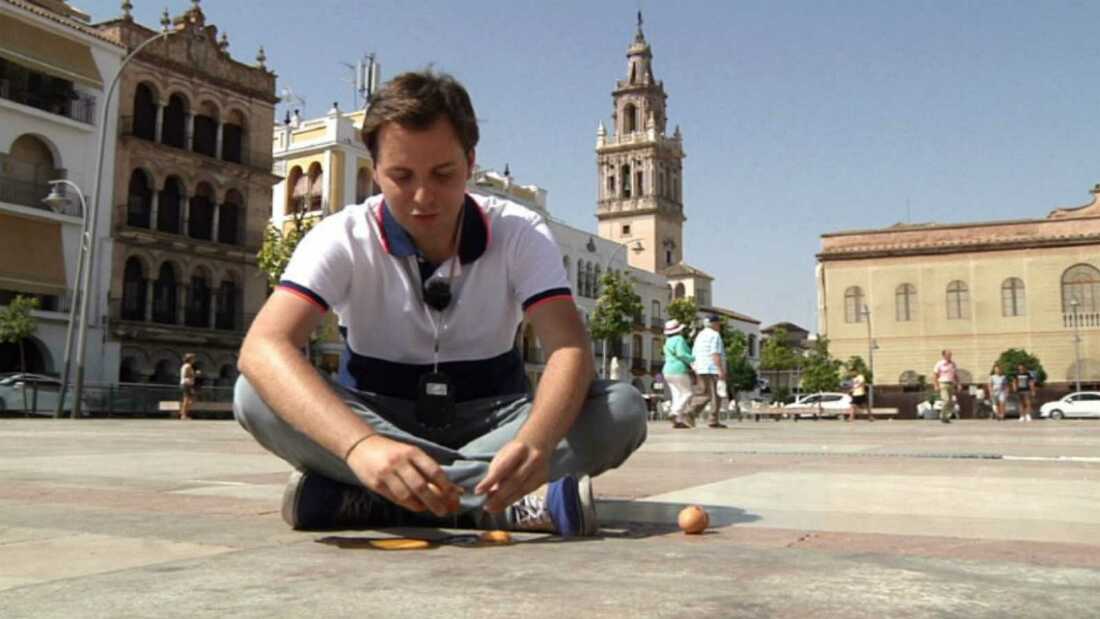
Andalucían journalist Johathan Gómez wonders if it’s really possible to cook an egg on the main plaza of Écija, nicknamed the frying pan of Andalucía. Result? Two nicely fried eggs.
For fun, watch the video
even if you don’t speak Spanish.
My point is: choosing a destination based on Internet intel is always a risky proposition. Articles all too often contain dubious, second-hand information or are skewed by personal bias. In fact, some read as if they were dashed off on a cell phone during the first sun-drenched, wine-soaked hours with a new local love interest — circumstances that can be difficult for the rest of us to replicate. And as you may have noticed, if everybody in the blogosphere praises a city as ideal for
#travelin2019
, chances are it’s already overrun with tourists and is busy becoming a Disneyland version of its former self. Then again, sometimes we stumble into a town that’s just plan appalling by any standard.
How can we make the best of a disappointing destination? For me, the first step is letting go of my expectations and initial impressions. Take my
first visit to the Romanian capital
:
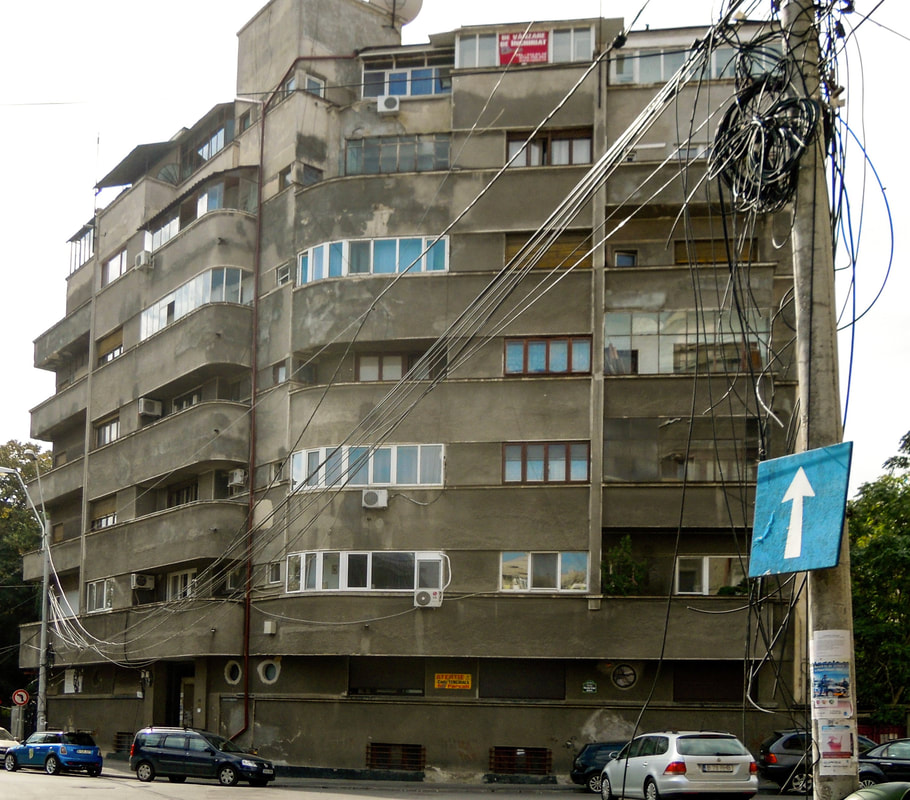
Rich and I spent a week in Bucharest, and it was love at fourth sight
.
Having spent three weeks enjoying the storybook beauty of Romania’s smaller cities and rural villages, it took us a little while to look past the brutal apartment blocks, massive tangles of electrical wires, decaying old buildings, and graffiti to see the charm. But we now know Bucharest as a city that has survived just about everything, cherishes the best of its old traditions, and knows how to take life as it comes, with a joke, a swig of homemade plum brandy, and an arm around your shoulder. This is one of the friendliest cities we’ve ever encountered. We were welcomed everywhere, are leaving many new friends behind, and hope to return again soon.
It’s only natural to arrive at any unknown destination hoping the city will instantly show us its richest and most beguiling treasures. But to truly love a place requires slowing down enough to engage with it on its own terms, letting the relationship unfold naturally. As travel author
Pico Iyer
put it:
“Visiting a new town is like having a conversation. Places ask questions of you just as searchingly as you question them. And, as in any conversation, it helps to listen with an open mind, so you can be led somewhere unexpected. The more you leave assumptions at home, I’ve found, the better you can hear whatever it is that a destination is trying to say to you.”
Visitors sometimes assume that Seville is best enjoyed as a vacation playground, but to focus exclusively on the cheap wine, warm weather, and vibrant bar culture means selling the city — and your vacation — very short indeed. Seville makes every effort to tell you about its more interesting features, like the stubbornly maintained ancient traditions, a lifestyle based on the demands of climate rather than commerce, and deep-seated devotion to family, friends, and social lives. Philosopher
Alain de Botton
wrote:
“One rarely falls in love without being as much attracted to what is interestingly wrong with someone as what is objectively healthy.”
So how can we find out what’s “interestingly wrong” about a city, especially if we find ourselves in one that appears deadly dull or seriously off-putting? A good first step in popular destinations is leaving the congested tourist area behind and striking out in a new direction. Rich and I like to pick a Point of Interest (POI) a half hour’s walk from the center and make our way there, allowing plenty of time for spontaneous detours, digressions, and coffee stops. How do we find these POIs? Some of my favorite resources are
Atlas Obscura
,
Like a Local
, and
Triposo
, all of which describe wondrous things to see and do in places you’ve never heard of. And before giving up on any city, it pays to check with the tourist office, as we did a few years ago upon arriving in the seemingly dull
Šiauliai
, Lithuania.
“I think we’ve finally found it,” I said to Rich. “A town where there is literally nothing to do.”
We were dragging our suitcases from the train station toward our hotel, walking past endless bland apartment blocks, unrelieved by a single shop, café, or even newsstand. After the dizzying mix of zingy modernity and storybook charm we’d encountered in other Baltic towns, Lithuania’s
Šiauliai (it’s pronounced Show-lay and means “sun”) seemed desperately drab.
Two hours later we were sitting at a sidewalk café table on the main pedestrian street, flipping through folders from the tourist information office and trying to juggle our schedule to fit in everything we wanted to do. “Let’s go to the traditional Lithuanian kosher dinner at
Chaim Frenkel’s Villa
this evening,” I said. “Then we can catch the music at
Juone Pastuoge
tomorrow. I just hope we’re not too tired after visiting the
Hill of Crosses
and the
Battlefield of the Sun
. Do you think we’ll be back in time to catch the fado concert?” The Cat Museum had long since been jettisoned from the agenda, but Rich was still standing firm on the need to visit the Chocolate Factory.
I guess it comes down to this: You may not fall in love with every place you visit, but if you walk into it with an open mind and generous heart, chances are you and this city can get past being strangers, find common ground on which to meet, and share a few good moments, maybe even some great ones. And isn’t that enough to ask of any journey?
YOU MIGHT ALSO ENJOY
I AM AN EXPAT BECAUSE I LOVE MY COUNTRY
ROMANIA: IS IT SAFE?
RICH’S FOOLPROOF PAELLA
Leave a Reply