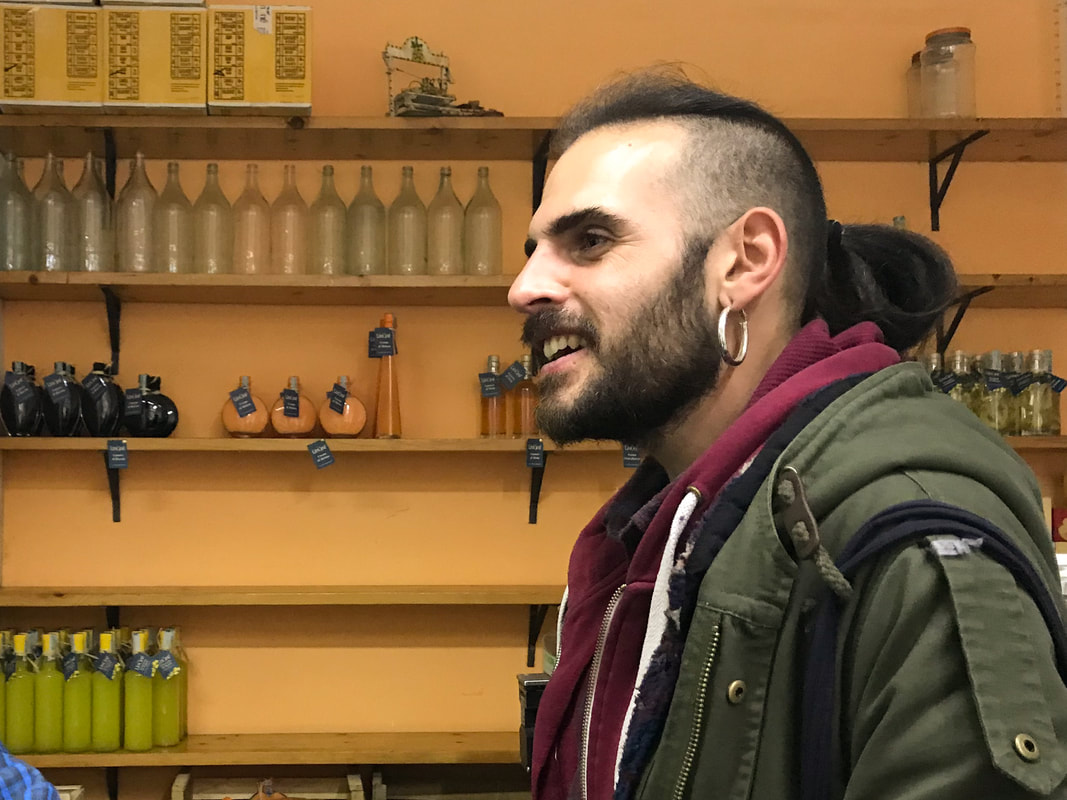
“You’ve heard of Diego Armando Maradona, of course,” said Alessandro, our guide on the
Naples Street Food Tour
.
I had to confess that my knowledge of European football ranks somewhere below my expertise in quantum physics, progressive jazz, and the history of duct tape.
Alessandro, a street-smart Neapolitan whose “day job” is working nights as a
fire juggler
, was gracious enough to overlook my ignorance. “Our next stop is a bar devoted to Maradona worship.”
Worship is putting it mildly. The entire
Bar Nilo
was consecrated to the man who was arguably the greatest footballer of all time and is still revered as the hero who brought Naples victory after victory in the 1980s. A shrine on one wall displayed strands of the great man’s hair, a glass vial (allegedly) containing tears shed by fans when he left the team in 1992, and a print of the Sistine Chapel ceiling featuring Maradona as Adam. A sign warned, in four languages, that if you take photos and don’t buy a cup of coffee, you’ll drop your camera “
capisc’ a me
!!!” (get me!!!). Yikes! Was that an urban legend or a threat? Obviously we weren’t going to take any chances.
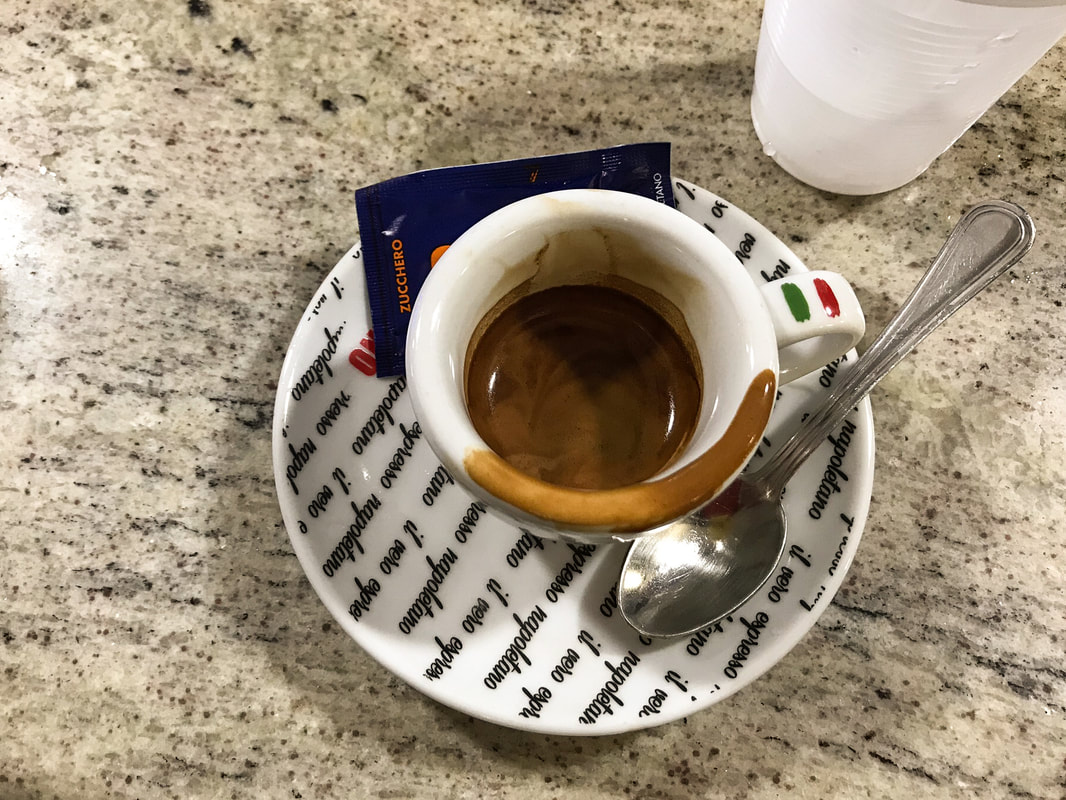
As we hastily bought espressos, I asked Rich, “What do you think? Is this a dive bar?”
A dive bar is a uniquely American concept, a kind of funky, no-frills local tavern providing cheap drinks and little or no food, usually in an atmosphere of kitschy memorabilia and dim lighting. The name comes from basement bars in the Prohibition era, when you had to dive down the steps under the cover of darkness to do your drinking. It’s never easy classifying European bars and cafés as true dives, because without the Puritan ethic and history of outlawing booze, few deliberately cultivate an old-school atmosphere of sinful, clandestine tippling. But Rich and I love dive bars and are constantly seeking out European establishments that offer the same quirky combination of cozy familiarity and taking a walk on the wild side.
“It certainly has the kitschy art,” Rich pointed out. “On the other hand, we’re drinking coffee, not beer.”
For years, Rich and I have diligently conducted research to refine our completely unscientific
criteria for identifying dive bars
and distinguishing between American standard and European traditional. Wherever we are, we look for a small, downscale place frequented by offbeat local characters, preferably with amusing tattoos. We award bonus points for kitschy bar art, duct tape on the seats, floors richly textured with beer and peanut shells, juke boxes, pool tables, and bartenders who drink along with the customers. In Europe, many places we consider dives have some elements you would never find in their US counterparts, such as decent food, coffee, and wine. But we overlook these lapses when they’re outweighed by other factors.
During our recent
unplanned, disorganized trip
through
Italy
,
Greece
, and (briefly)
Albania
, we explored many promising venues, including the
Bar Moro
in Lecce, Italy, where the bartender’s hair, clothing, and tattoos were all the same gorgeous shade of royal blue. Classy! Between her personal style and the general ambiance, we decided the Moro qualified, despite serving coffee and what looked like delicious meals.
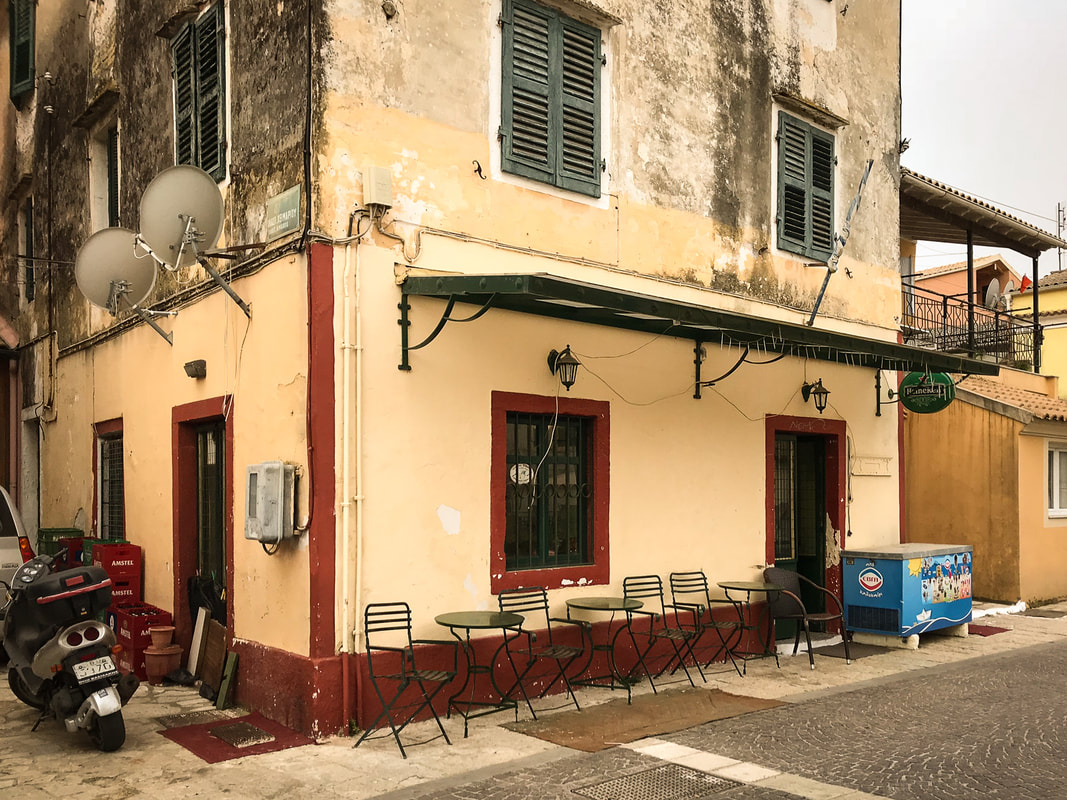
One night on the Greek island of Corfu, we wandered into a shabby place with no name on a back street called Στρατηγού Ξενοφώντος. Along with our ouzo we were served snacks, possibly involving some sort of sausage, that were so dubious that even we wouldn’t eat them. But we had the pleasure of sitting for a while in a room full of what appeared to be local fishermen taking their ease, and we all enjoyed pretending that we weren’t really spending the time checking each other out.
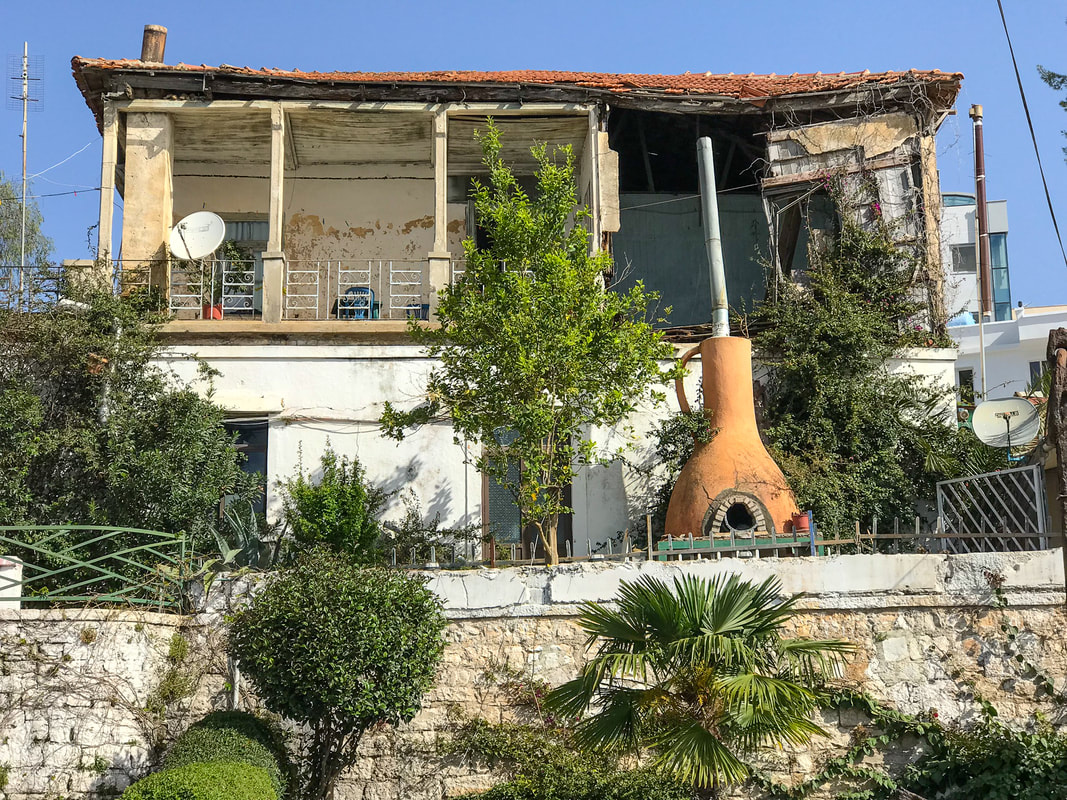
One of my true regrets of that trip was a missed opportunity during our
day trip to Albania
. We happened upon the Anchor at just 11:30 in the morning, and as we only had a few short hours in the town of Sarandë, we decided not to stop for a drink. I feel certain it would have been memorable, and I have added it to my must-return-someday list.
As Rich and I soldier on in our research, we’ve come to accept that we may never perfectly define what constitutes a dive bar. But we have proved conclusively that after a night out in one or several of them, we’re likely to be in serious need of restoratives and recombobulators, starting with caffeine. So I will leave you with this little video I made at the bar
Mokka
in Athens, where I was introduced to coffee made the old-fashioned way, as it was brewed 500 years ago: in hot sand. It’s υπέροχος (delicious) επιπτώσεις (eye-opening), and τονωτικό (guaranteed to cure what ails you).
THIS IS FUN! SEND ME MORE
Leave a Reply