When I first heard a humanoid AI robot had become a monk in a Buddhist monastery, I was aghast. If AI was taking over the work of spiritual heavyweights who had devoted their lives to advancing the human race toward enlightenment, how can the rest of us hope to hold on to our paltry jobs?
“At this civilizational turning point where artificial intelligence is coming like a tsunami,” said the Venerable Jungnyum, a leader of the robot’s Seoul-based monastery, “there is widespread concern and hope that Buddhism should also move toward a new direction of hope.”
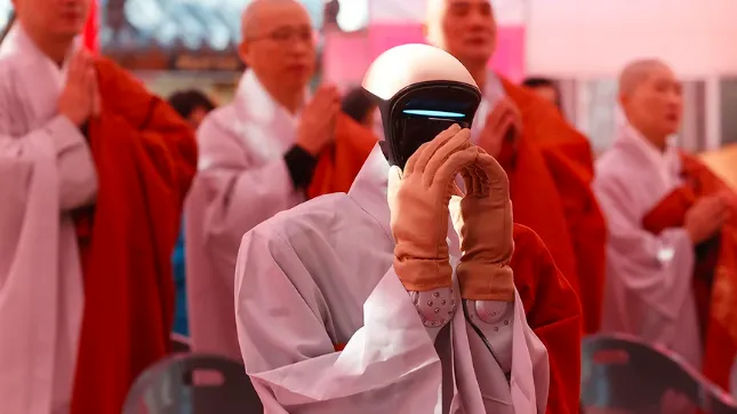
The hope is that Buddhism, which has been losing followers, will feel relevant again. Today’s young people would rather zone out gazing at their phones than sitting on a mountaintop in cross-legged silence. (Go figure.) And while I would never accuse Buddhism’s selfless religious community of pulling a cheap publicity stunt, embracing futuristic technology has certainly put them in the spotlight.
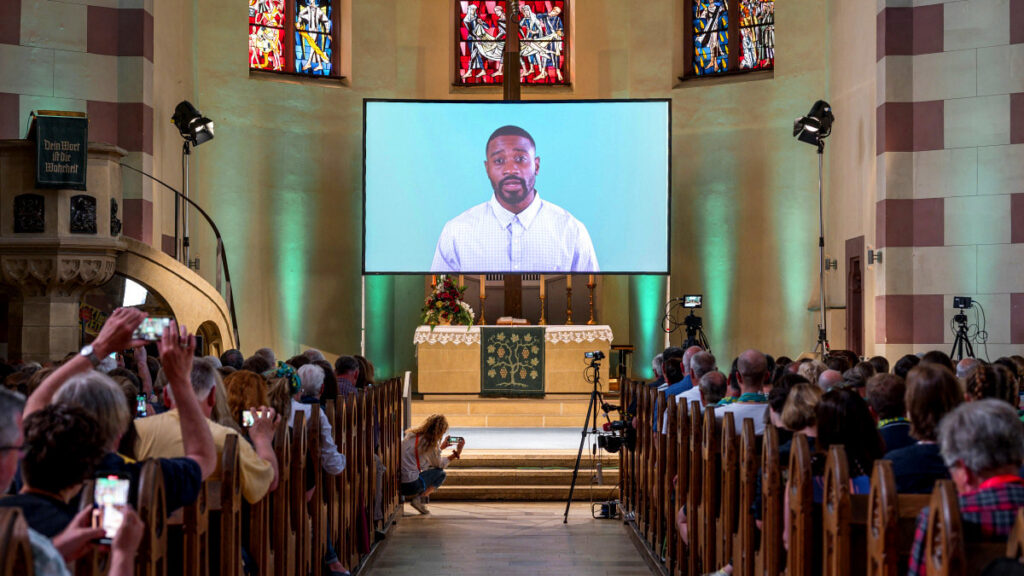
And they’re not alone; Christianity is also scrambling to bring AI to the flock. A Lutheran church in Germany experimented with an avatar-led church service nearly entirely generated by ChatGPT. A Catholic chatbot called Father Justin went from quoting scripture to hearing confessions, forgiving sins, and suggesting that baptisms could be performed with Gatorade (!). Public outcry and media mockery soon got him — I mean it! — reprogramed. A Swiss church temporarily installed an avatar of Jesus in the confessional, so you could go in and fess up face to face. Folks, I couldn’t make this stuff up.
When I mention all this to friends, they look at me oddly and say, “You really seem obsessed with AI nowadays.” Well, the human race is handing over the planet to robot overlords we cannot control, launching a cataclysmic upheaval many predict will change humanity’s trajectory as profoundly as the discovery of fire. Yes, I’m a tad concerned.
But no, I’m not laser-focused on AI. I give equal time to worrying about climate change, earthquakes, wildfires, floods, the erosion of democracy … the list goes on and on. And there’s always something new and disturbing on the horizon.
Take the Community Fair Rich and I attended on Saturday at a mall in nearby Greenbrae. I figured we’d sample the latest gluten-free brownies, admire some modest art, maybe enjoy a little live music.
The first person I spoke with asked, “Do you know how to staunch blood from a gunshot wound?”
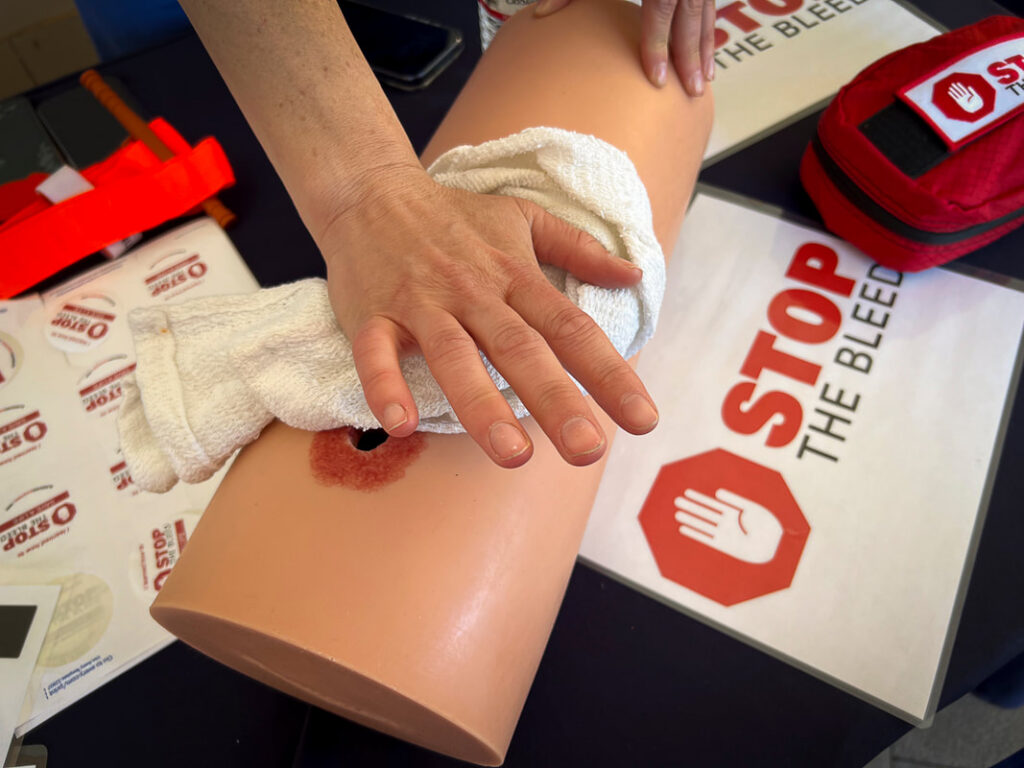
Incredibly, I’d never mastered this skill. Diane, an emergency room nurse, showed me it’s just like in the movies: you grab a piece of cloth, press it down hard on the wound, and yell for help.
At the next booth, Rachel from Resilient Neighborhoods asked if I was concerned about climate change and handed me fliers about workshops that would teach me how to live lightly on the earth.
“The world seems to be living in a perpetual state of emergency these days,” I said. “Got any advice for that?”
“Best thing to do in an emergency?” she said. “Take a breath. Pause. You’ll be better able to deal with whatever comes next.” Sound advice indeed.
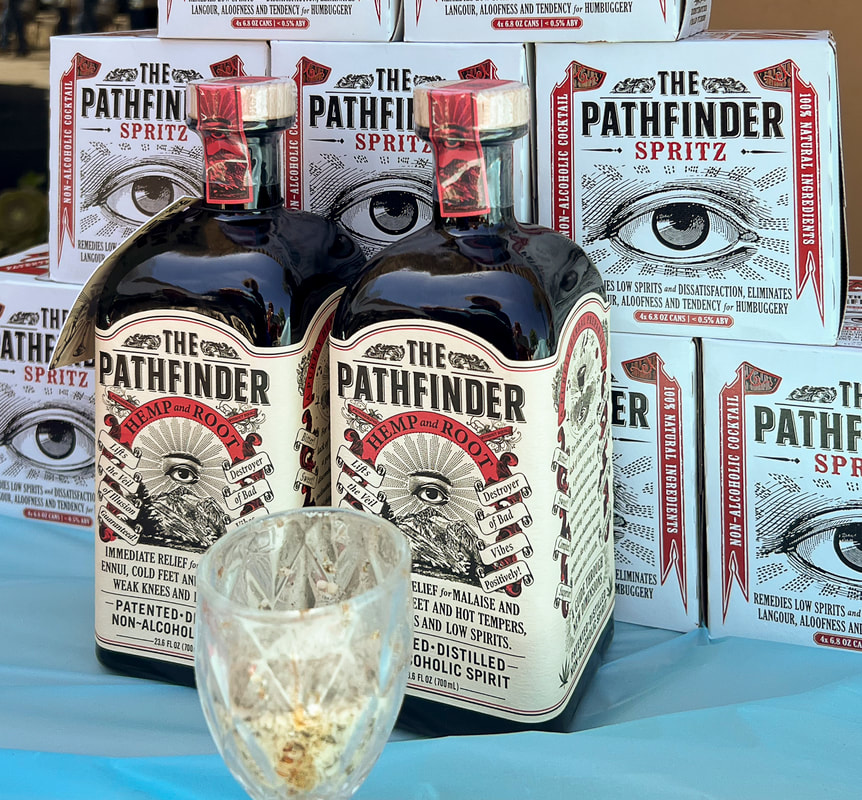
Eventually I found the culinary section and got down to business taste-testing cookies. Next I sampled Pathfinder, a hemp-based non-alcoholic beverage that seemed to be under the illusion it was some kind of nineteenth-century elixir.
Rich remarked to the kid staffing the Pathfinder booth, “I hear young people aren’t doing as much drinking these days.”
Kid: “Yes, that’s because they are consuming less alcohol.”
Me (trying not to roll my eyes): “Yes. Why?”
Kid: “Yes, wine too.”
I gave up.
And then I was back among the disaster-preparedness crowd. A woman at the Ready Central Marin Emergency table gave me a plastic zip-lock bag containing an Emergency Contact & Care Form and a sticker indicating that the form was inside my refrigerator.
“Firefighters and first responders are trained to look for those stickers and then open the fridge to find this bag with critical information, like your contacts and medical conditions.” I immediately decided I’d file this in my fridge where it would be easiest to find, among the true emergency essentials: wine and chocolate.
Fire Safe Marin offered safety tips in case of wildfires — which consumed half a million acres of California last year, and more than a million the year before. The good news: my home is (just) outside the official danger zone. The bad: there’s no way I can comply with their number one recommendation: remove all combustibles within five feet of the house.
Our cottage was built in 1900, when this part of the village had cheek-by-jowl land parcels. One neighbor’s house is a mere five feet away; on the other side, the wooden fence is less than two feet from the bump-out in our kitchen. We’re surrounded by shrubbery, trees, and one ancient rose we suspect went in the year the house went up.
“I sure would hate to have to hack all that down in the name of fire safety,” I remarked one day to our nephew Matt, an insurance investigator.
“Karen, I don’t know why you’re worrying about this,” he said. “Your house is covered in old wood shingles; one spark and it’s gone. The bushes are the least of it.” Good point, Matt. Not entirely comforting, but at least I don’t have to wreak havoc on the landscaping to preserve human life.
At the Central Marin Fire booth, a fire inspector named Chris warned me about the dangers of lithium-ion batteries, adding, “We’ve seen a lot of them explode.”
And there it was: a whole nother thing to worry about.
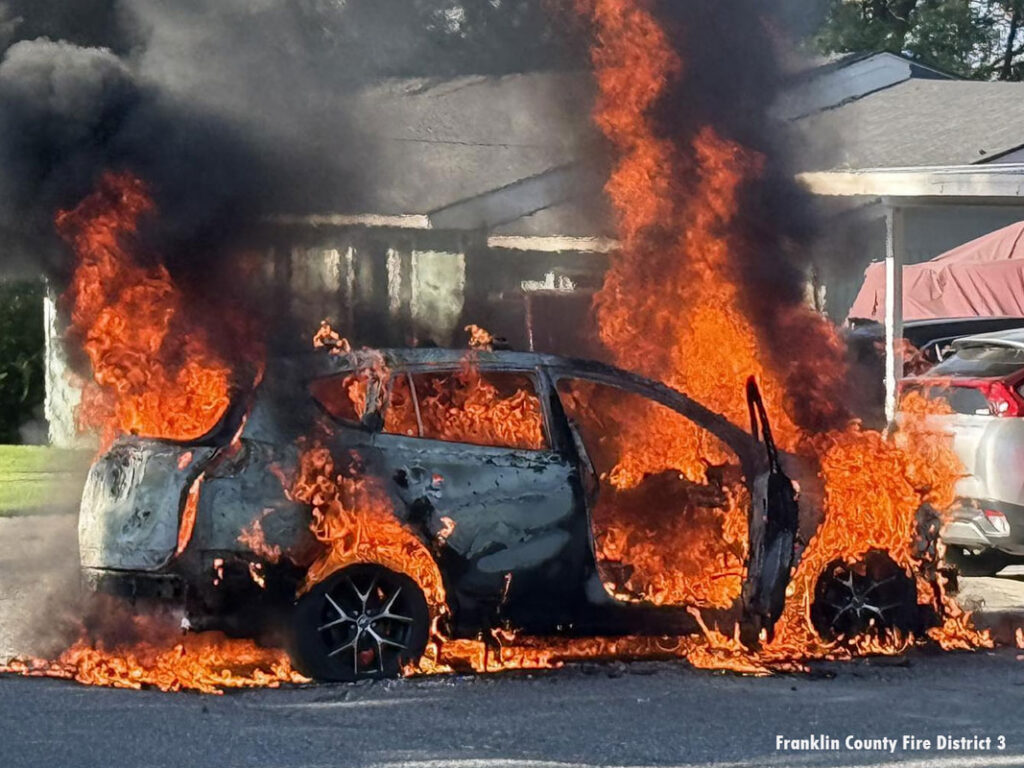
Chris explained the lithium-ion batteries powering our phones, laptops, cars, and pretty much everything else can easily be damaged, say by dropping them. That can deactivate the automatic shut-off, so that your battery keeps on charging and charging until …. BOOM!
I stared in dismay at the often-dropped iPhone in my hand. I’d always considered it my friend, but would it someday blow me to smithereens? Should I pre-panic now? Fortunately, just then, I remembered Rachel’s words about what to do in a crisis. “Take a breath. Pause.”
I took several deep breaths and paused. And looked. And listened. Here I was, surrounded by hundreds of people enjoying an easygoing Saturday morning, voices raised in a cheerful hubbub, exchanging information that might someday save their life, their home, and their family. Or mine, for that matter. Good neighbors working for the common good. I felt a moment of grace wash over me.
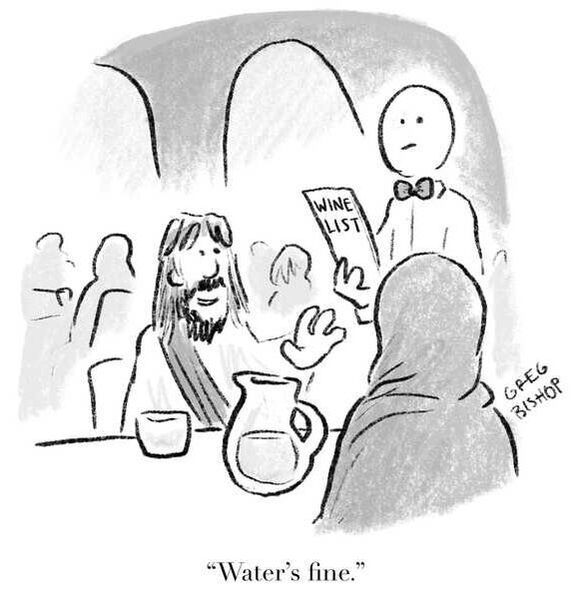
The Dalai Lama likes to say, “My religion is kindness.” I thought about those Buddhist monks and the robot that stood with them taking vows of peace, respect, and honesty. Perhaps those crafty old lamas are trying to seed a little compassion into the vast interconnected network of AI juggernauts. Will it help? Who knows?
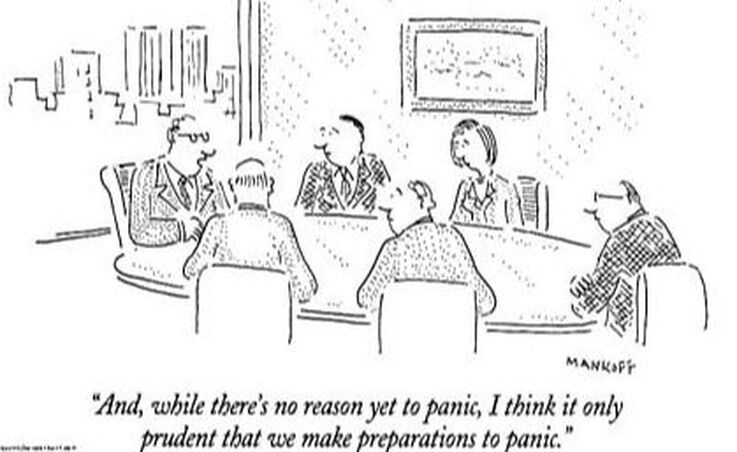
Until we find out, I’m relying on the wise words of Douglas Adams, author of The Hitchhiker’s Guide to the Galaxy, who suggested there’s one piece of advice the human race should cling to in any situation: “Don’t panic.”
I’m working on it!
Worried? Fuggedaboutit! Watching this beaver eat cabbage is supposed to lower your stress level by 17%. I believe that estimate’s on the low side. Rich laughed out loud. Don’t miss the comments from YouTube viewers. You’re welcome.
GOOD NEIGHBORS
This post is part of my series Good Neighbors, which explores how the people around me are working to help each other get through these challenging times. My weekly posts appear on Tuesday or Wednesday, depending on my travel and research schedule.
WANT TO READ MORE?
To subscribe, send me an email.
karen@enjoylivingabroad.com
SUBSCRIBED BUT NOT GETTING POST ANNOUNCEMENTS?
Check your spam folder. If you still can’t find them, please let me know.
Leave a Reply