

So this friend of ours is entertaining a group of clients at a posh restaurant. Late in the wine-soaked evening he goes to the restroom, then forgets he has a tableful of guests awaiting his return, sends the valet for his car, and drives home. We can only wonder how long the others waited, what sentiments they expressed as they settled the bill, and whether they were soon ex-clients.
I like to recall that story whenever I do something particularly foolish and forgetful. Which happens more and more often, and not just to me. Nowadays what mind isn’t reeling from the latest alarming news about the Delta variant, Afghanistan, hurricanes, floods, wildfires … need I go on? Being distracted by catastrophes undermines our focus and efficiency, so when I occasionally misplace my reading glasses, I know it’s normal and not a sign that I’m losing my memory or my mind. (No, it’s not!)
So I wasn’t worried a few weeks ago when I went in for my annual physical, which included a memory test.
“Remember these three words,” my doctor said. “Popsicle, banjo, giraffe.” As regular readers will recall (or maybe not, depending on your level of distraction today)
Rich’s memory course
taught a visualization technique. I pictured myself eating a popsicle and holding a banjo while riding on a giraffe. Then I thought, maybe the giraffe should be playing the banjo. No, not with hooves. Could he be eating the popsicle, so I could play the banjo? Did giraffes like popsicles? Weren’t they leaf-eaters? My doctor’s voice faded to “blah-blah-blah cholesterol blah-blah-blah” as I pondered these questions. And then he said, “So what were those three words?”
My mind went blank. Hooves? Leaves? “Popsicle,” I managed. “Uh, banjo…” I paused, then finished triumphantly, “Giraffe!”
“Don’t worry,” he said kindly. “You pass if you get even one right.”
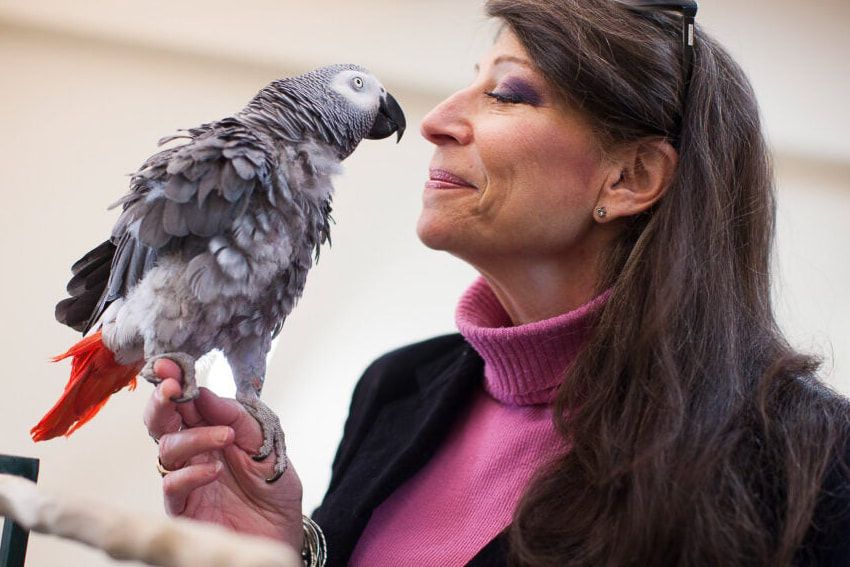
Whew! While I was congratulating myself on acing this modest test, I happened upon an article about Griffin, a
parrot famous for feats of memory
.
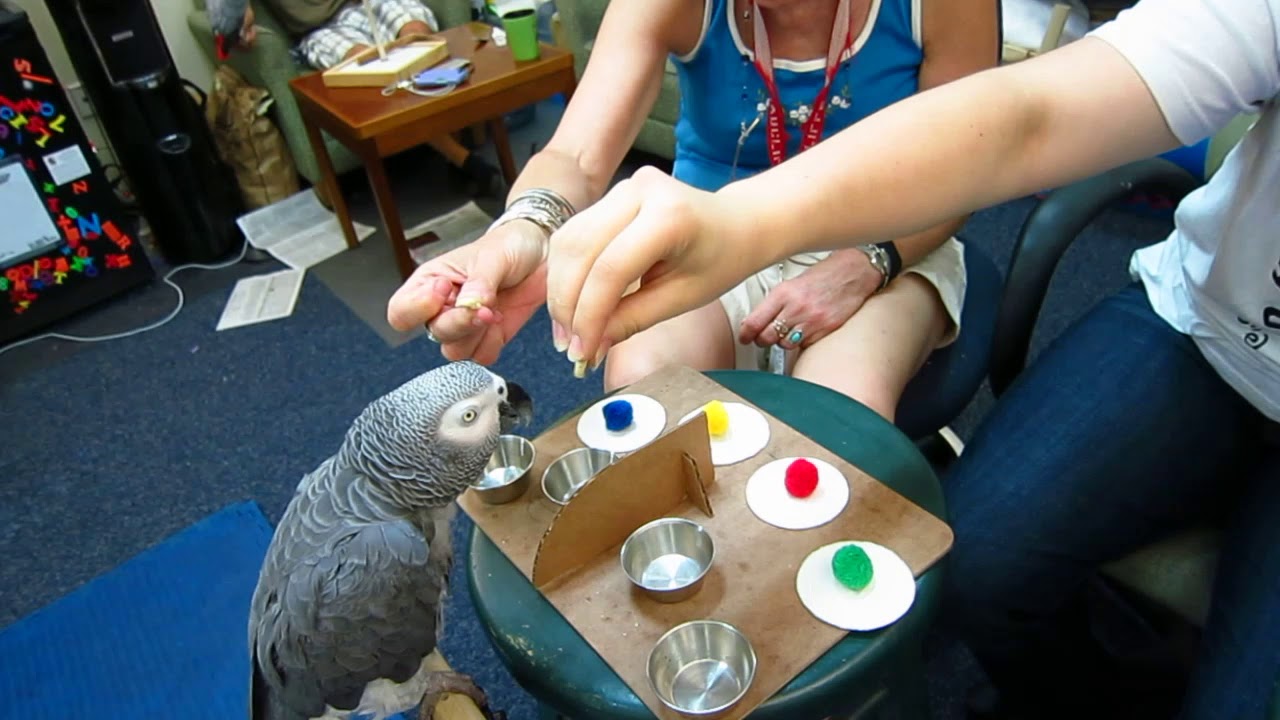
Harvard researchers created a version of the shell game, putting different-colored pompoms under cups and shuffling them around, then naming a color. If Griffin identified the cup concealing that color pompom, he got a cashew. Griffin outperformed human first-graders, then Harvard undergrads — arguably some of the smartest minds on the planet. Not bad for a birdbrain! Boy, was I glad my doctor didn’t test me against Griffin.
But if I wanted to measure my mental acuity, I wondered, were online resources available? Yes, but I should be very careful about unqualified, unscrupulous, predatory websites that were just out to frighten me into spending money, warned “
Online Memory Tests You Can Trust
.” This public-spirited message was frequently interrupted by banners saying “Need a mental lift? This brain supplement can do that” and “Personalized music boosts focus time up to 400%” with links to sponsored “product reviews” that read like hymns of praise and rapture. Could this be a case of the pot accusing the kettle of using scare tactics to profit at my expense?
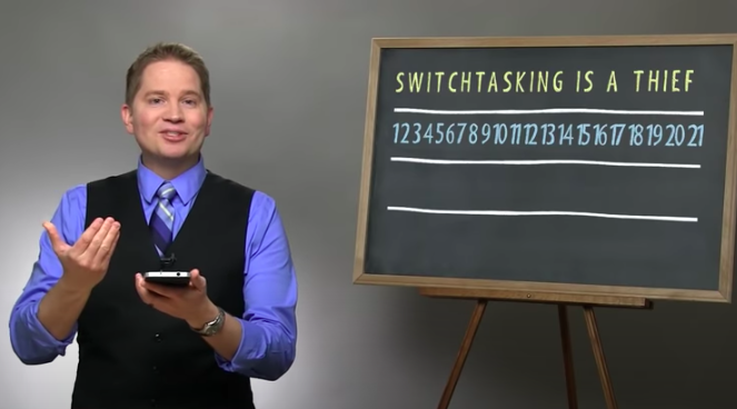
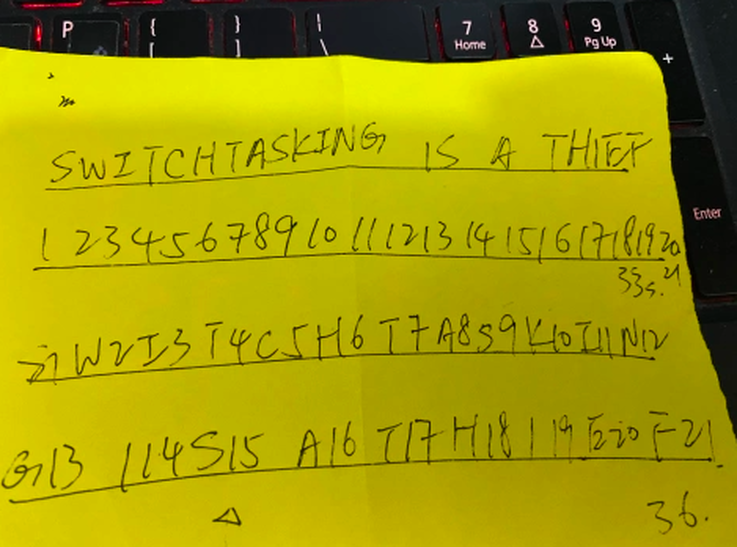
I did find one elegant test designed to debunk a productivity myth affecting memory: multitasking. More accurately called “switchtasking” — that is, alternating rapidly between jobs — this so-called productivity booster actually slows work speed, results in sloppy work, and fries our brains. In fact, a University of London study found those who multitasked during a cognitive test showed
the kind of IQ drop you’d find after smoking pot or staying up all night
— reducing their scores to the average range of an eight-year-old child.
But don’t take my word for it (or the University of London’s). Try this test.
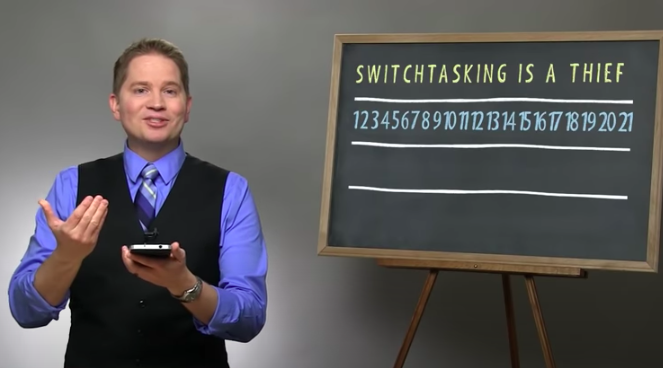
First, time yourself writing “Switchtasking is a thief” on one line and the numbers from 1 to 21 on the next. You might need 30 seconds. Next, try writing the same thing, but switching back and forth between two lines. First write the letter “S”, then drop to a lower line and write the number 1, then go back up to write the next letter, down for the next number, etc. This typically takes 60 seconds and becomes so riddled with errors it looks like the work an eight-year-old, or possibly your dog.
Obviously multitasking isn’t helping. So how can we corral our scattered brains? For a start, we can use commonsense tools like leaving ourselves notes, making lists, and checking online for facts that elude us.
“Many of you are worried that if you use Google to look up your blocked words then you’re cheating and contributing to the problem, weakening your memory. You’re worried that Google is a high-tech crutch that’s going to give you digital amnesia. This belief is misinformed,” says
neuroscientist Lisa Genova
. “You don’t have to be a memory martyr. Having a word stuck on the tip of your tongue is a totally normal glitch in memory retrieval, a byproduct of how our brains are organized. You wear glasses if your eyes need help seeing, you have my permission to use Google if a word is stuck on the tip of your tongue.”
What warning signs suggest a bigger problem? “If you start forgetting common words frequently,” explains Genova. “So if I’m like, ‘Oh, what’s the name of the thing you write with? The thing you write with. What’s that?’ ‘Pen?’ ‘Yeah’ — if that starts happening, that could be something. Doesn’t have to be Alzheimer’s. There are lots of reasons for having issues with retrieving memories, making new memories. It can be sleep deprivation, it could be B12, it can be lots of things.” If this happens to you often, write a note saying “Schedule a checkup” and tape it to your phone.
For those of us experiencing low-level lapses, self-care is the key. Among my top remedies are travel and getting plenty of exercise (which often go hand in hand). When it’s not practical to journey far, experts recommend learning a new language, making music, dancing, taking an art class — basically anything that gets the neurons fired up and connecting in new ways. Diet can help; make sure, for instance, you’re getting enough memory-supporting vitamin B12, which for me means including fresh fish and eggs in my largely plant-based diet. For energy, I do
yoga
and
qigong
— and I drink coffee, which studies show improves alertness, attention, and concentration. Chocolate helps too, obviously.
OK, time for a pop quiz:
What were the three words my doctor asked me to remember?
If you recalled even one, you’re doing great. If you decided not to be a memory martyr and scrolled back to check, you’re doing great. In fact, if you can still remember what a pen is, you’re doing great. Chances are there’s nothing wrong with your memory that a saner world wouldn’t soon put right. Sadly, the chances of that happening are slim to none, at least for now. But take heart. If you haven’t driven off into the night leaving a tableful of clients in the lurch, you’re still ahead of the game.
And now a few words from Einstein, the Talking Parrot.
YOU MIGHT ALSO ENJOY
WATCH GRIFFIN TRAINING WITH DR. PEPPERBERG
SEE HOW GOOD YOU ARE AT MULTITASKING
TRY QIGONG FOR BRAIN OPTIMIZATION
CLICK HERE FOR MORE
of my weekly thoughts on holding onto some shreds of our sanity as we enter Day 530 of the pandemic
.
FEEL FREE TO SHARE
this article with family, friends, and anyone who claims multitasking is making them more productive.
https://www.enjoylivingabroad.com/my-blog/feeling-like-a-birdbrain-nothing-wrong-with-that

Leave a Reply