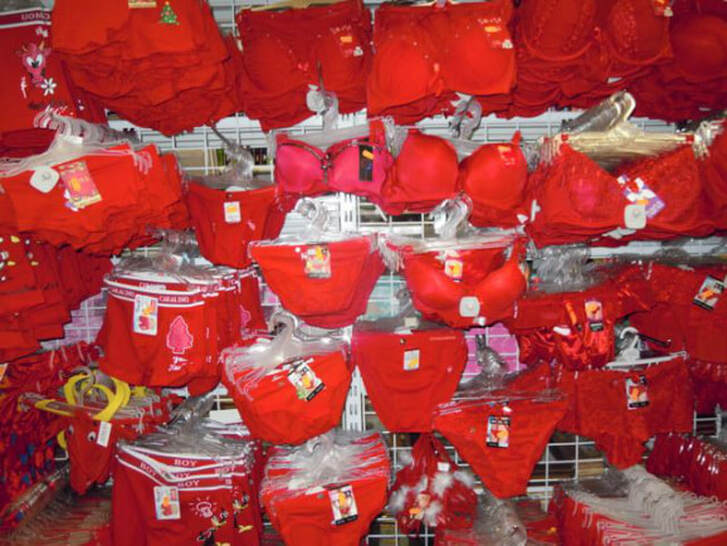



I thought I’d discovered all Spain’s quirky year-end traditions — red underwear and twelve grapes for luck, lentil soup for wealth, and plenty of bubbly for fun — until someone said, “Hey, look, Cristina Pedroche is about to take off her cloak.” It was minutes to midnight, and the TV screen showed a young actress enveloped in a bulky white cape.
“Every New Year’s Eve she does a big reveal of her outfit,” someone else explained. “Each dress shows more skin.”
All heads swiveled toward the screen as Pedroche struggled to unsnap her outer garment. When she finally shed it, what she wore underneath left me gobsmacked. And bewildered.
What was that white thing splattered across her chest like a bug on a windshield? Why was she wearing painted-on white gloves? The only thing we could tell with absolute certainty was that she was not wearing red underwear. In fact…
While we were debating whether she was wearing any underwear at all, I reflected on the goofy ways we humans like to ring in a fresh year. Millions of us woo Lady Luck with outlandish rituals: throwing furniture out the window, smashing plates on a neighbor’s doorstep, placing a carp’s scale in our wallet. Of course, I’m way too modern to hold with any of that superstitious nonsense. But hey, I forgot my red underwear on December 31, 2019, and look what a disaster 2020 turned out to be. I’ll never take that chance again!
But could there be other, slightly more practical ways to hedge our bets? Oh yes! In fact, there are at least
ten well-researched actions we can take to enhance our chances of living well
according to the people who teach
the Science of Happiness Course
at the University of California Berkeley. Here are some of their suggestions.
Appreciate small, everyday experiences; they give life meaning.
Lean into uncomfortable feelings; that’s where you do the heavy lifting necessary to achieve your goals.
Acknowledge any post-pandemic personality changes. Are you more introverted or less optimistic? It’s a form of PTSD and you can get past it.
Stop stereotyping young people as selfish;
new research suggests they are actually more altruistic
than prior generations. Yes, they are!
Share our collective wealth more evenly. While this may sound like screwball do-gooder idealism, it’s actually a smart way to up our chances of surviving the turbulent times ahead.
Let’s take a closer look at that last point. Yesterday I learned the US spends a whopping $869 billion a year on non-medical
public welfare benefits
— and
97% of that money goes to operational costs
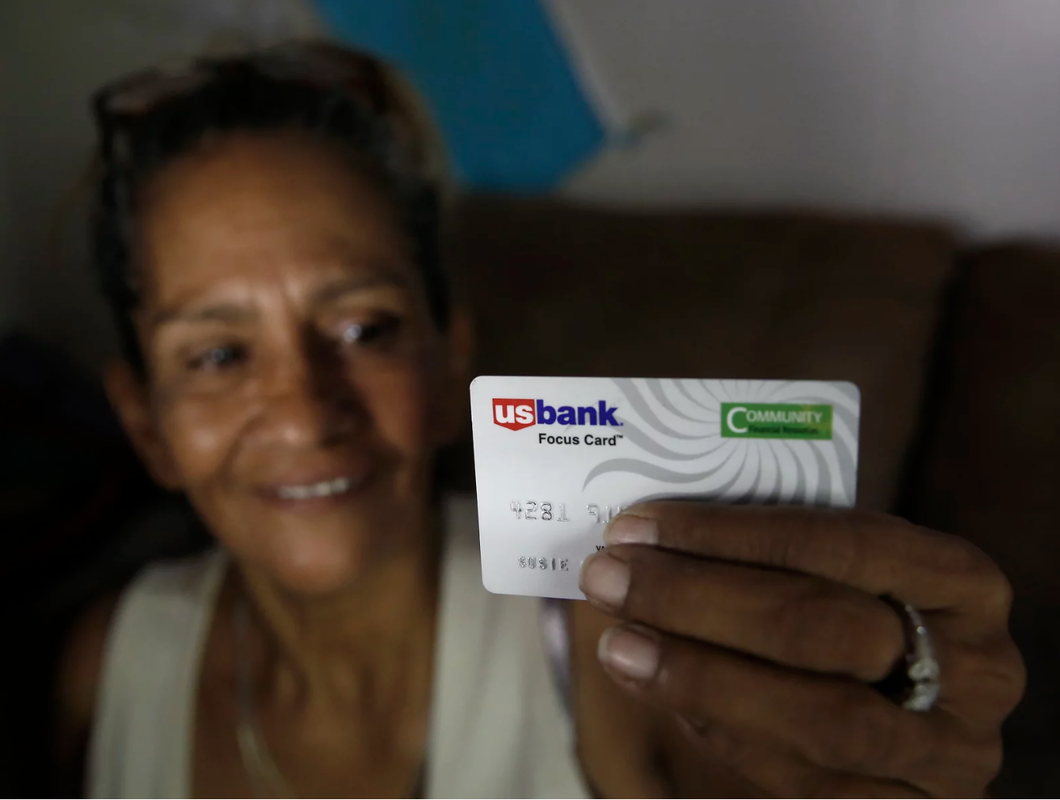
. I’m going to spitball a nutty idea: what would happen if we just gave some of that money directly to those in need? Turns out I’m not the first to think of this; experiments have been going on for decades. And they’ve been successful. You won’t be surprised to hear a cash infusion makes struggling families happier and healthier. More unexpectedly, fears that most folks would squander the money in foolishness and debauchery have proved unfounded.
“
A sheaf of studies
,” reports Reuters, ”show positive results. Participants in
Stockton’s
program were more likely to be working full-time, while participants in
Jackson
were more likely to pay their bills on time. One survey
found
that recipients spent less on alcohol and tobacco than they did before.” It’s comforting to know that wealth redistribution can be managed successfully. Especially now that AI is proving it can take over so many of our jobs.
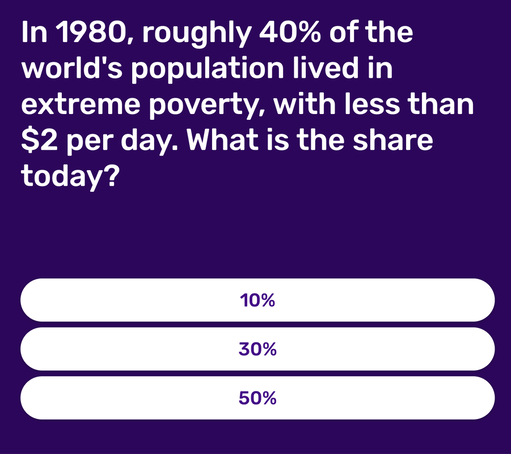
And that brings me to some very hopeful planetary news. But first, a pop quiz.
If you answered 10% you’re not only right, you did better than 92% of those polled, including Nobel-Prize winners and global policy makers.
Social scientist Hans Rosling
spent his career factchecking our world, asking 12,000 people these kinds of questions. He was shocked to discover that nearly everyone gets them very, very wrong. We’re all operating from deeply held misconceptions about how humans are doing.
(Don’t panic, we’re actually doing better than we think. I’ll get to that in a moment.)
Our perspective is skewed because it’s based on data we learned in college from teachers educated ten, twenty, or thirty years earlier. Many of our most essential “known facts” haven’t been true since 1980 or possibly 1965. Our knowledge is updated randomly with media stories feeding our natural human appetite for drama.
“Every group of people I ask,” said Rosling in his book
Factfulness
, “thinks the world is more frightening, more violent, and more hopeless — in short, more dramatic — than it really is.”
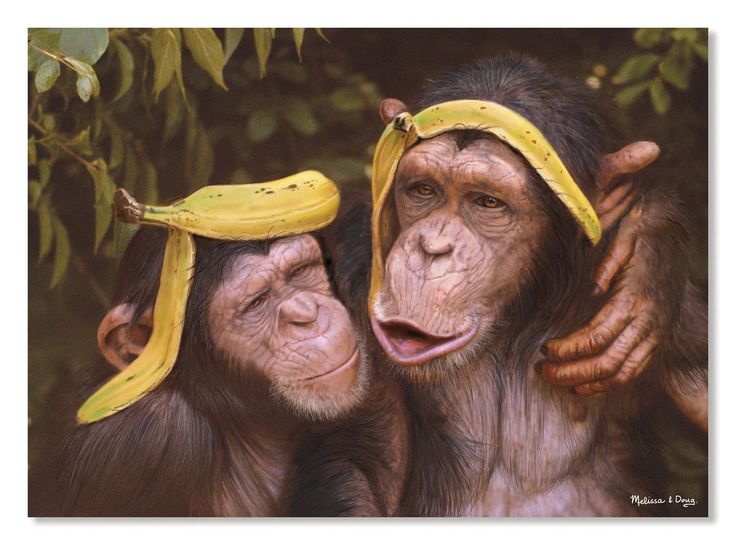
For instance, what percentage of the world population do you think lives in low-income countries? The average guess (from Earth’s best and brightest): 59%. The actual number: 9%. Chimpanzees randomly tapping bananas marked A, B, and C would score better.
When we do hear positive news, it doesn’t fit the framework of our inner narrative. Two hundred years ago, 85% of the world population lived in extreme poverty. In 1980 it was 40% and today it’s 10%. That’s a triumph the entire world should be celebrating. But feeling good about it makes us uncomfortable, as if it implies we’re OK with 800 million people still subsisting on the verge of starvation. And then another horrifying headline comes along, and we’re convinced all over again that we’re sliding fast into full-blown dystopia.
“Enough with the doom and gloom!” admonishes
NY Times
columnist Nicholas Kristof. “
Our planet may be in better shape than you think
. Human beings have a cognitive bias toward bad news (keeping us alert and alive), and we journalists reflect that: We report on planes that crash, not planes that land. We highlight disasters, setbacks, threats and deaths… But it’s also important to acknowledge the gains that our brains (and we journalists) are often oblivious to — if only to remind ourselves that progress is possible when we put our shoulder to it. Onward!”
OK, I’m in. So what can we do to help the world — and ourselves?
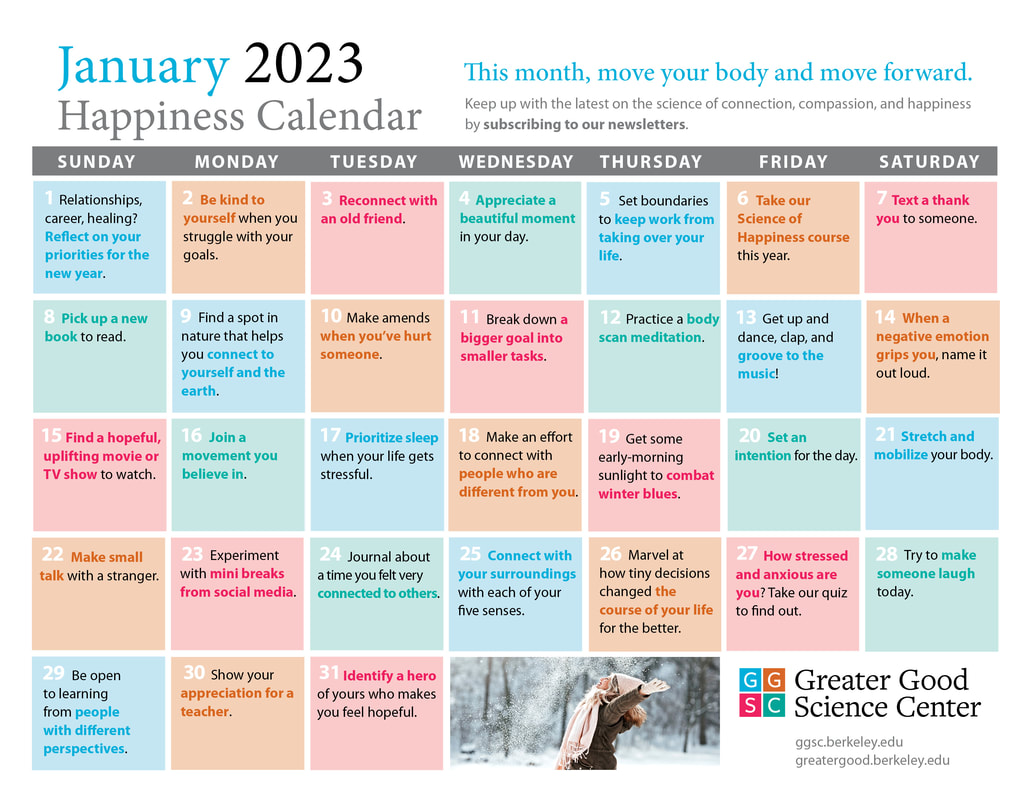
UC Berkeley happiness experts suggest it’s all about connection and compassion, and the best place to start is that first bullet point above: appreciating the little things. To help with this, they’ve created a
Happiness Calendar
; I’ve taped January to my kitchen cupboard so Rich and I see all day. It’s already led to some interesting discussions.
Jumping ahead to January 10, I feel the need to make amends. I started this post with snarky remarks about
Pedroche’s outfit. Since then I’ve learned she wore it to honor refugees. The top is the dove of peace with an olive branch. The painted hands signify the rejection of violence. The nearly invisible skirt hasn’t yet been explained in the press; maybe it symbolizes bandage gauze or the sheer madness of war. My point is: I’m sorry I was disrespectful, Cristina! It was all in a good gauze. I mean cause.
And I’ll certainly tune in next year to see your reveal. In fact Rich has voted to make it an annual tradition.
FEELING BETTER ABOUT THE FUTURE? I THINK WE ALL ARE!
HERE’S SOME MORE FUN STUFF:
HOW MUCH DO YOU REALLY KNOW ABOUT THE WORLD?
THE HAPPINESS COURSE: RICH TELLS ALL
WHAT I LELARNED FROM RICH’S HAPPINESS COURSE
DOWNLOAD YOUR JANUARY HAPPINESS CALENDAR
READ IT? PLEASE LEAVE A REVIEW HERE
WANT MORE?
Add your name to my mailing list, and I’ll let you know when I publish my weekly posts.
Just send me an email and I’ll take it from there.
[email protected]
Leave a Reply