“I saw that my life was a vast glowing empty page and I could do anything I wanted.”
― Jack Kerouac
Much of the blame — or credit — goes to WWII, an event that obviously already has a lot to answer for. During the war years, millions of Americans — soldiers, sailors, and shipbuilders, including all those
Rosie the Riveters
— found themselves passing through San Francisco. And suddenly their home towns seemed too small for them. Over the next three decades, a thousand people a day would move to California in hopes of a larger, more colorful, more authentic life.
One of them was my husband Rich.
“I came from a conservative New Jersey family and was educated at Catholic schools and a Catholic college, then went into the Navy,” he recalled in an exclusive interview at our breakfast table. “Talk about a structured life! When I got back from Vietnam in 1969, I was stationed at Treasure Island in San Francisco and found a freedom I’d never seen before. I realized I didn’t have to take a pre-determined path, fit into a mold, or follow dogma. I could live in an environment of infinite possibilities.”
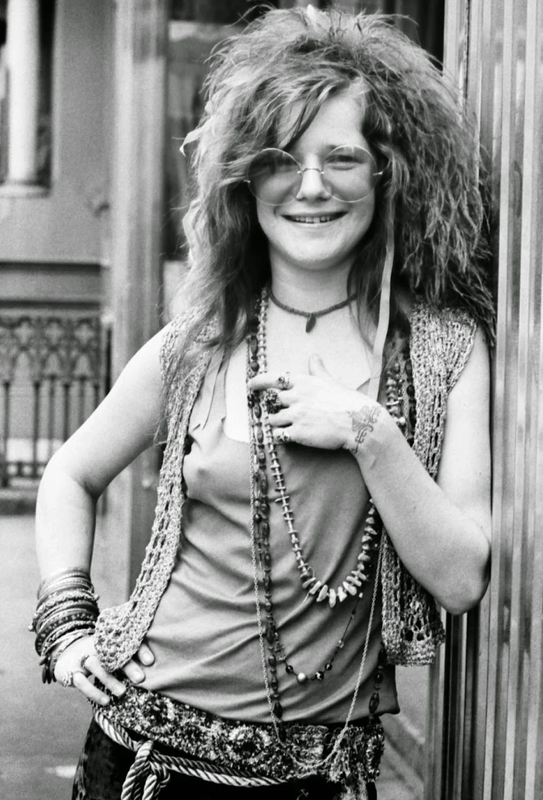
Janis Joplin, who arrived in San Francisco in 1963, observed,
“Texas is OK if you want to settle down and do your own thing quietly, but it’s not for outrageous people, and I was always outrageous.”
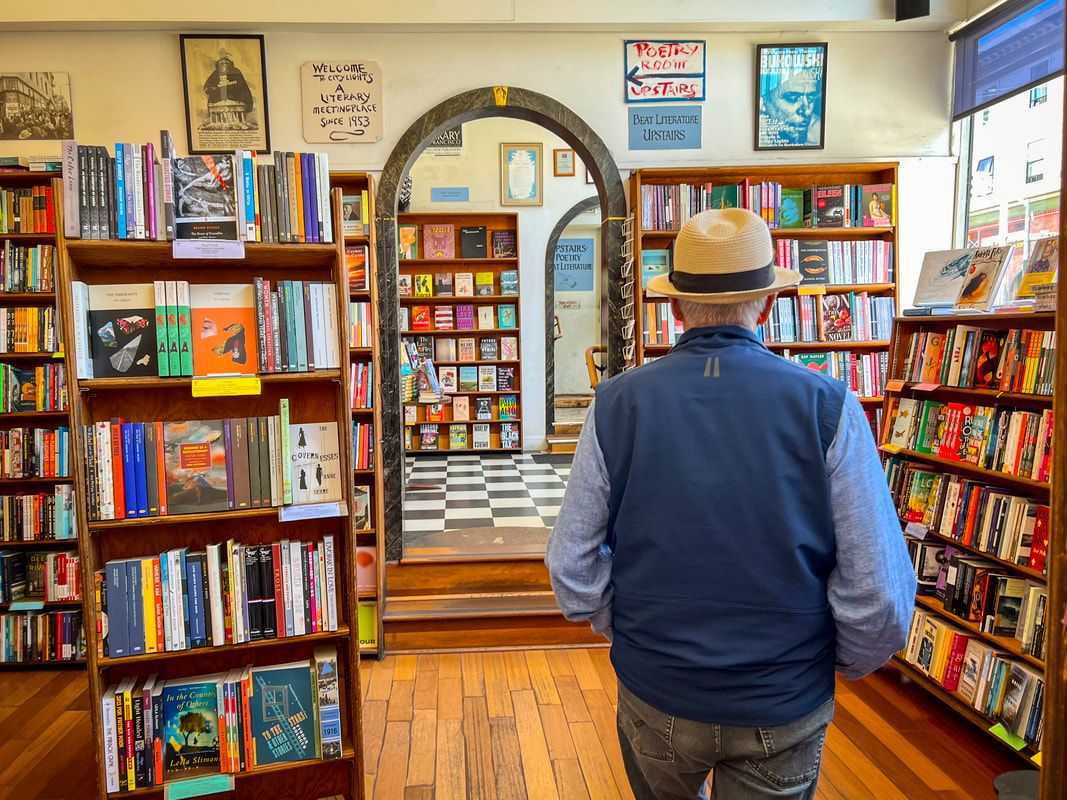
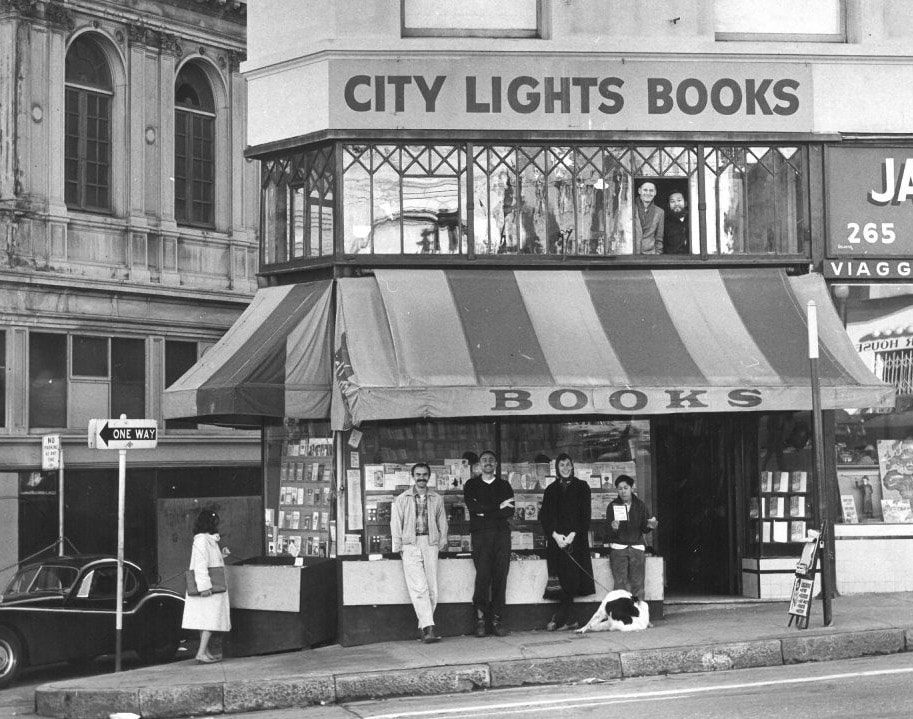
Not all newcomers proved as outrageous as Janis (who could?), but among them were a lot of free thinkers, poets, philosophers, writers, musicians, activists, and artists who naturally gravitated to the literary heart of San Francisco’s counterculture: City Lights Books.
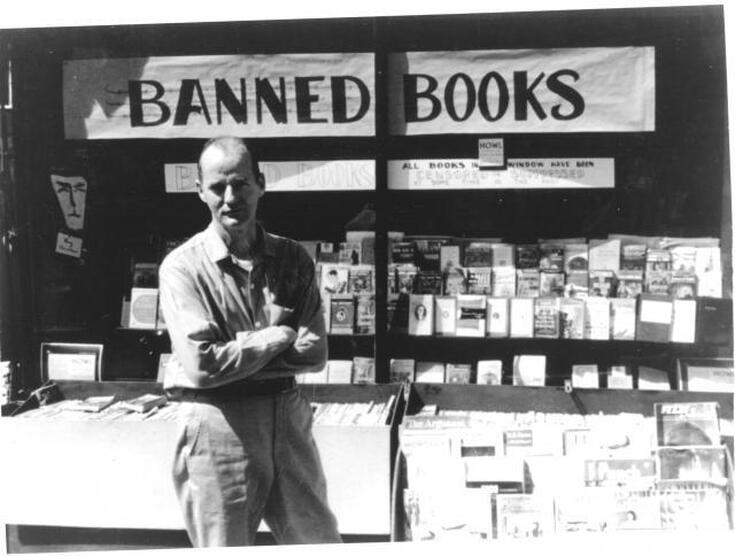
Co-founded by poet Lawrence Ferlinghetti in 1953, City Lights sold and published hotly controversial books. None caused more fuss than Allen Ginsberg’s
Howl and Other Poems
in 1957.
“At the height of the gray-flannel conformity, Ginsberg’s bohemian rhapsody was a shocking cry of outsider dissent,” wrote
Encyclopedia Britannica
. “Suffused with sexuality and spirituality, horror and humor, despair and hope, ‘Howl’ is profane and profound, a gainsay and a goof.”
The district attorney was not amused; he arrested Ferlinghetti for peddling obscenity. To everyone’s astonishment, the conservative judge found the poem had “redeeming social importance” and dismissed the case — a landmark victory for freedom of speech.
We owe a lot to the Beat Generation, whose radical nonconformity changed social conventions, sexual attitudes, laws, and literature in ways that are still being felt today. The Beats remind us that words matter. Every word we speak, hear, read, write, or think contributes to the narrative that defines the shape of our lives and the character of our cities.
“San Francisco itself is art, above all literary art,” said California author William Saroyan. “Every block is a short story, every hill a novel. Every home a poem, every dweller within immortal. That is the whole truth.”
That truth is what brought me to City Lights this week, my first visit since Ferlinghetti died in 2021 at age 101. I’m pleased to report the bookstore is still as freethinking and freewheeling as ever.
The neighborhood pays homage to the era with Kerouac Alley’s murals, famous old strip clubs gone to seed (including the Condor where Carol Doda pioneered topless dancing in 1964), and the wonderfully funky Beat Museum.
In the museum I gazed at Ginsberg’s typewriter, Ferlinghetti’s desk, and photos of the Merry Pranksters having an uproarious time teasing mainstream society. The museum’s shop is a treasure trove of vinyl albums, bumper stickers, radical literature, and a bathtub full of $2 paperbacks.
“This is such a cool neighborhood,” I told museum staff member Brandon. “I went to a suburban mall yesterday and it was so sterile I could hardly breathe.”
“That’s what happens when you suck all the joy out of it, when you lose the quirk,” he said. “San Francisco passed a law in 2006 prohibiting chain stores and chain restaurants in most neighborhoods. We don’t want to be like everybody else.”
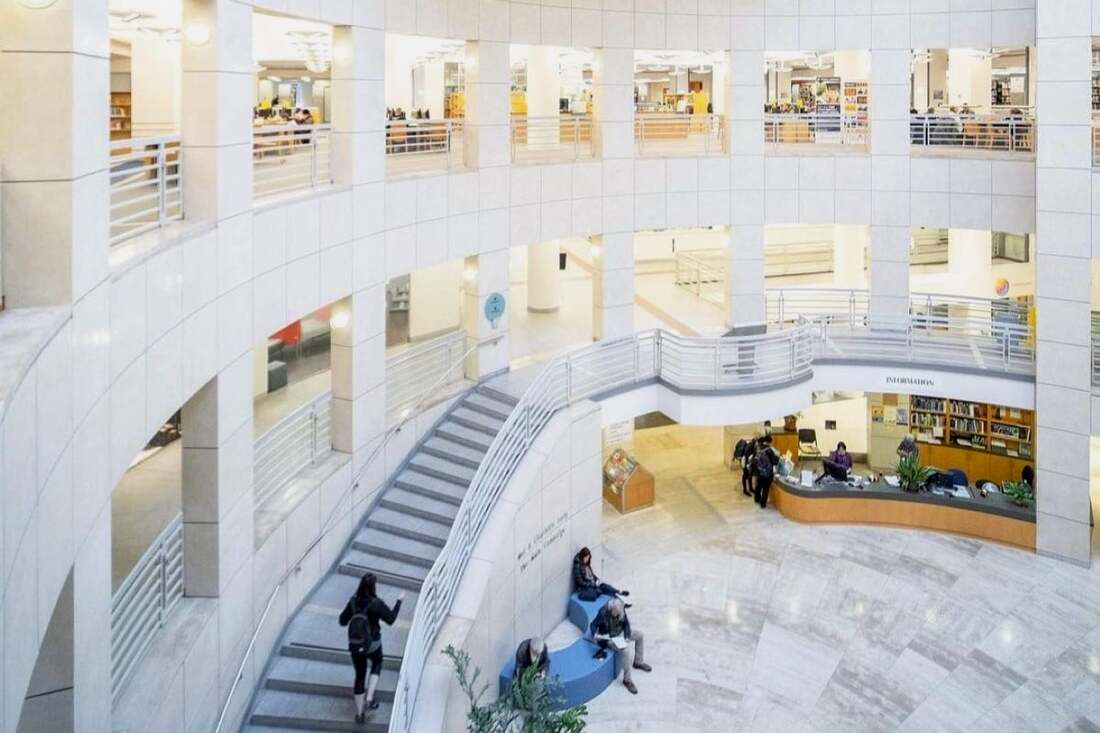
Quirk is everywhere in the city, as we saw at our next stop, the main branch of the San Francisco Public Library.
Believing books and ideas should be free to all, the library has done away with overdue fines, past and future. I know, right? Brilliant! When I think of the money that would have saved me over the years…
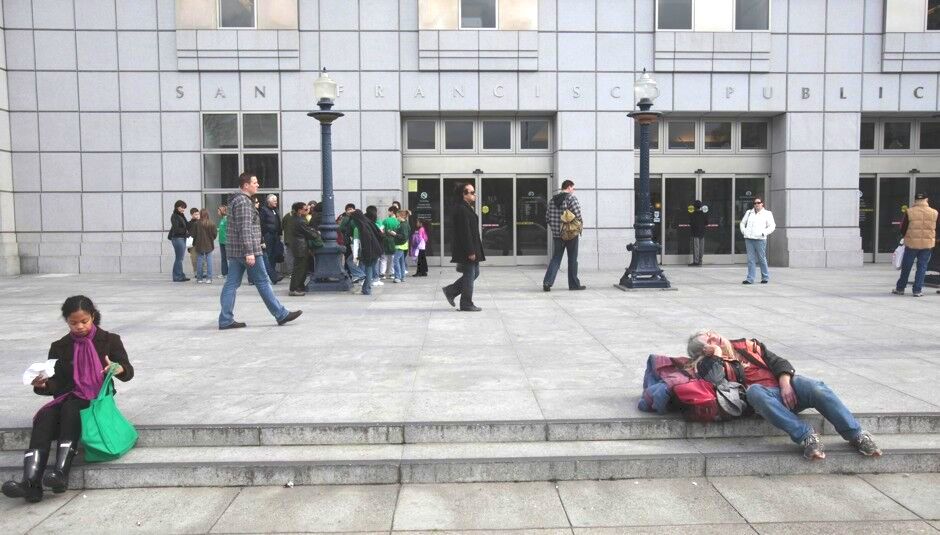
The library staff invites everyone, including the poor and unhoused, to enjoy the books, reading chairs, computers, and restrooms. The restrooms are impeccably clean and staffed with security people to enforce such rules as no “basin baths” or laundry. An atmosphere of mutual respect prevails. (And how often can you say that?)
In the library’s cozy African American Center, I found a handful of African-American teens reading quietly, surrounded by photos of 1972’s first African Liberation Day in San Francisco. Angela Davis, Stokely Carmichael, and Jesse Jackson were among the speakers showing solidarity to their distant kin fighting revolutions in Africa. The gifted Kenneth Green, who in 1968 became the Oakland Tribune’s first Black staff photographer, captured it all.
I wondered if the teenagers knew the stories behind the images that surrounded them. But hey, they were kids and probably viewed this as ancient history, as bygone as the dinosaurs.
Outside on the street, Rich and I walked among perhaps two dozen unhoused people, several in wheelchairs or struggling along with walkers. Many had the glazed expressions of the high or hopeless, but nobody seemed to be dealing drugs or hassling anyone; everybody was just hanging about with nowhere to go, nothing to do. I didn’t feel unsafe, just heartbroken.
I wondered how many of these unhoused folks had come to San Francisco — like Rich, Janis, and all those beatniks and hippies — fueled by dreams of working to create a better life.
By now, feeling the need to reanimate ourselves, Rich and I were thinking seriously about lunch. We’d heard about Brenda Buenviajé, who arrived in San Francisco from New Orleans in 1997, eager to share recipes from her bayou childhood and her Sicilian, French and Filipino ancestors. Her legendary eateries include Brenda’s Meat and Three — a Southern expression meaning a portion of meat with three side dishes.
At Brenda’s, lunch doesn’t start until 3:00 — how civilized! — but I didn’t care what they called the meal so long as I could satisfy my hankering for cheese grits.
Never had grits? You slow-cook ground corn to a sort of porridge. Originally a Native American dish, it’s so popular in the South the region is nicknamed the “grit belt.” Done right, grits are velvety food for the soul: hot, creamy, deeply satisfying. Done carelessly, they’re cardboard sludge. People top them with everything from shrimp to cinnamon, but the moment Mississippi friends fed me cheese grits, I was hooked. I soon discovered Brenda’s grits ($6.25) are perfection.
Brenda wasn’t around, but the manager, Alicia, made us feel like old friends who had dropped by a favorite haunt. As I savored the last golden spoonful of grits, Rich asked, “So where to next week?”
“No idea,” I replied. And suddenly I was enveloped by the freewheeling joy Kerouac must have felt when he penned the words, “We lean forward to the next crazy venture beneath the skies.”
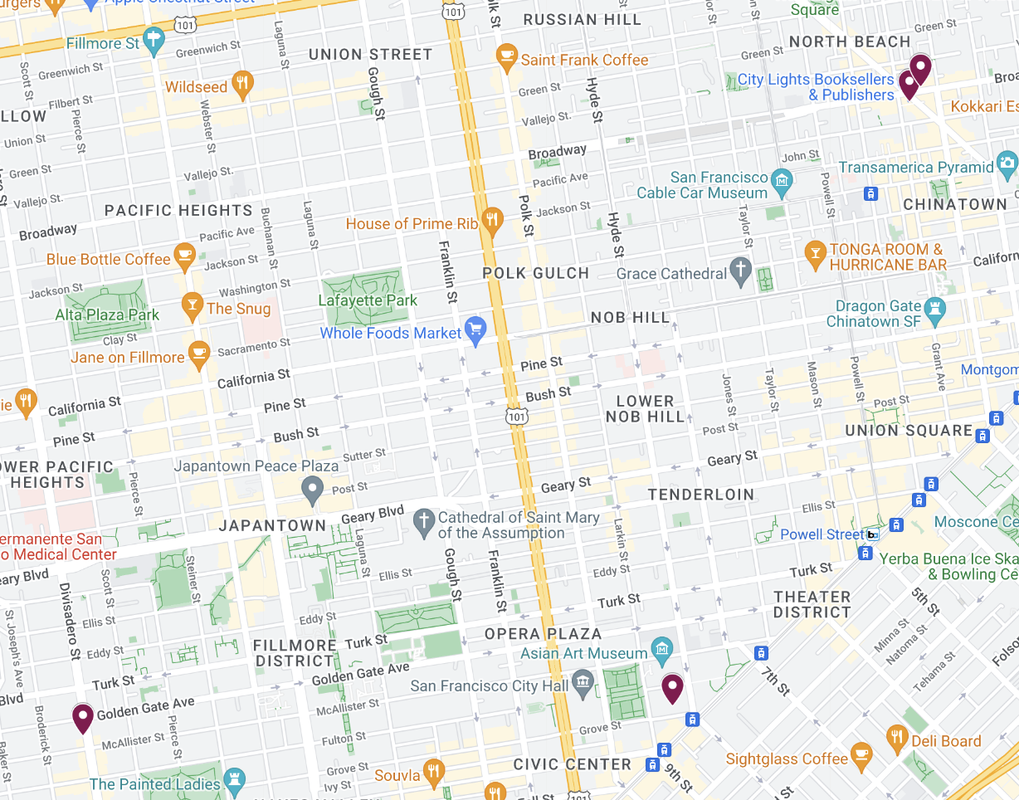
Click here for an interactive version of this map.
Related stories you may enjoy:
Symbolic Thinking and What We Mean by Words
Who Is the Real Rosie the Riveter?
This post is part of my new series
OUT TO LUNCH IN SAN FRANCISCO
My goal is to discover cheap and cheerful eateries in some of San Francisco’s most colorful neighborhoods while I check out what’s really going on in this zany town. Are we in a doom loop? Already on the rebound? Still fabulous? Stay tuned! These and other questions will be explored in upcoming posts.
DON’T MISS OUT!
If you haven’t already, take a moment to subscribe so I can let you know when I publish my weekly posts.
Just send me an email and I’ll take it from there.
[email protected]
And check out my
best selling travel memoirs & guide books
here
.
PLANNING A TRIP
?
Enter any destination or topic, such as packing light or road food, in
the search box
below
. If I’ve written about it, you’ll find it.
Leave a Reply