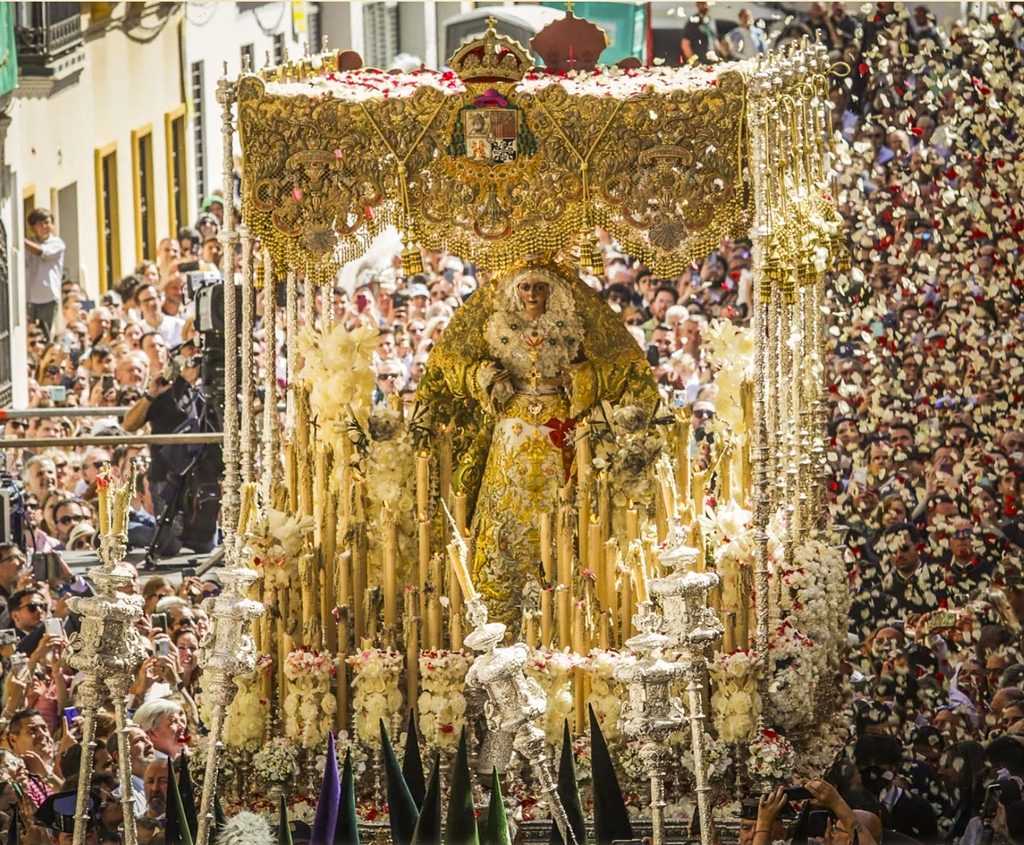
Our traditions and holidays provide reassurance that whatever madness is currently abroad in the world, some things will roll around every year with comforting predictability. But living abroad, it hasn’t always been easy getting my hands on all the customary accoutrements.
When I first moved to Seville more than two decades ago, Halloween decorations and Christmas trees were something people here only saw in movies, like talking cats and flying carpets. When Spanish amigos learned I was scouring the city in search of a pumpkin in October and then a live pine tree in December, they began looking at me oddly, as if I might be an alien from Mars instead of merely California.
A few years later, when Chinese importers turned up in Seville with truckloads American-style holiday decorations, trendsetters became intrigued, and soon everyone was experimenting with them, sometimes with unpredictable results.
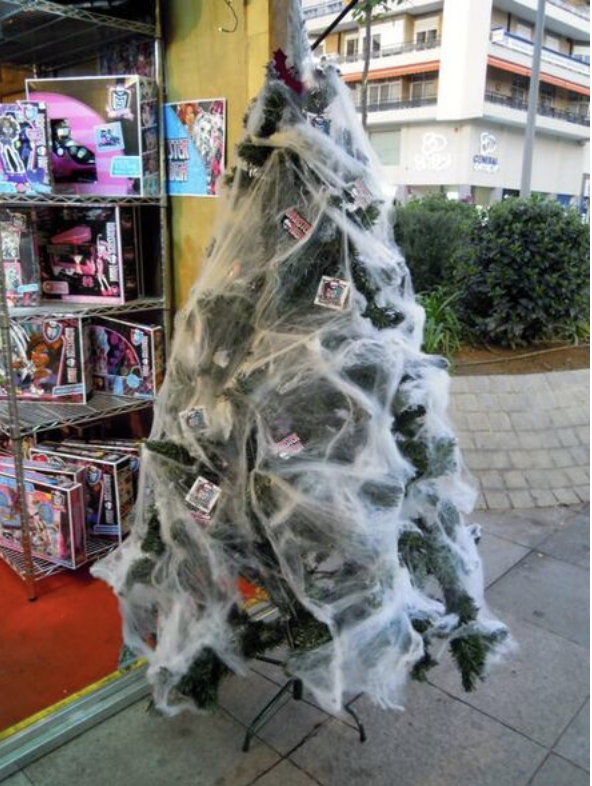
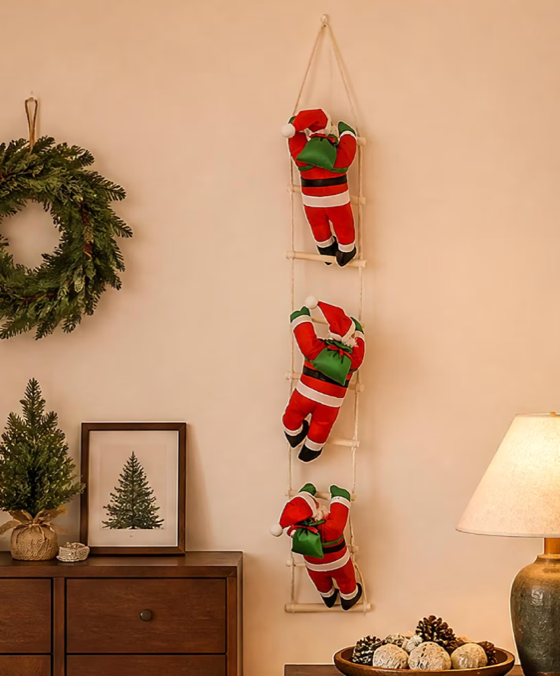
It’s easy for old and new traditions to become muddled. For instance, here in Spain holiday gifts are delivered by the Three Kings, so many Spanish balconies display a little rope ladder with the Three Kings climbing up carrying presents. When Santa suddenly came into vogue, rope ladders appeared with three Santas climbing up them. Huh? Three Santas? Did that make any sense? But then, this is a holiday where one man — or maybe three — supposedly deliver gifts to millions around the globe in a single night; sense really doesn’t enter into it. Weirdly, this new hybrid tradition has migrated over to the US; I just ran across this on Etsy.
Over the years, Rich and I have developed a number of our own personal travel rituals. For instance, we carry our cloth-framed wedding pictures (now battered and festooned with good-luck charms) everywhere. And we stop for a recombobulating coffee whenever we arrive in an unknown city. Now we’re pausing one of our favorite traditions: walking from our apartment to Seville’s Santa Justa Station and hopping on a train to begin our next adventure.
Last week’s tragedy was the fourth fatal rail accident in Spain this year due to faulty infrastructure, computer error, and lapses in human judgement. Fixing the system will require considerable time, money, shouting, finger-pointing, and ducking for cover.

So I’m avoiding Spanish trains at the moment, although I’m not prepared to scuttle our plans to take lots of short trips this winter. The Spanish bus system is efficient and affordable, but sadly lacking in romance. And then it hit me: one-tank trips.
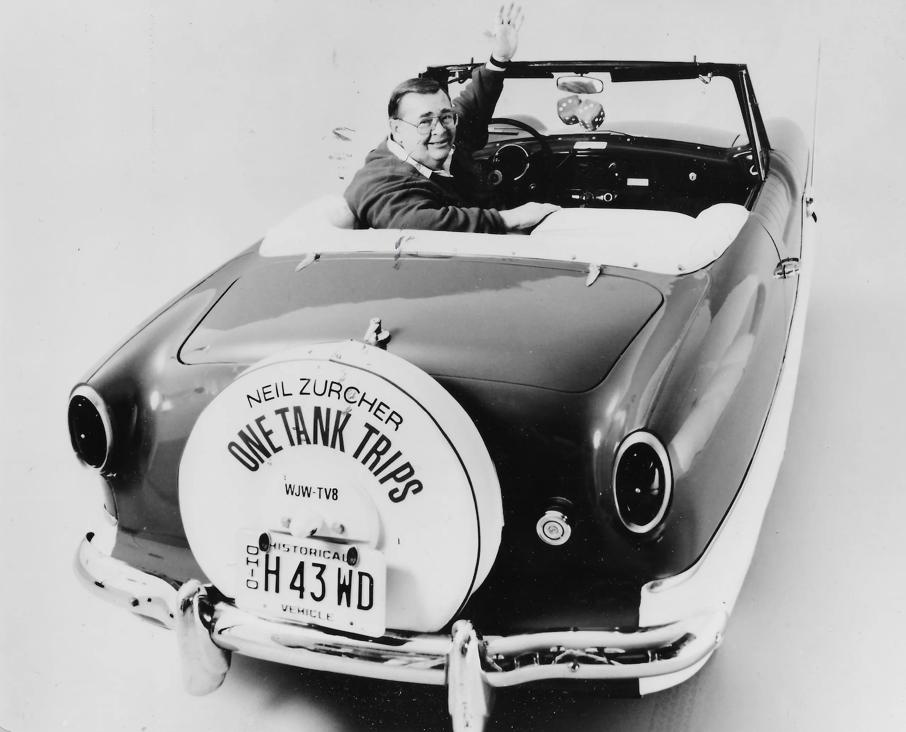
Rich and I moved to Ohio during the heyday of the travel journalist who originated one-tank trips: Neil Zurcher. During the oil crisis of 1980, a Cleveland TV station hired him to do a temporary five-segment show about weekend car trips with his family, each accomplished using a single tank of gas. Affordable getaways with a local angle. The audience loved it.
“I used my family car,” Zurcher wrote in 2008. “We tied some boxes on the roof, stuck some water skis out of the window and tied a child’s plastic inflatable inner-tube to the rear of the car. To make it all look like a family car going on vacation.”
One Tank Trips was so successful it was extended again and again for 25 years, earning Zurcher multiple awards and a place in Cleveland history.
Naturally other writers have adopted (OK, stolen) the idea. When I googled One Tank Trips 2026, the first listing that came up was “Gatineau Park & Carbide Willson Ruins … Featured in CTV Ottawa’s One Tank Trips, visitors explored the newly rehabilitated 1913 fertilizer plant.” Hmmm, I thought. Fascinating as a fertilizer plant makeover might be, I believe I’ve got more entertaining destinations at my fingertips.
“We could do this!” I said to Rich the other night, signaling the waiter to refill our wine glasses as I laid out my plan. “Just think of all the cool places near Seville!”
“I’m in,” he said. “Of course, there is one teeny, tiny problem.”
“The fact we don’t have a car here in Seville? We’ll rent one.”
Renting cars is considerably cheaper here than in the States, but even so, it’s not practical to rent one every week. Besides, many destinations will be quicker and easier to reach by bus, and occasionally I’ll want to write about things happening in Seville. But Rich and I have agreed road trips are in our future, starting this weekend.
“Our old VW could cover just about 400 miles on a tank of gas,” Rich said. “Shall we say anything within 200 miles of Seville is fair game?”
After an arduous effort to convert miles to kilometers and apply that to my map of Spain, I eventually settled on the unscientific method of using a roll of masking tape as a stencil for roughing out the approximate geographic area we might cover.
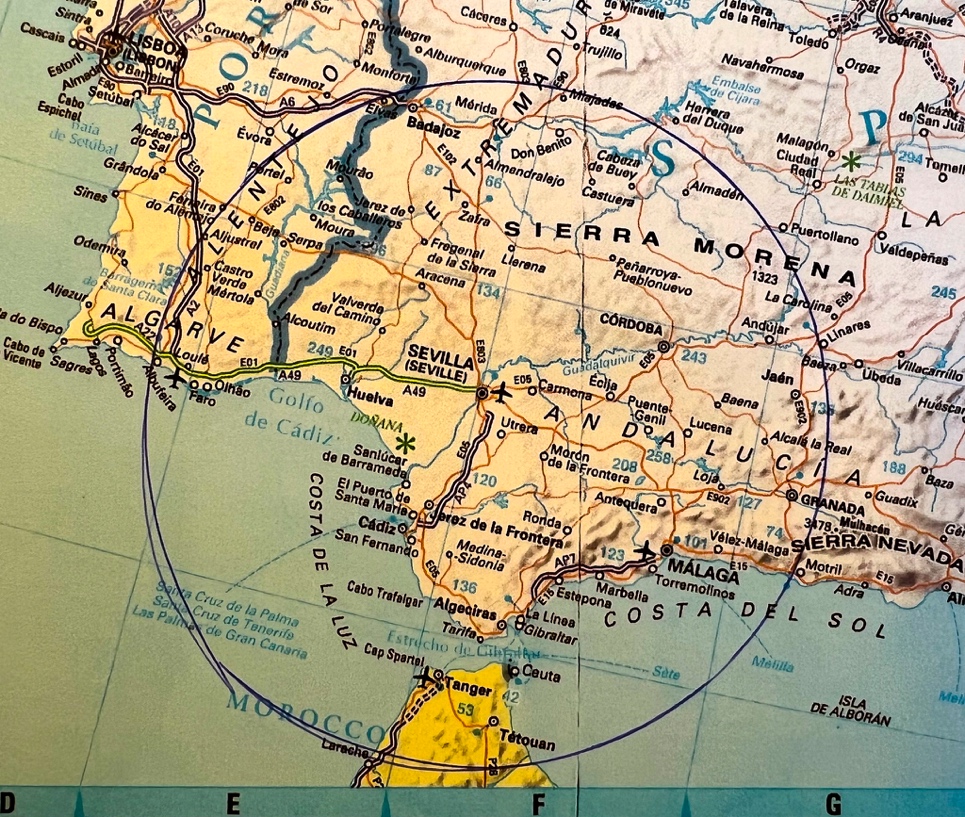
We’ll have plenty of territory to explore in Andalucía, the tip of Morocco (although I doubt we’ll drive there), and eastern Portugal. We’ll start closer to Seville, visiting towns we can drive to in an hour or so, and work our way outwards.
Unfortunately, our new parameters exclude some of Spain’s most curious festivals, ones I consider every year but somehow never manage to attend.
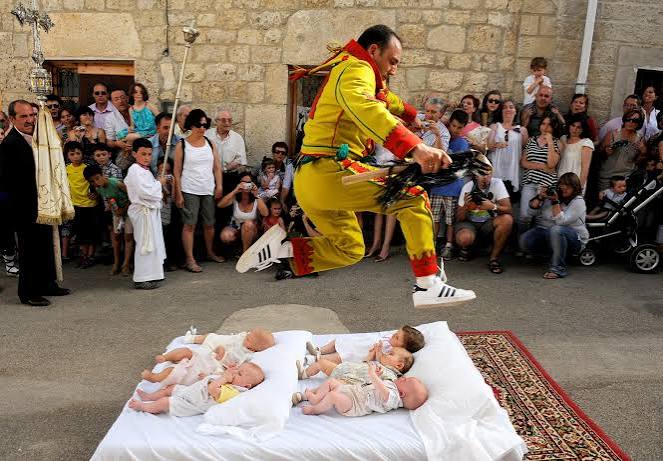
There’s the baby jumping ritual in the northern province of Burgos two months after Easter. Since 1620 the villagers of Castrillo de Murcia have lined up their newborns in the street so men dressed as devils can leap over them, absorbing their sins. Pope Benedict XVI pointed out baptism cleanses babies of original sin, and this pagan ritual is hardly befitting Catholics. The villagers’ position? Hey, it’s worked for 400 years; why stop now?
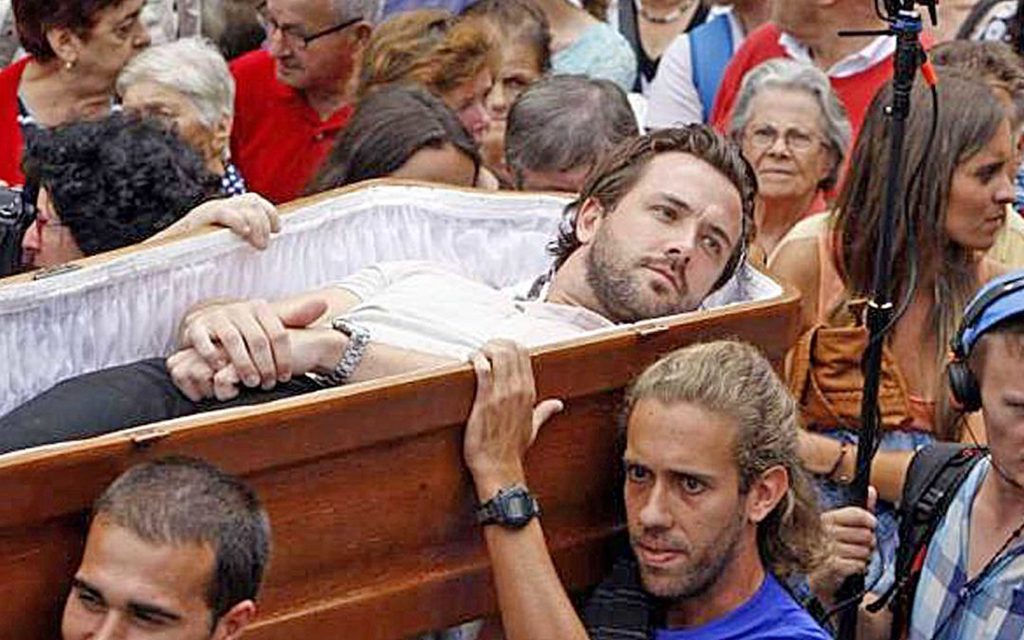
Then there’s the Romería de Santa Marta de Ribarteme (Festival of Near-Death Experiences). Every July 29 in Galicia’s parish of San Xosé de Ribarteme, residents who have cheated the grim reaper in some way lie down in a coffin and are carried through the streets, celebrating their deliverance and giving thanks to Santa Marta for her assistance in the matter.
The list of flamboyant Spanish traditions goes on and on, from running with the bulls to Holy Week processions to towns where residents spend one day a year pelting each other with tomatoes, turnips, eggs, flour, grapes, or red wine to re-enact some ancient event in their collective past. These observances are as sacred to them as our Fourth of July or Thanksgiving celebrations are to us; they’re part of what makes the year go round.
I think we can all agree 2026 hasn’t been easy, and as we stagger towards its final days, I’m bracing myself for whatever comes next. Of course, the Spanish have a tradition for that, too: everyone wears red underwear on New Year’s Eve to ensure good luck in the next twelve months. Is it too early to start sporting red undergarments now? Because from where I’m sitting, it looks like 2027 is going to be a bumpy ride.

Hey, everyone! Do you have any traditions or rituals that might bring good fortune, sustain us during dark times, or help us celebrate in style? Please share them in the comments below.


Leave a Reply