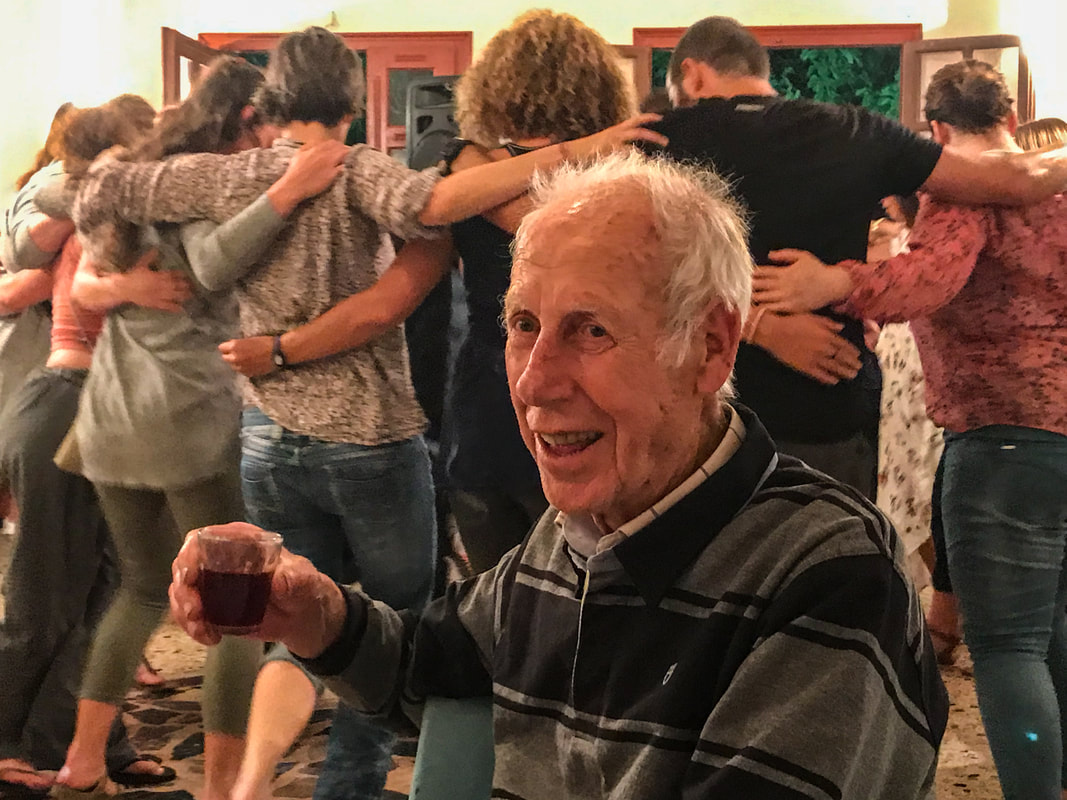

“Ya gotta give the guy credit,” I said around midnight, as Rich’s new friend led yet another 20-something woman onto the dance floor. “He’s got a lot of energy for eighty-four.”
One of the locals laughed. “Eighty-four? He’s ninety-three.”
I regarded the dancer with even greater respect. Not only was he the life of the
panygyri
, one of the traditional all-night parties with which Ikaria celebrates saints’ name days, but he was a living example of the locals’ legendary longevity. Designated as one of the handful of
Blue Zones
in the world, the island is full of people living remarkably long, healthy lives. I’d read articles on the subject aloud to Rich, adding, “We have to go there. Maybe it will rub off on us.”
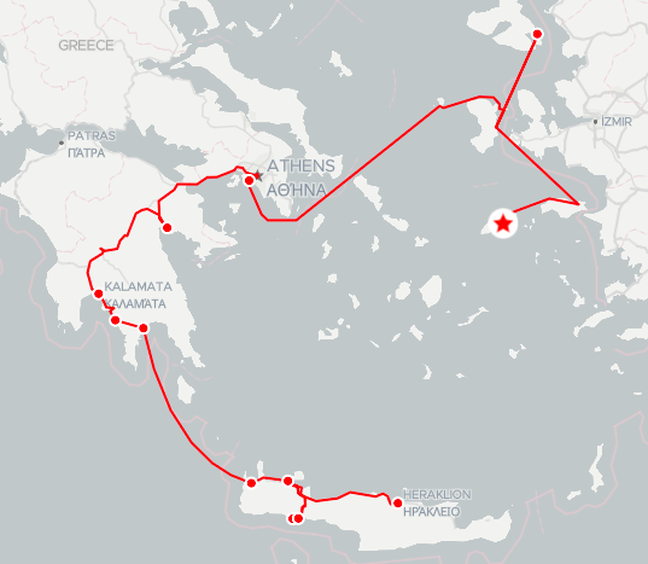
We arrived on the Sunday afternoon ferry and asked Dimitri, our hotel’s ever-helpful desk clerk, where to go for a late lunch. “Popi’s,” he said promptly. “The best food on the island, possibly all of Greece. Ten minutes’ walk up the coast road.” Twenty minutes later, as we staggered up yet another rise, we began to wonder if somehow we’d missed the place. Pulling out his phone, Rich discovered that Google had actually heard of Popi’s and informed us that it was just around the next bend, adding helpfully, “Closed. Opens again 1:00 AM.”
“That can’t be right,” he said.
We’d been told Ikarians refused to live by the clock, lightheartedly referring to any time of day as “late-thirty.” One young man I’d read about set off to buy coffee for his mother and didn’t return for three months. He’d run into friends en route to a
panygyri
, partied all night, gone to Athens, and gotten a temporary job. Presumably at some point he called home to suggest someone else should fetch Mom’s coffee. Obviously things were a bit looser around here. Still, opening at 1:00 AM?
We soldiered on.
Popi’s
was
just around the next bend, open, and serving some of the best food we’ve ever eaten.
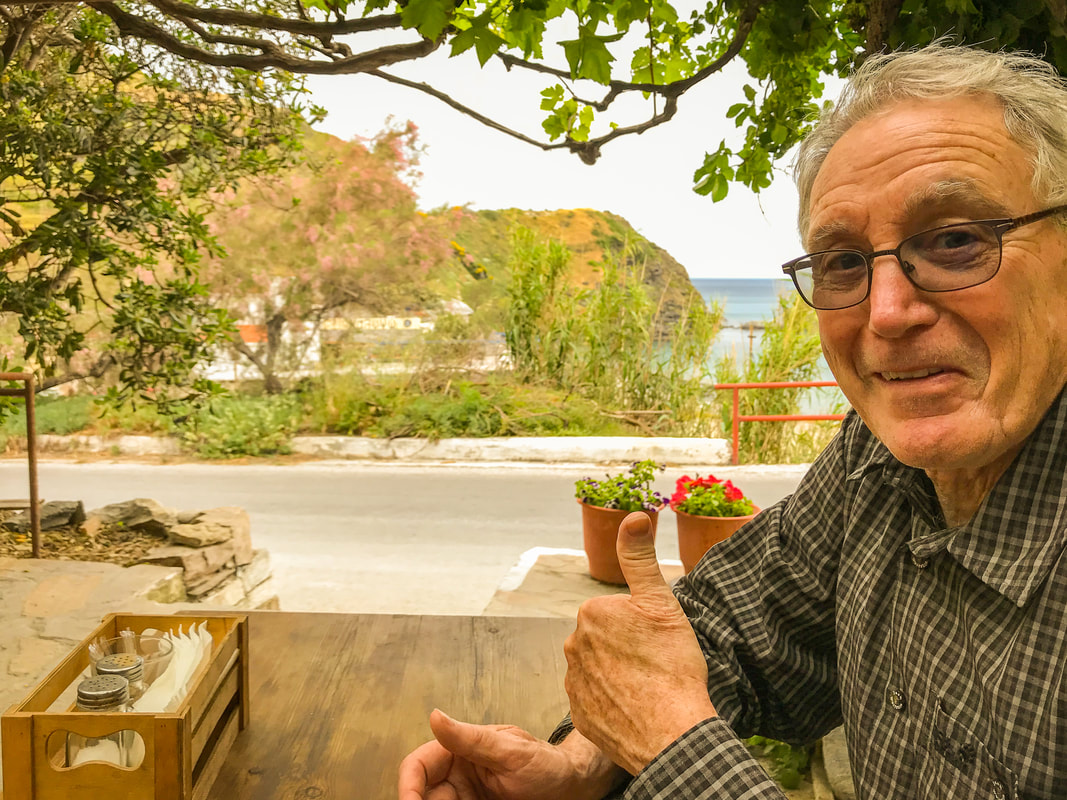
As we settled in the shade of the overhead vines, looking out over the tranquil Aegean Sea, we chatted with Zisis, whose mother had operated the place as a bar until he was born in 1993, at which point she converted it into a restaurant. I asked if he’d lived here all his life.
“I went to work in Crete for a time,” Zisis told us. “Too much stress. It’s better here.”
A relaxed lifestyle is one of the reasons ten times more Ikarians than Americans reach their eighties and nineties — and why their old age is rarely plagued with cancer, depression, or dementia. Another major factor is a diet based on the island’s wild greens, nutrient-rich herbs, seasonal vegetables, smaller amounts of food in general, and protein that’s mostly homemade cheese, fish, and goat. Goat is a surprisingly healthy option, far leaner than lamb or beef, with 40% less saturated fat than skinless chicken. And wild goat, it turns out, was the specialty of the house at Popi’s.
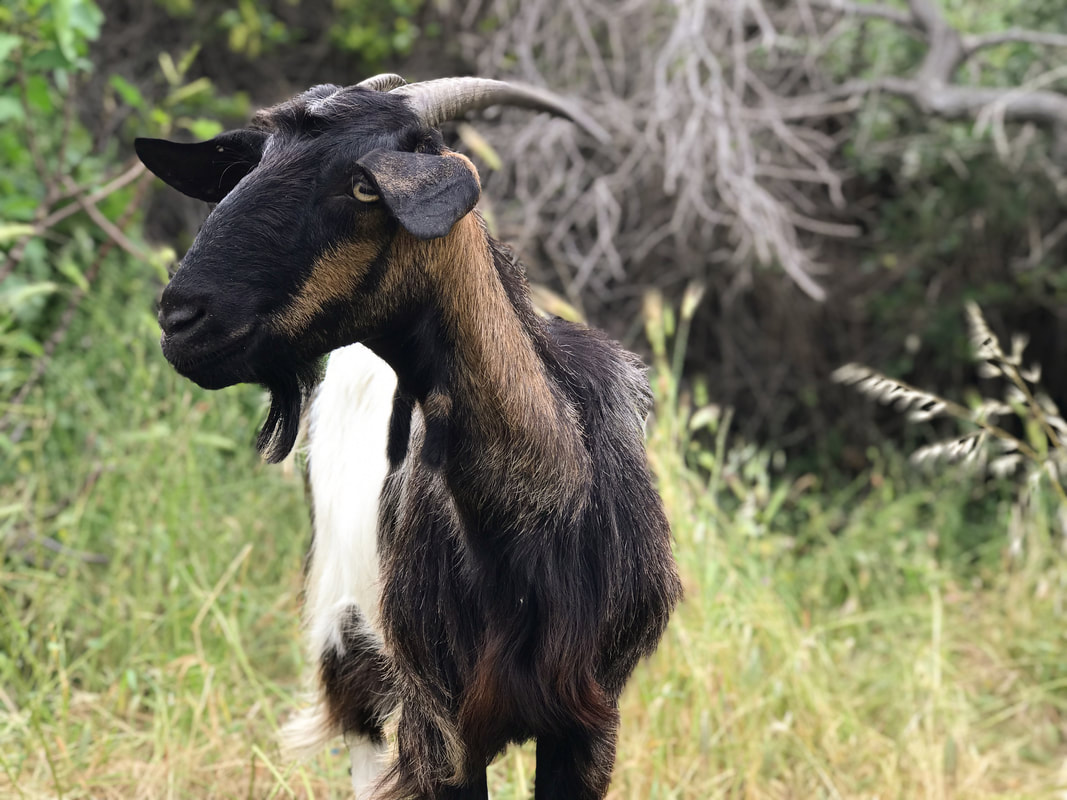
Now I know what some of you are thinking: How could I consider eating one of those cute little goats that had bleated a greeting as we passed, peering curiously at us from the hillside next to the restaurant? Well, right now, Ikaria is hideously overrun with goats, thanks to EU subsidies rewarding larger herds. On an island with just 8423 residents, there are currently 35,000 goats, most roaming free and wreaking havoc on the ecosystem. Islanders are desperate to cull the herds to keep their island’s vegetation healthy. I decided to do my bit to help.
“Want to try some wild goat?” I asked Rich. “Will you show me how you make it?” I asked Zisis. To my delight, they both said yes.
Zisis explained the meat was super fresh, having been butchered that very morning. They raise their own goats and get more from relatives and friends. “Some goats are kept in pens, but many are free. And then the people must go hunting.”
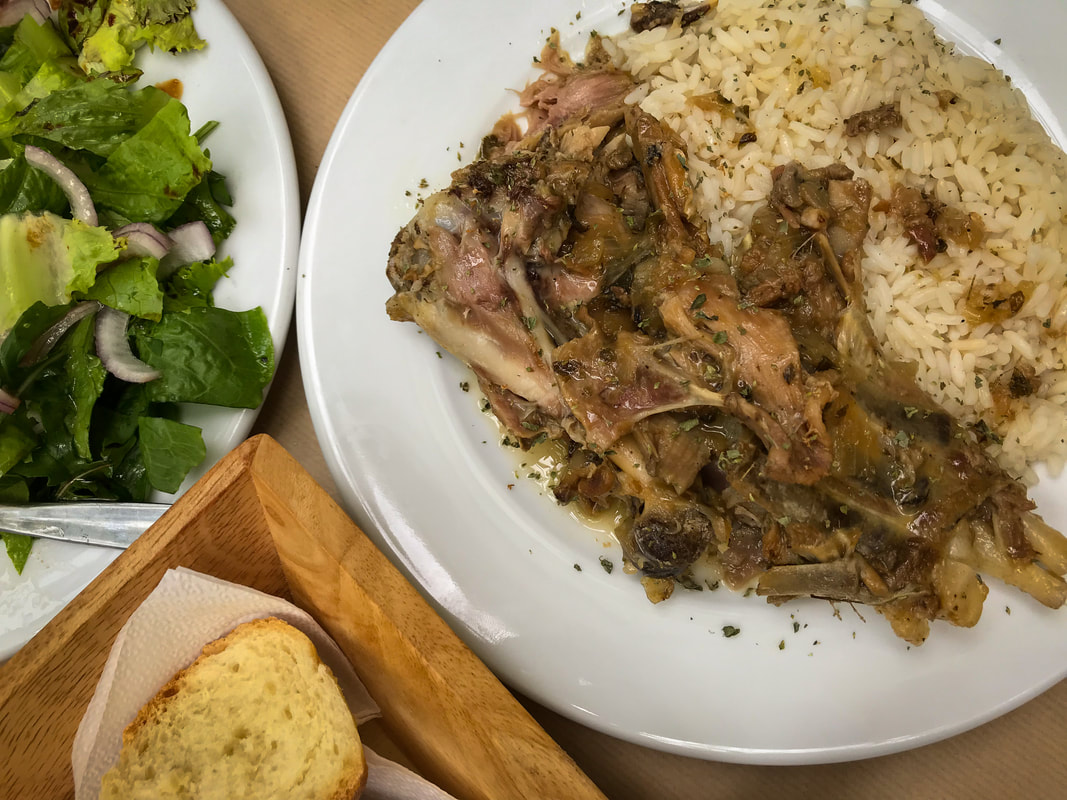
Asked to pin down quantities for the recipe, Zisis estimated he starts with about 2.25 kilos of meat. Because it’s so lean, formal cuts such as loin and shoulder aren’t practical; instead you make “village cuts,” dividing the meat any way you can, so long as it winds up a size that’s roughly suitable for cooking. You add lots of salt, pepper, and about three quarters of a cup of olive oil. You cook the meat in a ceramic pot at 200 degrees Celsius (400 degrees Fahrenheit) for an hour and a half to two hours. The cooking brings out the meat’s natural juices, but check it a few times and if it seems dry, add a little vegetable broth.
When the meat is tender and the smaller bones practically liquified, you take it out of the oven and sprinkle it with fresh herbs. Often this includes oregano, which is full of vitamins, antioxidants, omega-3 fatty acids, digestive aids, and much more. A study showed the variety grown on the island is three times more nutrient-rich and aromatic than the kinds in other parts of Greece. (I hate to even think how our American corporate version might compare.)
But the most important thing we learned is that wild goat cooked in its own juices and garnished with wild herbs tastes simply marvelous — succulent, rich, and comforting.
Learning how to cook goat was just one small part of our effort to live as “Ikarianly” as possible while we’re here. We’ve eaten local foods, sampled the local wines, and danced at the
panygyri
. Letting go of our sense of time, we’ve been easing around town at our best approximation of the locals’ relaxed pace, stopping often to linger in cafés and on our favorite wharf-side bench.
Don’t get me wrong; this isn’t an island of slackers. People get plenty done. They just do it their own way. Errands, for instance, often involve leaving their car in the middle of the street, their motorcycle at the curb with the keys in it, or their bicycle propped unsecured against a lamppost. Ikarians don’t sweat the small stuff … or the large stuff either. My goal in life is to find more ways to be like them. And of course, to eat more wild goat.
LEARN MORE ABOUT OUR MEDITERRANEAN COMFORT FOOD TOUR.
YOU MIGHT ALSO ENJOY
WANT TO LIVE TO 100?
PACKING LESS MADE EASY
CRETE: THE KINDNESS OF STRANGERS
Leave a Reply