Rich and I thought we were prepared for anything — trains leaving at 3:30 AM, running once a week, or requiring awkwardly timed changes at obscure junctions. It never occurred to us that there might be no public transportation whatsoever between two major European cities just 146 miles apart.
“Trains?” said the man at the Thessaloniki railway station, as if this were a foreign concept. He peered at my handwritten note. It read, “Thessaloniki —> Skopje Wednesday June 12.” He shook his head. “No. No trains to Skopje. After June 15, is possible. Now, no.”
Rich shrugged. “Looks like we’ll be taking the bus.”
Or maybe not. The lady at the nearby bus counter said, “Tomorrow. Next day. After that no.”
“We want to go next week,” I said.
“No. Tomorrow, next day, then is finished. No more buses.”
“Ever?” I asked.
She shrugged. “This is Greece.” Enough said.
This left us in something of a quandary. Our goal is to complete the entire trip on public transit — trains, buses, ferries, the occasional taxi — never driving a car or taking a plane. What to do?
We returned to the railway counter. “Could we buy tickets now for June 15?” I asked. It would mean three more days in Thessaloniki — not exactly a hardship.
“No. I have no tickets. Maybe June 15, maybe not.” He paused then added, “They are Serbian trains.” As if that explained everything.
Rich and I walked out of the railway station laughing and shaking our heads. There was a time we might have been a trifle perturbed at the idea that an apparently insurmountable obstacle was blocking our progress. But like everyone else in Thessaloniki, we were floating along on such a powerful caffeine high that nothing really bothered us.
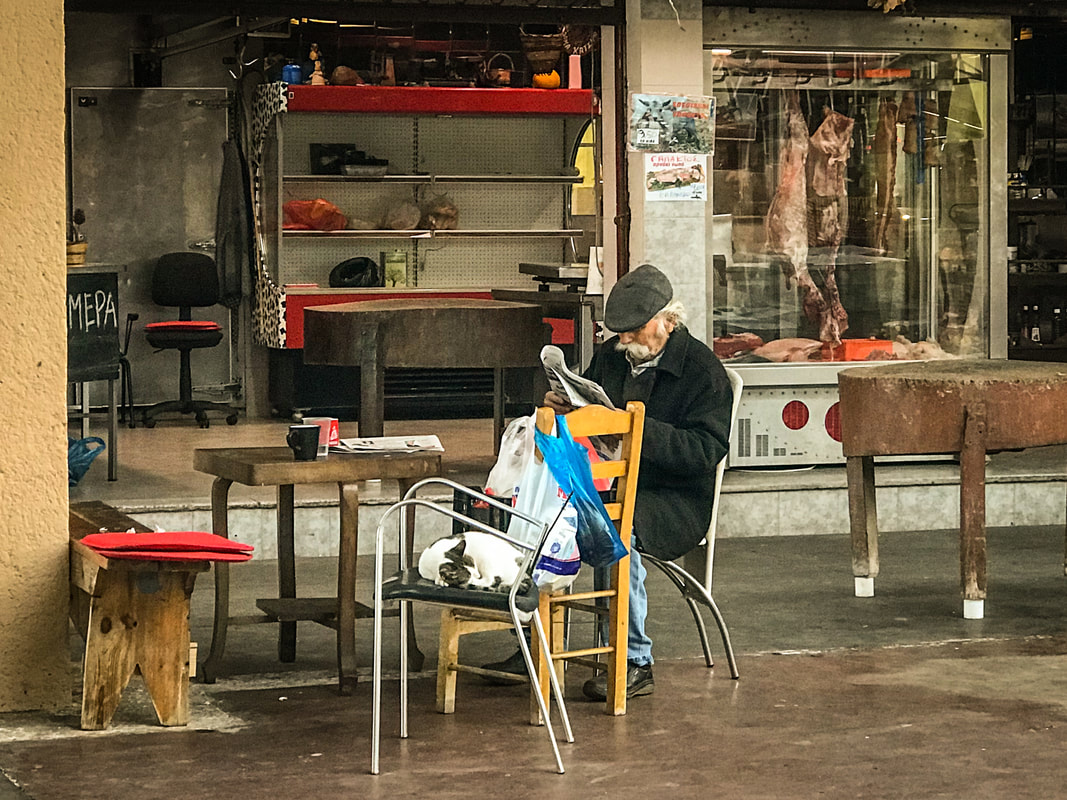
Coffee is the lifeblood of this city, and everyone, including us, is drinking plenty of it. Coffee houses abound, sometimes five or six on a block, doing brisk business at all hours of the day and night.
Younger locals are sipping from go-cups on the street, in the shops, and at work.
What’s in all those go-cups?
Frappés
and
freddos
, relative newcomers on the scene.
For centuries, folks around here drank nothing but traditional Greek
καφές
, a thick Turkish-style boiled brew that somehow manages to taste like American instant coffee. And while you can order it sketos (without sugar), it’s so bitter nearly everyone takes it
metrios
(one heaping teaspoon of sugar),
glykos
(sweet, two teaspoons), or
variglykos
(very sweet, four teaspoons, at which point it’s more or less Red Bull).
Then a single impulsive moment at 1957 trade fair changed the nation’s coffee culture forever. The Swiss manufacturer Nestlé was in town promoting instant Nescafé and a short-lived product involving chocolate milk made in a shaker. One day Nescafé employee Dimitrios Vakondios felt the need for caffeine but couldn’t find any hot water. On impulse, he borrowed the shaker from the chocolate milk rep and mixed Nescafé instant coffee with cold water and ice. The idea of iced coffee — shockingly radical yet undeniably attractive in this hot climate — caused an overnight sensation in Thessaloniki and soon became the drink of choice for hipper Greeks everywhere.
The new drink was dubbed the
frappé
(from the French “
frapper
,” meaning to hit, referring to the ice crashing around in the shaker). It can be served with varying amounts of
white or brown sugar
, with or without condensed milk, and — if you really want to feel the love — a scoop of ice cream. Frappés are so popular here that even Starbucks has added it to their menu.
The
frappé
reigned supreme until the 1990s, when it was overtaken by the
freddo
, a similar iced drink made from the classier Italian espresso. It can of course be configured to any degree of sweetness, and if you want milk, you ask for a
freddo cappuccino
.
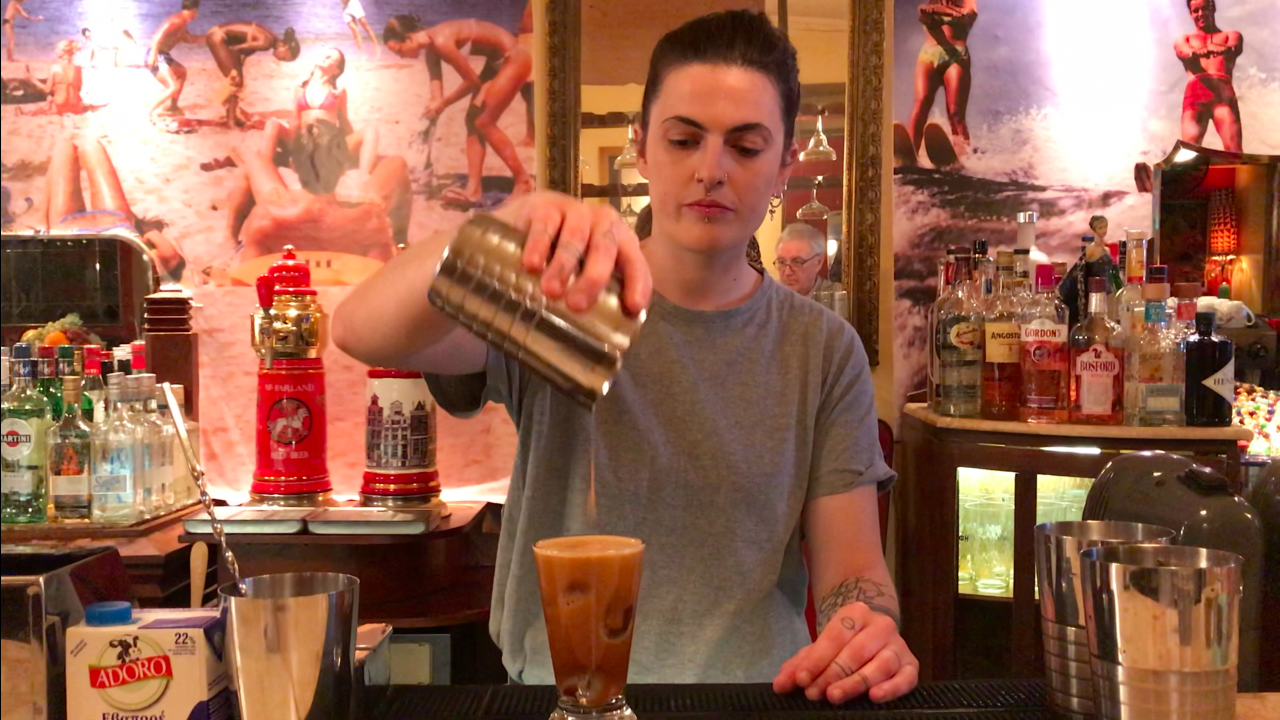
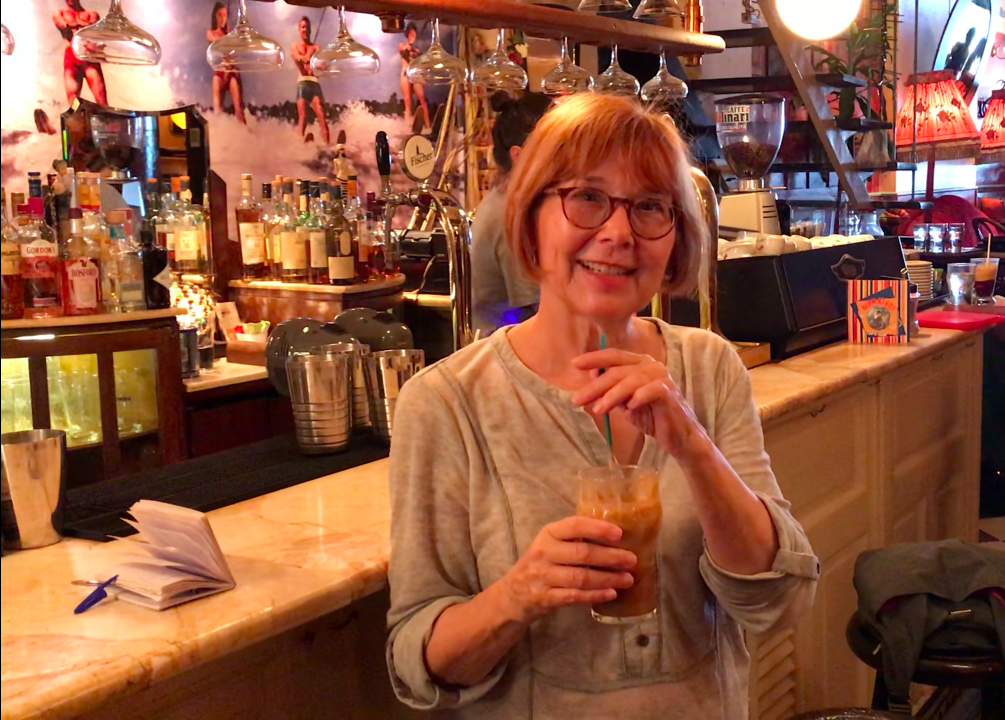
Which is better? Rich and I decided to consult Natasa, the owner of Thessaloniki’s historic and arguably hippest café-bar: Thermaikos. Here’s what we learned from Natasa and her barista, Athanasia.
Both drinks are fun, and if you get them fully loaded, they’re more like milkshakes than coffee drinks — which is no doubt why they’re so popular with the young. But if you hope to live to a ripe old age, you might want to stick with traditional Greek coffee. “Researchers studying heart health say that
a cup of Greek coffee each day may be the key to the longevity
of people on the Greek island of
Ikaria
, who live to age 90 and older,” reported Dr. Gerasimos Siasos of the University of Athens Medical School.
Greek coffee can determine your future in another way as well: the grounds are used by local psychics to predict the future. Which is why, when Rich and I were stymied in our efforts to leave town, I found myself at the café Ωκεανος (Ocean) for a reading with their resident clairvoyant. Elena is much in demand, and I had to take a number and sip my Greek coffee for over an hour while she did other readings. Shortly before my turn, she came and swirled the coffee around in the cup, tossed the liquid into a bucket, and upended my cup in its saucer to drain. Ten minutes later she was back, set the cup upright, and peered into my future.
First, she saw a female relative who was giving me trouble. “A dark-haired women, a bit heavy.” Four generations of my relatives passed before my mind’s eye; no one matched the description. The reading stumbled along with the theme of business papers recurring constantly and the hope that some money might be coming to me. Somehow we never got around to the subject of travel arrangements.
“What’ll we try next?” I asked Rich.
“Travel agencies. Somebody must go to Skopje.”
The first travel agency confirmed that no public or tourist buses were running to Skopje in the foreseeable future. As we emerged onto the street, a toothless old woman in black tried to shove a picture of the Virgin Mary into my arms. At my repeated refusals to buy it, she hurled a curse at me and stomped away. She and I had been through this routine three days earlier, just before our transit problems began. Hmmm, could there be a connection?
“Do you think I need to buy some of her art to get our karma back on track?” I asked Rich.
“Let’s hope not.”
Eventually we learned that bus service has been extended a few days while negotiations continue. So we may or may not leave town next week, I might have an unknown, dark-haired, heavyset female relative plotting against me, and it’s possible I’ll have to buy some cheap religious art to lift a curse. In other words, we don’t have a clue about what the future holds. But then, does anyone? In the meantime, I’ll just relax over another cup of
καφές
.
My Mediterranean Comfort Food Tour
In 2019 Rich and I set off on an open-ended, unstructured journey to sample some of the world’s best comfort foods — I know, a tough job, but somebody has to do it! Each meal gave me fresh insight into the character of the local culture. Right now I’m working on a book about my adventures; stay tuned for updates.
My Other Eastern European Adventures
My Move to Seville
Leave a Reply