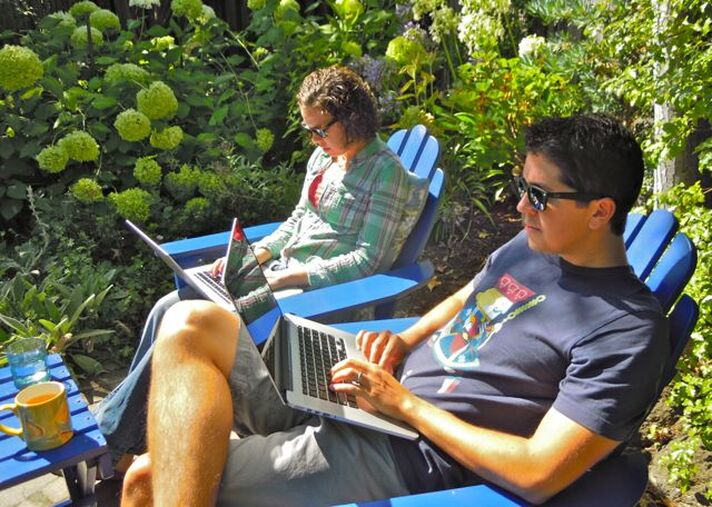


I love living abroad and adore traveling, but even my hell-yes-let’s-go attitude seems downright stick-in-the-mud compared to the nomadic lifestyle of my friends Lindsay Lake and Ross Williams. Now in their late twenties, Lindsay and Ross are nomads.
Since I got to know them in Seville in 2008, they’ve lived in Prague; Berlin; Amsterdam; Victoria, Canada; Buenos Aires; Phuket, Thailand; Paris; Berlin again; Barcelona; Budapest; Mexico’s Yucatan peninsula, Merida and Playa del Carmen; and Barcelona a second time. As I write this, they are boarding a plane to New Zealand.
Ross and Lindsay are not rich dilettantes on a permanent vacation, nor (so far as I know) are they secret CIA operatives, hitpersons or members of the witness protection program. They’re wireless nomads, part of a small but growing number of people who work over the Internet in ways that allow them to live anywhere – and everywhere – they choose.
Of course, like most people, they started out with “real” jobs in bricks-and-mortar locations, first in Denver and later working for a tech company in Seville. Then they realized that advances in telephone and Internet technology made their location irrelevant for many jobs. Doing international searches on CraigsList, they found market research clients for Lindsay and sales work for Ross that could be done entirely over Skype and cell phone; his sales clients in the US need never know he’s out of the country.
“We threw all the chips in and bet everything on this decision,” says Ross. They got rid of all excess belongings, and today, their entire worldly goods can fit into a taxi: two suitcases, a small rollaboard, a backpack, Ross’ guitar, and their large, cheerful dog, Rocky, who travels with them everywhere.
The couple has evolved strict rules to keep their baggage manageable. If you buy a t-shirt, you get rid of a t-shirt. Always choose multi-use items, like the lightweight bars made by Lush that serve as shampoo, body wash, hand soap, dog shampoo and even laundry detergent. And most importantly, don’t buy anything you don’t really, really need.
Like most young couples, they live in modest rented apartments and work hard five days a week. Unlike most people of any age, when they walk outside after work, it’s always someplace new and exciting, with opportunities to learn new skills, such as Basque cooking in Spain and scuba diving in Thailand.
As long as there’s decent Internet connection and no dog quarantine laws, they can live anywhere that takes their fancy. Entering on a tourist visa usually limits them to a three-month stay and then they move on. It’s not the lifestyle for everybody, but for Lindsay and Ross, it’s a great way to see the world while moving forward with their careers.
“It’s really not a question of why we do it,” says Lindsay. “It’s more a question of why doesn’t everyone do it?”
How long will they keep it up? That’s what’s everyone’s wondering, especially as they’ve just announced they’re expecting a baby in February. They admit they’ll probably have to curtail their travels to some degree, but they have no intention of returning to the US, or settling permanently in any one location. As Lindsay puts it, “We want to be sure we’re raising our kids in an environment bigger than their own back yard.”

Leave a Reply