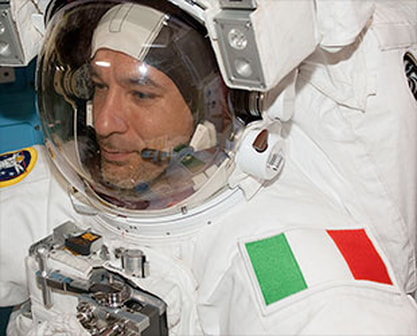

Italian astronaut Luca Parmitano couldn’t survive in space without a taste of home.
One of the many things I loved about living in Cleveland was Little Italy, a neighborhood where you could always find outstanding pasta, veal piccata, and Chianti, often served family style with a side of accordion music. A friend took us down there and introduced us to Angelo, owner of
Nido Italia
(The Italian Nest) in the old Brotherhood Loan Association building across from Holy Rosary Church. Rich and I went there often to eat homemade spaghetti and slow dance to songs made famous by Frank Sinatra.
The mix of romance and mouthwatering goodness has made Italian cuisine a favorite just about everywhere on the planet, from your neighborhood pizza parlor to
Antarctica
— proof that, as one blogger put it, “
in a culinary sense at least, the Romans managed to take over the world
.” And its reach is still expanding. A few years ago, Italian astronaut Luca Parmitano persuaded the International Space Station to provide the crew with a dinner that reminded him of home:
lasagna, risotto, parmigiana, and tiramisu re-engineered for travel into space
.
Luca may have found the meal comforting, but I have to confess I consider the idea of reconstituted freeze-dried tiramisu outright horrifying. Having spent the last few weeks savoring Northern Italy’s splendid cuisine, I know it’s all about fresh, local ingredients, recipes passed down for generations, and hands-on preparation in a kitchen that smells of tomato and basil. Somehow I doubt the International Space Station managed to include any of that.
Rich and I got to talking about how our Mediterranean Comfort Food Tour has really upped our appreciation of good food. And that’s when it occurred to us how easy it would be for our readers to do much the same thing on a smaller scale — say ten days to two weeks in Northern Italy.
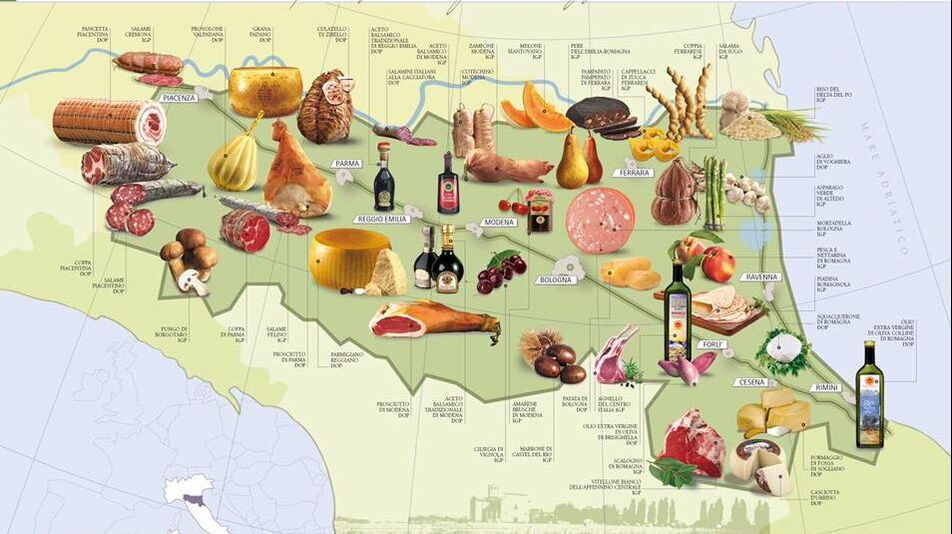
It’s the ideal place to create your own Comfort Food Tour. One glance at the map reveals a cluster of cities synonymous with great eats, such as Bologna, home of Bolognese sauce; Modena, familiar to anyone who uses balsamic vinegar; and Parma, which gave the world Parmigiano-Reggiano cheese and
prosciutto di Parma.
In addition to the famous foodie cities, the region has countless lesser-known towns making mouthwatering contributions to the pleasures of the table.
Google “food Northern Italy” and the culinary treasures of the region pop up. The efficient train system makes it easy to travel from city to city, often in trips lasting just 30 to 40 minutes and costing less than 10€. You may find it convenient to stay in one city and take day trips to the others. Here are a few towns you might want to put on your short list.
Trieste
Arriving from Croatia, we had a one-night stopover in Trieste, and Rich consulted one of his favorite apps,
Triposo
, to research nearby eateries. When we arrived at the cozy
Trattoria alla Valle
we discovered there was no menu and the proprietor only spoke two words of English: “pasta” and “fish.” Fortunately for us, both were delightful.
Parma
This ancient city offers an astonishing array of pastas,
salumi
(cured meat) such as
prosciutto di Parma
(ham), and cheeses including the iconic Parmigiano-Reggiano. To get a grip on places with this kind of overabundance, I like to connect with a food-savvy local via a cooking class, food tour, or
EatWith
(dinners in private homes).
Cooking instructor Stefania
gave us great food and lots of inside info; see my post
The Secret Life of Parmesan Cheese
for some of what she shared.
Modena
I’ve owned countless bottles of supermarket balsamic vinegar. Now, thanks to Stefania and to Cristina at
La Consorteria 1966
in Modena, I know the difference between that and the decades-old, barrel-aged version. It’s nearly as thick and dark as molasses, and the tangy-sweet flavor enhances everything from salad to (gasp!) ice cream.
Bologna
We arrived to find the lovely city of Bologna overrun with tourists during the final days of everyone’s August vacation. In such situations, there’s one sure-fire remedy: we stand with our backs to the cathedral and walk for ten minutes in just about any direction, knowing we’ll wind up someplace more interesting, less crowded, and more affordable.
And that’s how we discovered the unpretentious
Trattoria Tony
. Tony welcomed us with free
mortadella
(the grandfather of bologna sausage, aka boloney). To try the city’s iconic pasta sauce, we’d heard you don’t order
spaghetti bolognese
but rather
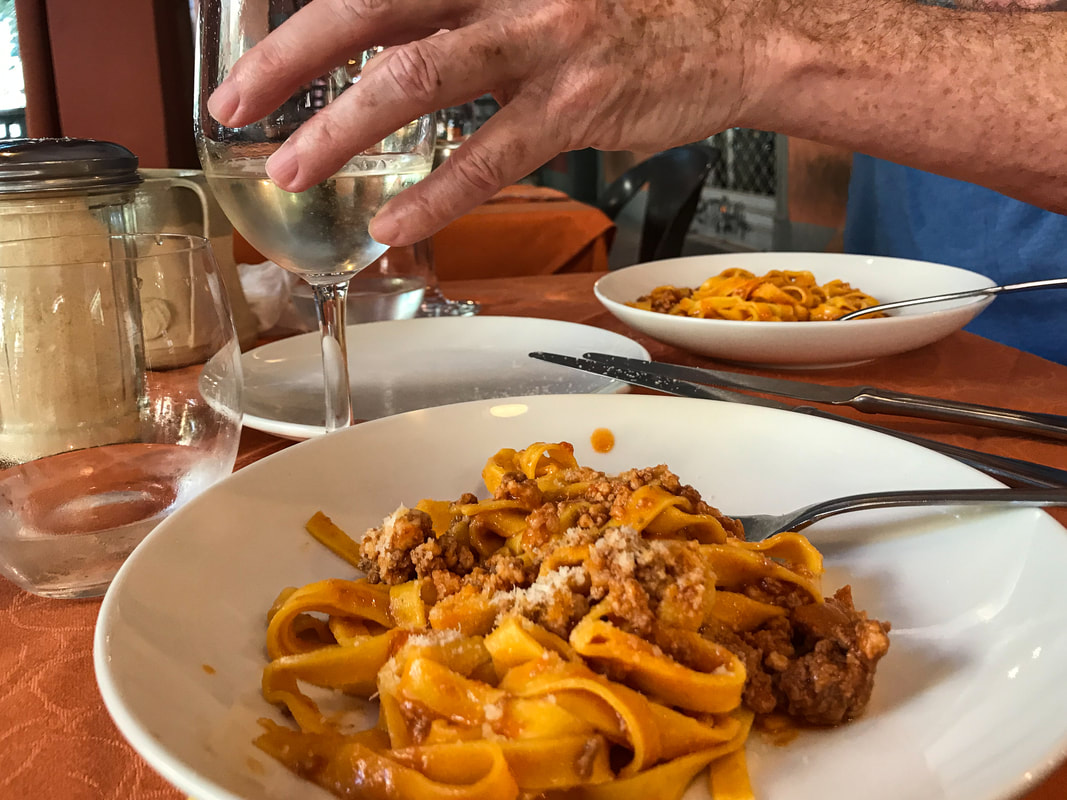
tagliatelle al ragù
: broad, flat noodles with a slow-cooked meat sauce flavored with tomato.
Deliziosa!
Piacenza
This overlooked little city has gorgeous old architecture, a mellow vibe, and a cuisine as good as its neighbors’ (which is saying something!). Their signature dish is pisarei e fasö, little dumplings and borletto beans seasoned with tomato sauce and bacon. What a treat! To sample the city’s famous prosciutto, we visited the meat store
Macelleria Callegari
, where for some reason the proprietor was inspired to fake driving a giant meat cleaver into my head. Butcher humor!
Asti
Most famous in the US for Asti Spumanti sparkling wine, Asti is also host to the wild bareback horserace called the
Palio di Asti,
in which local parishes have competed since the 13th century. Caterina, a member of the Ribero family who run the
Hotel Lis
where we stayed, managed to finagle us invitations to the pre-race banquet staged by the Cattedrale (Cathedral) parish. We were deep in conversation with Cattedrale supporters when the appetizer arrived at the table: horse tartare, a popular local delicacy.
“These guys really know how to work a theme,” I whispered to Rich. He and I agreed, with tremendous reluctance, that the demands of hospitality required us to eat at least some of it. How was it? Much like steak tartar. I’ll never know for sure, but perhaps this sacrifice on our part contributed some positive karma and was part of the reason for Cattedrale’s victory the next day — their first in 42 years.
After the race, Rich and I celebrated at the
Campanaro Restaurant
with a horse-free meal, concluding with a local specialty,
Pesche Ripieno all’ Amaretto
(Peaches Stuffed with Amaretto Cookies and Chocolate). In a city famous for sweet, sparkling wines, you can’t discuss dessert without discussing dessert wines, and at our host’s suggestion, we tried a rich Moscato d’Asti.
[See the recipe for
Pesche Ripieno all’ Amaretto
(Peaches Stuffed with Amaretto Cookies and Chocolate).]
For readers who want an excuse to try some good dessert wines (not that any excuse is needed), I’m providing recipes for two of Asti’s most renowned dishes: Campanaro’s Pesche Ripieno all’ Amaretto and from Caterina at the Hotel Lis, her version of Nocciole Cake. Both recipes naturally include wine suggestions.
[See the recipe for Caterina’s Cake.]
Every Comfort Food Tour is different, and you certainly don’t have to eat horse or rabbit or ham to discover the joy of sharing a meal at an Italian table — whether that meal is in Italy itself, your home town, or wherever your travels take you. As the Italians say, “
A tavola non si invecchia
,” at the table you never grow old. In fact, being at the table, surrounded by good food, family, old friends, new friends, and the memories of other wonderful meals — that’s when we truly come alive.
Have you been to any towns in Italy that you’d include in a Comfort Food Tour? What impressed you most about the cuisine there? Let me know in the comments below.
Unlike some of my better-organized and more practical blogger friends, I never accept free goods or services in return for promoting anything on this blog. Everything I write about is included solely because I believe you might find it interesting and useful for planning your own adventures.
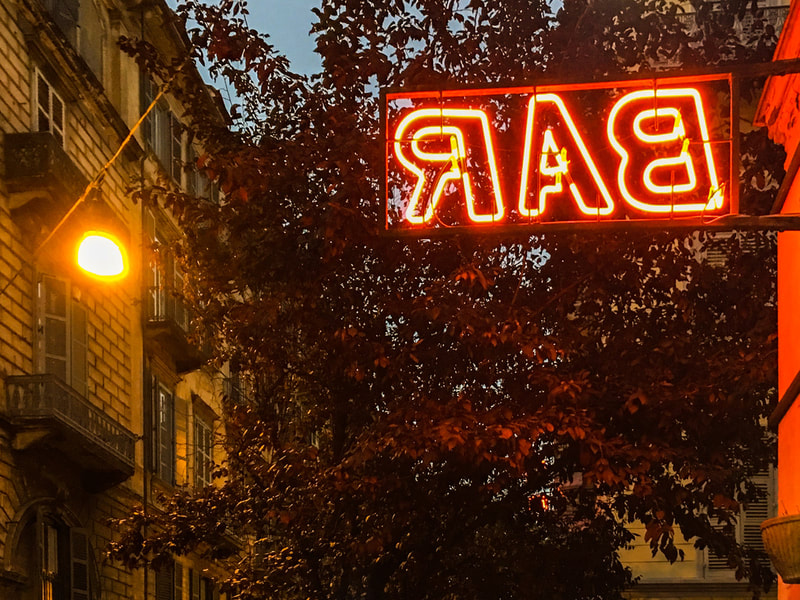
DIVE BARS OF NORTHERN ITALY
MY ROMANCE WITH SPAGHETTI
NAPLES, ITALY: EMBRACE THE CHAOS
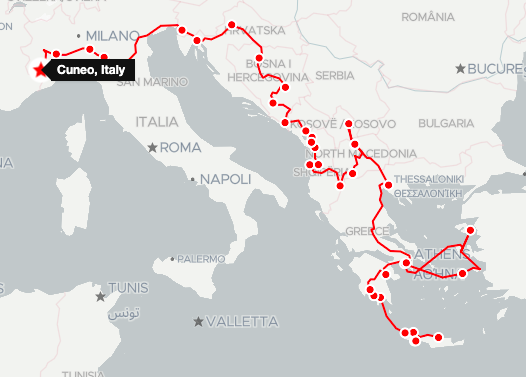
WHERE ARE WE NOW?
CUNEO, ITALY
Our
Mediterranean Comfort Food Tour
Continues!
Don’t miss a single loony adventure or mouthwatering recipe. Sign up to receive updates.
yes! Send me updates!

Leave a Reply