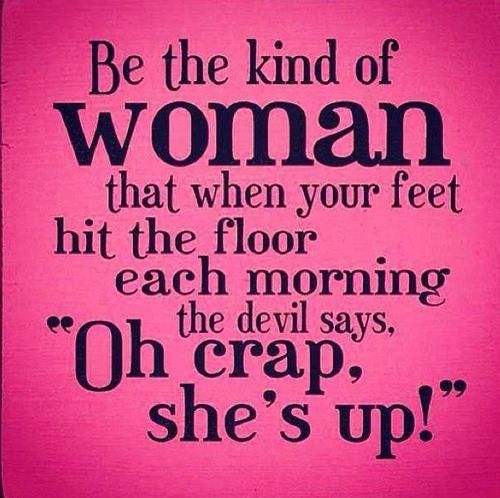
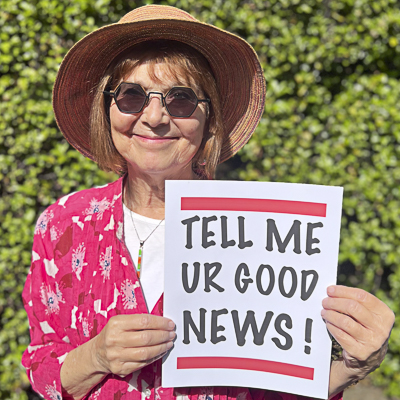
Running across this wonderful meme yesterday, I paused to think about the women in my family. My great-grandmother Mary Langley crossed the continent by covered wagon, arriving on the West Coast around 1889. Her daughter Ramona would spend her youth as a silent film star and her later years as my outrageous grandmother. My mom led civil rights marches. They were among the countless lionhearted women who have given the devil a run for his money throughout California’s history.
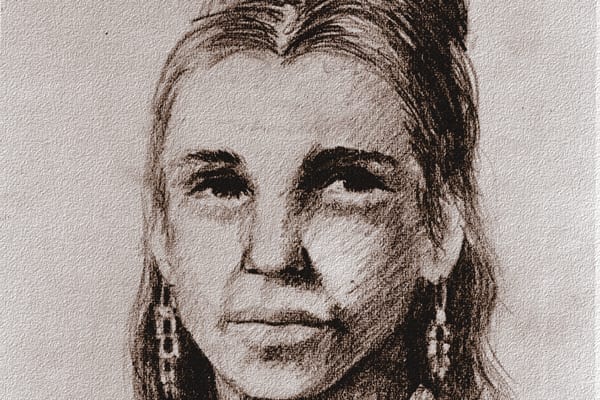
Take, for instance, “the Founding Mother of San Francisco,” Juana Briones de Miranda (1802 – 1889). A lesser woman might have considered birthing eleven children and adopting a twelfth to be occupation enough for anyone. But Juana was also running a medical and midwifery practice, a cattle ranch, and a thriving grocery business while developing real estate in what would become the city’s North Beach neighborhood and the suburb Palo Alto.
When she dumped her deadbeat, abusive, alcoholic husband, Juana faced an uphill battle to keep her properties. In 1844, a woman on her own, especially one of mixed African-American, Native American, and Spanish descent — who couldn’t read or write — wasn’t considered capable of handling her own affairs. She gave those naysayers their comeuppance. With the help of a trusty lawyer friend, she remained a powerful influence in the city and matriarch of her family until her death at 87.
Incredibly, I’d never heard of Juana until I started researching San Francisco’s
Museum of the African Diaspora
for a visit this week.
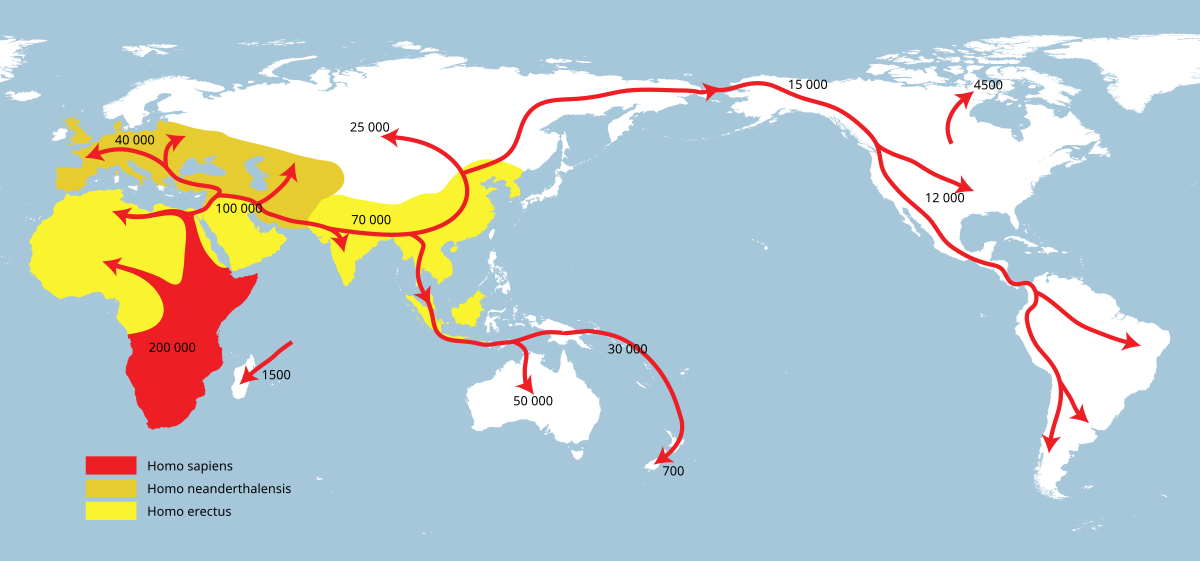
I’ve always been fascinated by the idea that all eight billion humans living today share common ancestors from East Africa. According to paleoanthropologists (who know a lot more about this stuff than I do), fossil remains clearly indicate that Homo Sapiens first emerged there around 300,000 years ago and after hanging around for 100,000 years, began to spread out across the globe.
“When did you first realize you are African?” a sign asked all visitors when the museum opened in 2005. Today, says the website, the museum “celebrates Black cultures, ignites challenging conversations, and inspires learning through the global lens of the African Diaspora.”
Imagine my surprise when I arrived on Thursday to discover it’s been turned into a fine arts museum. “Wait, what?” I said to the person at the front desk. “Why?”
Shrug.
“Is there still information here about the diaspora?”
“Of course. It’s everywhere throughout the museum.”
Really? Because Rich and I hiked every inch of the three exhibition floors, eyeballing all the art and reading every text, seeking any hint of information about the most significant migration in human history. And we found nada, zip, zilch.
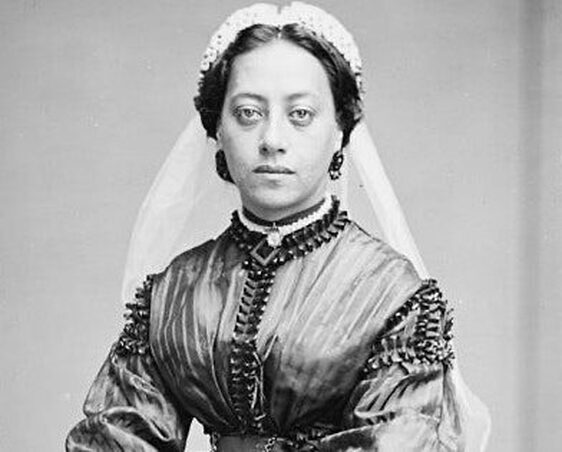
I had been hoping the museum would tell me more about the African-Americans who helped build this city. But Juana was never mentioned, nor was Mary Ellen Pleasant, the first self-made millionaire of African-American heritage, often called “the Mother of Human Rights in California.”
Like so many San Franciscans, Mary Ellen has an obscure past. She may have been the daughter of a voodoo priestess and a Hawaiian merchant on the East Coast. As a young woman she amassed a fortune in real estate and finance, spending much of it to free slaves and fight for civil rights.
During the Gold Rush, she moved to San Francisco to establish the Underground Railroad there and remained, rescuing fleeing slaves and women in need. For many years she worked as a cook and housekeeper, overhearing the city’s movers and shakers, picking up insider tips that helped with her make even shrewder investments.
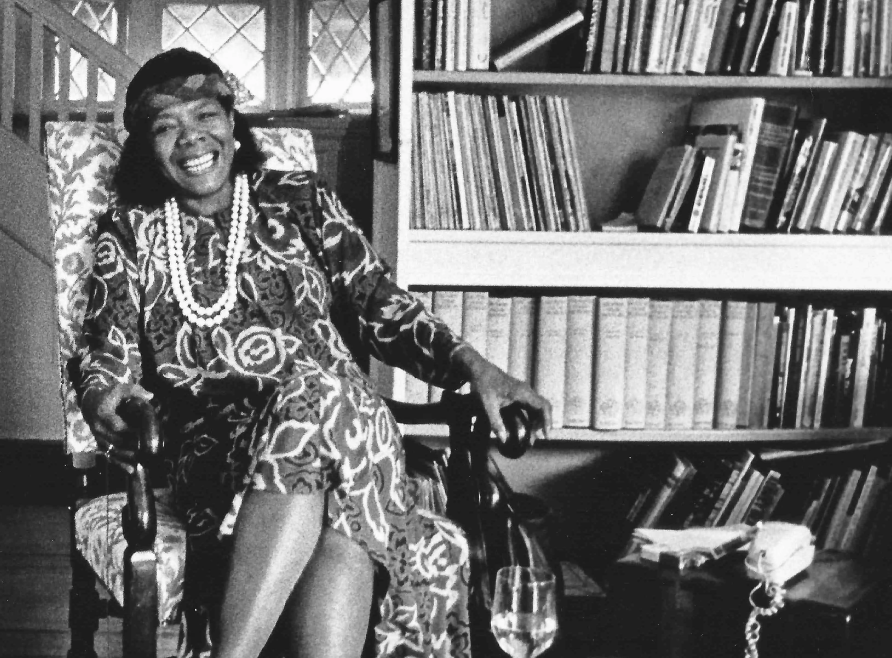
Among her many legal battles, Mary Ellen fought to change the laws that prohibited Blacks from riding in San Francisco’s streetcars. Her success paved the way for 15-year-old Maya Angelou to became the city’s first African-American female streetcar conductor in 1943.
“The thought of sailing up and down the hills of San Francisco in a dark-blue uniform, with a money changer at my belt, caught my fancy,” she wrote in her famous memoir
I Know Why the Caged Bird Sings
.
At first, transit officials wouldn’t even let her fill out an application, but Maya went back every day for two weeks, and they finally relented. On the paperwork, she lied about her age, made up a “fable” about driving for a white woman in Arkansas, and got the job.
“I clanged and cleared my way down Market Street,” she wrote, “with its honky-tonk homes for homeless sailors, past the quiet retreat of Golden Gate Park and along closed undwelled-in-looking dwellings of the Sunset District.”
Maya’s checkered career included stints as an actress, singer, dancer, composer, playwright, and theatrical producer. She was a tireless civil rights activist who worked with Martin Luther King, James Baldwin, and Malcom X. But she is mostly remembered for her brilliant poetry and fearless memoirs.
Her daily writing ritual began with checking into a hotel and lying on the bed with a legal pad, a bottle of sherry, a deck of cards, Roget’s Thesaurus, and the Bible. “I also wear a hat or a very tightly pulled head tie when I write. I suppose I hope by doing that I will keep my brains from seeping out of my scalp and running in great gray blobs down my neck, into my ears, and over my face.”
This is the kind of stuff I’d hoped to learn at the Museum of the African Diaspora, but hey, I guess that’s why God, in her infinite wisdom, gave us Google: so we could dig out the facts for ourselves.
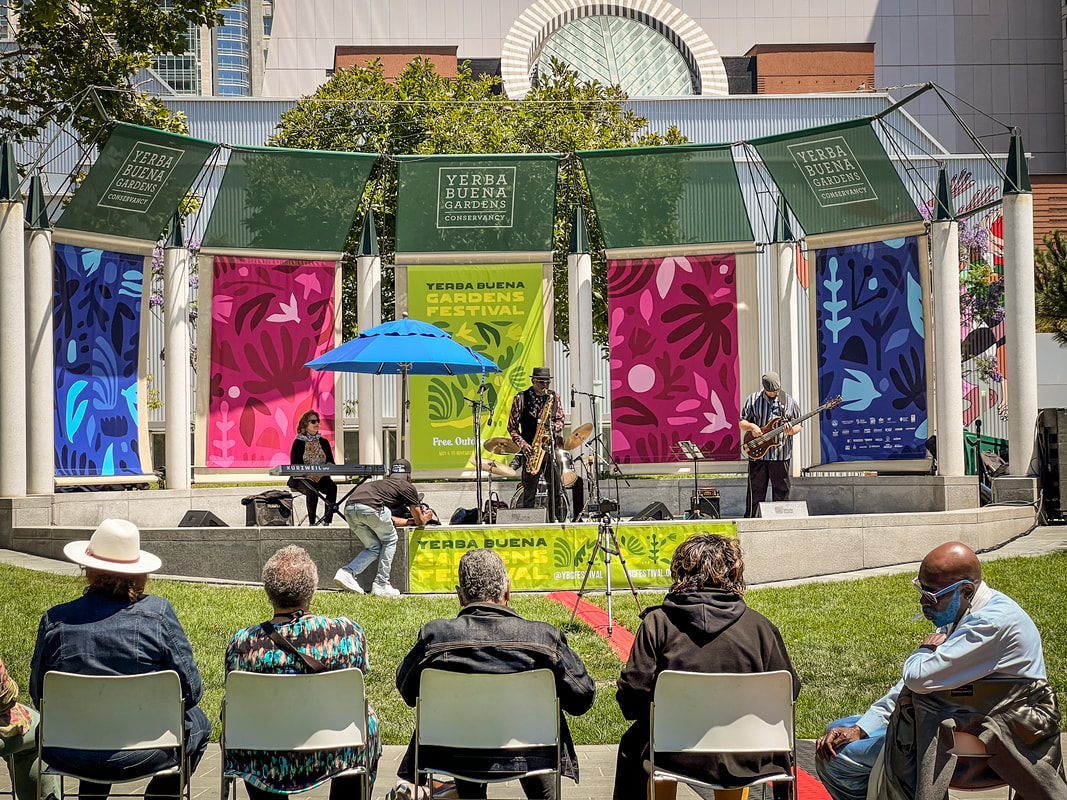
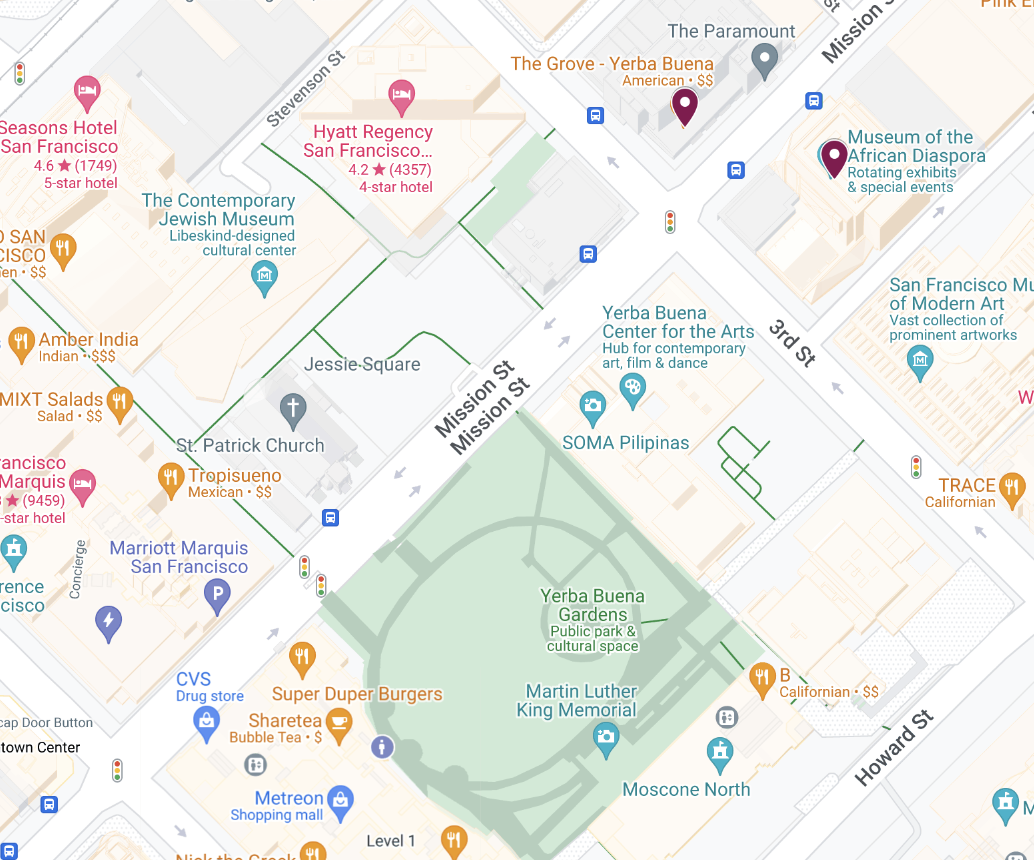
The museum was part of then-mayor Willie Brown’s 1999 project to redevelop a blighted “skid row” into the park and cultural center now known as Yerba Buena Gardens. Emerging from the museum, Rich and I lingered on the park’s sunlit lawn, listening to glorious tunes from legendary saxophonist Charles Unger.
Afterwards we headed across the street to lunch at The Grove. “We make honest, thoughtfully crafted comfort food,” says their website. “We’re independently owned, warm, woodsy, eclectic, outdoor, with a zillion details and oozing with soul.” Incredibly, this turned out to be an understatement. Co-owner Anna Zankel wanted to create “San Francisco’s living room,” and the atmosphere is delightfully homey. The breakfast burrito was some of the best food I’ve found in the city.
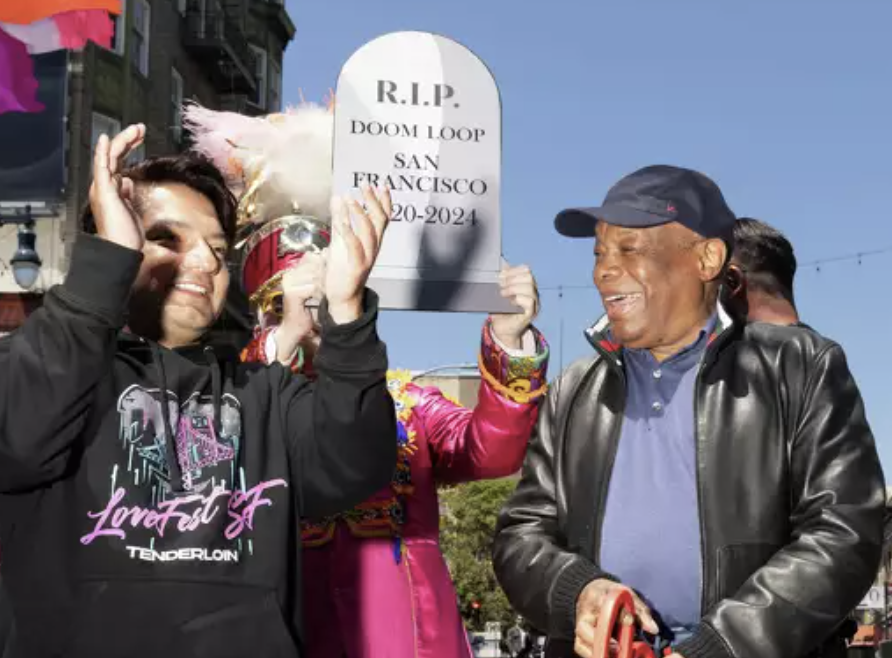
This week, at the Tenderloin block party “Love Fest SF,” former-mayor
Willie Brown officially declared the death of the “doom loop,”
the narrative that San Francisco is on a dystopian spiral into hell. Amen to that!
As I looked around the Grove at the laughing, chatting, munching crowd, I thought of all the people who love this city not despite its oddball character but because of it. Yes, we are not like the others, and that’s fine with us.
This is a gutsy, vibrant city and I’m not afraid to say so. In fact, I cherish the belief that when my feet hit the floor this morning, somewhere the devil of doom-loop misinformation was shouting, “Oh crap, she’s up! And working on another post about cheap and cheerful San Francisco. Dammit!”
SUBSCRIBERS
If you miss a post announcement, please check your spam folder. Internet security is in a frenzy these days.
This post is part of my ongoing series
OUT TO LUNCH IN
CHEAP & CHEERFUL SAN FRANCISCO
My goal is to discover some of San Francisco’s most colorful neighborhoods so I can check out what’s really going on in this zany town. Are we in a doom loop? Already on the rebound? Still fabulous? And where should we eat afterwards? These and other questions will be explored in upcoming posts.
BROWSE PREVIOUS POSTS HERE
DON’T MISS OUT!
If you haven’t already, take a moment to subscribe so I can let you know when I publish my weekly posts.
Just send me an email and I’ll take it from there.
[email protected]
And check out my
best selling travel memoirs & guide books
here
.
PLANNING A TRIP
?
Enter any destination or topic, such as packing light or road food, in
the search box
below
. If I’ve written about it, you’ll find it.
Leave a Reply