

“Well, that’s another restaurant we’re never going back to,” Rich said.
We were peering in the front window of El Traga, a Seville eatery in which we’d whiled away many happy hours with great friends and passable wines. Inside, a mob of twentysomething Americans and Asians perched on our old familiar bar stools, shooting selfies and swilling enormous pink drinks bristling with umbrellas and fruit. New arrivals poured through the front door brandishing printouts from TripAdvisor and pointing to photographs of Caribbean cocktails unknown on Spanish soil until very, very recently.
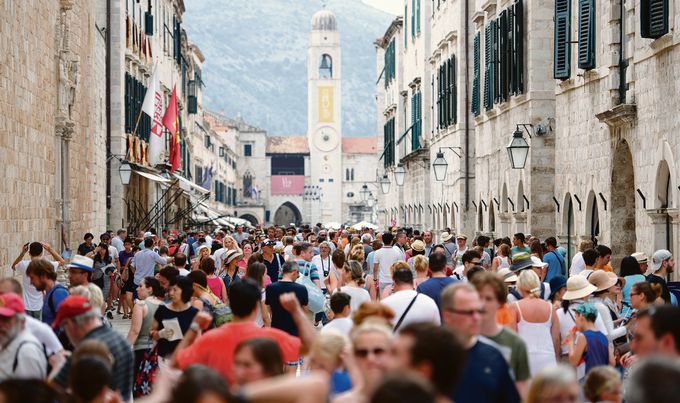
Scenes like this are happening all over Europe. In the decade since the economic crisis drained government coffers, officials have been struggling mightily to replenish them with tourist cash. For better or worse, many cities have succeeded beyond their wildest dreams. Europe hosted a record-breaking 663,000,000 visitors last year, and 2018’s numbers are set to surpass that.
Now are officials realizing they should have been a bit more careful what they wished for.
“Vacationers Threaten to Turn Europe into a Theme Park,” reads a recent
Time
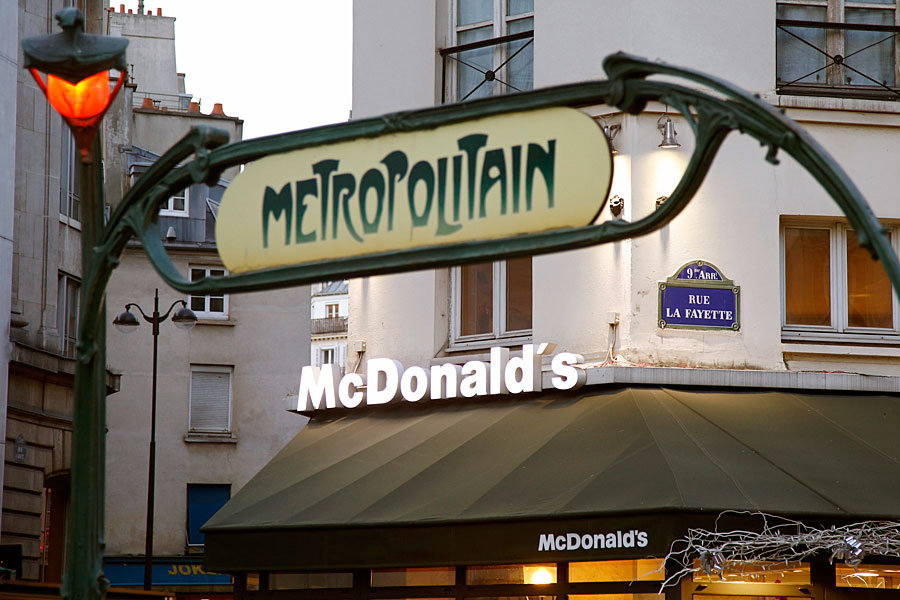
headline. Exaggeration? Maybe. But in many top destinations, downtown streets are so clogged with vacationers and souvenir stands and fast food vendors that businesses have stopped functioning, residents can’t conduct their daily lives, and the charm that has attracted visitors for centuries is in danger of disappearing forever. And as if all that wasn’t worrying enough, corporate food chains are replacing the traditional trattorias, cafés, and bistros faster than you can say “Yes, we have menus in English.”
But wait! Don’t tear up your plane ticket and cancel your next trip. Remember that Europe is nearly four million square miles, so it’s easy enough to find unspoiled regions — even unspoiled sections of hideously overrun cities like Barcelona and Rome. While it’s depressingly true that much of the European landscape is infested with American fast food franchises and more homegrown cookie-cutter chains, every city still boasts a host of fabulous eateries, from old-school cafés to experimental chefs of real genius.
To find great eats, you’ll need two simple tools: walking shoes and your sniffer.
Every European city has a “Touristville,” usually in the blocks surrounding the cathedral. In this zone, expensive substandard fare is the norm because owners know they’re serving one-time customers unfamiliar with local cuisine and prices. Use those walking shoes to stroll out of Touristville and into a local neighborhood.
Now get serious about choosing a place to eat. For guidance, I often check such resources as
Like a Local,
Lonely Planet
, and
Triposo
. The least reliable is TripAdvisor, which measures popularity not quality. Whether you’re heading to a place you’ve read about online or choose to explore an intriguing-looking spot you stumble upon, here’s where your sniffer comes into play.
Rich has spent a lifetime honing his sniffer — that is, his uncanny ability to discover terrific places to eat, drink, and make merry. His technique has always been a closely held secret — until now. The shocking proliferation of tourist trap restaurants, especially corporate chains masquerading as quaint, traditional cafés, is compelling him to speak out.
“It’s for the greater good,” he says. “And it’s really quite simple. Just ask yourself these five questions.”
“What do they say about judging books?”
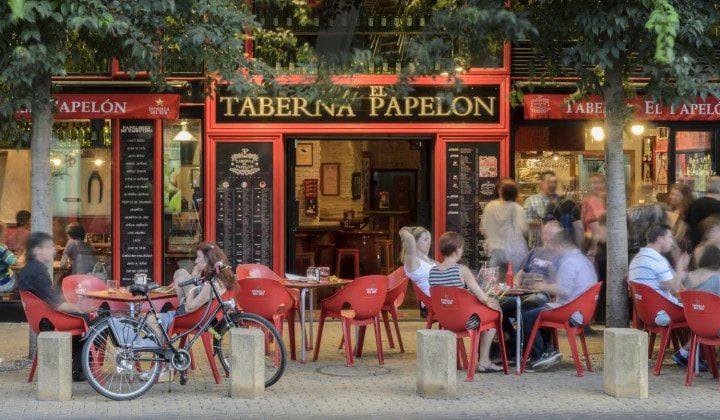
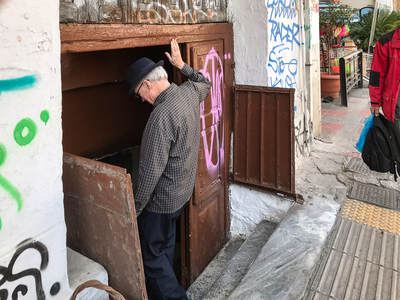
A modest exterior doesn’t mean the food isn’t outstanding; likewise an adorable front can be deceiving. When the cheerful red Taberna el Papelon first opened in Seville, I couldn’t wait to give it a try. Turns out it’s a corporate Spanish chain with food that can best be described as
decepcionante
(underwhelming). It was rated #1 on Trip Advisor.
2. “Does the place look clean and well run?”
Funky is one thing, filthy another. We once took some unlucky guests to try out the new café-bar opened by an old acquaintance. Wall plaster was crumbling down onto the frayed seats, the food in the glass case looked as if it had been there for days, and when our host insisted on giving us free potato chips, they had a strange, fish-like flavor. We made our excuses and fled.
3. “Sniff the air; what’s cooking?”
If the scents wafting out of the kitchen make your mouth water, that’s a big plus. If the place smells like potpourri, disinfectant, or worse, give it a miss.
4.
“Look around; what dishes are being served?”
In Antiqua, Guatemala we wanted local food but at first all we saw were tourists tucking into burgers and chicken Caesar salads. Eventually we found a hole-in-the-wall jammed with locals eating
pepián de pollo
(chicken in spicy pumpkin and sesame sauce). Yum!
5. “What are customers drinking?”
There’s nothing wrong with enjoying frilly cocktails from Thailand, Cuba, and Hawaii, but they are a tip-off that you’re not in a traditional European restaurant. If you’re looking for a local experience, find out about regional favorites — usually specific types of beer and wine.
All food has a backstory. You’re not likely to get much joy from a dish whose history is a dismal saga of mass production, days on trucks, and months in freezers. Skip the corporate food traps and go for the real deal — locally sourced, freshly prepared meals that are a feast for the senses. Yes, some regions of Europe are edging closer to becoming theme parks, but even there, with a bit of walking and judicious use of your sniffer, you can still find memorable meals worth lingering over. Life is too short to eat bad food, and that goes double when you’re traveling. As Erma Bombeck so famously put it, “Seize the moment. Remember all those women on the
Titanic
who waved away the dessert cart.”
Have you had any great or terrible meals in Europe? Got any tips for finding terrific eateries abroad? Please share the details in the comments below.
YOU MIGHT ALSO ENJOY
HELSINKI IS FOR FOODIES; WHO KNEW?
THE MYSTERY OF THE VANISHING GREEK TAVERNA
NAPLES STREET FOOD & DIVE BARS

Leave a Reply