




“We are getting crazy travel bug,” my friend Lonnie wrote me this week. “Don’t know when but we are talking. Would love to pick your brain.” My emails and Zoom calls are humming with fresh possibilities now that the vaccines are making many Americans feel, as my pal Pete puts it, “completely bullet proof.” Or at least sufficiently Covid-proof to consider a future that includes a destination further away than the local supermarket.
For the last year Rich and I have avoided even discussing travel. Bringing it up seemed as foolish as someone in a WWII foxhole saying, “When all this is over, I’m going to buy a farm.” Way to jinx yourself! But a few weeks ago, when I’d had my first shot and Rich his second, an idea popped into my head.
“When it is safe to travel again,” I said, “what would you think about visiting the happiest places on earth?”
“Disneyland?”
“No, seriously. I’ve spent the last year writing about
surviving disasters
,
packing for catastrophes
, and
stocking the Apocalypse Chow Food Locker
. You’ve spent months studying
the science of happiness.
Wouldn’t it be fun to visit lighthearted places — you know, the countries that always top the World Happiness Index? See what they’re like?”
Rich got that I-think-we’re-on-to-something gleam in his eye and said, “Where’s the map of Europe?” In moments we had the map spread across the table and the
World Happiness Index rankings
onscreen.
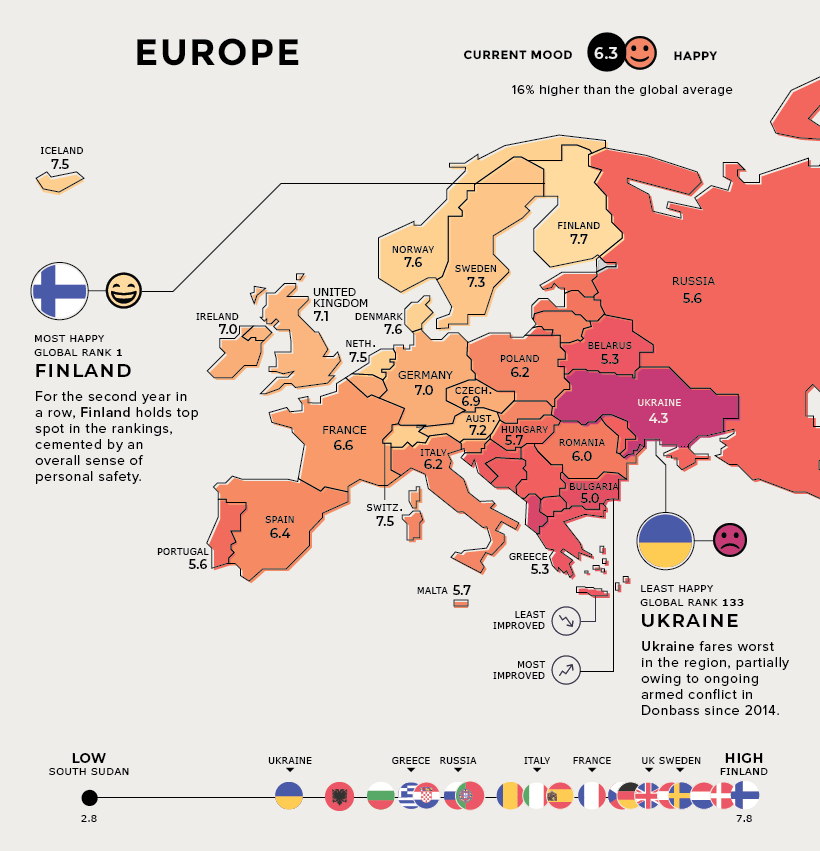
The World’s Happiest Countries
Finland
Denmark
Switzerland
Iceland
Norway
The Netherlands
Sweden
New Zealand
Luxembourg
Austria
Canada
Australia
UK
Israel
Costa Rica
Ireland
Germany
USA
Czech Republic
Belgium
“Finland, Denmark, Switzerland, Iceland, Norway, and the Netherlands,” Rich read. “So a summer trip then.”
“Definitely.” I recalled our visit to Helsinki in July of 2016; in every photo I’m wearing at least two layers plus a jacket. And, come to think of it, smiling.
They say it was the King of Bhutan and his famous slogan, “Our gross national product is happiness,” that inspired the UN to start publishing the World Happiness Index in 2012. The rankings alerted the world to the peculiar fact that the Scandinavian lands — despite being as cold, bleak, and remote as Winterfell in
Game of Thrones
, known for high suicides and taxes — consistently took the prize for wellbeing and contentment.
“Clearly, when it comes to the level of average life evaluations, the Nordic states are doing something right,” states the latest report, released in March of 2020. “But
Nordic exceptionalism
isn’t confined to citizen’s happiness. No matter whether we look at the state of democracy and political rights, lack of corruption, trust between citizens, felt safety, social cohesion, gender equality, equal distribution of incomes, Human Development Index, or many other global comparisons, one tends to find the Nordic countries in the global top spots.” So their happiness ranking reflects a society based on fairness, stability, and trust. What must that be like?
The video
Why Finland and Denmark Are Happier Than The U.S
. explains some reasons why those two countries trade off the top spot on the Happiness Index every year. Their citizens enjoy free education and health care, gender and income equality, and work-life balance that’s taken so seriously everyone has reasonable schedules, five-week paid vacations, and the right to “stress leave” if the job becomes overwhelming.
So why all the suicides? “The higher the level of life satisfaction, actually also the slightly higher the level of suicide rates,” says Meik Wiking, CEO of the
Happiness Research Institute
, a quality-of-life think tank in Copenhagen. “And the theory here is that it might be more difficult to be unhappy in an otherwise happy society. Because it creates a stronger contrast to how you are feeling if you are surrounded by very happy people.” Since 1980 those rates have plummeted by about 75% and are now similar to those throughout Europe and the US. “But still it’s not zero. So we still need to reduce that even further.”
Wiking is doing his bit to spread Nordic happiness, not only in his own country, but around the world via
The Little Book of Hygge: Danish Secrets to Happy Living
.
Hygge
, pronounced roughly like HUE-guh, comes from the Norwegian word for wellbeing and defines that delightful cocoon of tranquil contentment that comes from being comfy, cozy and safe, usually in the company of congenial companions. “
Hygge
,” Wiking explains, “has been called everything from ‘the art of creating intimacy,’ ‘coziness of the soul,’ and ‘the absence of annoyance,’ to ‘taking pleasure from the presence of soothing things,’ ‘cozy togetherness,’ and my personal favorite, ‘cocoa by candlelight.’”
As you can imagine, I am in love with this concept. In these challenging times, clearly we need all the
hygge
we can get. In fact, it wouldn’t be a bad idea for us all to become
hyggespreders
, people who spread
hygge
around our homes and communities.
Hygge
is associated with soft lighting, relaxed clothes, cozy furniture, and familiar, sweet, comforting foods. Ideally it involves lots of candles, the crackle of logs in a hearth, and the smell of chocolate chip cookies baking.
Obviously, that’s a shoot for; I have no log-burning fireplace, can’t bake chocolate chip cookies every night, and rarely light candles as I usually have to get out of bed at least once to reassure myself I remembered to blow them all out. But I have spent a fair amount of time making our cottage cozy.
Right now Rich and I are still hunkering down in the comfy safety of our California cottage. I don’t know when it will make sense to hit the road again, but in preparation for that joyous day, we’re busy researching our Happiness Tour. There are a few tiny obstacles. The pandemic is far from over, especially in Europe. Our Spanish residency cards have expired, so we can’t return to Spain until it reopens to American tourists. And to move freely around Europe for months on our Happiness Tour, we will need to renew those residency cards — a daunting task at the best of times, now complicated by massive backlogs due to the pandemic and Brexit.
With luck, we’ll eventually get all that sorted and take off on a long railway journey from Spain (28th in happiness ranking) through France (23rd) and ultimately to the Nordic countries. There I hope to experience
hygge
in its native habitat, learning first-hand what it’s like to nestle in a warm, cozy, firelit place wearing thick socks and a wooly sweater, savoring a steaming cup of cocoa by candlelight, even if it is the middle of July.
YOU MIGHT ALSO ENJOY
MY VISIT TO HELSINKI IN 2016
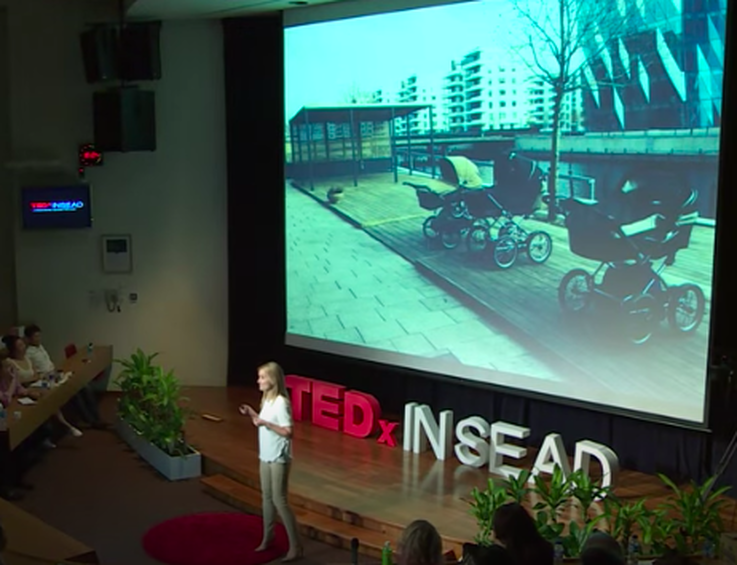
MALENE RYDAHL’S TED TALK ON DANISH TRUST, FREEDOM & HAPPINESS
GOOD READS FOR ARMCHAIR TRAVELERS
WHY FINLAND & DENMARK ARE HAPPIER THAN U.S.
This post is part of my ongoing series of articles on surviving the pandemic and, with luck, emerging from it with some remnants of our sanity and good humor intact.
I’d be happy to send you a quick note when I publish new stuff.
SUBSCRIBE HERE
to get free stories in your inbox each week.
Feel free to share this post link
with family and friends.
https://www.enjoylivingabroad.com/my-blog/is-it-time-to-start-thinking-about-travel-again
Leave a Reply