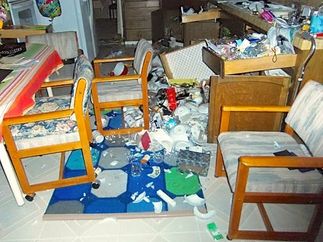
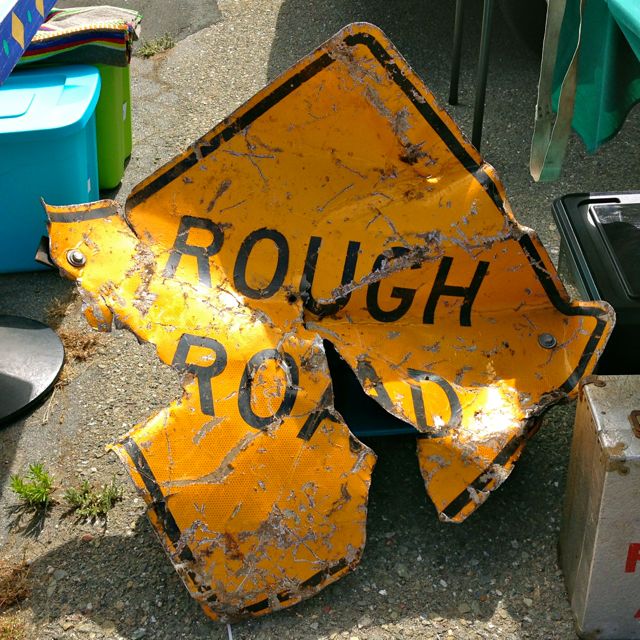
This was up in Napa; my house was spared. Photo: Sscknapa
At 3:20 on Sunday morning, I was jolted awake when my bed started doing the jitterbug.
Earthquake!
And this was no minor tremor, but a serious effort by Mother Earth to realign a couple of plates that met at the long-dormant West Napa fault. Rich and I leaped out of bed and went to stand in the doorway, as instructed by a lifetime of public service announcements.
Twenty seconds and a billion dollars in damage later, it was over
. There were more than 120 reported injuries although thankfully, at least so far, no fatalities. As if there wasn’t enough tragedy, thousands of cases of good Napa wines were lost.
Right now, people all over the world are probably hesitating over whether to cancel their upcoming trip to California. Sizable quakes like this one tend to roll around every 25 years – 1964, 1989, 2014 – so
you’re probably safe enough until 2039
. But as a fourth-generation Californian, I know only too well that Mother Nature has a quirky sense of timing, so there are no guarantees. Your best bet is to learn a few earthquake survival skills, as you never know when or where one may strike.
Peru, Chile, and Iceland
all had major seismic activity this year, and there are many more
earthquake-vulnerable cities around the world
.
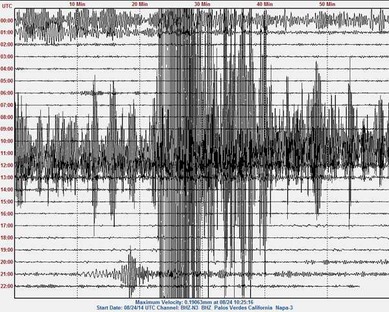
3:20 Sunday morning looked – and felt – like this.
What to Do in an Earthquake
1.
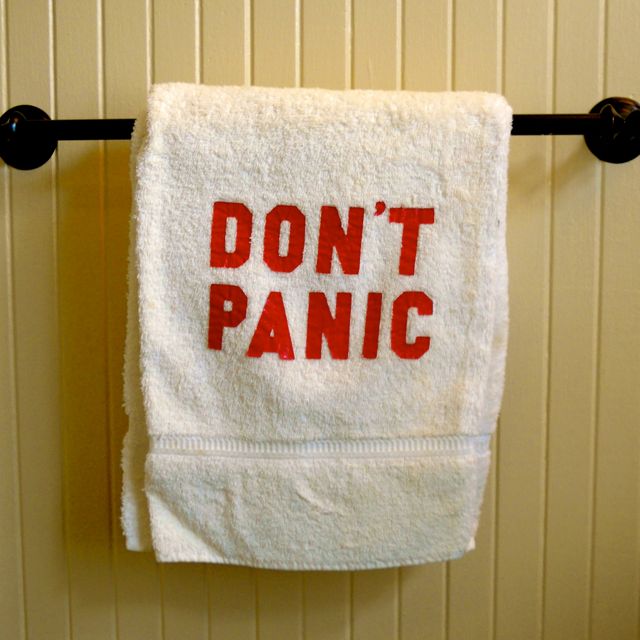
Stay calm.
There will be plenty of time to panic later.
2.
If you’re inside, seek protection.
Duck under a sturdy table or lie down beside the couch; avoid windows. Don’t try to leave; there likely isn’t time, and you do
not
want to tumble down the stairs.
3.
If you’re outside, stay in the open.
Try to get away from things that might fall on you – which is pretty much everything from buildings to bridges. Avoid beaches, as you don’t want to be out of the earthquake and into the tsunami.
4.
If you’re in your car, stop and stay put.
Cars offer pretty good protection against smaller falling objects. Use common sense about where to stop; see #3.
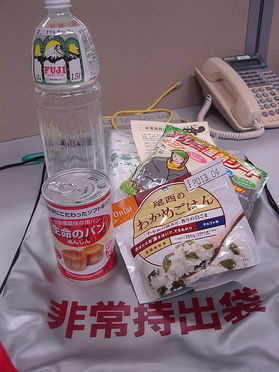
Japanese earthquake kit. Photo: David Pursehouse
And Afterwards
5.
Avoid elevators.
They often get stuck, and no one is going to have time to come help you for quite a while.
6.
Stay away from power and gas lines.
Fire often does more damage than the earthquake itself.
7.
Don’t use anything with a flame.
Chances are you won’t be standing next to a broken gas line, but if you are, lighting a match to sooth your nerves with a cigarette could be very, very bad indeed.
Most Californians are much better prepared than I am to deal with such cataclysmic events, keeping
survival kits
by the door and
organizing escape routes
and rendezvous points for family members. My plan? To be as far from San Francisco as possible in 2039.
YOU MIGHT ALSO ENJOY
DONT’ PANIC! IT’S ONLY AN UNKOWN COUNTRY!
RICH’S WORLD-FAMOUS FIRST AID KIT
VACATION PHOTOS FROM HELL
7 REAL-WORLD JET-LAG SOLUTIONS

Leave a Reply