
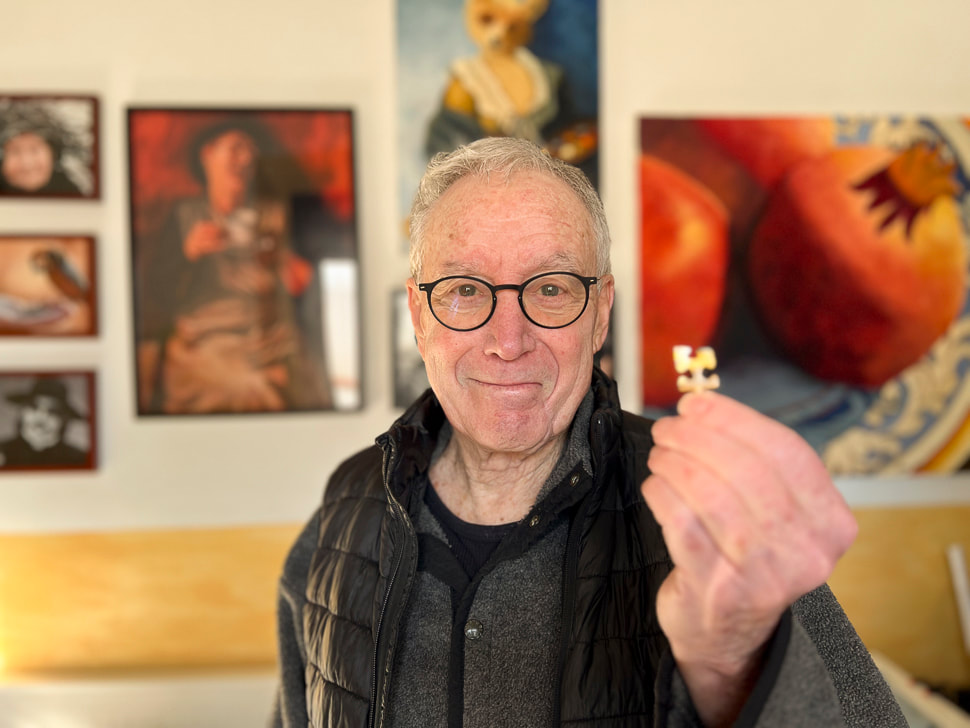
A few days ago Rich bellowed “Karen!” with an urgency I haven’t heard since that time the pine tree in our front yard caught on fire. I raced down the hall to find him holding up a small, irregular piece of cardboard.
It was the missing piece from a 1000-piece jigsaw puzzle, which we’d recently assembled, with colossal mental effort, only to realize we were one short. Yes, we tore the house apart and on Friday, admitting defeat, we’d disassembled the 999 pieces and put them away. And now … !
As the Spanish would say, ¡Estaba feliz como una perdiz! (I was as happy as a partridge.)
To be honest, I am not convinced partridges are happier than any other creatures. But the phrase always makes me think of joyfully settling into a cozy nest, comfortably shaking out my feathers, and basking in the moment. So I’m sticking with it.
One of the great things about learning a second language is that sometimes it provides a word or phrase so perfect (a bon mot, as the French put it) that you wonder how you ever lived without it.
For instance, to emphasize they’re delivering the unvarnished truth, the Spanish say, “No tengo pelos en la lengua” (I don’t have hairs on my tongue). Another favorite is “quedarse en blanco” (literally to stay in the white, meaning to lose your conversational way as if you were enveloped in dense fog), which for me is so … wait, what was I saying?
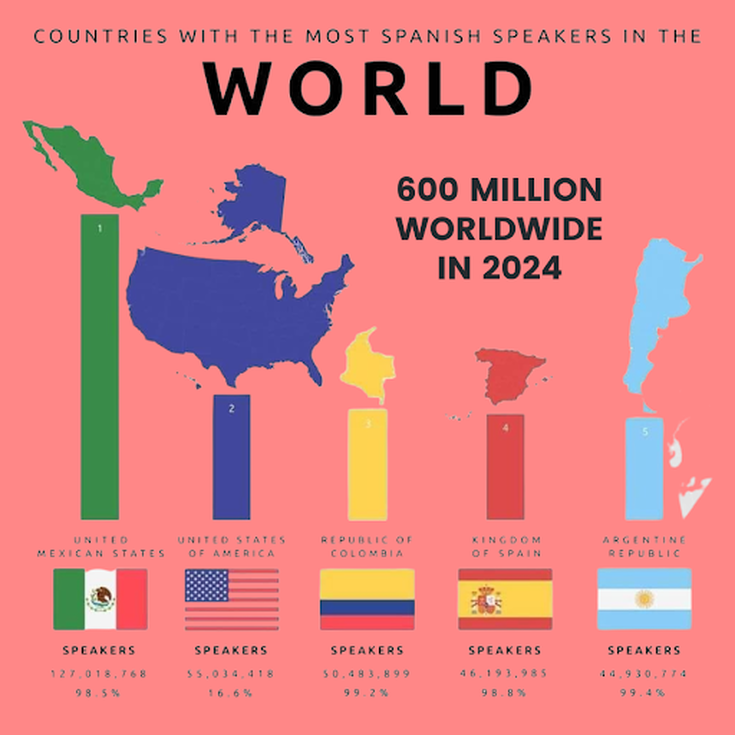
Learning goofy sayings is just one of the appealing reasons to embrace Spanish. Just look at the numbers: with 600 million people speaking it, you’ll have lots more amigos to chat with as you wander through life.
Even more usefully, studying a foreign language enhances neuroplasticity, the ability of your brain to change and adapt. It boosts memory, focus, cognitive skills, creativity, mood, and perhaps even your ability to keep dementia at bay.
“Speaking more than one language appears to help the brain resist the effects of Alzheimer’s disease,” reported Alzheimer News Today.

Experts tell us the ideal age to learn a new language is when we’re ten to eighteen, and as soon as they invent a time machine, I’ll hop back and get started on that. Luckily for all of us, life isn’t about ideals, it’s about possibilities and what we do with them.
Take my amigo Julius — he goes by Julie — a lifelong New Yorker who spends a couple of months in Seville every winter. When I zoomed with him Saturday, on his 82nd birthday, I asked him how long he’d been studying Spanish.
“Five years, mas o menos” (more or less). “Okay, I did have Spanish in high school, but I also had physics and chemistry; I don’t remember a lot of that stuff. So say five years.” That means he got started at age 77, six decades later than the recommended timeframe.

How has it gone? Julie talked about reaching the first milestone, known here in Seville as “bar Spanish,” which means he can order food and drink with a reasonable degree of certainty that he’ll be understood.
“It’s one thing to speak to another person,” he told me. “It’s another thing to understand what they’re saying when they respond. But, you know, it’s not like I’m speaking on such a high level that the responses are too difficult. And also, there are a lot of workarounds; if you don’t exactly remember how to say something, you find an alternative way to say it. And a lot of the vocabulary is almost the same as English.” In fact there are hundreds of words, such as taxi, radio, and mosquito, common to both languages.

So Julie has achieved what I consider the second milestone: accumulating your own little collection of workarounds and soundalikes that let you make your way to solid ground even in slippery conversations.
Over the past five years, Julie has thrown himself into his studies with enthusiasm. Every week, he Skypes for an hour and a half with Sonia, his language teacher in Seville. They talk about his 40-year career running New Audiences, a concert production company for jazz, blues, and folk music, and about the jazz concerts Julie and his wife, Deborah, have enjoyed in Seville.

Every week, Julie also Skypes with a Valenciano named Dani who wants to learn English. They converse in one language, then the other, an arrangement commonly known as an intercambio (interchange). “He’s a young man, half my age, and very, very funny,” said Julie. “We have a good time together.” Valencia isn’t all that far from Seville, and visits have also been exchanged, giving the men and their wives a chance to become friends.
“Two years ago,’” Julie recalled, “when Dani and Elena, his wife, were in Seville, we were out to dinner together, with some other friends. And I actually attempted a joke in Spanish, and everybody laughed. Deborah said the waiter was standing behind me, and he was laughing. So I said, ‘Are they laughing at the joke, or are they laughing at my Spanish?’”
I’m guessing they were laughing at your joke, Julie. Humor is one of the most difficult things to pull off in a foreign language, marking that moment as milestone number three.

“You are officially a bi-lingual person,” I told him. “What advice do you have for people just starting on this journey?”
“You should not be afraid to use whatever little bit of Spanish you’ve learned,” he said. “People are very kind and accepting… They will respect you more and thank you for making the attempt.”
Your brain will thank you, too. Thinking in a second language always gives your cerebrum an invigorating workout, bestowing the same health benefits, such as neuroplasticity and boosted memory, no matter how polished the results may (or may not) be.
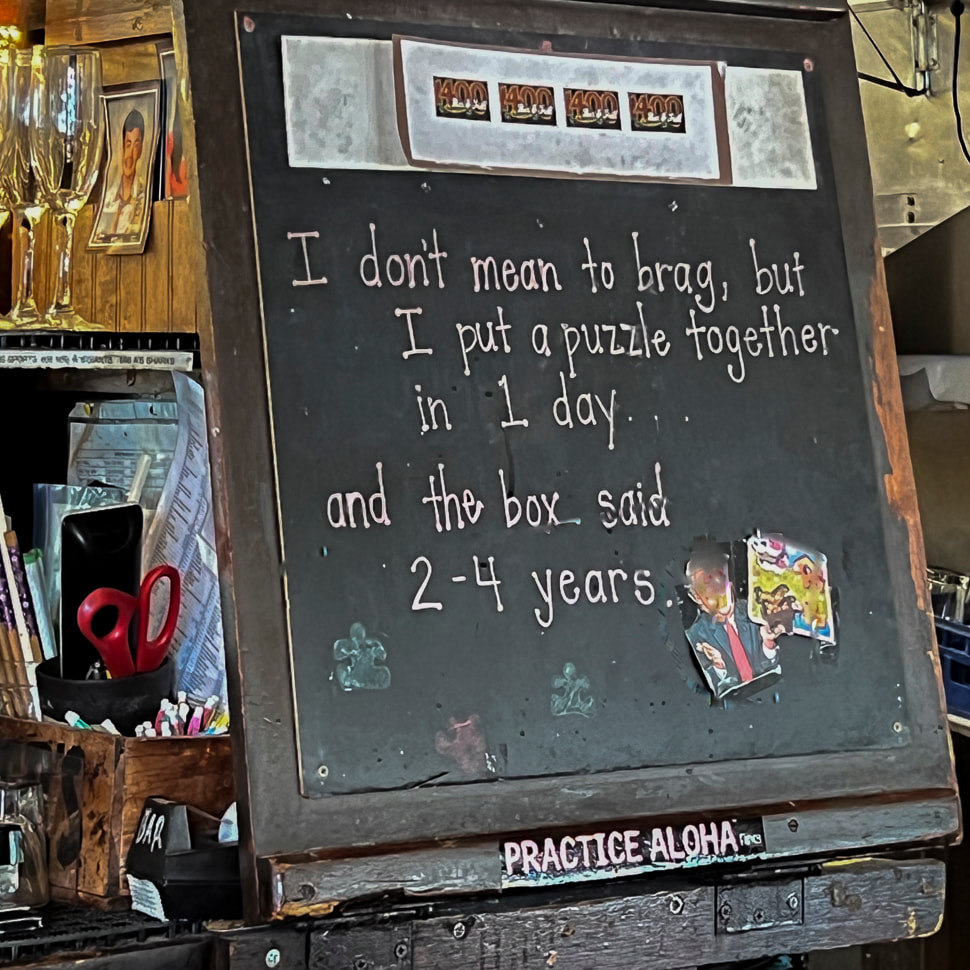
Of course, no matter how long you study Spanish, you may occasionally quedarse en blanco, feel your mind blanking out in the middle of a sentence. (Yes, it still happens to me, even after 20 years, although far, far less often.) That’s when speaking Spanish starts seeming like working a jigsaw puzzle that’s missing half the pieces. And you find yourself bewildered by the suddenness of the disaster, like a homeowner discovering one of their pine trees is on fire. (Which, if you’re wondering, was caused by an electric cable rubbing against a branch until the insulation wore off.)
But then, there are the good days. You reach for a word and it’s there. Somebody gives you directions and you understand them. You crack a joke that leaves a tableful of friends and nearby strangers helpless with laughter.
“I’m proud of myself when I’m understood,” said Julie. “And I’m getting better at it.” And that is something to be celebrated, at any age.
Leave a Reply