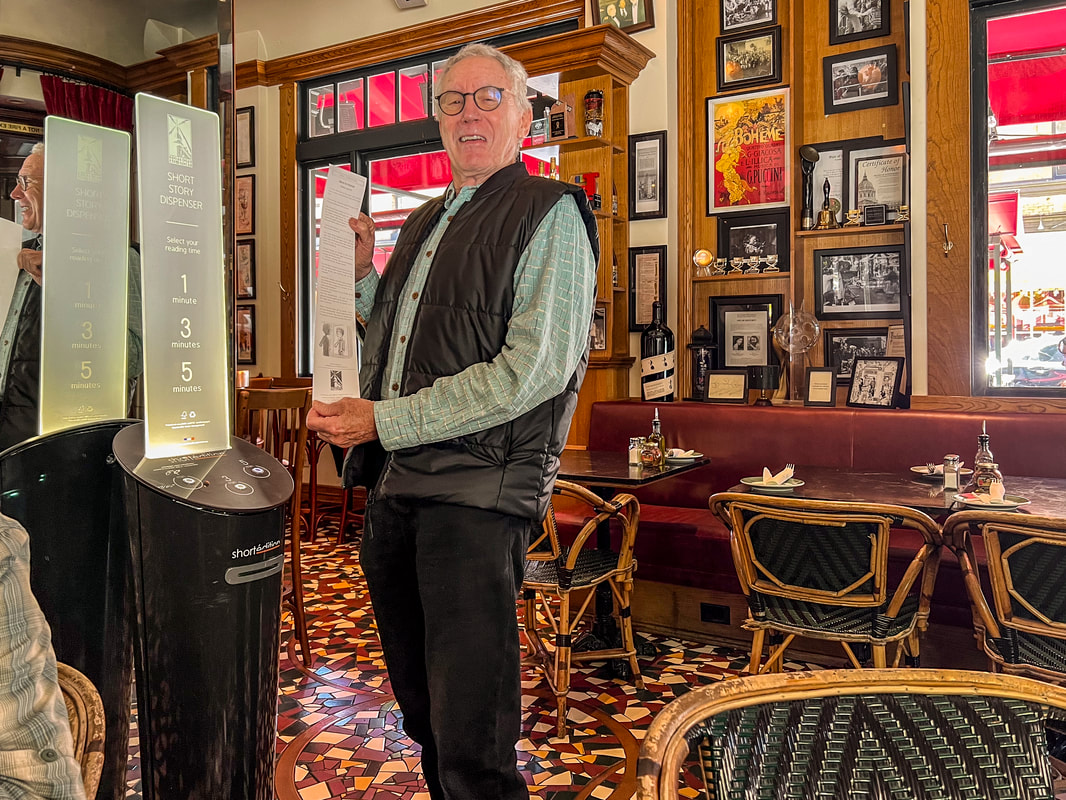

When I first heard about the Short Story Vending Machine I was horrified. “Is this AI? Are robots plagiarizing published works by legitimate authors to compose cookie-cutter mini-novels while you wait? What fresh hell is this?”
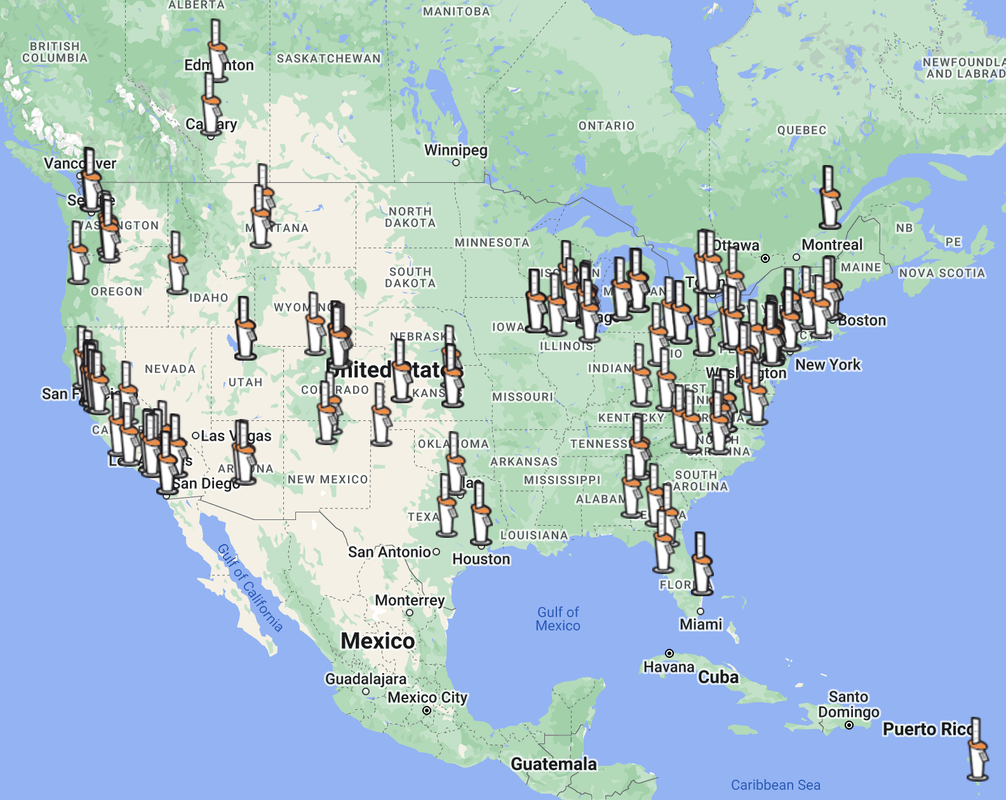
But no; I was charmed to be proven completely wrong. It turns out these stories are composed by actual humans. They (the stories, not the humans) are fed into the computerized brains of machines and delivered — for free — at the push of a button. Since 2016 French publisher Short Édition has placed
Distributeurs d’Histoires Courtes
all over the world to promote budding authors and the joy of reading.
US readers: click here to find the Short Story Vending Machine nearest you.
Yes, of course, San Francisco has one.
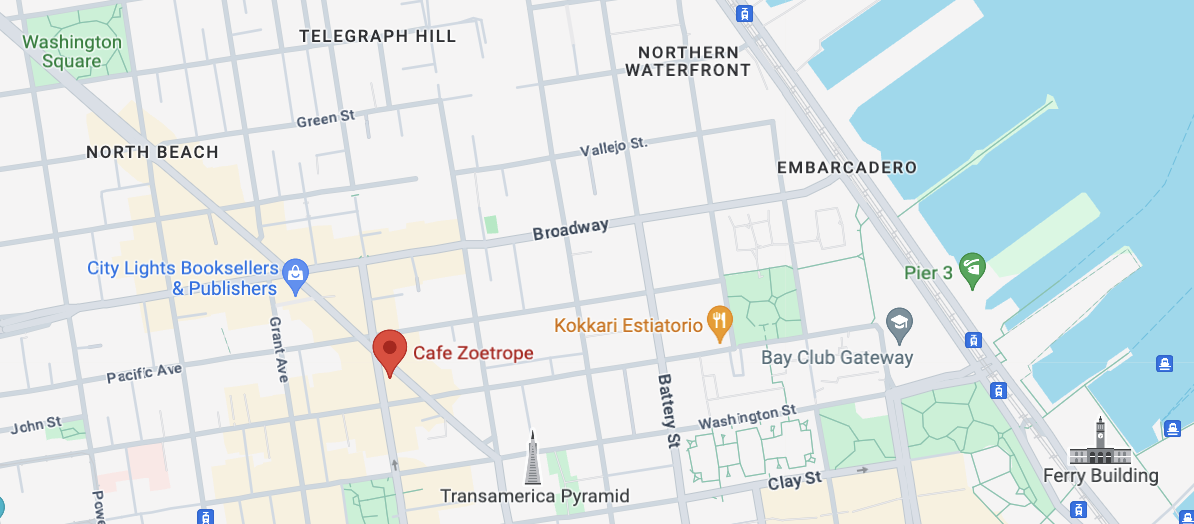
It sits inside Frances Ford Coppola’s cozy, European-style Café Zoetrope on the corner of Kearny and Columbus. Rich and I spotted it a few weeks ago and were so intrigued we rounded up some friends and went back to sample the literature and the food, not necessarily in that order.
I should have known that Coppola — the gifted screenwriter of
Patton, Apocalypse Now
, and, with Mario Puzo, the
Godfather
films — would make us an offer we couldn’t refuse: great Mediterranean food, generous glasses of wine, and as many extra helpings of short fiction as we wanted. My first was a sweet piece called Six Feet (“The distance between two not-yet lovers…”). The second began with a description of Astrid’s “abject terror” and ended 36 inches later with the words, “At least Astrid would die happy.” I am still trying to summon the nerve to read what lies between.
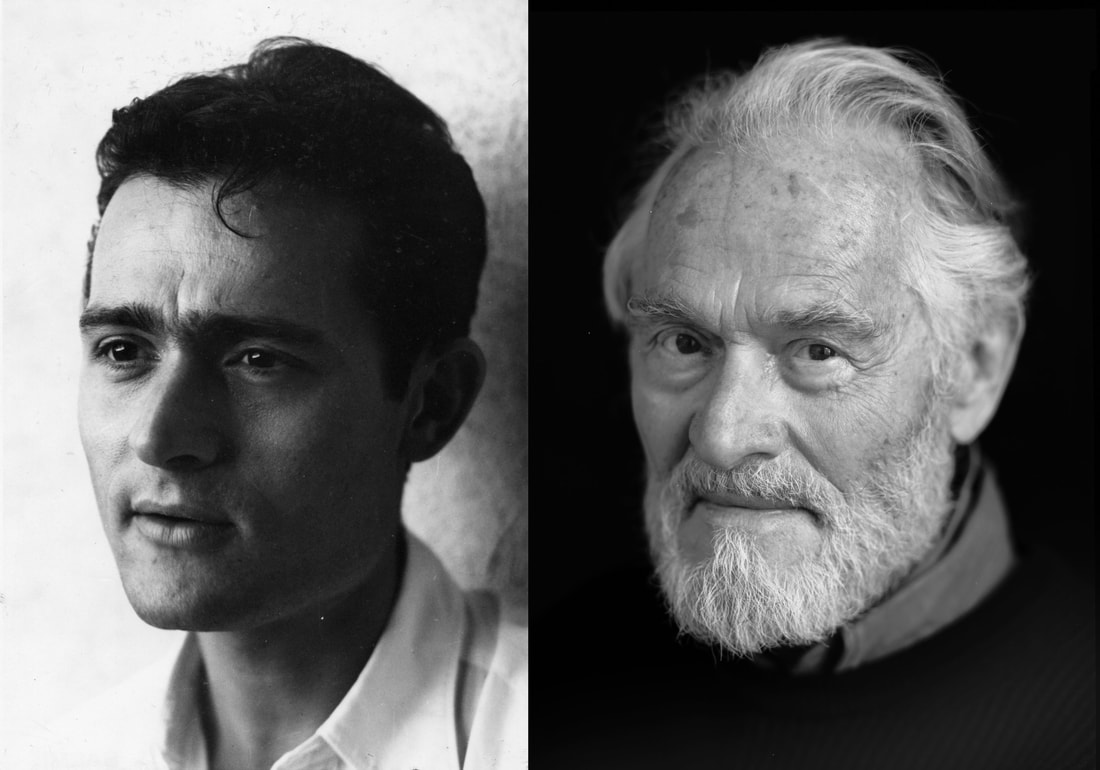
Café Zoetrope is surrounded by icons of San Francisco’s freewheeling literary history: City Lights Bookshop, Jack Kerouac Alley, William Saroyan Place, the Beat Museum, the vintage writers’ bars Vesuvius and Twelve Adler. Nearby Beat poet Herb Gold penned these immortal words:
Even well into my eighties
I thought I was a young man.
I knew I would die someday
But the diagnosis would have to be
He died of the complications of young age.
“If free speech and individuality are American characteristics, there is no place more American than San Francisco,” said filmmaker Desi Del Valle. Sadly, her sentiments are not shared by everyone here in the land of the free. I was shocked to read this week that the American Library Association’s Office for Intellectual Freedom documented
4,240 books targeted for censorship in 2023
.
In many school districts, a single challenge can require librarians to pull a book off the shelves while an inquiry is conducted. Then everyone gathers for a free and frank exchange of views involving plenty of shouting, table pounding, and name-calling.
So what are they trying to keep kids from reading — and why?
Mark Twain’s
Huckleberry Finn
: coarse language, uncomfortable commentaries on race
Jack London’s
Call of the Wild
: mistreatment of animals. (His work was also burned by the Nazis for socialist sentiments.)
Dashiell Hammett’s
The Maltese Falcon
: subversive communist views
Shirley Jackson’s
The Lottery
: causing students “to question their values, traditions, and religious beliefs”
Harper Lee’s
To Kill a Mockingbird
: “It makes people uncomfortable.”
F. Scott Fitzgerald’s
The Great Gatsby
: violence, adultery
John Steinbeck’s
Of Mice and Men
: anti-business attitude, homosexual overtones
Alice Walker’s
The Color Purple
: sex, violence, homosexuality
E.B. White’s
Charlotte’s Web
: They
“found the book’s talking animals to be disrespectful to God.”
Kind of makes you want to re-read the classics, doesn’t it? How did I miss all this exciting subtext when I was in school?
Now, I don’t mean to brag, but the most frequently banned book in America — for the last two years running! — was written right here in the San Francisco Bay Area. We’re so proud.
The book is the graphic (in every sense) memoir
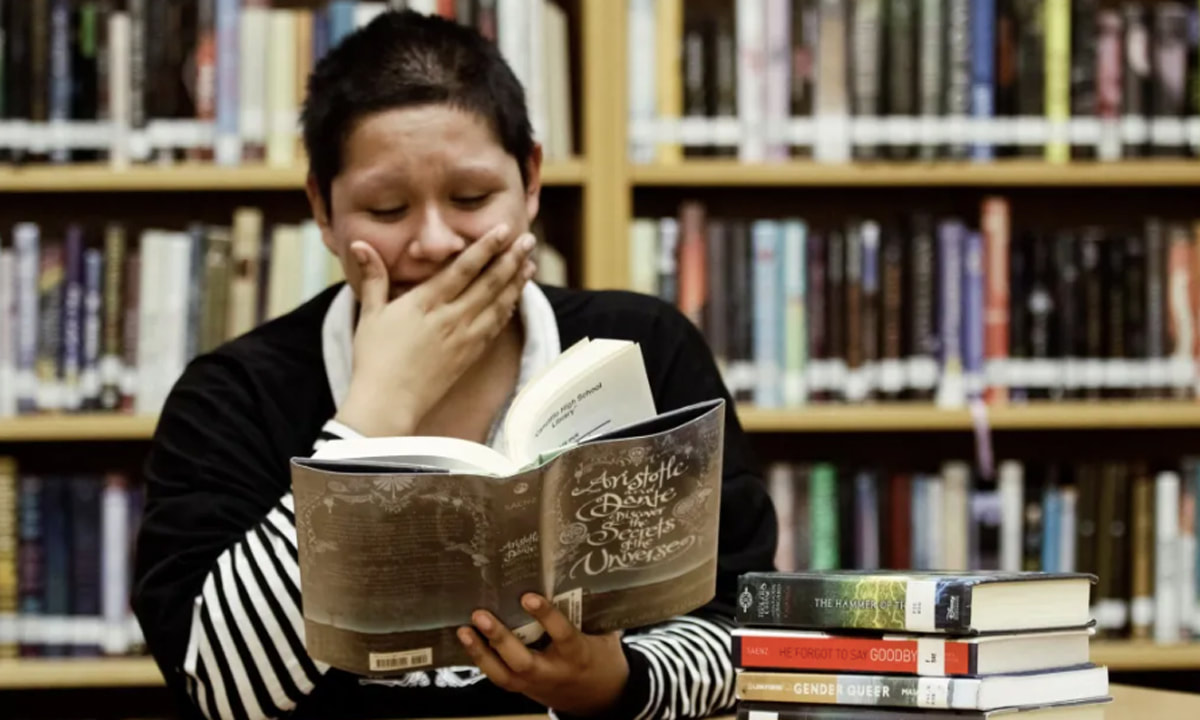
Gender Queer
, by Maia Kobabe, who uses the pronouns e, em and eir. (These gender-neutral
Spivak pronouns
date back to 1890 and are enjoying newfound popularity.) E started writing to explain to eir family what it means to be non-binary and asexual. Critics went ballistic over drawings providing explicit guidelines for teens navigating complex sexual situations.
“It’s pretty worrying that a scene talking about consent is considered inappropriate for young people,” Kobabe said.
Seriously, are there any parents out there who think their kids aren’t online — right now, this very minute — watching stuff that would make your hair curl?
“Childhood is terrifying. Adults forget this,” says Dave Rudden, who writes for middle school kids. “I used to sandwich
Goosebumps
between two other books on the way out of the library so my mom couldn’t see the cover. She thought they were teaching me about monsters … except that the news exists, and kids talk to each other. I already knew there were monsters in the world … The series taught me that monsters were beatable. More than anything, it told me that there were other kids facing them too.”
When it comes to navigating the world, ignorance isn’t bliss, it’s a blindfold.
And for heaven’s sake, what do they expect kids to read?
The Wizard of Oz
?
Harry Potter
?
Goosebumps?
All banned.
The Bible
? The complaint listed “sexism, sex, violence, genocide, slavery, rape, and bestiality,” although to be fair it was a counterprotest to ultraconservatives.
“What I tell kids is: Don’t get mad, get even,” said Stephen King. “Read whatever they’re trying to keep out of your eyes and your brain, because that’s exactly what you need to know.”
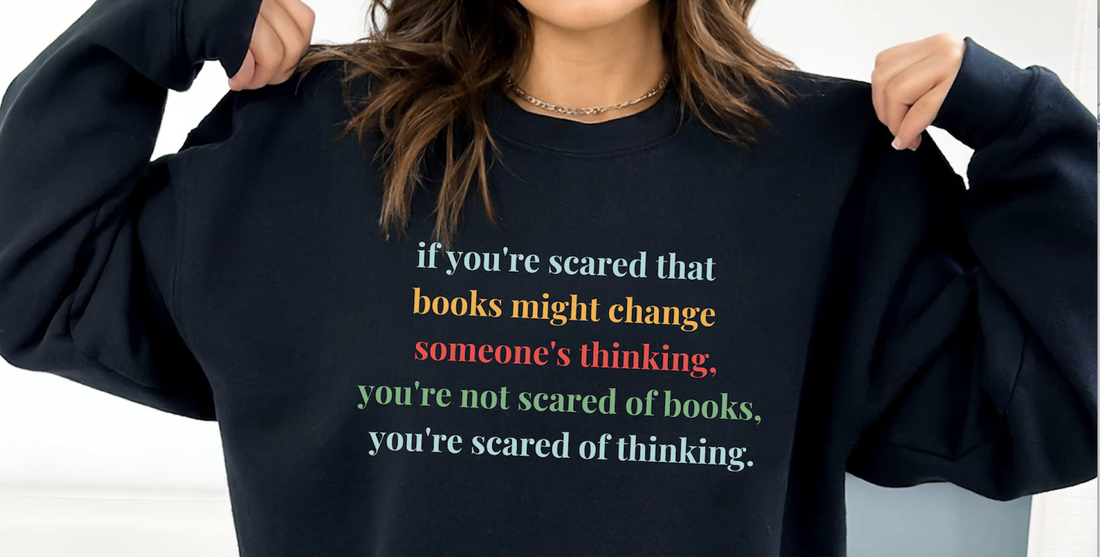
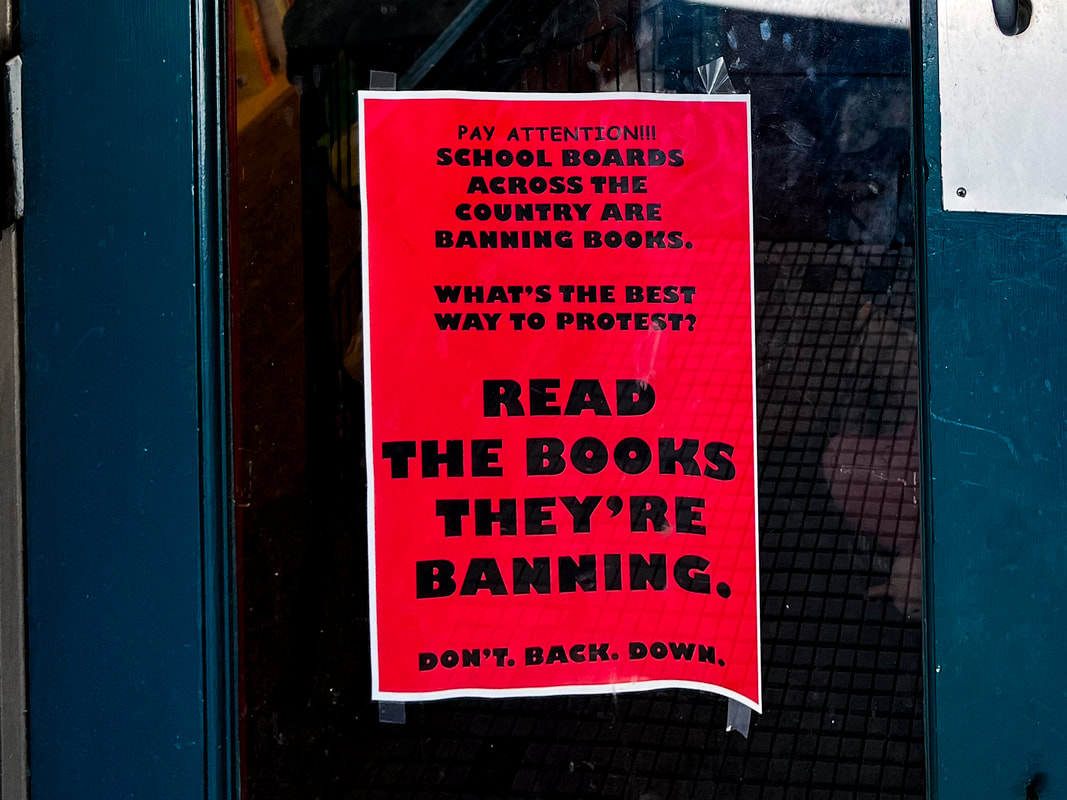
Last year, this poster inspired me to write
Why Isn’t Anyone Banning My Books?
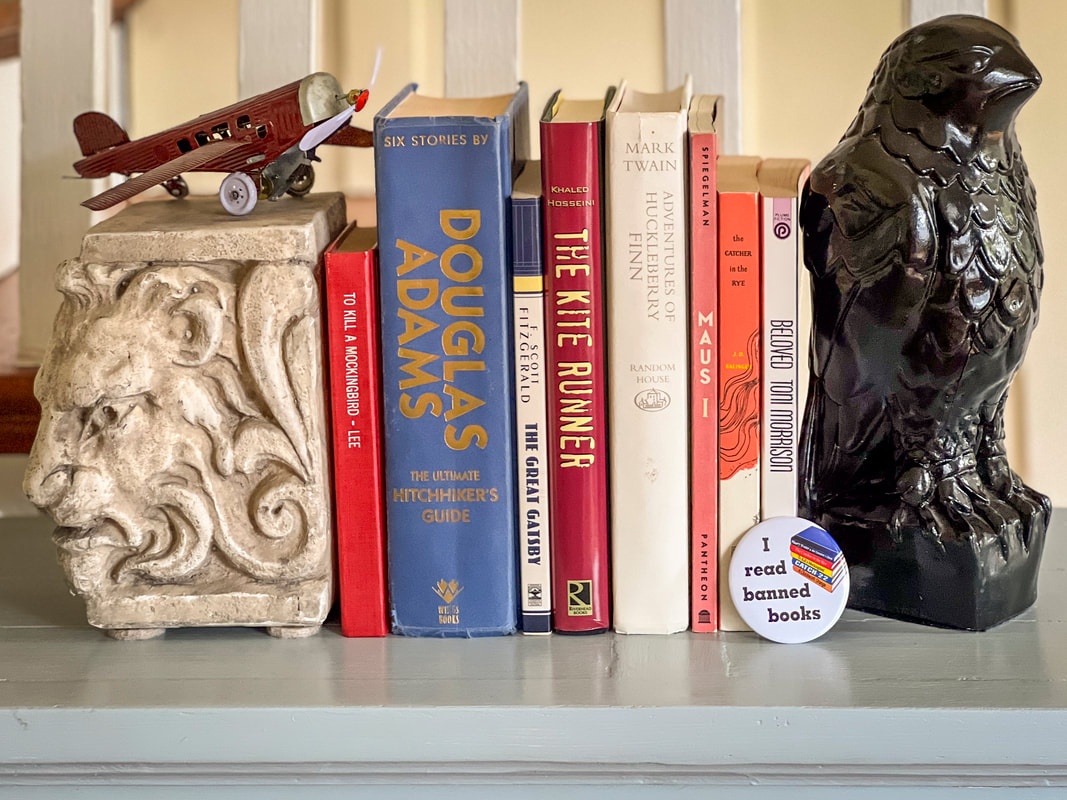
This week, I decided I had to do more. I printed out the
ALA’s list of the most frequently challenged books
and walked around the corner to Town Books, the second-hand bookshop run by volunteers from the public library in my village.
“I want to start a collection of banned books,” I said. “It’s the only way I know to fight back.” The two women staffing the desk poured over the list, exclaiming aloud over the titles.
A woman on the far side of the shop called over, “They banned
The Kite Runner
? Why?”
Another shopper pulled out her phone. “Yep. Here it is. ‘Fear that the novel would inspire terrorism and promote Islam.”
“Have they even read these books?” someone asked.
By now everyone was scanning the shelves and coming up with titles for my new collection. I bought an armful and said I’d be back soon for more. It was the most fun I’ve had in a bookstore in years.
“We read to know we are not alone,” said C.S. Lewis (whose Narnia books have been banned). I cannot imagine my life without the company of books, without that sudden, glorious start of surprise when I read a line and an idea springs open for me.
“A mind needs books as a sword needs a whetstone, if it is to keep its edge,” said George R. R. Martin (also banned). Thanks to writers, publishers, librarians, booksellers, and the Short Story Vending Machine, I’ll never run out of reading material to whet my imagination. It’s up to all of us to preserve our intellectual treasures for future generations, so they have something worth writing about in school book reports and worth thinking about for the rest of their lives.
WHY I WON’T BE POSTING NEXT WEEK
Rich and I have some family activities that will keep us too busy for excursions to San Francisco this week. But don’t worry, I’ll be back with all-new stories after that.
This post is part of my ongoing series
OUT TO LUNCH IN
CHEAP & CHEERFUL SAN FRANCISCO
My goal is to discover some of San Francisco’s most colorful neighborhoods so I can check out what’s really going on in this zany town. Are we in a doom loop? Already on the rebound? Still fabulous? And where should we eat afterwards? These and other questions will be explored in upcoming posts.
BROWSE PREVIOUS POSTS HERE
DON’T MISS OUT!
If you haven’t already, take a moment to subscribe so I can let you know when I publish my weekly posts.
Just send me an email and I’ll take it from there.
[email protected]
And check out my
best selling travel memoirs & guide books
here
.
PLANNING A TRIP
?
Enter any destination or topic, such as packing light or road food, in
the search box
below
. If I’ve written about it, you’ll find it.
Leave a Reply