“One
can’t
believe impossible things,” Alice said in
Through the Looking Glass
(the sequel to
Alice’s Adventures in Wonderland
).
“I daresay you haven’t had much practice,” said the Queen. “When I was your age, I always did it for half-an-hour a day. Why, sometimes I’ve believed as many as six impossible things before breakfast.”
That Queen would have felt right at home in Seville, where my credulity is constantly strained — and my funny bone tickled — by the myths and legends people have passed on to me as gospel truth. Here are six impossible things, and I hope you’ll manage to swallow all of them before breakfast.
Hercules Founded Seville.
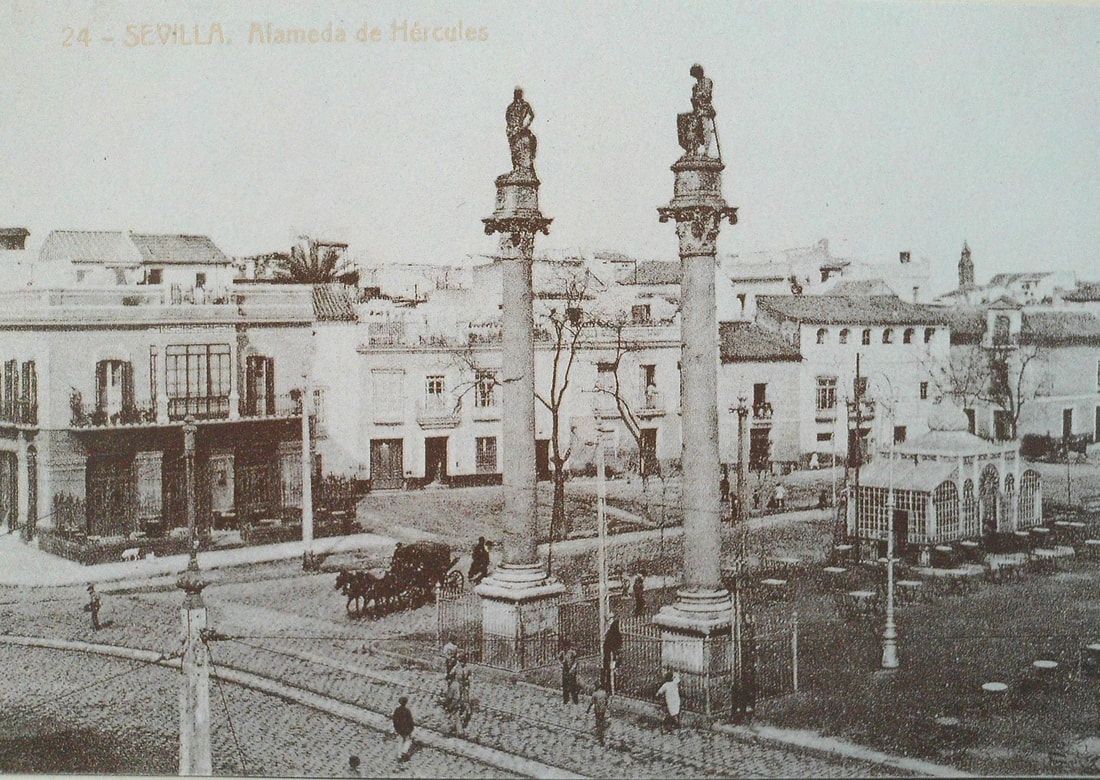
Having your city established by an actual god conveys certain bragging rights, and to make certain nobody missed this point, in 1574 city officials built a vast public garden — Europe’s first — and named it the Alameda de Hercules. For decoration they chose six Roman columns that had stood on the other side of town for 14 centuries. Hauling ancient, 30-foot stone columns across a busy city by wagon; what could possibly go wrong? Incredibly, two made it safely to the new garden before one managed to roll off and shatter spectacularly in the faces of horrified onlookers.
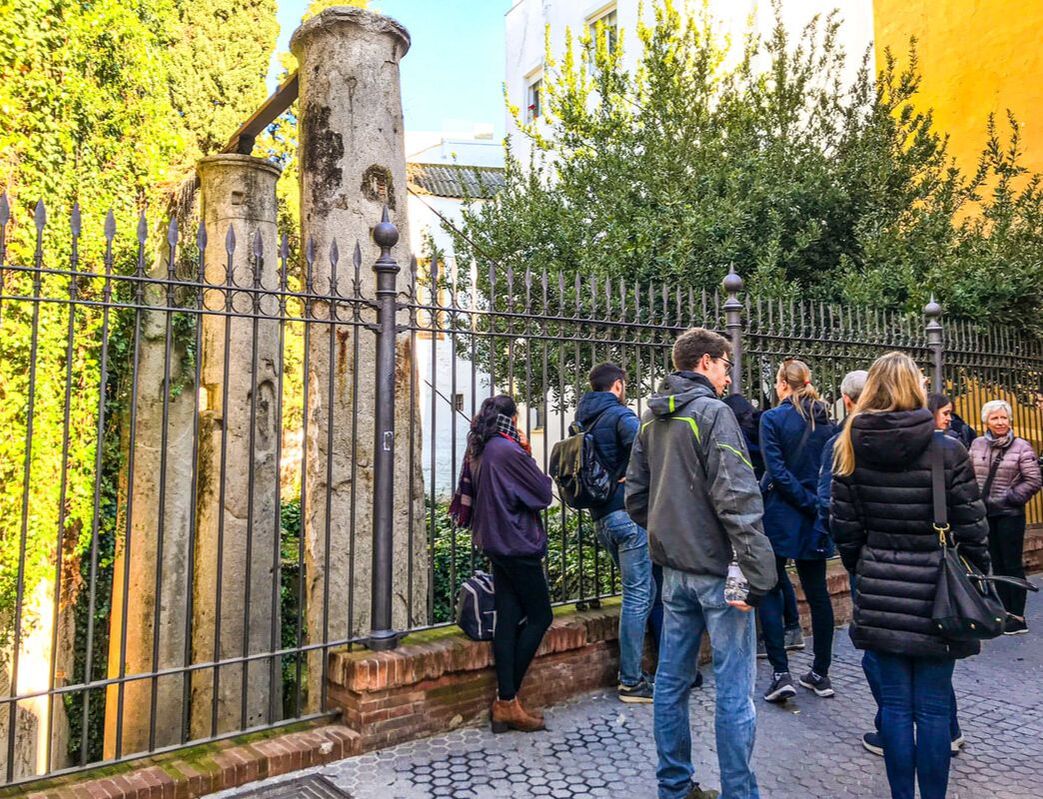
No doubt a few heads rolled —possibly literally — over that snafu, and suddenly no one wanted the job of chief pillar transporter. The two surviving columns, topped with statues of Hercules and Julius Cesar respectively, stand at the southern end of the Alameda, their off-center alignment reflecting space left for the third. The other three columns are aging gracefully in the Calle Mármoles (Marbles Street).
A Crocodile Was Sent to Woo a Spanish Princess.
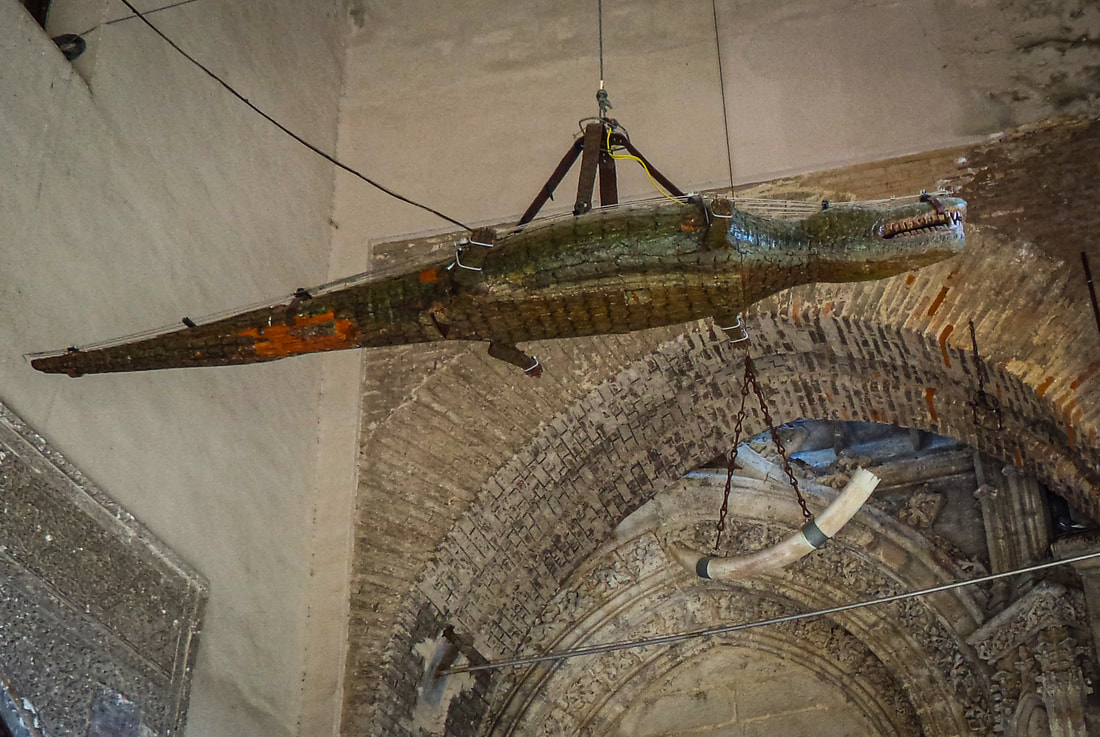
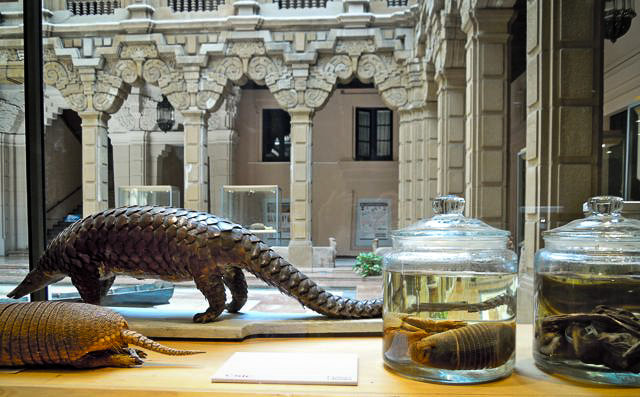
In 1260 the Sultan of Egypt sent a delegation laden with exotic gifts to ask for the hand of Princess Berenguela, King Alfonso X’s daughter. The gifts included a live crocodile, a domesticated giraffe, an elephant tusk, and a wizard’s wand. (I know, right? And nowadays guys get away with bringing us flowers and chocolates!) The king rejected the proposal but kept the gifts; the crocodile thrilled the populace for years.
When the beast had breathed its last, the king had its body stuffed and hung up in the cathedral along with the tusk, the wand, and the giraffe’s bridle bit. When the crocodile’s body eventually crumbled, a wooden replica was hung in its place, where it remains today, on the ceiling by the exit onto the Patio de los Naranjos (Patio of the Orange Trees).
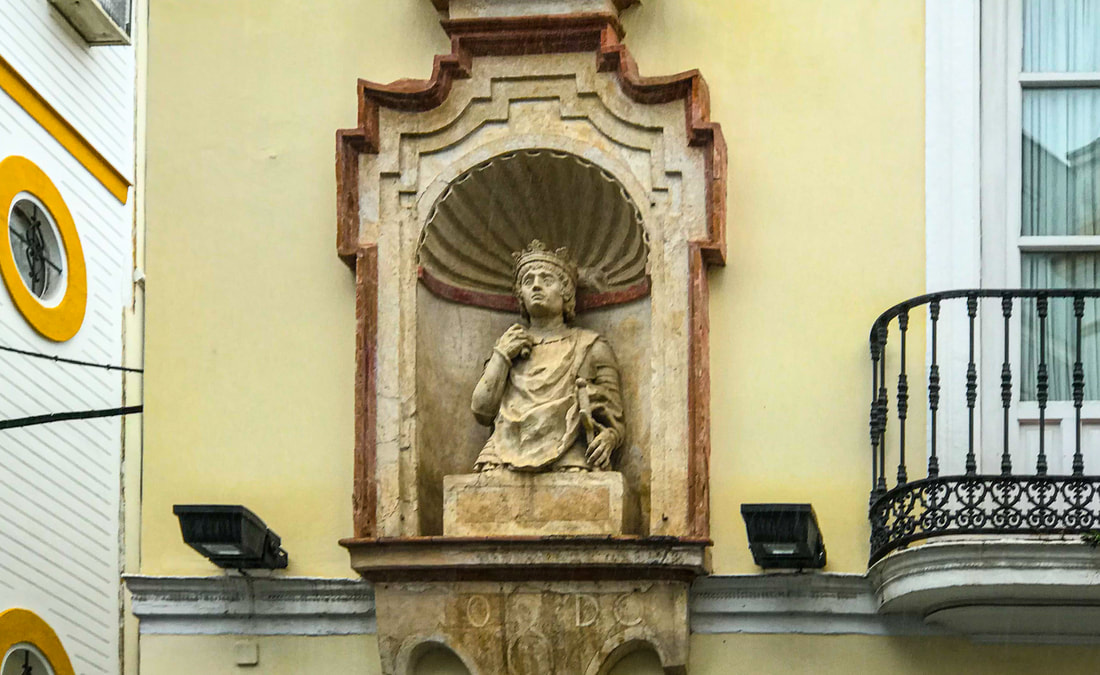
Pedro the Cruel Nailed His Own Head to the Wall.
One dark night in the fourteenth century, young King Pedro the Cruel (known to his friends as “the Just”) was waylaid on a back street in my very neighborhood. The clash of swords caused an old woman to lean out an upstairs window. She didn’t see the king or his fatal thrust, but as he tiptoed away from his attacker’s corpse, she heard the telltale squeak of his knee from an old injury, a sound known to everyone in the city.
The dead man’s family showed up at the palace demanding the killer be found and brought to justice. The king, thinking no one knew the truth, promised a reward — which the old woman’s son came to claim. He took the king aside, pretending to point out the window, but actually pointing to a small mirror. The king rewarded him and announced that the next day the killer’s head would be nailed to the wall at the scene of the crime. (This was before we had all those pesky laws about due process, evidentiary hearings, etc.)
Naturally everyone in the city showed up, agog to know whodunnit. The king arrived with a large box containing, he said, the killer’s head; the identity would remain a secret to avoid sparking a blood feud. The box was nailed to the wall, secured with iron bands, and kept under guard day and night. Years later, when his enemies finally bumped Pedro off, they immediately opened the box. Inside, they found a marble bust of Pedro’s head. It’s still on that wall (without the box) on Calle Cabeza del Rey Don Pedro (Head of King Pedro Street).
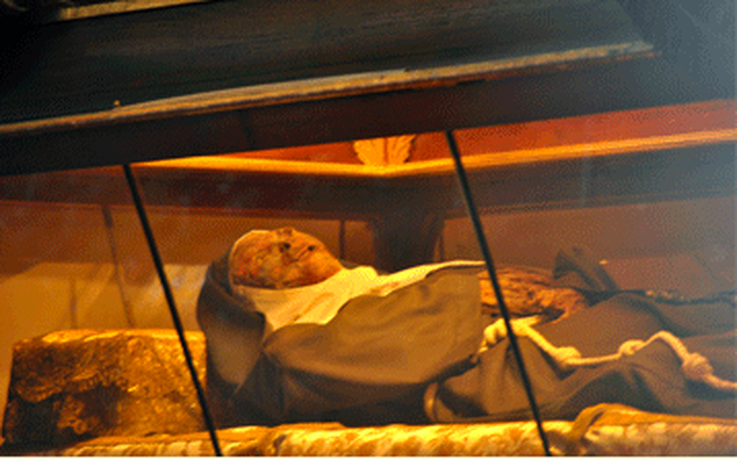
Doña María Coronel’s Body is Miraculously Preserved.
Actually, her corpse is not so much preserved as mummified. And it’s probably just as well that we can’t see her features too clearly, as she was famously disfigured in a gruesome encounter with our old friend, Pedro the Cruel. Infatuated with her beauty, he chased her all over the city for months. When he finally cornered her in the kitchen of a convent (brace yourself, this bit’s ghastly) she dashed a pan of boiling oil in her own face to make herself unattractive to her pursuer. Incredibly she not only survived but went on the found the Santa Inéz Convent and lived to the age of 77. Her distinctly creepy remains are occasionally put on display at the convent on Calle Doña María Cornel Street.
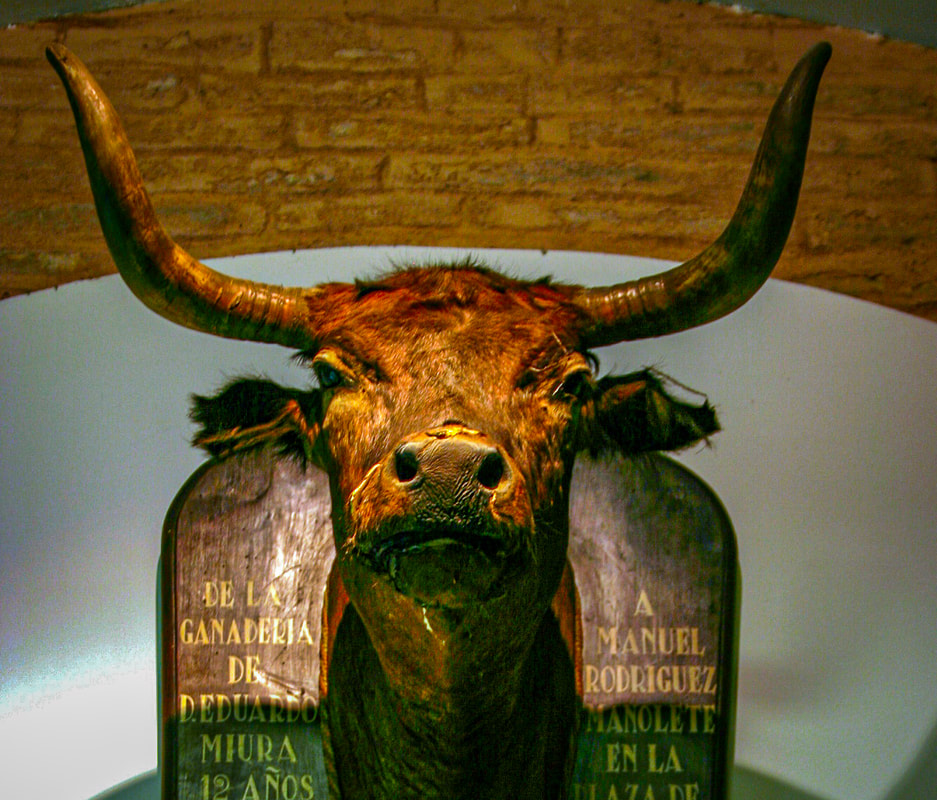
They Killed the Mother of the Bull that Gored Manolete.
“And this is Islera,” said my guide on the bullring tour, with the profound loathing usually reserved for mentioning Hitler or Vlad the Impaler. “The bull that killed the great bullfighter Manolete in 1947. Islera was, of course, killed. And afterwards, they went and found his mother and killed her too, so that she never again produced another murderer.” Now does that seem sporting?
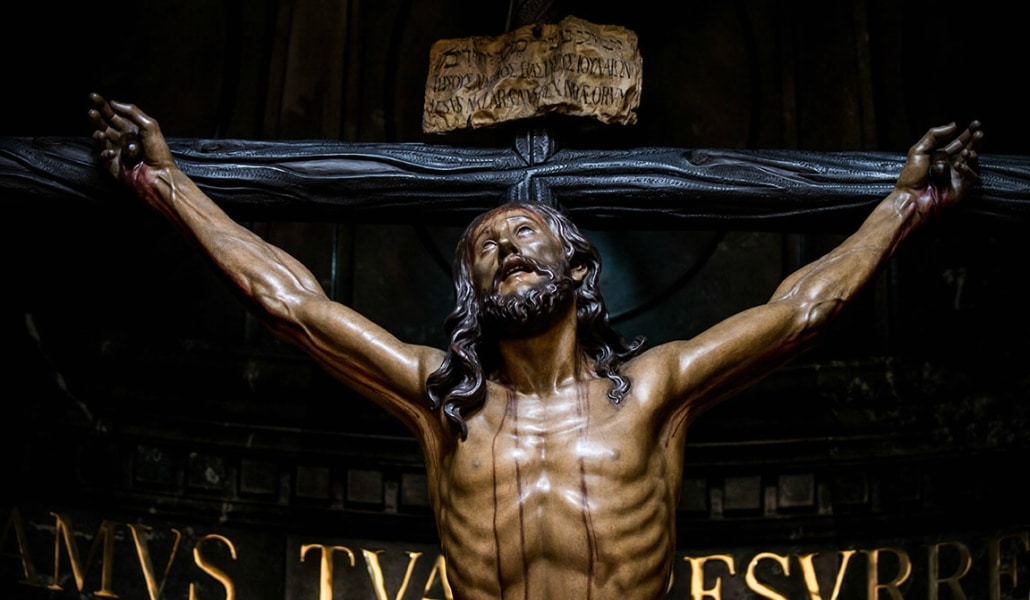
A Murder Inspired the “Puppy” Statue of Jesus.
“This statue was modeled after the gypsy El Cachorro,” a Spanish friend told me. El Cachorro means Puppy and may have referred to the man’s reputation as a bit of a hound dog. He was coming home from a tryst with a noble lady when he was murdered on the Isabel II Bridge by her husband. Some claim the woman’s lover was really El Cachorro’s bastard brother, and it was all a terrible mistake. Be that as it may, sculptor Francisco Ruiz de Gijón happened to be on the scene, roaming the city in search of inspiration for the statue of Christ he’d been commissioned to carve. Seeing El Cahcorro breathe his last, the sculptor knew he had found the perfect image. “Expiring Christ,” better known as “El Cachorro,” is one of the highlights of Holy Week processions. In the off season, it can be viewed in the Basílica del Cristo de la Expiración on Calle Castilla in Triana.
I don’t know about you, but I find all of these tales completely plausible and don’t doubt for a minute that every detail is accurate. But even if I didn’t, I’d love the drama they add to the streets, bridges, and buildings that make up the landscape of my life. One man collected many of these tales into a book, but when I showed it to a Spanish friend, she sniffed. “Well, I wouldn’t trust a word he says. Everyone knows he’s the biggest liar in town.” Hmmm, I sense another legend right there in the making. I’ll keep you posted.
MY GAME OF THRONES TOUR OF SEVILLE
QUIRKY, ODDBALL PLACES TO VISIT IN SEVILLE
THE ART OF BREAKFAST IN SEVILLE
WANT MORE FUN? SUBSCRIBE TO MY BLOG

Leave a Reply