Congratulations! Simply by reading this, you are already pre-celebrating tomorrow’s often-overlooked but super-significant national holiday. Yes, August 5 is Blogger Day in America, and I, for one, am proud to be part of it.

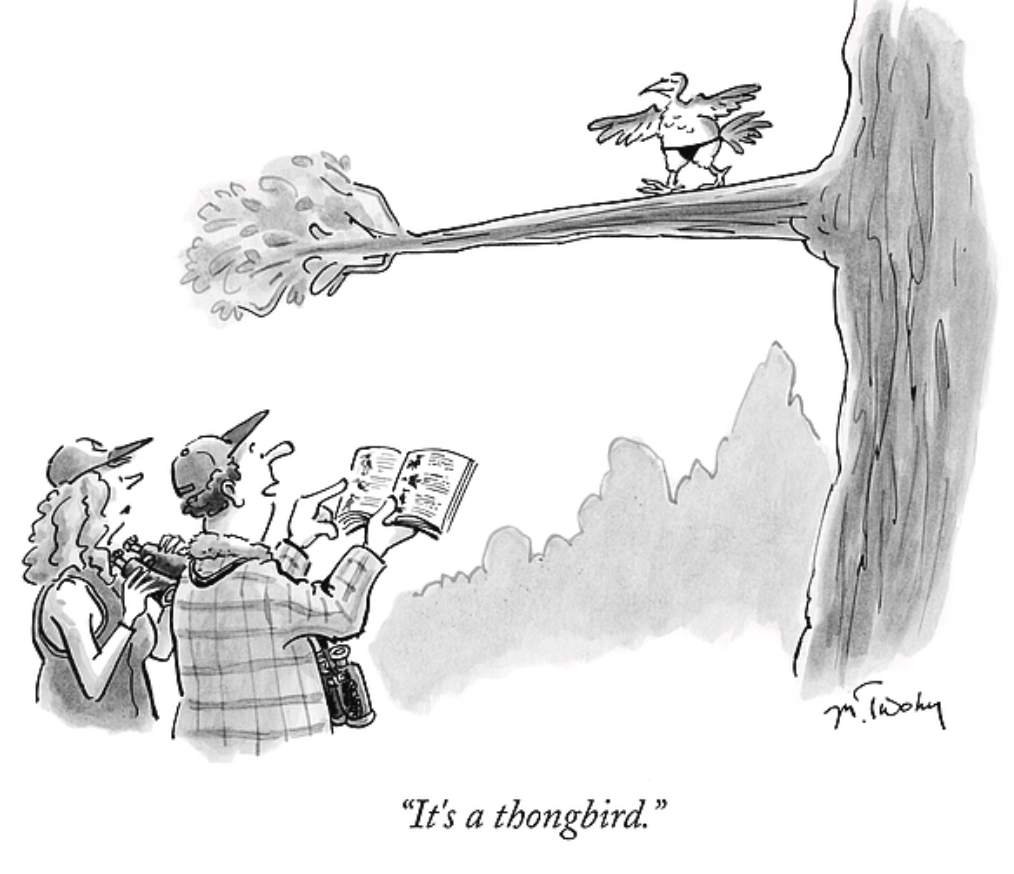
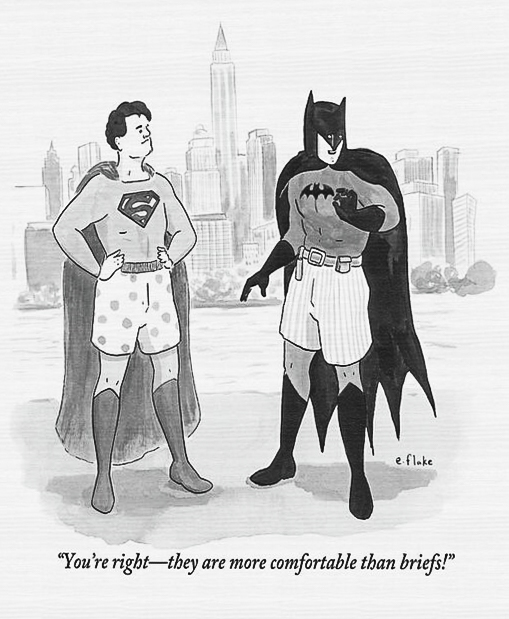
August 5 is also national Underwear Day. Coincidence? Or deliberate timing? Many bloggers brag about enjoying a profession (one of all too few) that can properly be done wearing nothing but undergarments. For the record, I myself favor loose yoga pants and a t-shirt, but I’m old-school.
Sharpening my detective skills, I soon uncovered the truth: national Underwear Day was invented in 2003 by online retailer Freshpair, which offers men an eye-popping array of unmentionables in mesh, leather, lace, straps, thongs, and peek-a-boo styles. I’m not posting any photos, as they might be a bit frisky for my more sensitive readers, but here’s the link, if you’re curious. I think we can all agree such spicy styles are clearly not intended to be worn by those sitting home alone trying to articulate insightful commentary about the state of the world.
Whatever I’m wearing, I know my job as a blogger is to contribute something meaningful to the global conversation, ideally something that will make readers think, laugh, blink in wonderment, and/or view life a bit more constructively. Put another way, my job is to provide content intriguing enough to hold your attention for seven whole minutes in an online world where the average viewing time is 47 seconds. I’m excited that you’ve made it this far in today’s post, even if you’re just here for the cartoons. (And yes, there are more to come, so stick around.)
I took up blogging in December of 2011 thanks to a publishing course that suggested it would help me promote my move-abroad memoir, Dancing in the Fountain. And it worked. My blog readers turned Dancing into a bestseller that currently has 505 Amazon reviews. I appreciate each and every one, including the guy who complained that I talked too much about myself in the book. What did he expect? It’s a memoir.
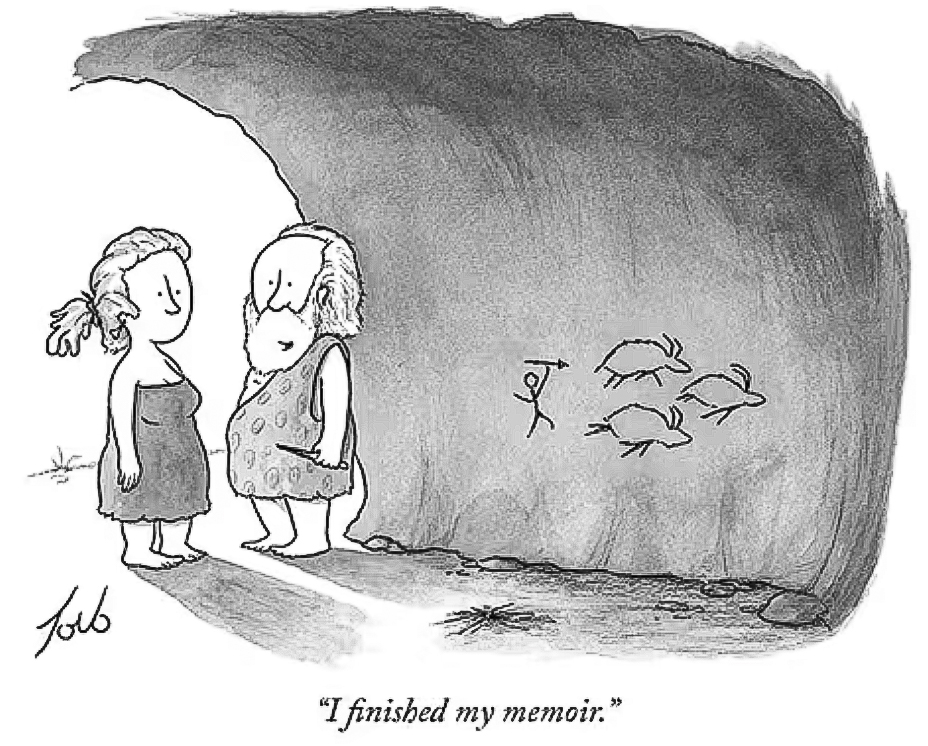
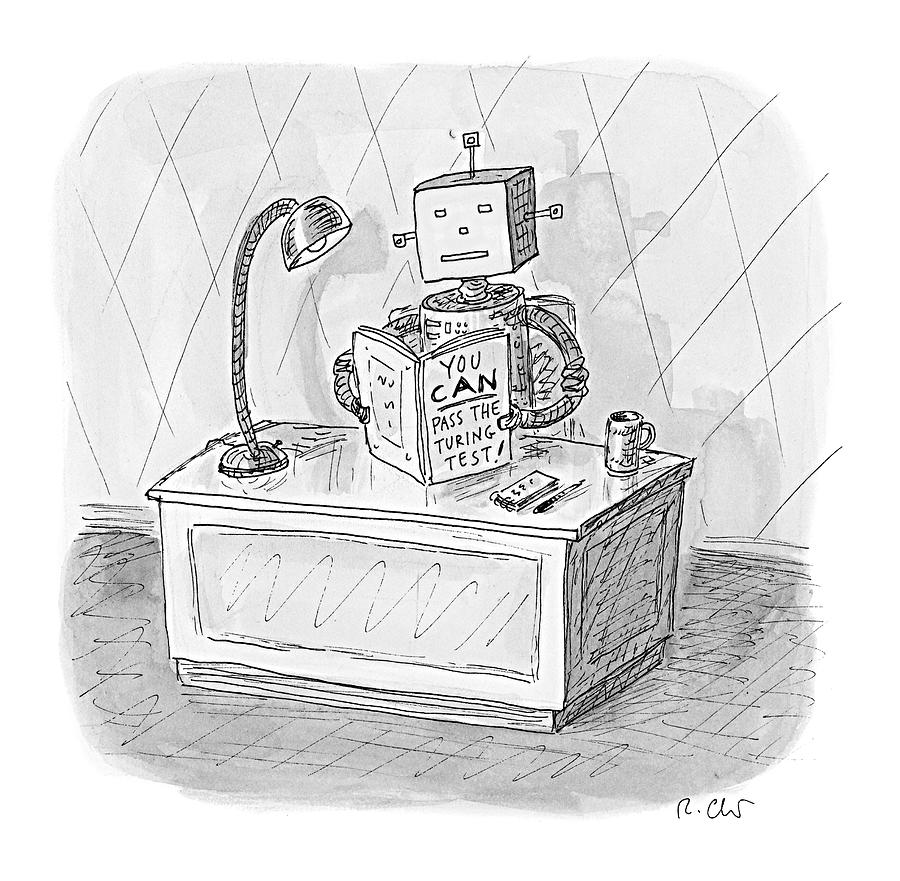
In blogging’s primitive past, we humans had to rely on our own brains to come up with everything we posted. Today about 75% of websites and blogs are created, at least in part, by artificial intelligence. As your chatbot itself will be the first to point out, it’s so fast! It has the entire written output of the human race at its (metaphorical) fingertips! And it will lavish praise on you for being smart enough to let it do your job for you! What’s not to like?
Let me count the ways.
First, there’s style. Computers tend to have what we in the writing biz call “a tin ear,” meaning they can be tone deaf to the nuances of human communication. Often machine-made prose gives the impression your chatbot’s been up all night chugging Red Bull and uploading Roget’s Thesaurus. Here’s what Troy Harrison, “the Sales Navigator,” got when he asked AI to compose a post opening:
Hey there, savvy sales champs! Ever thought about having a secret weapon that boosts your sales game? Enter ChatGPT, your new best buddy in the sales world. It’s like having a Jedi master of conversation on your side, helping you charm clients, answer tricky questions, and close deals faster than you can say ‘commission.’”
Yowzer! Pro tip: watch for text riddled with exaggerated claims, clunky wording, clichés, meaningless filler, and sentences of identical length. I’m not saying humans never write that poorly, but when it comes to awkward composition, machines are the champs.
Then there are the factual errors. AI will stop at nothing to complete a task. Insufficient data? It will invent some. If the instructions are open to misinterpretation, it may go down some pretty weird rabbit holes. Lately we’ve all be chuckling (in a horrified manner) over the AI-generated US State Department map that misplaced and mislabeled all five of the African nations under discussion. Oops!

How did a superintelligence (meaning AI, not the State Department) get such basic facts so wrong? AI is essentially a guessing machine, one that takes in vast amounts of data, spots patterns, and uses them to predict the most likely answer to any question. It can’t reliably determine whether its source material is a joke, a lunatic-fringe conspiracy theory, or a well-reasoned argument. That’s why AI sometimes winds up with egg on its face over posts would never pass even the most rudimentary human sniff test. Like this famous example:
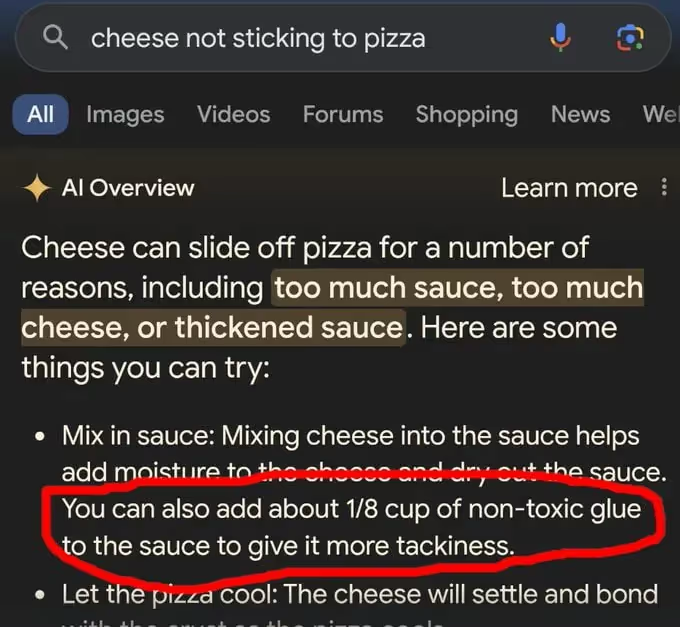
Where did AI get this harebrained idea? From a wisecrack on a 2013 Reddit comment about how mixing Elmer’s into the sauce might improve a pizza. The AI blooper went viral in 2024, and millions around the world have been snickering over it ever since.
Which brings me to the main reason not to turn our writing over to bots. “Humans,” said journalist Tom Parker, “don’t run on truth, we run on stories. And whoever controls the stories controls the species.”
The Odyssey, for instance, has served as a cautionary tale for 150 generations, giving the phrase “Trojan horse” a permanent place in our global vocabulary. Nobody wants to feel as stupid as the guy who said, “Sure, let’s bring in the horse. What could possibly go wrong?”
It’s basic neuroscience. “Stories engage the brain’s sensory and emotional centers, making information more memorable and persuasive than facts alone,” wrote journalism professor Evan Kropp.
This explains why ludicrous stories persist even when all objective evidence demonstrates they’re completely untrue — from the myth that immigrants eat cats to blaming terrorists for the algae in the Reflecting Pool to claims the US government is made up of reptilian space-aliens. (OK, to be fair, that last theory may have merit; the jury is still out.)
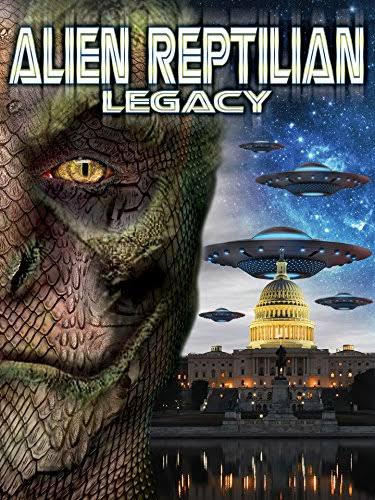
Yes, humans can be delusional. But so can chatbots. Are we ready to turn over control of the global narrative — and our species — to machines? Remember The Terminator? The Matrix? Westworld? Do those cautionary tales have as much to teach us as The Odyssey? Is AI the modern Trojan horse?
This is why we still need human thinkers and writers: to apply the sniff test, remember our hard-earned lessons, and connect the dots. Together we can explore narratives that help us make sense of the world and find ways to live like good neighbors rather than paranoid strangers.
Blogs hold a special place in the process, offering a unique opportunity to engage in immediate and ongoing dialogue with the author and fellow commenters. Many of you have been writing to me for years, and new voices join the conversation all the time. Thank you all for reaching out! My life would be considerably less interesting and entertaining without you.
So this August 5th, I hope you’ll join me in celebrating national Blogger Day. Share your comments below — and on other blogs — to help keep the human conversational ball rolling. As for national Underwear Day, I’ll leave it up to you and your favorite unmentionables to find an appropriate way to honor the occasion; just promise you won’t send me photos.




Leave a Reply