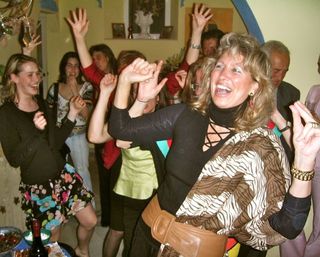
After 20 years in Ohio, following an early-to-bed, organic-vegetables-fresh-from-our-garden kind of lifestyle, adapting to Seville’s uproarious social scene was a bit of a shock. The Sevillanos consider it their God-given birthright – practically an obligation – to enjoy themselves. Even a simple
tapeo
(sampling of the city’s tapas bars) can run until the small hours of the morning and not infrequently includes walking home through the silent streets, arm in arm with friends, and (if I am to be totally honest with you) singing a medley of old show tunes, Beatles hits, and
Besame Mucho
.
If I’ve learned anything from my days and nights in a city with 3000 tapas bars, it’s how to pick out a congenial place to stop for a bite and a sip. And Rich’s nose for new bars and cafés is now held in such high regard that it’s often referred to as “the Sniffer.” In our travels around the globe, we’ve found that many of the criteria we’ve honed in Seville’s tapas bars apply wherever we go. If you’re wandering around an unknown city in search of a café, bar or restaurant, ask yourself:
1.
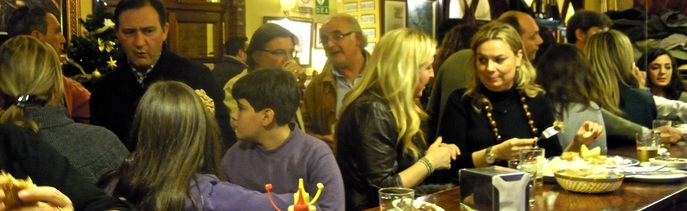
Is the place crowded with locals?
People in the neighborhood know where to find the best food at the best prices. If they’re standing three deep at the bar, chances are it’s worth elbowing your way in.
2.
Is it noisy?
When people are enjoying themselves, the buzz of convivial conversation tends to rise, and noise levels that require shouting over the din suggests that people are having a very good time indeed. It may be worth straining your vocal cords to find out what the buzz is all about.
3.
Is it a chain?
There is a sort of alchemy to corporate ownership that transforms even the best fresh ingredients into a sort of gooey sawdust; just think about the last meal you had on a plane or in the hospital. Although there are decent franchises (I quite like the cheap shrimp and buckets of beer at Spain’s hot new chain La Sureña, for instance) in general they’re best avoided.
4.
Are the menus in English?
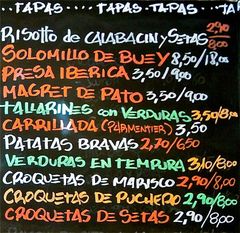
When I’m confronted with a menu written entirely in the local language, I know I’m far enough off the tourist track to find food with true regional flavor. But it can be risky. I’ll never forget the time in Japan when our friend Phil, confronted with a menu in kanji, pointed to an entry at random, and we were served a huge fish head and a fistful of chopsticks. I have now learned that the trick is to point at tasty-looking dishes that are passing by, not to incomprehensible menu items that may turn out to be fish heads, or worse.
5.
How is it decorated?
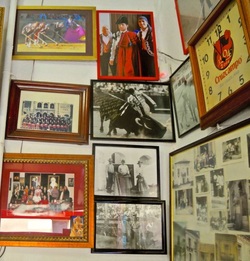
Funky decor with a strong local flavor suggests a family owned place; with any luck, there’s a grandmother out back in the kitchen cooking with recipes revered for generations. Although I have had wonderful meals in over-manicured eateries, when I’m hunting for an authentic local dining experience, I go the funky grandmother route whenever possible.
When we first moved to Seville, just about every bar and café sported dispensers of small, thin, waxy, woefully inadequate napkins; it would take a dozen or more just to get through a plate of ham. We soon learned that floors littered with greasy, crumpled napkins suggested a lively locale worthy of further investigation. Sadly, this key indicator has now faded into obscurity as proprietors have succumbed to the hot new trend of buying paper napkins with actual powers of absorption.
So how
do
you find a good bar in Seville these days?
I get that question a lot, especially during the annual spring influx of tourists, and I have decided to give it the full attention it deserves in a special page on my website. You’ll find guidelines for choosing a tapas bar, photos of promising or worrisome features, and a list of Sniffer-tested favorites. If you’ll be anywhere near Seville in the near future, or simply want to know how try out new bars with Spanish-style zest wherever you may be, come visit
Seville’s Tapas Bars
. Cheers!

Leave a Reply