
When I was laid low with a cold last week (I’m fine now, thanks for asking) I found myself watching lots of WWII videos to cheer myself up. First of all (spoiler alert!) we always win in the end. And while I might have been coughing, sneezing, and blowing my nose every 15 seconds, at least nobody was shooting at me or reducing my city to rubble. Also, I didn’t have to answer unthinkable questions like “So …. shall we build an atomic bomb or let the Nazis do it first?”
Nor did I have to worry about defending my virtue. In
Atlantic Crossing
, Crown Princess Märtha of Norway, desperate to get America to join the Allies, spent much of WWII being chased around Washington, DC by that old womanizer, Franklin D. Roosevelt, who never let little things like being married or in a wheelchair slow him down. It was impossible to watch without asking myself, “Just how far would I be willing to go to save my country, Europe, and civilization as we know it?”
One of the reasons we go to the movies — and spend sick days on the couch in front of the TV — is to imagine, if only briefly, how we would face up to life’s tough challenges. It’s why American teenagers flock to horror movies, millions of adults are addicted to reality TV and extreme sports, and why bullfighting has been popular for 4000 years. Especially in Seville.
When I first came to Seville, I was gobsmacked to see all the bullfighting memorabilia around here. Gigantic horned heads loom high on hotel walls, glittering
trajes de luces
(bullfighters’ “suits of light”) gleam in restaurant display cases, and flyspecked black-and-white newspaper photos of famous
toreros
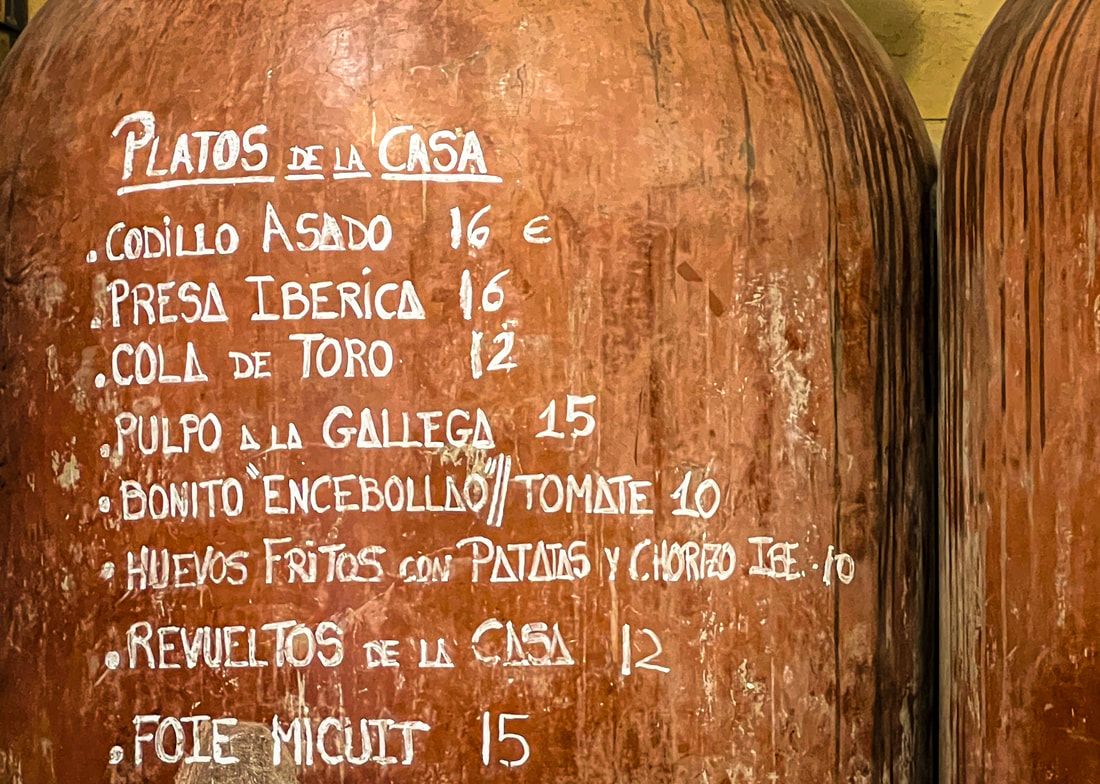
hang in places of honor above even the humblest bar. Animals killed in the ring are always eaten, appearing on menus as
cola de toro,
a succulent stew of bull’s tail simmered in wine and herbs.
Years ago Antonio, owner of a tiny neighborhood tavern in the Triana district, tacked to his wall a newspaper clipping with the headline, “¡
Volveré a torear
!” (“I will return to bullfighting!”) When I asked about it, he explained that for his debut in Seville, one bullfighter decided to make his mark and demonstrate his courage by dropping to his knees and holding his ground when the bull was released into the ring.
The bull, hardly able to believe his luck, instantly lowered his head and gored the man’s chest, neck and face. Antonio, Rich, and I gazed at the hideous scars in the grainy newspaper picture.
“Where is this man now?” I asked.
“Working in a stationary store here in Triana,” Antonio said. So much for that career in the bullring.
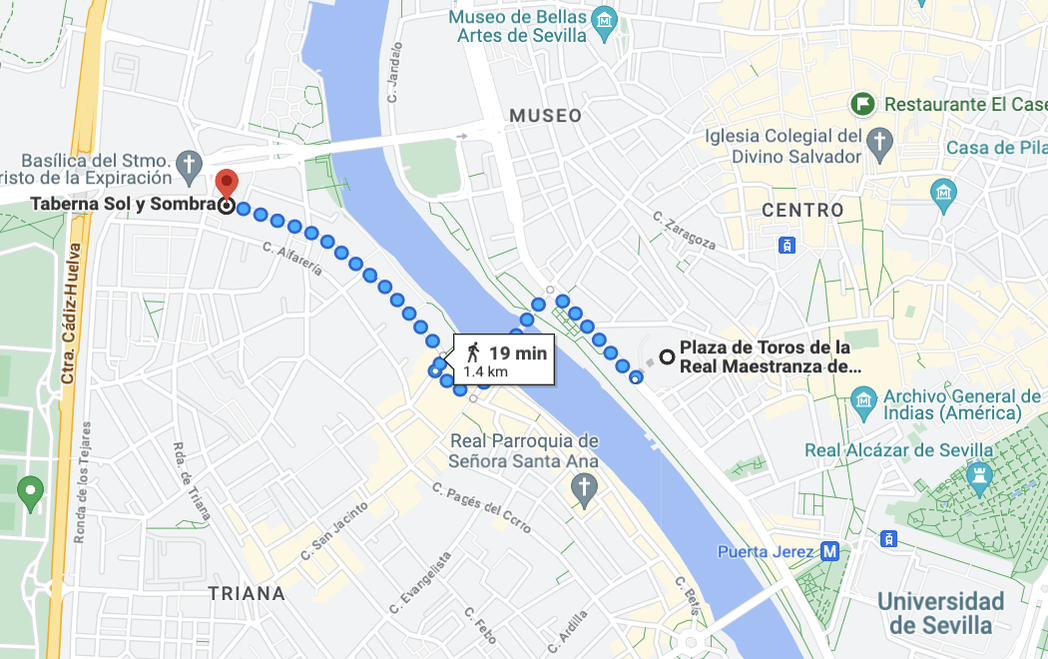
Rich and I were reminiscing about that ex-bullfighter (whose name has been so lost to history I couldn’t even track him down on Google) during a recent lunch at Sol y Sombra, a classic
bar taurino
(bullfighting bar) in the Triana district.
Sol y Sombra is dim and cozy, with worn tiles, yellowed posters, and handwritten menu cards stapled to the walls. Rolls of toilet paper are scattered about, to be used in place of napkins. Just keeping it humble and real.
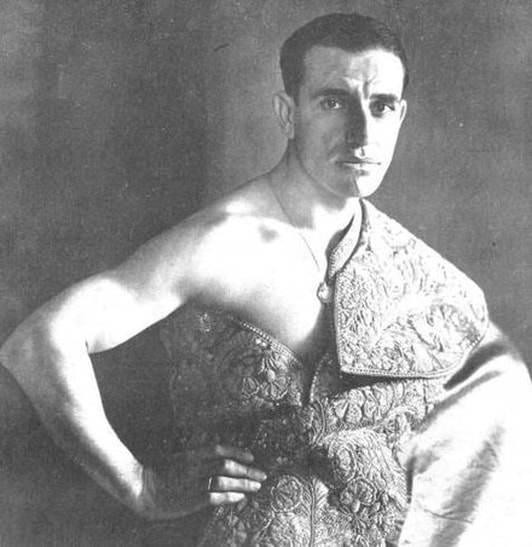
Faces of top
toreros
peer down from every wall. Many of them are unlikely characters, such as Juan Belmonte, a spindly Trianero with crooked legs. “My legs were in such a state,” he said, “that if one wanted to move, it had to request permission from the other.” Unable to leap nimbly out of harm’s way, he had to find another way to fight.
“At night,” he said, “we would swim the Guadalquivir and fight the bulls in the pastures in the moonlight. That was the beautiful time, fighting them naked in the moonlight.” Naked or clothed, he developed a unique, close-in, barely moving style that led to getting gored fifty times but won him acclaim as “the greatest bullfighter of all time.”
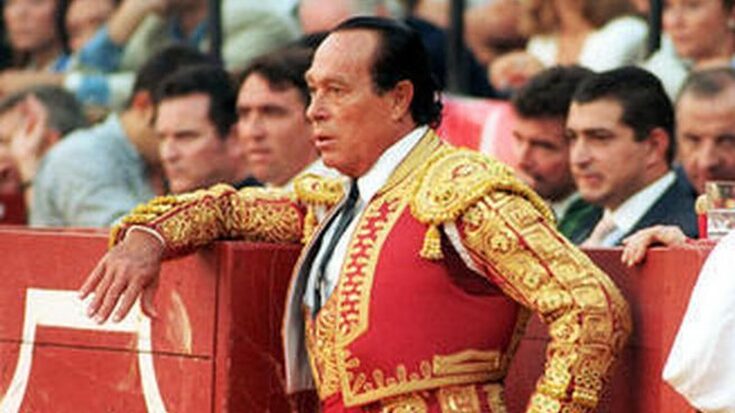
Another unlikely local hero is Curro Romero, who often took fright and ran away from a bull, flapping his cape from a safe distance, not even pretending to fight. “
Curro was booed and cursed
and rained on with seat cushions,” explained blogger 100swallows, “and of course fined heavily for breaking the rules that required a bullfighter to kill his animal.”
But when he was at his best “it was like going to heaven. There was nothing like it in this world. If you saw it, you knew you had seen something angelic. Curro hypnotized with his slow capework and the dignity of his poise. The bull charged as though he too were trying with all his might to reach perfection, to ‘get it right.’”
Say what you will about bullfighting — go ahead, everyone does! — you have to admit it’s colorful stuff. The season starts Easter Sunday, runs through spring, pauses during the heat of summer, and finishes up with a few fall events.
And I can already hear you thinking, “Nope, not me! I wouldn’t be caught dead at a bullfight!”
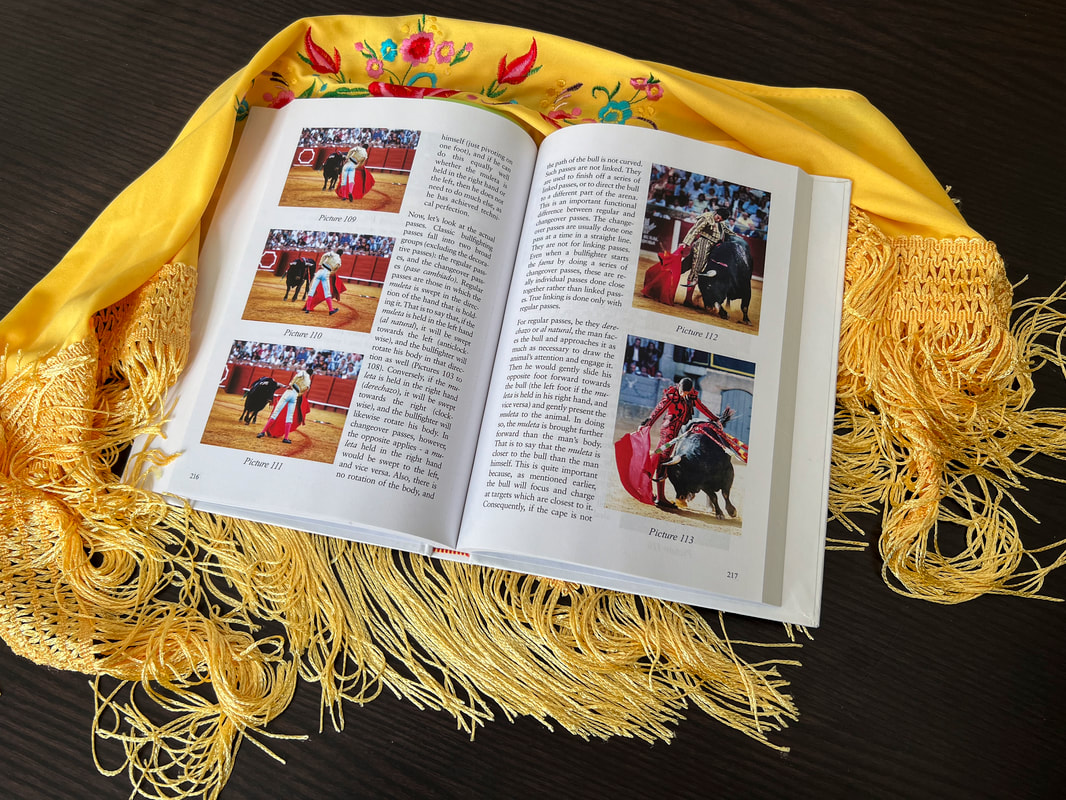
Never say never. When my friend Reza Hosseinpour, the brilliant pediatric heart surgeon, moved to Seville, he was appalled by the very idea of bullfighting. But Spanish
amigos
finally persuaded him to go just once, and he fell in love with “the esoteric ritualistic art.” Eventually he wrote the first comprehensive English book on the subject, the meticulously researched and lavishly illustrated
Making Sense of Bullfighting
.
Inspired by our lunch at Sol y Sombra, Rich and I decided to drop by Seville’s Maestranza bullring. During the off hours you can pay a small fee and wander about to your heart’s content, checking out the museum, the arena, and the
torero’s
chapel, where some of the most urgent praying on Earth takes place.
When I first visited you could also poke around in the bullfighter’s hospital — another hotspot for communing with the Almighty — but then some stickler for hygiene objected to the idea of random crowds tramping around a sterile operating theater, and the medical facility was shifted to a less public area. Go figure.
The museum houses a wonderful collection of
trajes de luces
, some still showing bloodstains.
Toreros
are “dressed to kill” in outfits inspired by the spangled, embroidered, and tasseled extravagances favored by dandies in the eighteenth century, when modern bullfighting practices developed.
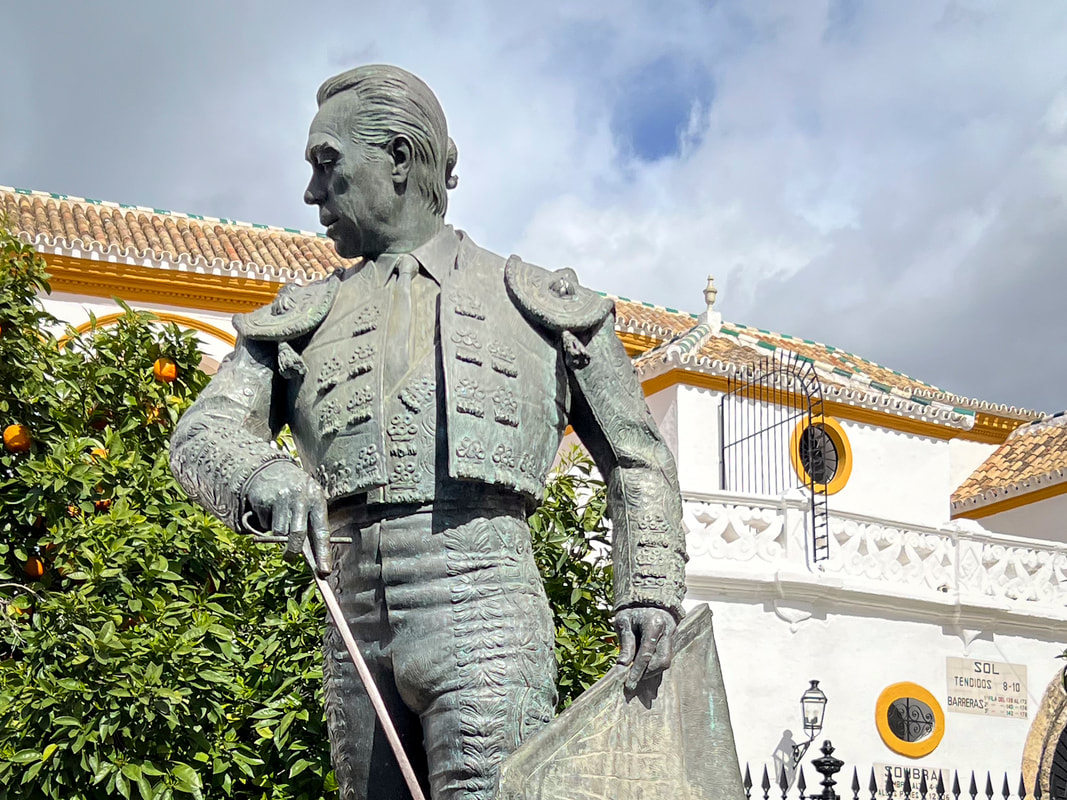
To prevent horns from snagging in the fabric, the fit is super snug. Indeed, men wear their trousers so tight that their “noble parts” are clearly visible, arranged to one side, or “away from the bull,” as famously demonstrated in this statue of Curro Romero.
Life is full of impossible moral dilemmas. Should animals be killed for food? If so, is it wrong to perform this act yourself, assuming personal risk to achieve artistry? Is it kinder to raise beasts in overcrowded pens and kill them in slaughterhouses ringing with the death cries of their mates? Is it OK to eat
cola de toro
if you’re opposed to bullfighting?
These questions have been hotly debated for thousands of years, and are best discussed over a cold beer in one of Seville’s classic bullfighting bars. Let me know what you decide.
BULL BARS YOU MIGHT LIKE
Taberna Sol y Sombra
,
Calle Castilla, 147, Triana
Casa Pepe Hillo
,
Calle Adriano, 24,
Seville centro
Bar Estrella
,
Calle Estrella 3,
Seville centro
OUT TO LUNCH
This story is part of my ongoing series “Out to Lunch.” Each week I write about visiting offbeat places in the city and province of Seville, often by train, seeking cultural curiosities and great eats. (
Learn more
.
)
WANT TO STAY IN THE LOOP?
If you haven’t already, take a moment to subscribe so you’ll receive notices when I publish my weekly posts.
Just send me an email and I’ll take it from there.
[email protected]
LIKE TO READ BOOKS?
Be sure to check out my
best selling travel memoirs & guide books
here
.
PLANNING A TRIP?
Enter any destination or topic, such as packing light or road food, in
the search box
below
. If I’ve written about it, you’ll find it.
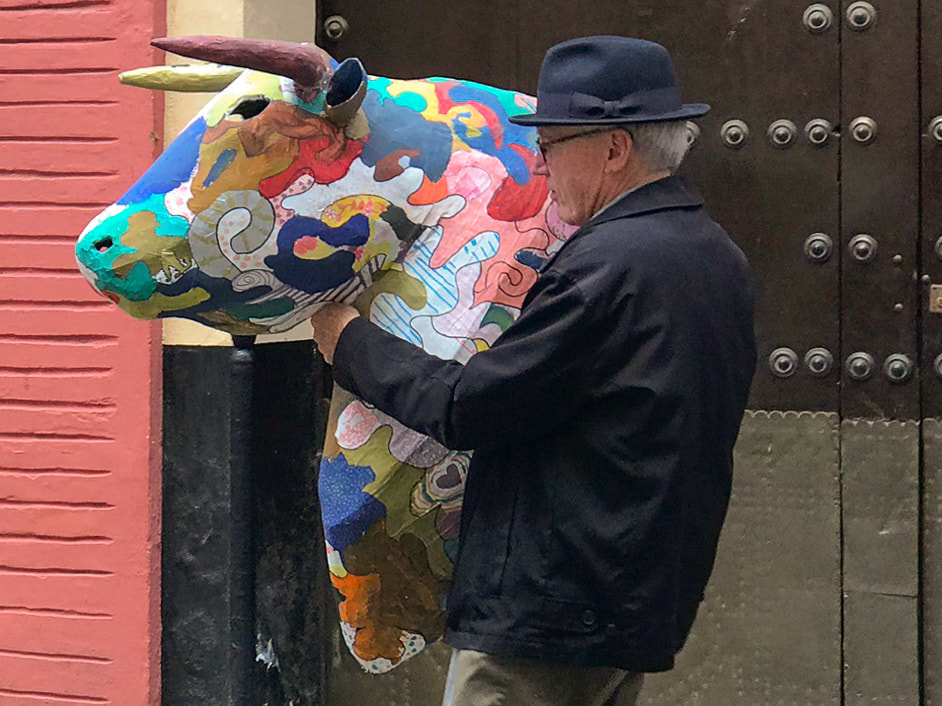
Why is Rich carrying around a bull’s head?
Read all about it here.

Leave a Reply