I often see newcomers blinking in confusion over Seville menus offering “lard of heaven” (the eggy dessert
tocino de cielo)
or “green Jews” (a mistranslation of
judías verdes,
meaning “green beans”). But generally Spanish restaurants describe their dishes with admirable clarity, and we are spared the kind of pretentious nonsense that’s all too familiar elsewhere.
“Here, for example,” wrote author Peter Mayle, “is a London restaurant’s attempt to justify the exorbitant price of its whitebait:
‘The tiny fresh fish are tossed by our chef for a few fleeting seconds into a bath of boiling oil, and then are removed before they have a chance to recover from their surprise.’
Anyone who suggests tossing the writer in after them has my full support.”
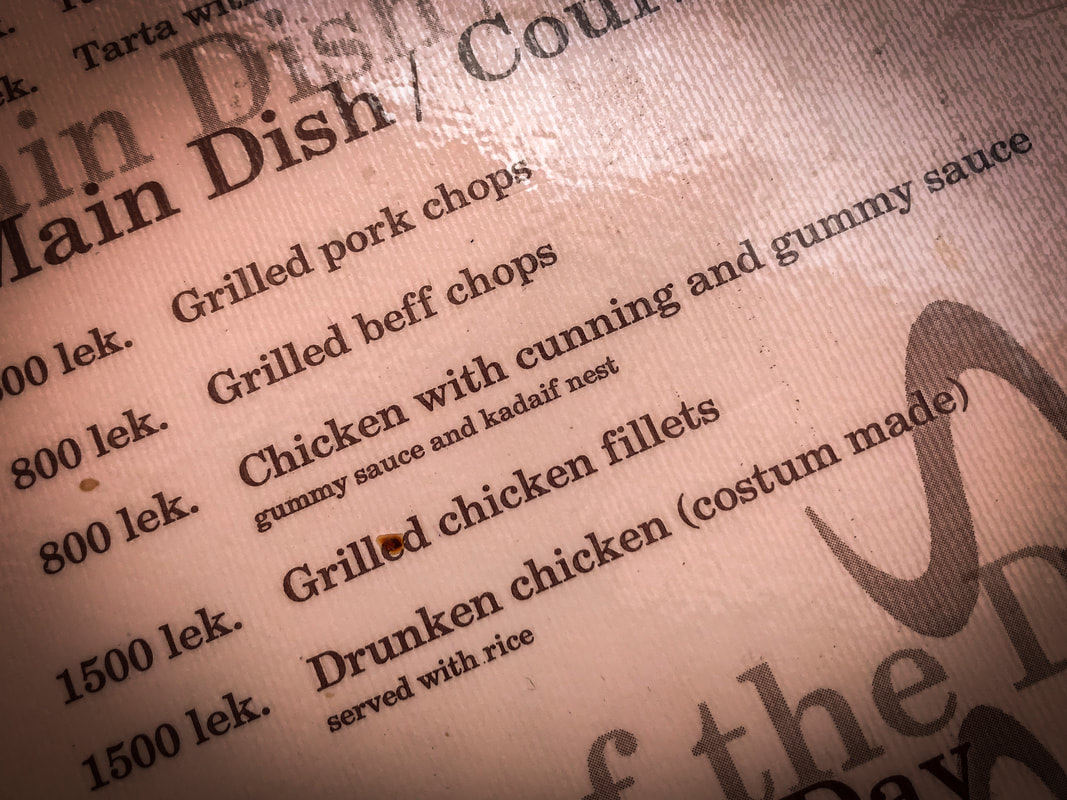
You expect that kind of silliness in London or Albania, but not Seville. So it took me a few moments to recover from my surprise when I picked up a café menu this week and read: “The Hake Has Balls and the Squid is Downright Saucy!!” Yikes! Did I want fish balls topped with cheeky squid? No, I really didn’t.
Soldiering on, I discovered a dish called “What Have I Done to Deserve This,” pork brioche in a sauce of “coke and wine.” Would that be Coca-Cola or cocaine? Further down was “pastor meat,” denomination unspecified.
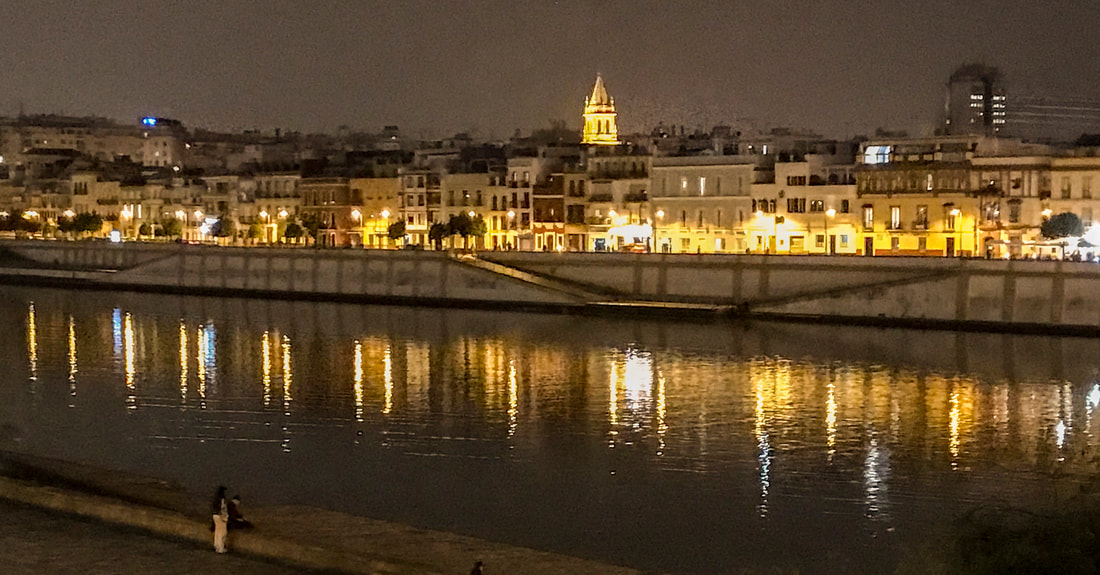
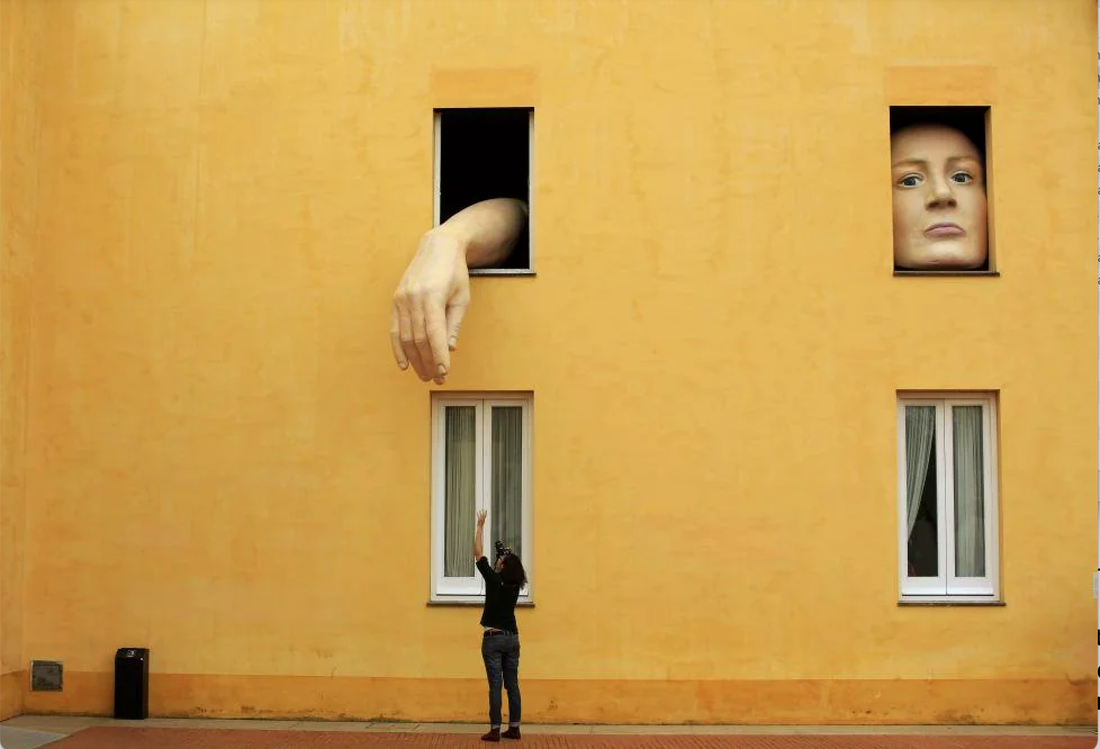
As a writer, I had to admire the author’s daring, even while I questioned some (ok, most) of the word choices, which sounded equally bizarre in the Spanish version of the menu. I reminded myself this was Seville’s Triana district, which for millennia was a notoriously independent separate city, home to outliers, misfits, flamenco dancers, scallywags, bullfighters, and artists. Technically it’s now part of Seville, but clearly Triana is maintaining its reputation for ignoring the rules and living out loud.
Triana is also justly famous for the excellence of its mud. The blue clay lining the Guadalquivir River is ideal for making ceramics, a fact noted by the crafty Romans back in Biblical times. They developed an artisan community that has provided a hundred generations of Seville families with plates, cups, platters, and statues of various deities. And of course, where you have deities, you have controversies.
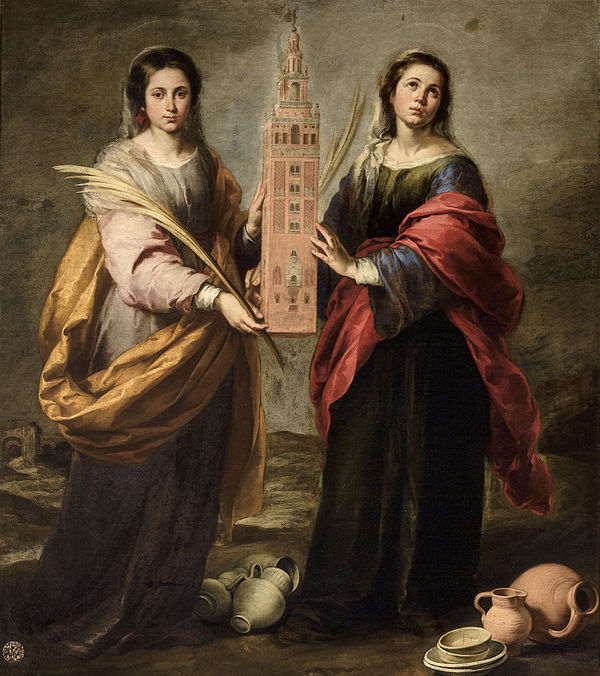
One such controversy involved early Christian potters, sisters Justa and Rufina, who refused to sell their wares for use in pagan rituals. Angry neighbors attacked their stall, and in the ensuing donnybrook, one of the sisters broke a statue of Venus.
The two potters were arrested, jailed, tortured; Justa died first. Rufina was then thrown to the lions, but the beasts became as tame as kittens, licking her feet. (It’s possible some of these details may not be 100% accurate.) Rufina was eventually beheaded, and the sisters became Seville’s patron saints, always shown with piles of pottery at their feet.
Triana’s pottery really upped its game in the seventh century when the Moors conquered the region. The new overlords brought with them sophisticated techniques such as white tin-glazing and the iridescent gold finish known as lusterware, adding breathtaking dazzle to local architecture and housewares.
Another game-changer was the arrival of British aristocrat and entrepreneur Charles Pickman in 1841. Looking to build a factory, he bought Triana’s ancient Cartuja Monastery, where Christopher Columbus had prepared for his voyage to the New World and later the artist Zurbarán painted some of his best-loved masterpieces.
At first Pickman’s factory was welcomed as a revitalizing force in the industry and a source of jobs, but the elegant English designs — and higher prices — soon stirred up resentments. Competitors reacted by embracing pre-industrial techniques and old-school Spanish designs, an approach that lasted well into the twentieth century.
By the 1970s, Triana’s ancient, wood-fired kilns were creating so much smoke pollution that they were banned, marking the beginning of the end of large-scale commercial pottery production in the
barrio.
You can still see some of the ancient kilns in the rambling, fascinating
Centro Cerámica Triana
museum. Pickman’s Cartuja Ceramics moved to a neaby town in 1982, and today the monastery serves as the
Andalucía Contemporary Art Center
, home to some outrageous art.
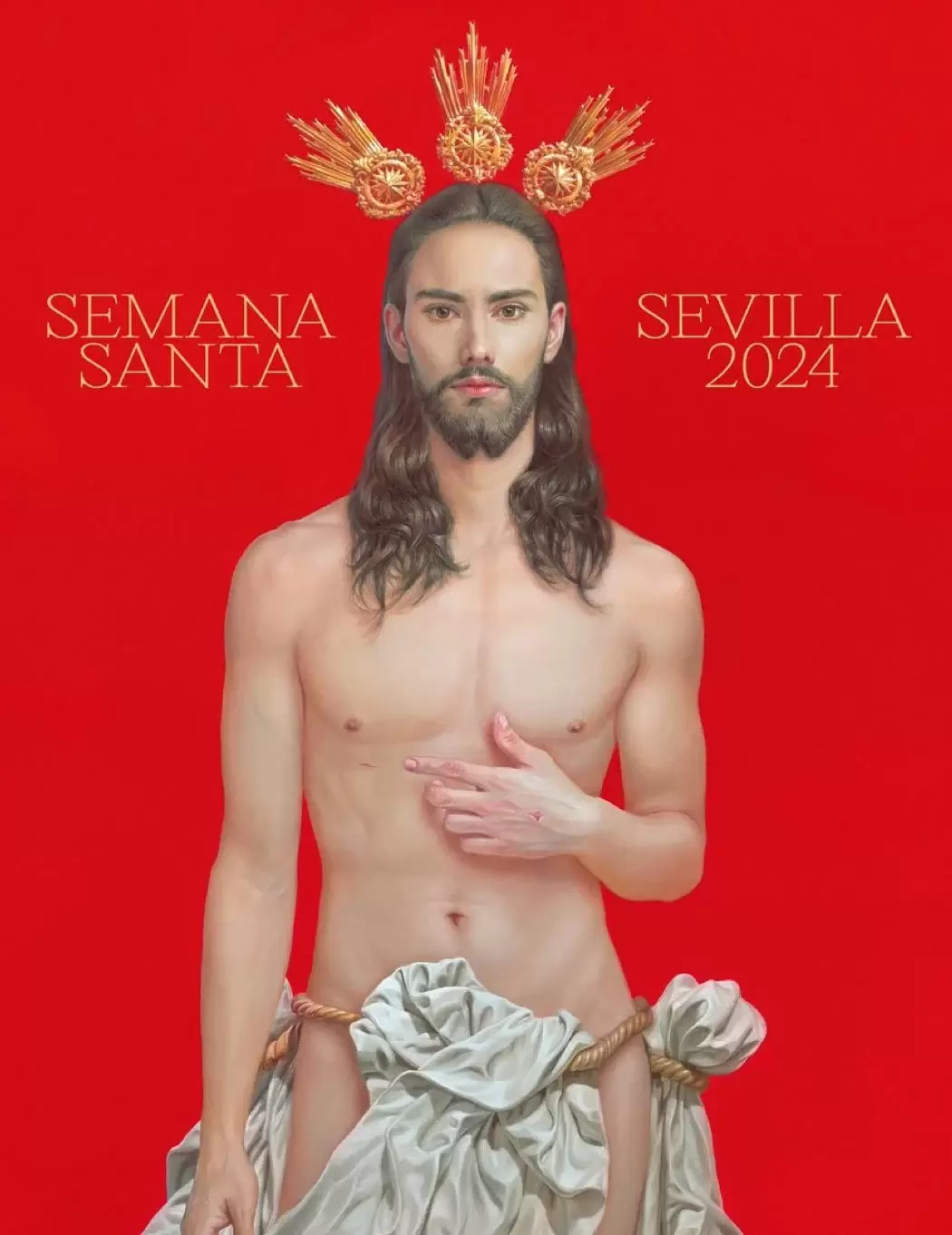
No discussion of outrageous contemporary art in Seville would be complete without a mention of the red hot controversy currently convulsing this city. Every year officials commission a poster to promote Semana Santa (pre-Easter Holy Week) when the streets are jammed with processions and visitors. Typically posters show pious depictions of the suffering Jesus, a weeping Mary, or an adorable altar boy. This year’s theme is the risen Christ. Luminous, radiant, and absolutely gorgeous.
Every one of the powerful Holy Week organizers, the Council of Brotherhoods of Seville, signed off on the piece before last week’s unveiling. Ultra-conservatives took one look and began foaming at the mouth, cursing the day it became illegal to burn heretics at the stake.
Death threats have been hurled at the artist, Salustiano Garcia, who said, “To see sexuality in my image of Christ, you must be mad,” adding there was nothing in the image that “has not already been represented in artworks dating back hundreds of years.”
Curious yet? Want to see what all the fuss is about?
Yowser!
People will be talking about this poster for centuries. Which is no doubt why they did it.
“Contemporary art challenges us,” said billionaire collector Eli Broad. “It broadens our horizons. It asks us to think beyond the limits of conventional wisdom.” Art is all about redefining what it means to be alive in a particular era. We have to keep at this, because we humans are ceaselessly reinventing ourselves and our environments.
And that’s what’s happening right now in Triana’s old ceramic district, where they’re busy dismantling the last vestiges of a 2000-year-old industry. Artisans still make pottery in small workshops, but the big factories are being transformed into stores, restaurants, wine bars, and
abacerías
, tiny grocery markets with a few café tables and, in most cases, modest menus.
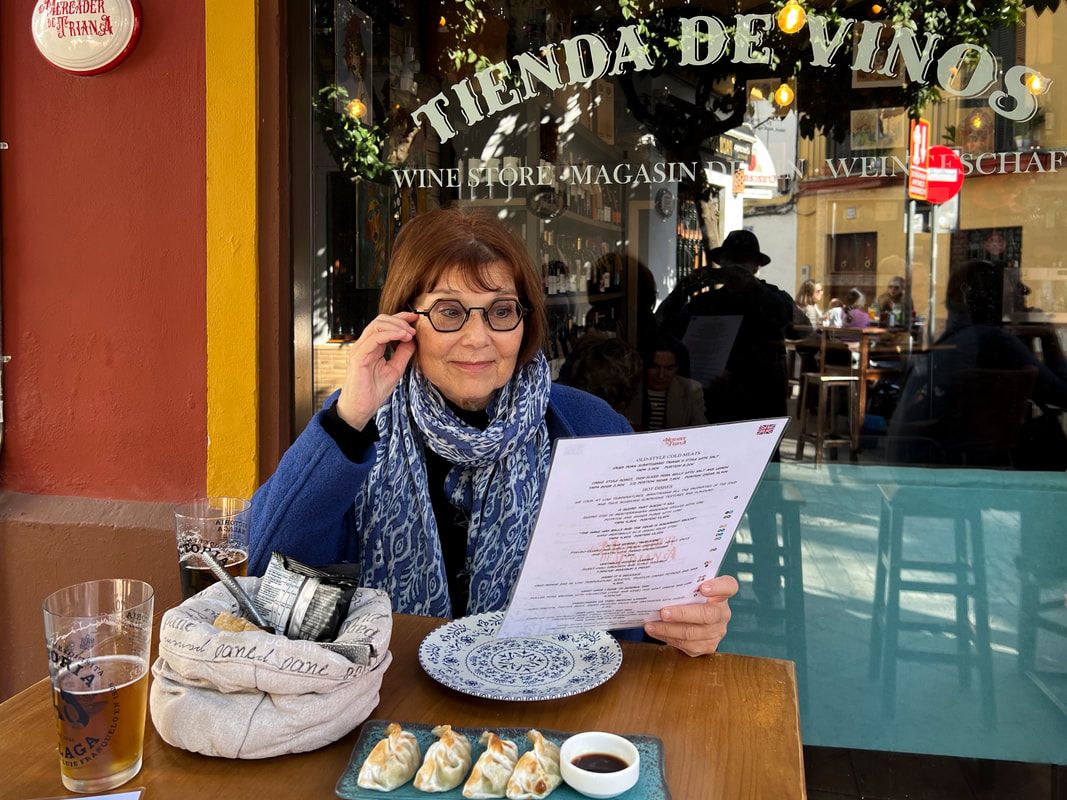
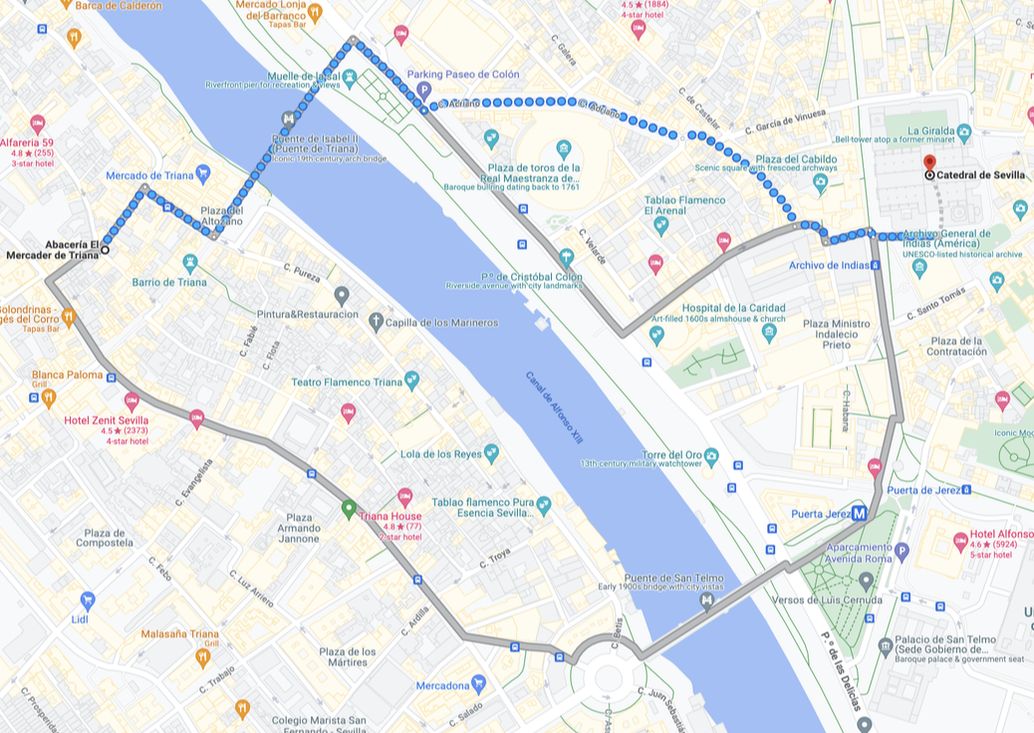
The Abacería El Mercader de Triana, however, went large with a flamboyant bill of fare, placed temptingly on tables set beneath orange trees on a back street winding past the former ceramic factories. I sat down and began reading, curious to see how our host proposed to “reanimate” (as the Sevillanos say) weary wayfarers like ourselves.
“Listen to this,” I said to Rich. “There’s one called ‘Does Not “Entrail” Any Risk.’ Apparently it’s a plate of entrails with chimichurri sauce. Yikes!” I’m not a bashful eater, but in the end I selected the more conventional “A Sword That Doesn’t Kill,” tender swordfish steak lounging on a bed of lively lime-infused potato-ginger puree.
I reflected that Sevillanos, once the most conservative of eaters, had come a long way in the twenty-plus years I’d been hanging around with them. The city continues to draw its strength from ancient traditions — culinary, spiritual, artistic, and social — yet fearlessly embraces fresh ideas that even the most modernist thinkers might find startling. And that’s why I never take this city for granted; I’m always agog to see what’s going to happen next.
OUT TO LUNCH
This story is part of my ongoing series “Out to Lunch.” Each week I write about visiting offbeat places in the city and province of Seville, often by train, seeking cultural curiosities and great eats. (
Learn more
.
)
WANT TO STAY IN THE LOOP?
If you haven’t already, take a moment to subscribe so you’ll receive notices when I publish my weekly posts.
Just send me an email and I’ll take it from there.
[email protected]
LIKE TO READ BOOKS?
Be sure to check out my
best selling travel memoirs & guide books
here
.
PLANNING A TRIP?
Enter any destination or topic, such as packing light or road food, in
the search box
below
. If I’ve written about it, you’ll find it.

Leave a Reply