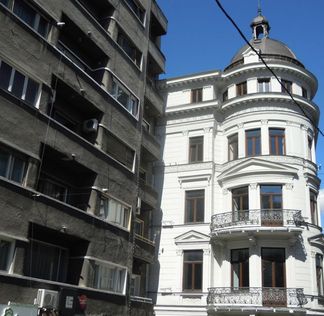
The communists have a lot to answer for, not least of which is their brutal architectural style. In Bucharest, Romania, hideous, concrete, Soviet-style apartment blocks blight the downtown landscape, often mashed up against some genteel old Victorian with filigree, turrets, and an air of being appalled to find itself in such rough company.
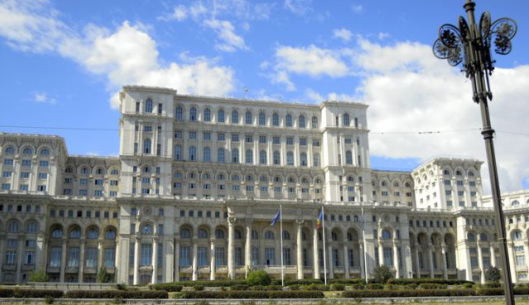
Of course, when it comes to architectural monstrosities, nothing in the city compares to the
Palace of the People
,
Nicholae Ceausescu
’s monument to his own unbridled ego, built at a cost of somewhere north of $4 billion at a time when his people were starving.
The keen observer will note that Ceausescu chose a
let-them-eat-cake style of architecture
for his 1100-room palace, which is filled with reception halls the size of cathedrals, an enormous balcony for addressing the populace, and a main staircase that was
rebuilt three times so that it would
more precisely match the size of his feet
. The staircase came out perfectly, but the timing was off, and in 1989, before the building was completed, there was a revolution, and Ceausescu was deposed and executed.
More than 200 soldiers volunteered
to be on the firing squad.
So as it turned out, the first person to use the massive balcony wasn’t Ceausescu but
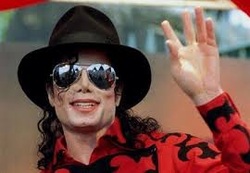
Michael Jackson
. In town for a concert, the King of Pop stepped out to greet his fans, waved and said,
“It’s great to be here in Budapest!”
He wasn’t the first to mix up the names of Budapest (the capital of Hungary) and Bucharest (the capital of Romania and the place he happened to be standing at the time). Nor was he the last. Just about everyone from the lead singers of
Iron Maiden
and
Metallica
to
Ozzy Osbourne
and
Lenny Kravitz
has stood up before cheering crowds and misidentified the city. Last year
400 Spanish sports enthusiasts
chartered a plane to attend the Europa League final but found themselves 397 miles from the action when they landed in Budapest by mistake. Arriving at the correct location for the game, a British announcer started off his program with an enthusiastic, “Good evening, Budapest!”
Clearly something had to be done, and
ROM, a Romanian candy maker
, decided to step in and clear up the confusion, launching a
“Bucharest Not Budapest” campaign
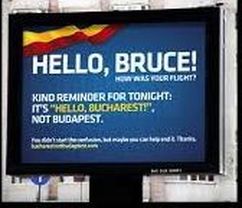
with t-shirts, billboards, and the name of Romania’s capital clearly stamped into each chocolate bar. When a certain well-known singer was scheduled to appear, an enormous billboard was put up in the main square, saying, “Hello, Bruce! How was your flight? Kind reminder for tonight: It’s “Hello, Bucharest,” not Budapest. You didn’t start the confusion, but maybe you can help end it. Thanks.” I believe he got the message.
Rich and I spent a week in Bucharest, and it was
love at fourth sight.
Having spent three weeks enjoying the storybook beauty of Romania’s smaller cities and rural villages, it took us a little while to look past the brutal apartment blocks, massive tangles of electrical wires, decaying old buildings, and graffiti to see the charm. But we now know Bucharest as a city that has survived just about everything, cherishes the best of its old traditions, and knows how to take life as it comes, with a joke, a swig of homemade plum brandy, and an arm around your shoulder. This is
one of the friendliest cities we’ve ever encountered
. We were welcomed everywhere, are leaving many new friends behind, and hope to return again soon.
We even learned a bit of Romanian. Spelled phonetically, hello is “bon jour,” good evening is “buena sera,” thanks is “merci,” house is “casa.” and the word for carp is “crap.” (See, you’ve been speaking Romanian for years and didn’t even know it!) The ease of picking up useful phrases was just one more reason we hated to say goodbye, which is an Italianesque “arrevaderi.” Now we’re on the road again in a new city and a new country, and are doing our best to greet it properly with
“Здравей, България!” (Hello, Bulgaria!)
For more photos of Bucharest, click here.
Leave a Reply