“Hey, the new
SMART train
is
finally
starting,” Rich said. The endless delays, over everything from technical glitches to permit issues, had become a local joke. “We should try it out.”
I instantly thought of
Petaluma
, where we were scheduled to meet friends for lunch on Thursday. “How about an overnight stay at the old
Hotel Petaluma
? In fact,” I said, warming to the theme, “since we’re traveling by train, why not make it a sort of trip back in time? We can carry that vintage suitcase we bought last year, go to old-style restaurants, that sort of thing.”
“I’ve had my eye on an old dive bar there called
The Hide-Away
,” said Rich thoughtfully.
So Thursday morning we packed the old suitcase and set off on foot from our home in San Anselmo, took a short bus ride to the train station in San Rafael, and rode a half hour north and a hundred years back in time.
Tickets to travel the 22 miles were $7.50 per person each way. Fortunately there’s a half-price senior discount; unfortunately, we didn’t realize you had to purchase senior passes elsewhere, so we paid full fare. The train was clean and modern, with a friendly young conductor and a bar car run by
Becoming Independent
, an organization whose support services for people with developmental disabilities will soon include on-board job training.
Stepping off the train we visited the old station, where I was shown the first of many photos I’d see around town depicting Petaluma’s glory days as the World’s Egg Basket. A hundred years ago, four million Petaluma hens were laying 450 million eggs a year; the eggs were sold as food and to provide albumin for the first commercially viable photographic prints. I’ve heard that up until the 1960s, the smell from those chicken farms was like a ghastly fog permeating the entire city. Today the few remaining chickens are housed on the outskirts, well beyond nose range. Every April, the city pays homage to its roots with Butter and Egg Days, which “celebrates all things Petaluma.”
We walked the short distance downtown to the Hotel Petaluma, built in 1923 and recently restored to its former splendor. Our room was tiny (to be fair, we opted for the cheapest on offer) but very comfortable, and it did come with the Teachings of Buddha as well as a Bible. We spent the day visiting the historical museum, lunching with our friends, and window shopping along the quaint main streets. Built on solid bedrock, Petaluma was one of the few cities in the region to survive the 1906 earthquake with most of its lovely old Victorian buildings intact. Filmmakers love the town, and first-time visitors often experience a dizzying sense of déjà vu as they stroll past buildings they’ve seen in
American Graffiti, Cujo, Scream, Pleasantville
, and so many other movies.
Around sunset, we headed over to The HIde-Away, hoping for the kind of down-and-dirty place that offers cheap drinks, plenty of atmosphere, and quirky local characters. You can imagine our bitter disappointment when it turned out to be large modern sports bar.
“Talk about bait and switch!” Rich grumbled.
But Rich’s sniffer is capable of catching the scent of a dive bar in any town, on any continent, and it didn’t fail us now. A few blocks further on, we discovered
Gale’s Central Club Bar
; a hand-written cardboard sign proclaimed the day’s special: $2 pints of PBR (Pabst Blue Ribbon beer). The atmosphere was suitably dark, the walls jammed with bottles and bar-room kitsch. Presiding over one corner was a grizzly bear shot in 1967 by the bar’s original owner, Bob Gale; his son John took over in 2003 and gave us a friendly welcome. Over our PBRs, we chatted with John and the bartender, Julie, and before long we were explaining our retro-themed journey.
“Have dinner at
Volpi’s
,” Julie advised. “Good Italian food, generous portions, and if you’re lucky, John Volpi will be playing his accordion in the back room, where the old speakeasy was.” Our luck was in; John was there, playing hits popularized by crooners in the thirties and forties, sitting in front of the door through which bootleggers passed in bottles back in the day. The walls sported funky art, hunting gear, and a whole herd of deer heads; I’d forgotten what a bloodthirsty lot country farmers could be. I tried not to think about Bambi’s mother as we ate our pasta and listened to “Blue Skies.”
We departed Petaluma early the next morning and were back in San Anselmo and the 21st century just over 24 hours after we’d left home.
A few days later I said to Rich, “I have to come up with a title for the Petaluma story. Ideas?”
He thought a minute. “These two chickens walk into a dive bar …?”
To justify the title, I spent some time on Google trying to find a joke that starts with anything like that line, but to no avail. All in all, the chicken jokes I found were lame in the extreme. One read: Q: What do you call a city of 20 million eggs? A. New Yolk City. Wrong! The correct answer is, of course, Petaluma.
It’s been long, hot summer in the USA, and I’m heading back to Spain soon, where I’m hoping for some rest, some international perspective, and some time to work on a new book. I’ll post more stories in a few weeks. Until then, happy travels, amigos!
YOU MIGHT ALSO ENJOY
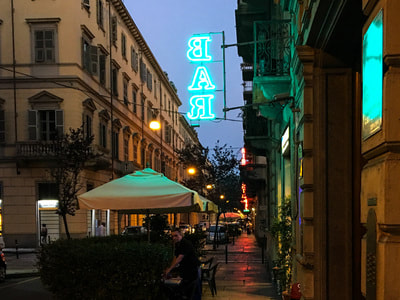
DIVE BARS OF NORTHERN ITALY
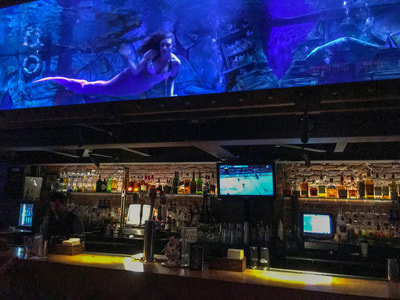
SACRAMENTO “DIVE” BAR HAS LIVE MERMAIDS
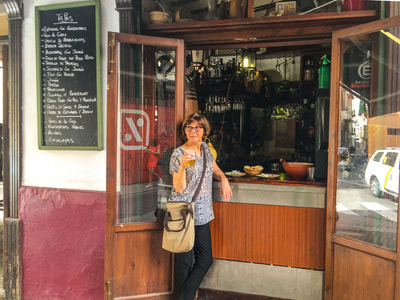
OUR FAVORITE DIVE BARS IN SEVILLE
SIGN UP FOR MY BLOG HERE
SEE MY TRAVEL BOOKS ON AMAZON

Leave a Reply