




I love the Spanish news. No matter what else is going on in the world, they find time for articles like the one about 600,000 grumpy pensioners protesting under the slogan “
I’m old, NOT an idiot.
” Enraged by the endless closing of bank branches where human-to-human transactions occur, members of “the third age,” as it’s known here, are demanding the government stop financial companies from forcing them to bank online. “We don’t understand these machines,” grumbled the group’s leader, 78-years-young retired physician Carlos San Juan.
Nobody does, Carlos! Look at what just happened during the chaotic vote to approve landmark labor reform and release 14€ billion in European Union funds into the Spanish economy. At the last minute one of the right-wing opposition members, voting online from home, accidentally pressed the wrong button — the “yes” button — so the legislation passed by a single vote. Horrified, he immediately tried to change his vote, but it was too late.
The nation’s entire economy pivoted on a single internet-based error
. Ooops!
But my favorite recent news story is about Spain declaring animals, domestic and wild, to be sentient beings. If you’ve ever lived with a pet, you won’t be surprised to learn science has amassed “compelling evidence that at least some
animals likely feel a full range of emotions, including fear, joy, happiness, shame, embarrassment, resentment, jealousy, rage, anger, love, pleasure, compassion, respect, relief, disgust, sadness, despair, and grief
.”
And they can be very devious. Our dog Pie, who knew begging was strictly forbidden, would sit gazing at guests, radiating such intense adoration they’d feel compelled to pass her chunks of steak under the table. Wild parakeets, impatient for their turn at the watering hole, will give the “danger, predator” cry, causing the flock to scatter so they can swoop in for a drink. These creatures may not be able to speak but they are far from dumb.
Spain’s law encourages us to treat animals with the respect they deserve. We can only hope that along with their new rights, the animals recognize their responsibilities. Cats, in particular, can be pretty terrifying when they turn on humankind, as seen in the recent spate of OwlKitty videos.
Octopuses are covered under Spain’s law, which is good news for those who fell in love with these affectionate and intelligent creatures while watching the Oscar-winning documentary
My Octopus Teacher
. It’s bad news for those investing 50
€
million building
the world’s first commercial octopus farm
in the Canary Islands, now barraged with outrage at the idea of subjecting these “Einsteins of the sea” to the cruelty of factory farming. PETA (People for the Ethical Treatment of Animals) jumped in with a global campaign showing sea creatures and the slogan “I’m ME, not MEAT…Go vegan.” Good luck with that here in Spain, Europe’s most carnivorous country, where the average person consumes three pounds of squid and octopus a year.
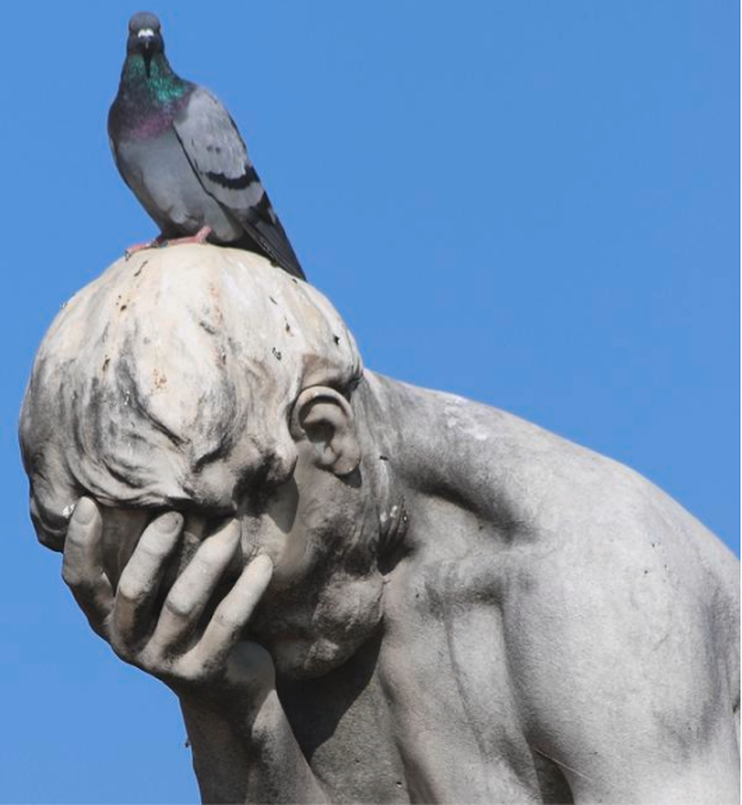
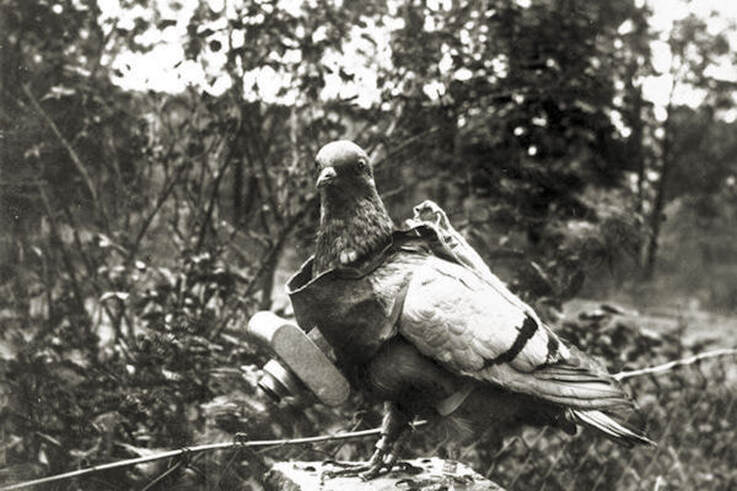
Pigeons didn’t wait around for PETA to take them off the dinner table. Once widely hunted for food, they took matters into their own claws, cleverly making themselves indispensable to humans by carrying long-distance communications for everyone from the ancient Persians and Romans to WWI and WWII armies.
Perhaps the most famous was Cher Ami, who in 1918 saved the lives of 194 US soldiers of the Lost Battalion. The men were trapped behind enemy lines in France without food or ammunition, and because their location was unknown, they came under friendly fire. Desperate to alert HQ to stop bombing them, they kept sending messenger pigeons but the Germans blasted them out of the air. Cher Ami was shot down but rose again and flew 25 miles with a bullet through the breast, blinded in one eye, and one leg hanging by a tendon. His message saved the men, and after Army medics patched him up, Cher Ami toured America as a war hero.
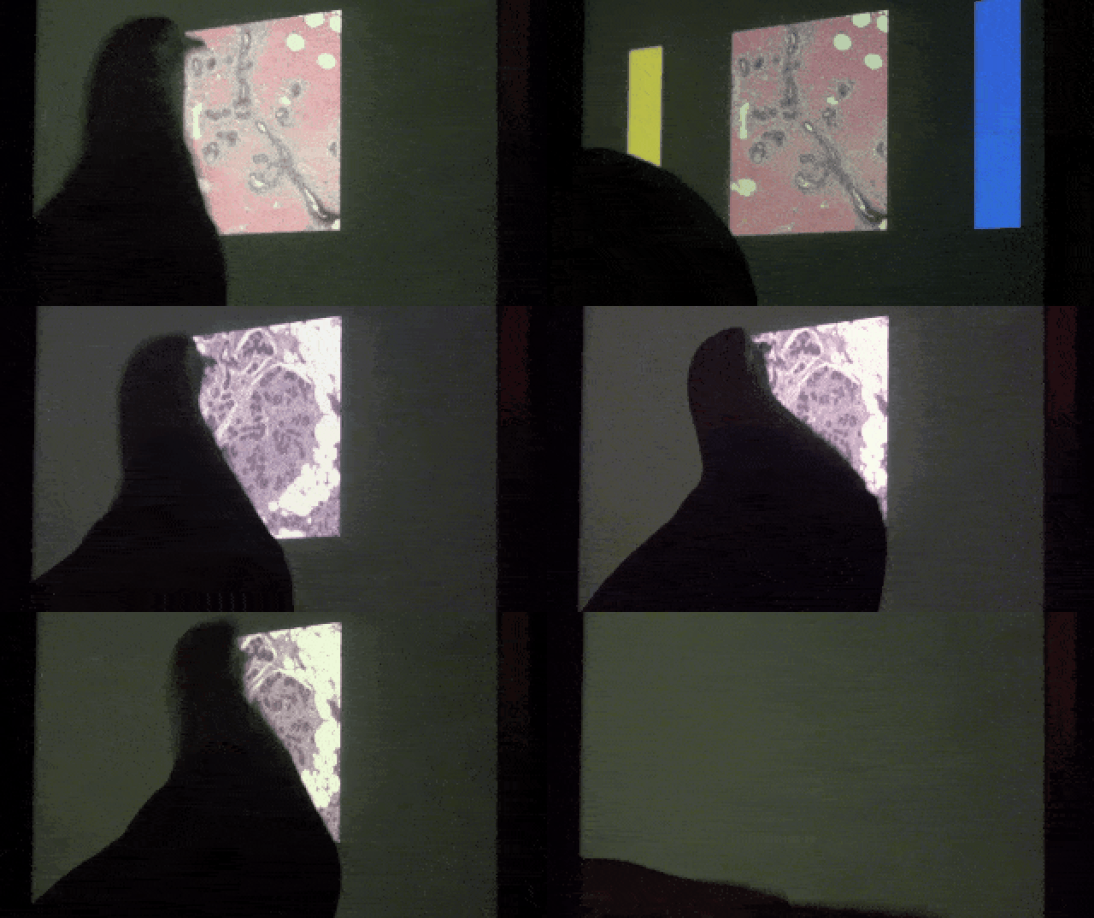
“Pigeons,” Rich says, “are amazingly intelligent. They can recognize themselves in a video, which very few animals can do. They can
distinguish between Impressionist and Cubist paintings, organize groups of objects from the lowest to the highest number, and spot cancer tumors
on mammograms.”
Who is teaching them this stuff? And why? I thought robots were supposed to take over human jobs, not birds. It turns out these are just ways of measuring pigeon intelligence, which is right up there with the IQ of monkeys, dogs, and children. Since pigeons generally only live two to three years in the wild, they’re faster learners. Well-fed and carefully tended domestic pigeons can make it to age 15 or more.
Many pigeons outlive their owners — or possibly their owners’ enthusiasm. “There’s a pigeon adoption agency near us in California,” Rich said yesterday, with a gleam in his eye. “We should go check it out.”
It won’t be long before we head to the West Coast for the summer; is Rich hinting that there’s a pet pigeon in our future? We can’t adopt anything permanently, of course, as we’ll be returning to Spain in the fall, but I suppose we could foster a bird temporarily. Although to be honest, I can’t help wondering if the kindest solution to excess pigeons isn’t simply opening the door to the cage and setting them free among the 120 million pigeons already roaming the world.
“But those are feral pigeons,” explained Rich. “Not domesticated ones.” Obviously I still have much to learn.
And finally, speaking of pets, I’m afraid I have some very sad news. Remember Macy, the dog who pioneered peanut butter painting? After a debilitating illness, she was put to rest yesterday. She will be mourned by her family, friends, and the art world for her great talent and her even greater heart.
Just before I got the sad news about Macy, I happened upon a card sent to us when our beloved Pie passed. On the front there’s a picture of a leash and the word “stay.” Inside it says, “If only they could.” Loving animals is one of life’s abundant joys; losing them breaks our hearts. They are not, as was once thought, mere biomechanical objects to be owned, used, and discarded like an old shoe. Research confirms the emotional connection we have with them is real, not an artifact of our imagination or a projection of our own feelings.
Of course, you still find naysayers like the far-right Spanish politician Ángel López Maraver, ex-president of the Spanish Hunting Federation, who insisted the new law is “insanity, nonsense, stupidity. It humanizes animals and dehumanizes man.” To Ángel, I would say, as one journalist remarked during the UK’s wrangling over the question of animal sentience, “Politicians clearly think that they know better about animal brains than the majority of scientists on the planet. This complete lack of logic leads me to believe that many of
our [lawmakers] probably have less intelligence than a jellyfish
.” And I hope that any jellyfish who may be reading this will know that I mean them no disrespect whatsoever by that remark.
My bird research led me to the American Woodcock, aka
the timberdoodle, the bogsucker, and the hokumpoke (I am not making this up). There are many theories about why these birds dance this way; I’m convinced it’s so God can show off her quirky sense of humor.
YOU MIGHT ALSO ENJOY
DOG PIONEERS PEANUT BUTTER PAINTING TECHNIQUE
OUR VISIT TO UKRAINE IN 2016
THE VIRUS THAT SAVED HUMANITY IN THE 1950S
If you aren’t already subscribed, sign up to receive weekly updates & travel tips.
SIGN UP HERE

Leave a Reply