If I say Zagreb, what’s the first response that comes to your mind?
Huh?
Gesundheit!
A place to zip through en route to Croatia’s island-studded coast
My answer? None of the above. In the past few years, Croatia’s capital has transformed itself into one of the most delightful cities in Europe — and one that’s still refreshingly tourist-free. It’s filled with great eateries, lush parks, and the kind of stylish clothing stores that seriously challenge my policy of traveling with minimalist luggage.
“You see all these coffee places and small shops,” said my local friend Doris, gesturing to the charming boutiques and cafés around us. “They are all new in the last five years.”
Perhaps the best part of Zagreb’s renaissance is the offbeat museum scene. Among the most innovative is the
Museum of Broken Relationships
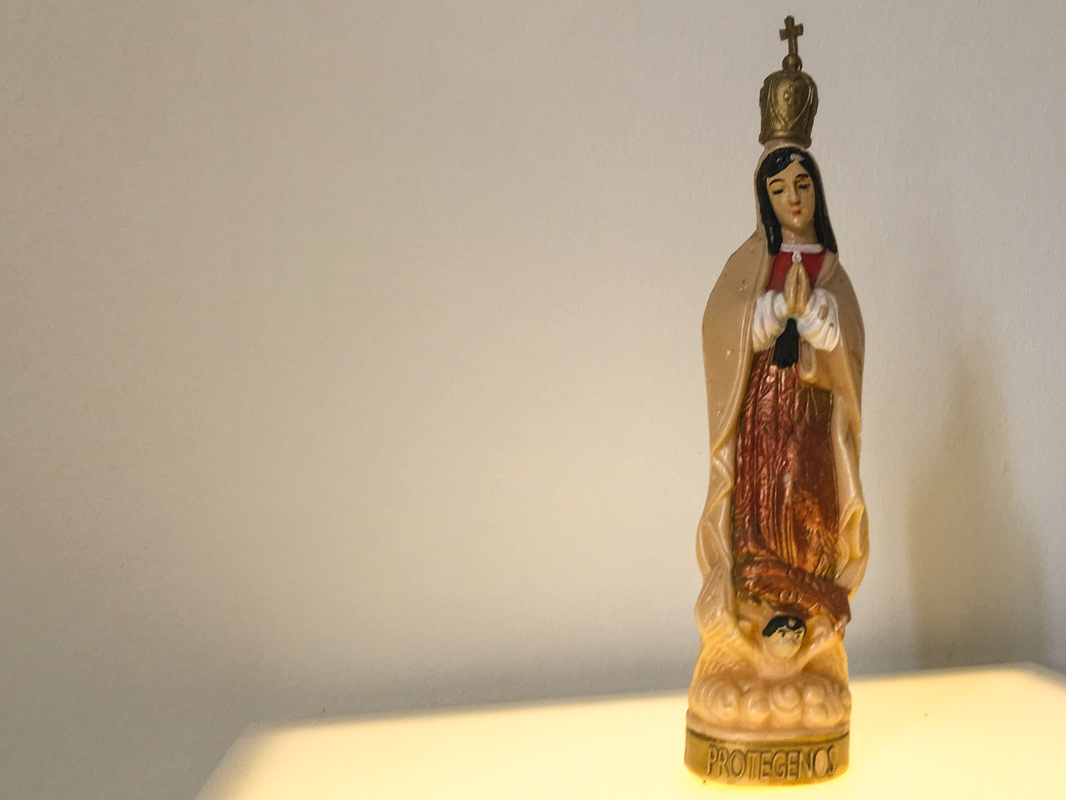
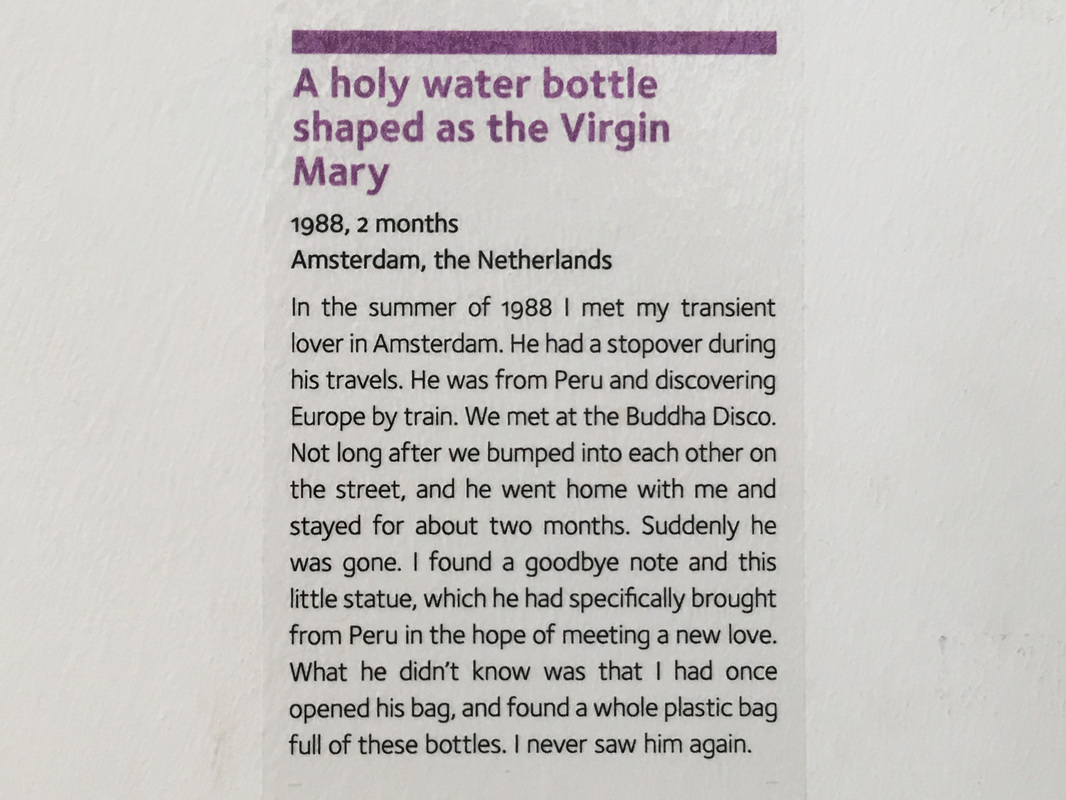
, which displays keepsakes from grand passions that have gone down in flames. For example:
The museum was, naturally, the result of a romance gone wrong. When local artists
Olinka Vištica, and Dražen Grubišić
called it quits, they wondered what people are supposed to do with love tokens from relationships now lying in ruins, stuff that’s too significant to throw away and too painful too keep around. Why not put these objects on display, they thought, along with their stories? The first, wildly successful traveling exhibition gave rise to museums in Zagreb and now Los Angeles; the show still goes on the road, and people around the world are invited to donate mementos and anecdotes. (If you’ve got a splitting-up story that deserves a wider audience, here are the
contributor’s guidelines
.) As an antidote to the angst of the exhibitions, the gift shop reminds us that breaking up may be hard to do, but it can also be funny as hell.
“Oh look,” I said to Rich the next day. “There’s a
Museum of Illusions
. Let’s check that out.”
To be perfectly honest, it turned out to be a bit cheesy and far from original, filled with well-worn optical tricks, such as holograms and op art. But some of it was good fun.
In our rambles, Rich and I discovered parades, traditional dancers, and venerable second-hand book stores. The food and drink — from markets, dive bars, cafés, and street vendors —ranged from interesting-but-never-again (the house white in Bacchus Jazz Bar) to very good indeed (the sardines at Bistro Amfora).
The best meal we had, hands down, was made by a local dentist named Lidija. She had just become
EatWith’s first Zagreb host,
and Rich and I were her inaugural guests. Joining us at table were her daughter Doris and long-time friend Mladen, who immediately produced a test tube of orange rakija (fruit brandy) and invited us to try it. From that first moment, the evening flowed forward, the conversation rolling around the table as easily as if we had been old friends.
Dinner was served on Lidija’s balcony to take advantage of the unseasonable warm weather, known here, Mladen explained, as “old woman summer.” We began with
viška pogača
, bread topped with olive oil, onions, and anchovies. “The recipe comes from the island of Vis, in southern Croatia,” said Lidija. “Traditionally it is made with a second crust on top, but that is too much bread, I think.” A summer salad of tomato, cheese, and olives followed, and then Lidija brought out the main course, fresh
skuša riba
(mackerel) cooked to perfection, the fish dense yet flaky, surrounded with organic potatoes. The side dish was a vegetable nobody knew how to translate. “It’s like kale, but it’s not,” said Doris. One of the things I loved best about this dinner was that nobody reached for a phone to look it up; we were having way too much fun to bother with technical details like that. For dessert we had delicious
rožata
, a cross between flan and
crème brûlée,
topped with sour cherries soaked in rakija, accompanied by small, sweet purple grapes from Lidija’s garden.
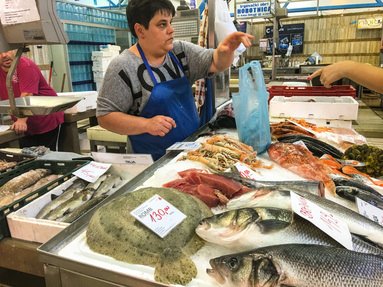
Fishmonger at Dolac Market, a great place to buy fresh skuša riba
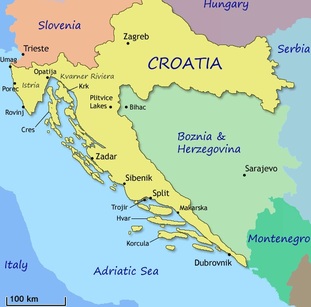
I don’t know quite what I expected from Zagreb, but it wasn’t this dazzling kaleidoscope of good fun and good food. Our last night in town, Lidija, Mladen, and Doris took us out to some of their favorite bars for beer and rakija. As we walked through the velvety night, Mladen was explaining some point of local history that “could only happen here in the Balkans.” Wait,
what
? We were in the
Balkans
? Somehow I hadn’t tracked that geographical detail at all.
Why did it matter? Well, as long-term readers of this blog know, our original concept for the trip was a
Balkans-to-Baltics tour
lasting five months. When
our plans were derailed
by family issues requiring our presence in the US, we shortened the trip to three months, started in the north, and accepted the disappointing fact that we wouldn’t have time to work our way as far south as the Balkans. And yet we had. It was a wonderful, gobsmacking realization.
So that’s Zagreb for you: a place that’s full of surprises and has a knack for turning tragedy into triumph and strangers into friends. Sure, you can zip through it on your way elsewhere and never give it a second glance. But why would you want to?
Days on the road: 81
Distance covered:
4625 km / 2874 miles
Highlights have included zany
Amsterdam
, the German city of
Lübeck
on the edge of the Baltic Sea,
the Stockholm disaster
, the new foodie mecca of
Helsinki
, Finland, futuristic
Estonia
, and a kookie visit to
Riga
, Latvia. We
headed south to
Šiauliai, Lithuania
, where history — and great chocolate — were made.
Vilnius — and the tiny Republic of
Užupis
—
taught me about miracles; I learned about devils in
southern Lithuania and northern Poland
. In
Warsaw
, we learned that nothing is what it seems. We rode
the midnight bus Lviv, Ukraine
, and after many adventures there, we moved on to Hungary, with a brief stopover in Budapest and a
somewhat too-peaceful rest stop in Pécs
. We’ve just left Zagreb, Croatia for
Ljubljana, the capital of Slovenia.
To follow our adventures as they unfold,
subscribe to my blog
, like
my Facebook page
,
and keep checking
the map
of our journey.
Leave a Reply