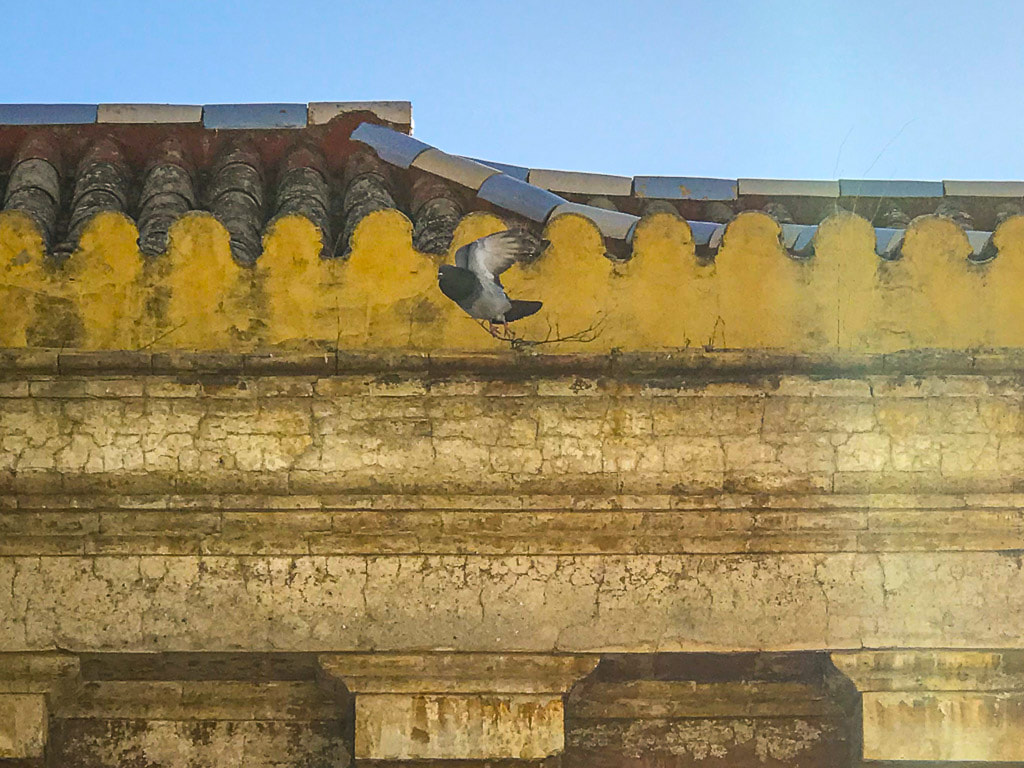
So I walked into the living room the other day and found Rich staring out the window at a pigeon. The bird — a lone male — was standing on the church roof just opposite, his feathers spread in full mating display, his head tilted to one side directing a come-hither look at my husband.
“That is not going to happen,” Rich called out the window.
“You two need a moment alone?” I asked.
“Nope. We’re done,” he said. The rejected pigeon shook his ruffled feathers back into place and flew off, attempting to look nonchalant.
I blame the weather. Temperatures shot up a few degrees and our feathered friends became extremely frisky; at times there’s so much sex and fighting going on out there it’s like watching
Game of Thrones
. They mostly engage with one another, of course, but as I’ve now learned, there are always a few rebels who want to take a little walk on the wild side.
Whoo! Steamy stuff!
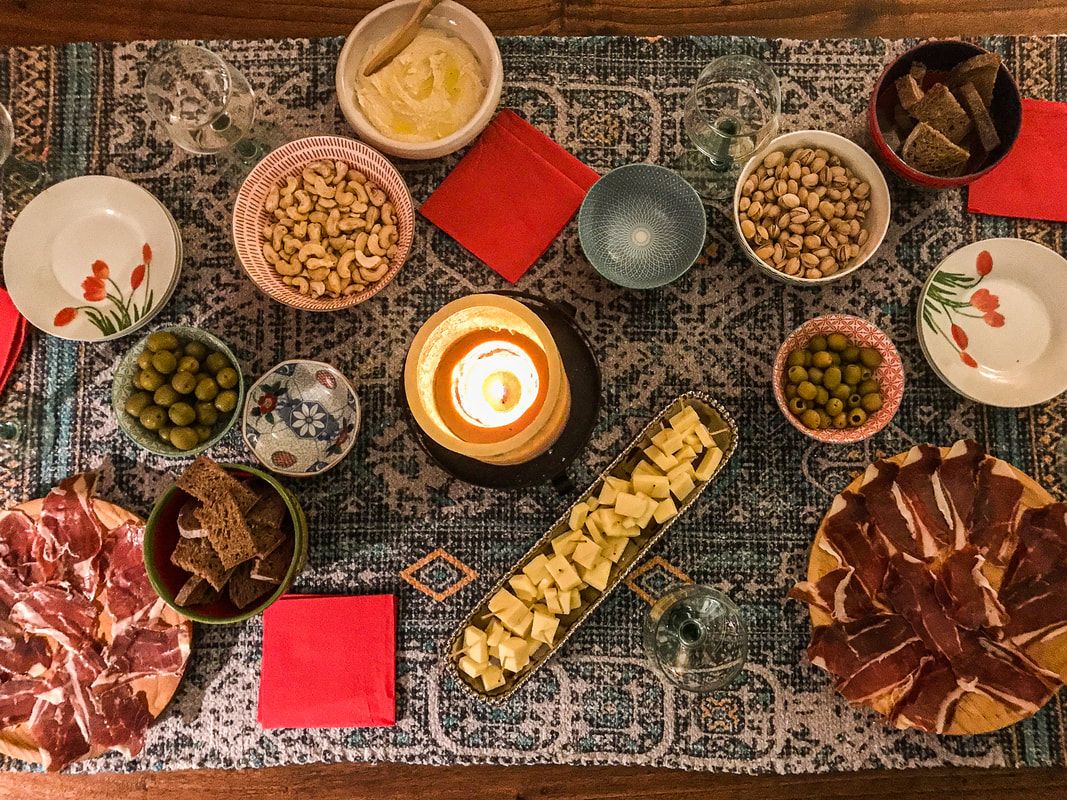
Although relations between my husband and the pigeon he rebuffed have been a bit strained lately, for the most part Rich is having a grand time pursuing his new hobby of bird watching. As my regular readers will recall, a few weeks ago he hung up a bird feeder in hopes of attracting the little local song birds. So far, no takers. Apparently this is common, and according to the Internet, we can address this by upping our game with a brush pile or hedge to give the birds a sense of protection, a sparkly water fountain to attract notice, and more alluring food presentation. Like what? Candlelight and good china? It doesn’t matter, because none of this is feasible on our narrow urban window ledge.
I must say I’m glad I don’t have to work that hard to get my human friends to eat. I’ve had a lot of visitors lately, and thank heavens none of them needs a hedge or water feature to whet their appetite.
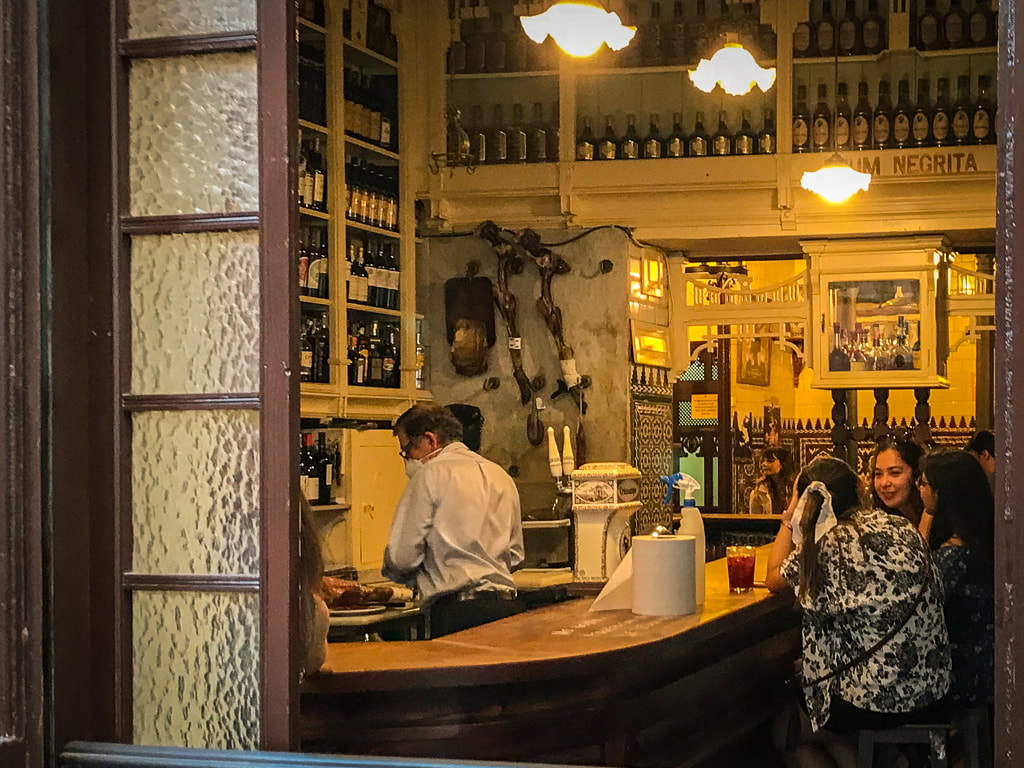
But it is true that, like the birds, we humans do have certain rituals and routines that define our dining habits, and that goes double in Seville. Here are some ways Sevillanos treat everyday meals with the respect and appreciation they deserve.
1: Order drinks first.
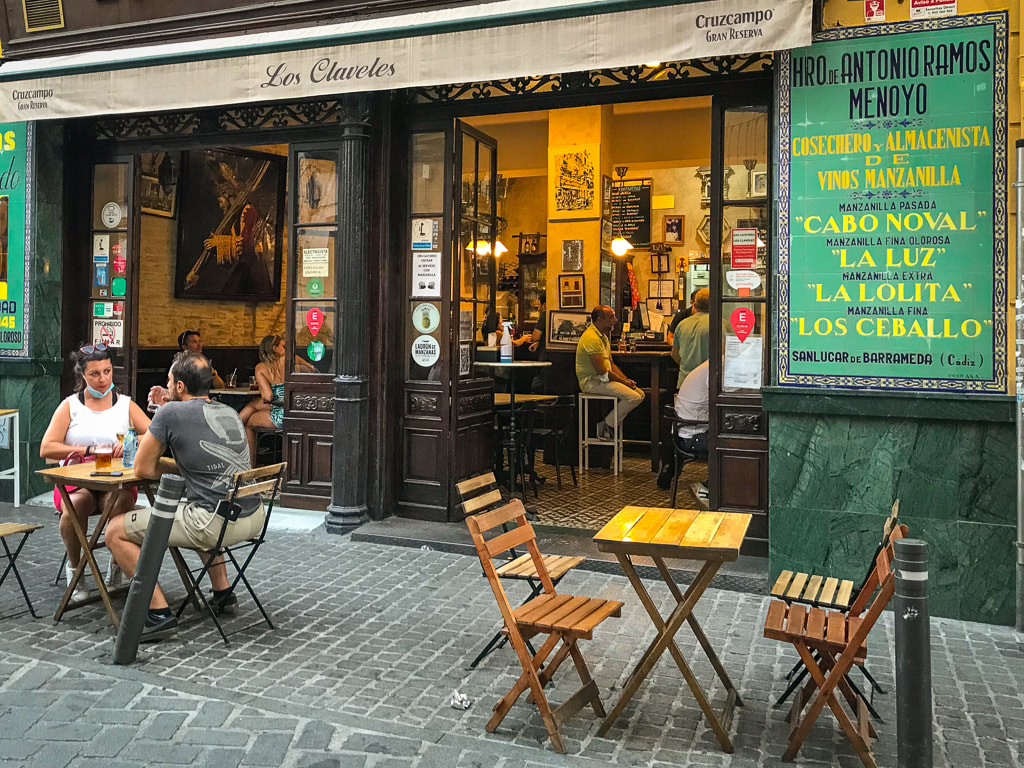
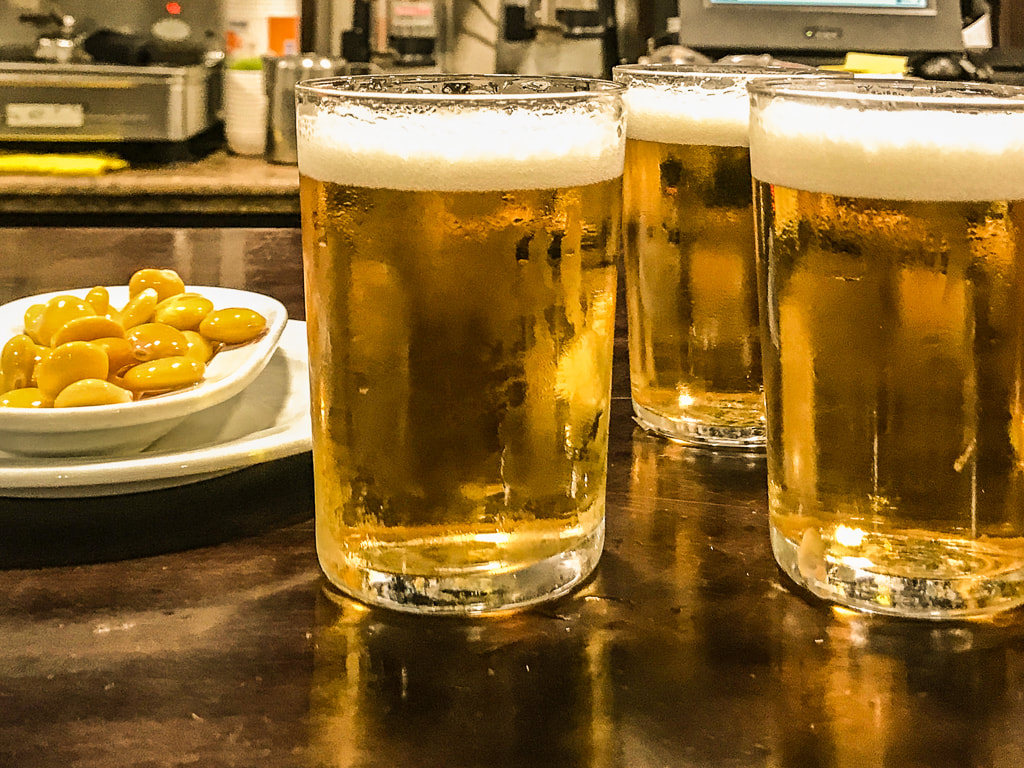
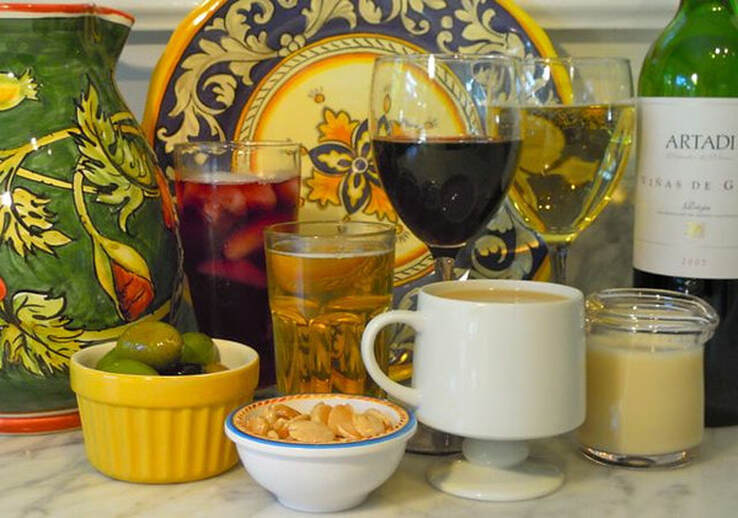
Having the warmest climate in continental Europe, Seville assumes you’re always in urgent need of an ice cold beverage. “
Para beber
?” (To drink?”) is inevitably the first question asked, and you’re expected to be ready with your answer. By far the most common response is
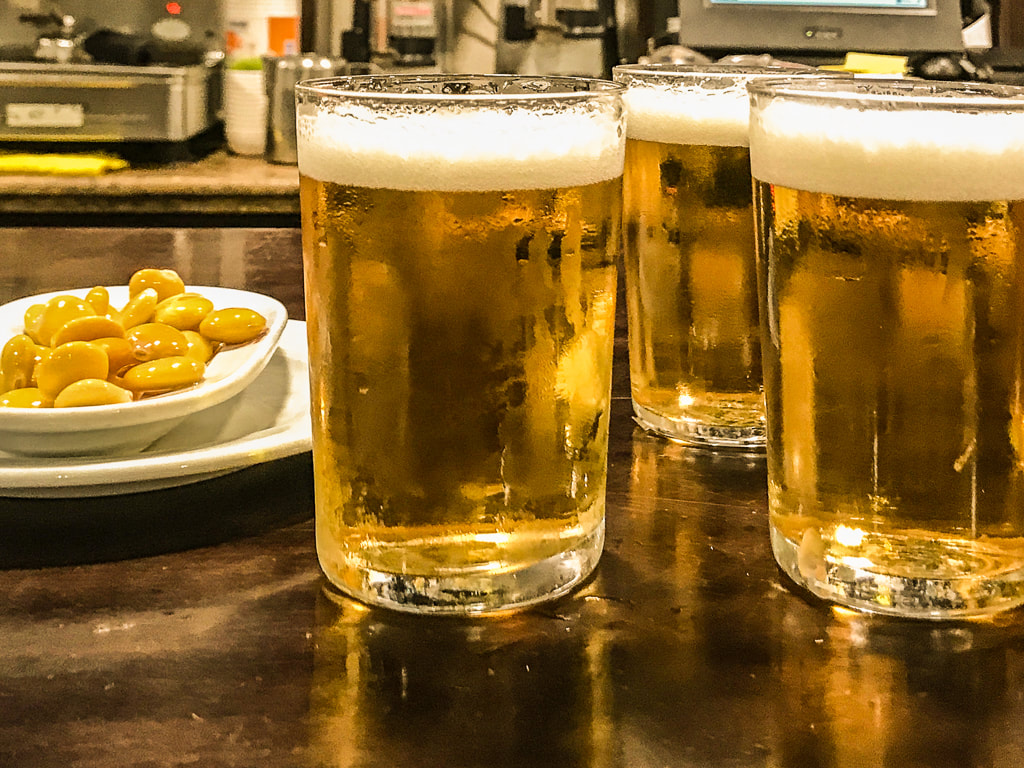
“Cerveza”
(beer). Not only is a crisp cold brew perfectly suited to the weather, but in a widely quoted study — conducted with Spanish college students —
beer was shown to rehydrate better than water
. That’s right, it’s science!
2. Don’t order your food until you have your drinks.
Here, most servers will rush to get your drinks on the table, then give you time to slake your thirst and review the menu before they return to take your food order. For a major meal such as lunch or dinner, you’ll want to take plenty of time to consider your options and discuss them with everyone else at the table, in case you’ll be doing any sharing.
3. Expect to share food.
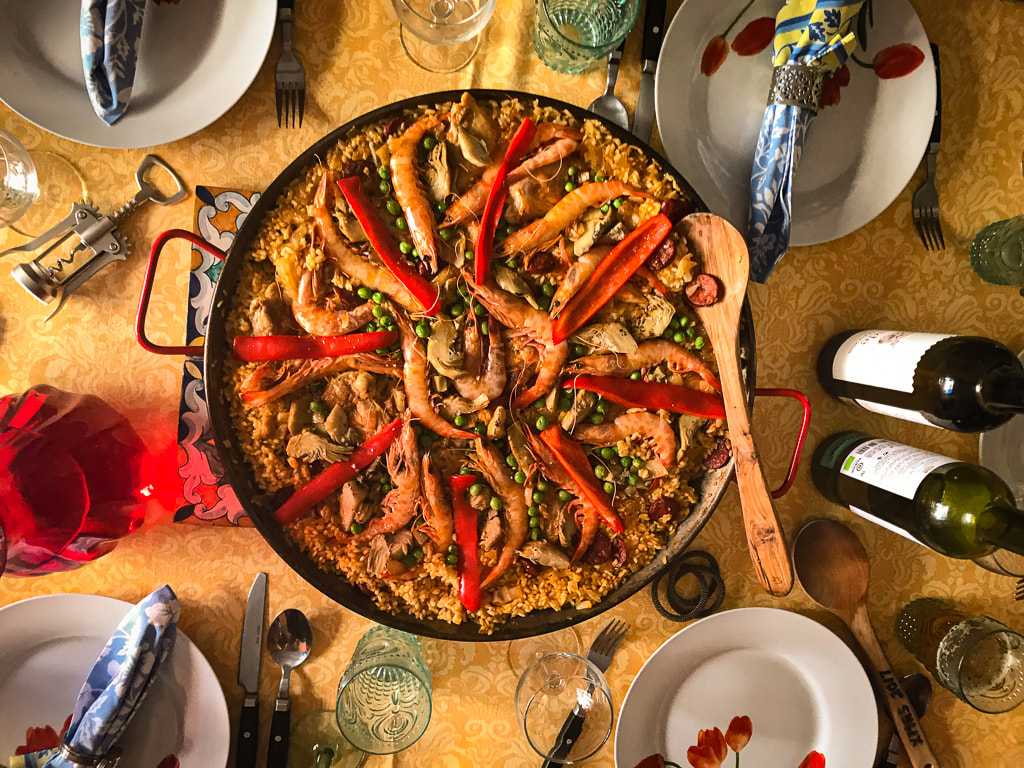
Eating is a communal act in Spain, and a traditional
plato
(full portion) is scaled for dividing among many. Even a tapa may be passed around so everyone can sample the flavor. For the past two years, health concerns caused most of us to avoid sharing and order individually, and that’s still perfectly acceptable. Lately the preferred compromise seems to be ordering a few
platos
to put in the center for sharing plus one individual tapa per person.
4. You own the table until you request the bill.
Unlike the US, where your waitress may slap the bill on the table and shoot you a look that says, “Scram, kiddo, your time is up,” in Seville the table is yours until you’re ready to leave. You could nurse a single beverage for hours; I’ve seen it done and the staff always take it in stride. To settle up, you say, “
La cuenta
,” (the bill) and may reinforce the message by pantomiming the act of writing on your hand as if it were a pad of paper. When the staff is extremely busy, you may have to wait a while, as everyone knows rushing beers to the tables of thirsty newcomers has priority.
5. Tip in the local manner.
Sevillanos tip very little, typically leaving behind a few small coins; for a big meal with a group, they might leave a euro per person. This often drives our American friends crazy, and we’ve been accused of being cheapskates and elitists who don’t care about the wellbeing of the workers. On the contrary, I was often a waitress in my checkered youth, and I have deep respect and empathy for all waitstaff. That’s why I’m trying not to upend the existing system, which is more advantageous for them than a tipping economy.
Waitstaff here are professionals who are paid a living wage and aren’t dependent on
propinas
(gratuities). If foreigners drive up tipping standards sufficiently, wages will stagnate as proprietors will no longer feel the need to increase salaries. Eventually, as in the US and elsewhere, the base salary will be woefully inadequate, and the servers’ livelihood will depend on kowtowing to the whims of customers. Sevillano friends have told me this is viewed as demeaning, a reversion to the old class system in which these professionals would be treated as inferiors.
“But everybody appreciates getting money!” some Americans insist. Not always. Once, in a funky old bar, Rich attempted to leave a few coins as a
propina
, and the offended proprietor pushed it back, growling, “This is not that kind of bar.” His pride was worth more to him than a few coins.
6. Accept
chupitos
gracefully.
At the end of a big meal, your table may be served a complimentary round of
chupitos
(little slurps), shot-glasses of liqueur such as limoncello or vodka carmelo (literally vodka candy, which is much nicer than it sounds). Hipper establishments may serve your
chupitos
in test tubes, infused in a sorbet, or as dollops of foam. Your host wants to send you out into the street with a smile on your lips and warm thoughts about returning again soon.
Spain has the highest number of bars and restaurants in the world, one for every 175 residents, and each host is hoping you’ll drop by often and eat heartily — much like Rich with his bird feeder. So far our carefully displayed song-bird seed hasn’t won us any dinner guests, but there are encouraging signs. Lemondrop, the finch who visited last fall, has fluttered by a few times, and two parrots have taken up residence on a nearby rooftop. Clearly news is spreading by word of beak, and while he waits for hungry song birds to arrive, Rich has plenty of feathered neighbors to keep him entertained.
If you aren’t already subscribed, sign up to receive weekly updates & travel tips.
SIGN UP HERE
PROOF THAT BEER HYDRATES BETTER THAN WATER
WHERE TO FIND SEVILLE’S BEST TAPAS
HOW TO ORDER DRINKS IN SEVILLE’S CAFES

Leave a Reply