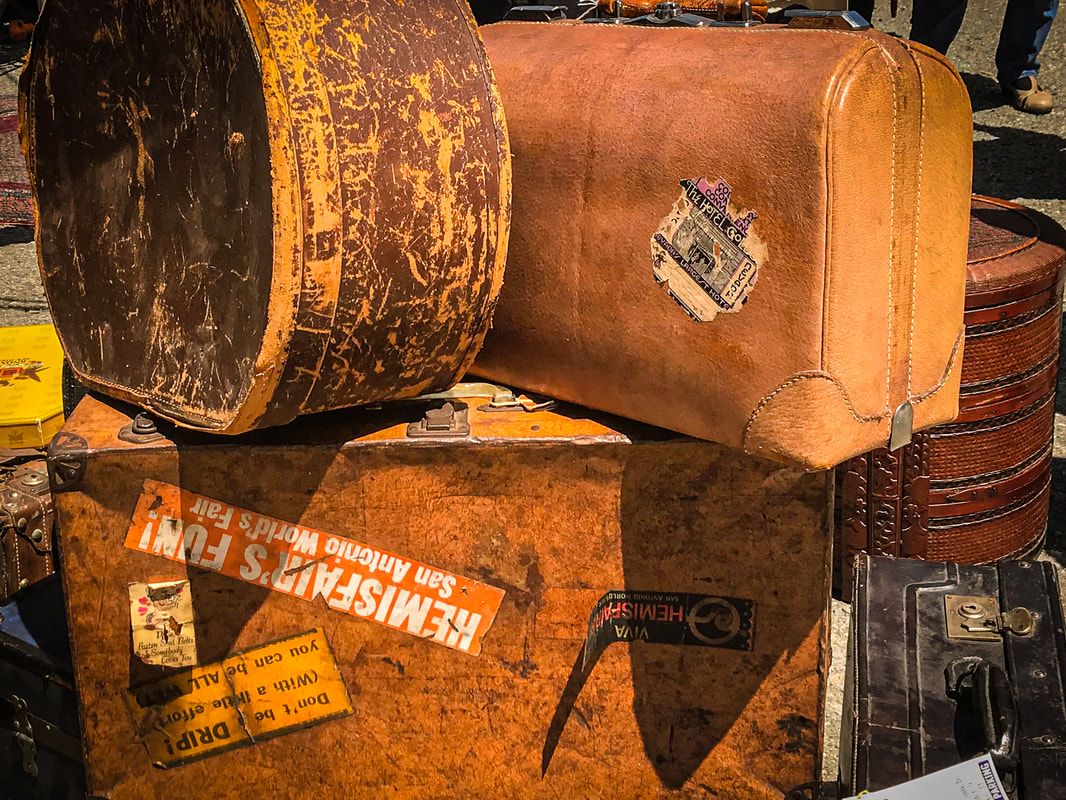


I remained in blissful ignorance of the catastrophe until just after checking into the hotel. Dazed by the long drive and stunning heat, I just wanted to drop off our stuff, grab a little lunch, and dress for our friends’ country wedding. Rich walked around to the back of the car, popped open the hatchback, and peered inside.
“Where’s your suitcase?”
“What? It’s right there.”
No, it wasn’t.
There was an awkward pause. I clearly recalled him saying, “Would you like me to take your bag out to the car?” To which I replied in the affirmative. I’d assumed he was volunteering, but had it been a rhetorical question, along the lines of “Would you like to taste test chocolate for a living?” In the bustle of closing the house and throwing things into the car for the trip, I hadn’t given my suitcase another thought. And clearly neither had he. An oversight that was obviously coming back to haunt us now.
It wasn’t a complete disaster. My dress was on a hangar in the back seat. And having
traveled luggage-free
before, I knew I could survive without my nightgown and other small luxuries. But it was a bit daunting to think of showing up for a wedding without jewelry, decent shoes, a handbag daintier than my baggy satchel, and a sweater (because California nights always turn cool).
My first response? I laughed. And then I said, “Looks like we’re going shopping!”
But where? On our brief drive through the small town of Cloverdale, California, all I’d seen were a few ancient diners and a Dollar Store.
Rich drove along Cloverdale Boulevard — slowly, so we didn’t blink and miss anything — and I spotted a sign saying “Cloverdale Retail Therapy.” Inside I found the kind of general store where you can buy scented candles, cowboy boots, beach bags, and — yes, thank the Lord — clothes and jewelry. The proprietor, quickly grasping the nature of the emergency, threw herself into the hunt and helped me find the right jewelry, purse, and sweater. I didn’t think cowboy boots would do my outfit any favors, so I resigned myself to wearing my grubby espadrilles.
As it turned out, the wedding was not only the most glamorous I’d ever been to, it was the most glamorous I’ll ever go to. My friends had purchased a nineteenth-century power plant which had been converted into a spectacular home. There was enough champagne to float the Spanish armada. The food was divine. To make sure we didn’t take ourselves too seriously, we were all issued kazoos to provide a ragtag version of the Wedding March.
I wondered what the folks who’d built the power plant would think if they could see it now.
Repurposing old buildings is an art, and it always warms my heart to find one transformed into something so wonderful. We’re going to be seeing a lot more of this in the years ahead as cities struggle to find new uses for offices vacated by remote workers. Right now San Francisco has 18.7 million square feet of empty office space to play with, and I hope some of the solutions are as creative as these.
I’ve never had occasion to repurpose a whole building, but a lot of my home furnishings come from flea markets, yard sales, and second-hand shops. I’m always on the lookout for unwanted treasures that can be saved from the landfill and adapted to new service — the more unexpected the better.
Now isn’t that more exciting than just going down to Ikea and buying stuff that looks like everyone else’s?
To be fair to Ikea, they are doing their best to keep their products out of the landfill, starting with their
Buy Back & Resell
program. If you have fully assembled, fully functional Ikea furniture you no longer want, they’ll take it off your hands and pay you between 30% and 50% of the retail price, depending on the condition. They’ve been doing this in the UK and Ireland for a while, and in April they launched the program in
37 US stores
. Their goal is to become a “circular” business by 2030 — that is, to produce all products with materials that are 100% recycled, remanufactured, refurbished, or reused. Amen to that.
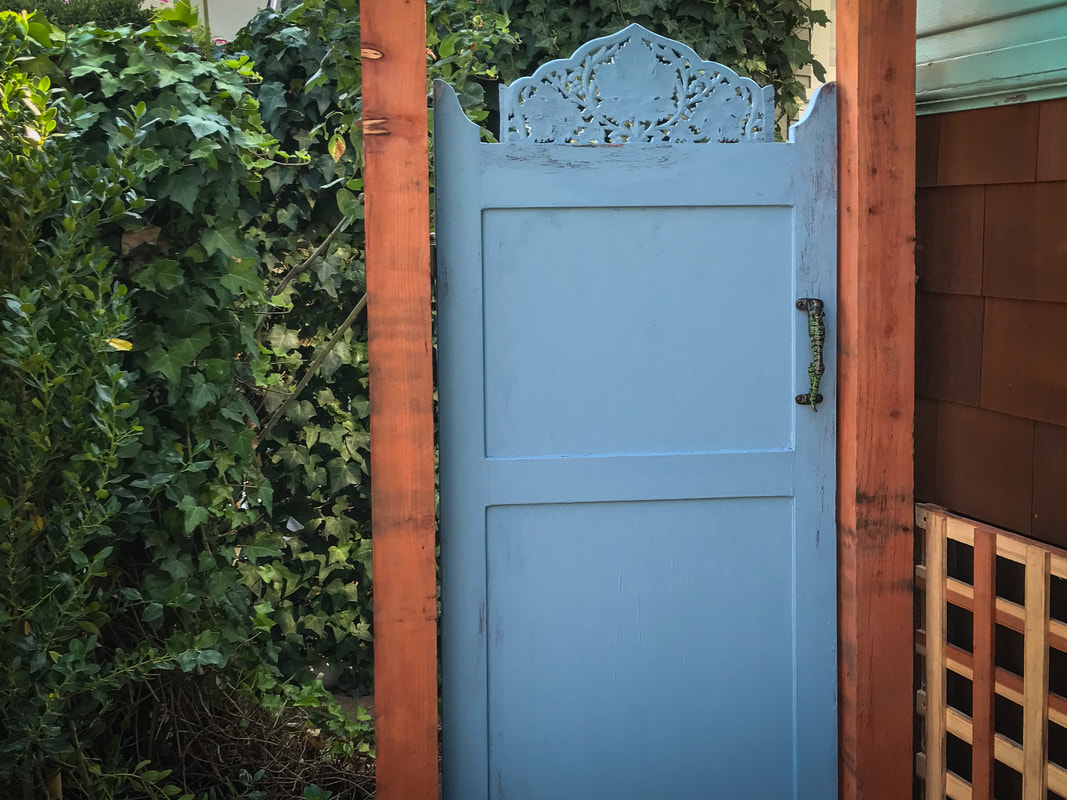
I’ve certainly bought my share of Ikea furniture and admire its practicality, but I generally prefer home furnishings with more character. That goes for the garden, too. In the summer of 2020, Rich and I used our quarantine time to clear out an overgrown patch of the yard for a seating area. To screen it from the narrow strip of land separating our house from the next, we wanted a slender door. After a massive online search, Rich found one that had originally graced a children’s bathroom in a mid-century Midwestern school. I added a decorative toper I found on Etsy, sanded and primed the door, painted it, varnished it, and figured my job was done.
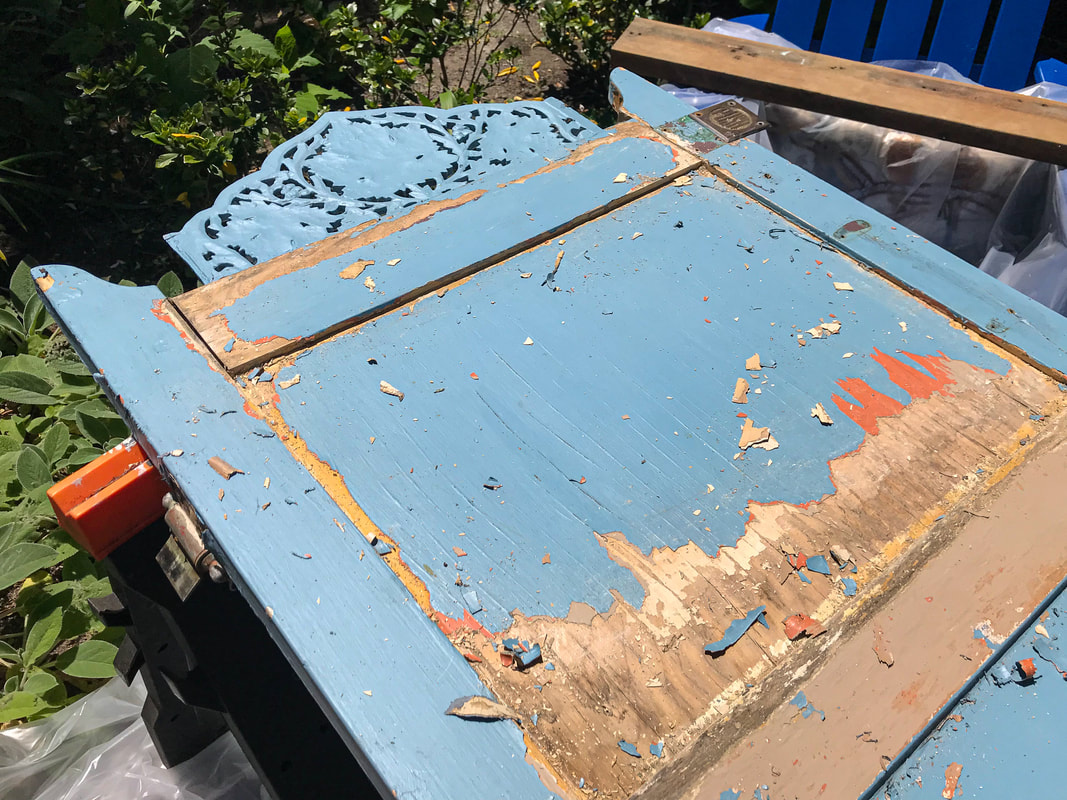
To my dismay — and considerable annoyance — the paint began bubble and peel almost at once. Repeated attempts at repainting only seemed to make it peel faster, until by this spring it looked as if something inside was trying to claw its way out.
When a woodworker friend came to lunch, I showed him the disaster. He exclaimed, “Karen, you could easily fix this.” I sincerely doubted it, but I listened with interest until he got to the part about removing the inset plywood panels that were absorbing too much water and retrofitting new wood in their place. At that point, it was clear the project was way beyond my meager skills, and my eyes glazed over.
Rich, however, embraced the project with unbridled enthusiasm. “And think of all the money we’ll save, not having to buy a new door.”
Yes, you know where this is going. So far he’s purchased three bottles of stripper to remove 60 years’ worth of yellow, green, orange, blue, gold, brown, and white paint, a cement stripper wash, five disposable tarps, six KN95 face masks, a box of disposable gloves, two clamps wide enough to encompass the width of the door, sandpaper, epoxy, something that looks like pressed tin but is made of a synthetic material, four buckets, three bags of rags, and some polyurethane sealer. He’s been working on it for two months and is just now down to bare wood.
I suspect, eventually, it will be finished, and the sweat equity will make the little door all the more precious. In much the same way, my Cloverdale accessories will always have a special place in my wardrobe, thanks to the frenzied effort that went into finding them. “The things we love,” said Thomas Aquinas, “tell us what we are.” Apparently Rich and I are all about not-quite-lost causes and loony backstories, and I wouldn’t have it any other way.
Have you ever salvaged objects, buildings, or potential social disasters? Tell me your story in the comments below.
YOU MIGHT ALSO ENJOY
LOST IN CLEVELAND
LOST IN INDIA
LOST IN CULTURE LAG
Well, that was fun! Want more?
Sign up to receive notices when I publish new stuff.
LEARN MORE ABOUT FREE UPDATES HERE

Leave a Reply