
I don’t normally hang out with scoundrels, scallywags, or stone-cold killers, but every once in a while I find myself among a genuinely dangerous crowd. And it’s about to happen again. So this week, to prepare my soul and psyche for a walk on the wild side (more on that in a minute), I decided to have lunch in a place I’d once had drinks with multiple murderers.
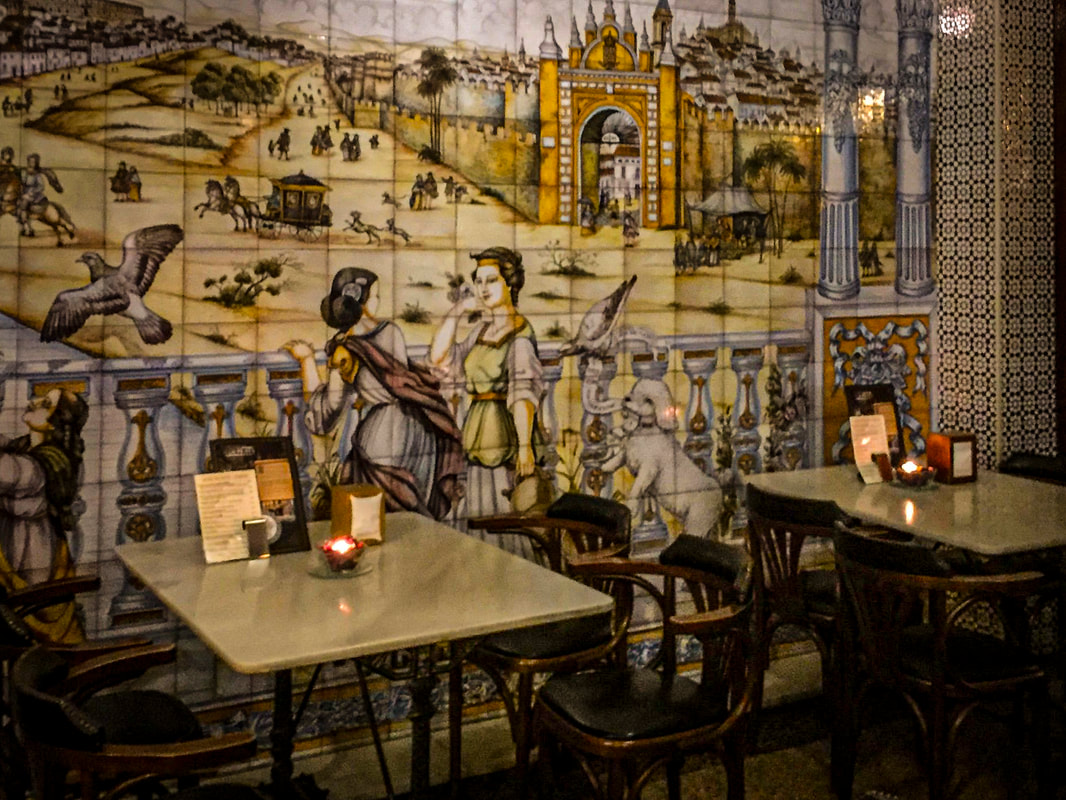
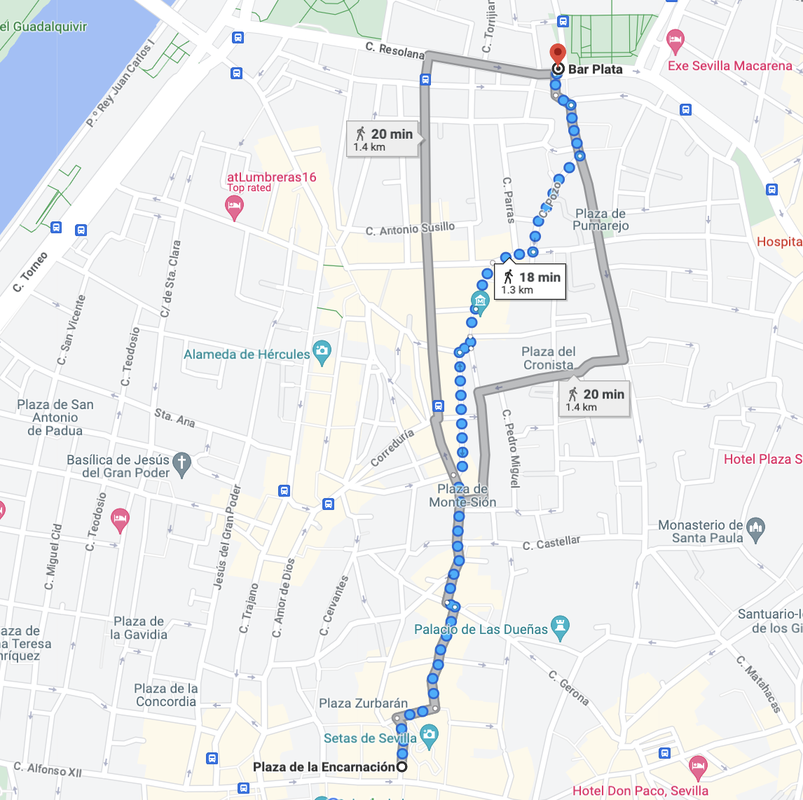
It all started innocently enough one midnight in Seville, when a friend suggested we stop for a nightcap at a bar with “a special atmosphere.” Bar Plata was charmingly old-school, with exquisite tiles and dark, polished wood. Large windows overlooked the city’s ancient north gate, walls built by Julius Caesar’s boys, and the Macarena church, said to be a hotbed of Opus Dei (the zealots you may recall from
The DaVinci Code
).
There was no one around but the bartender. We ordered a drinks and had just settled at a small, marble-topped table when the door opened and a handful of young men strolled in.
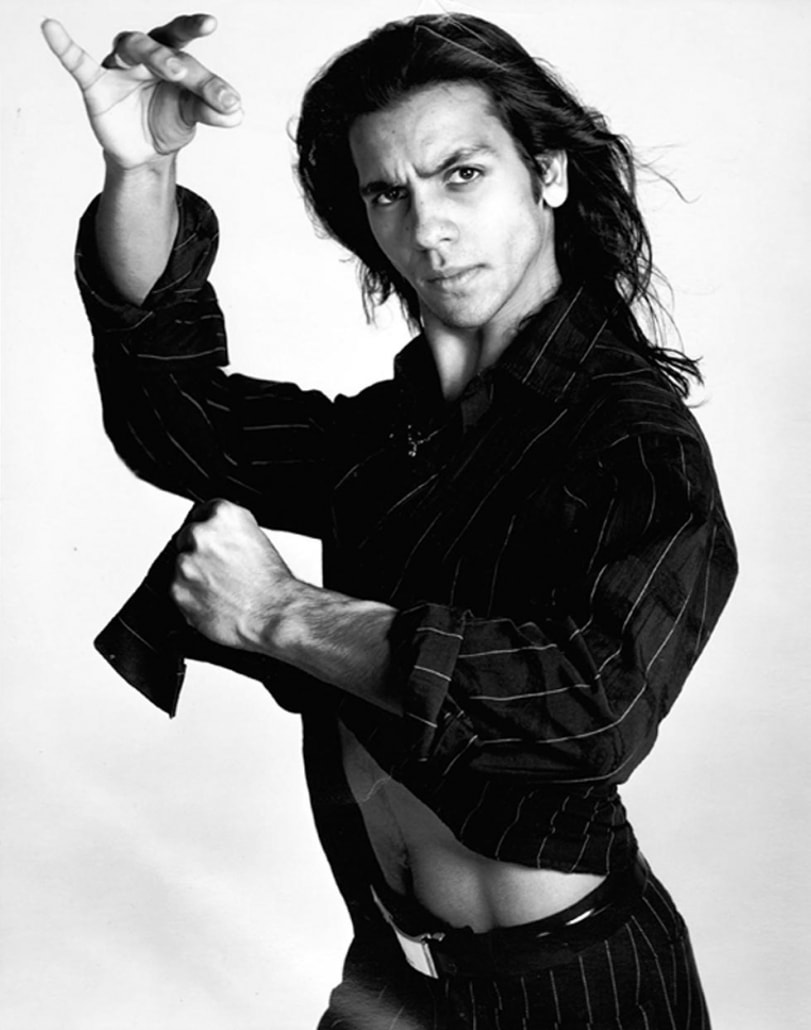
My friend glanced at the tallest of them and gasped. “That’s
Farruquito
!”
Farroquito was 22 and the most celebrated flamenco dancer of his generation. He was about to go on trial for killing a man in a hit-and-run; no one believed his claims that his kid brother was driving. The young men gathered in the back corner, chatting quietly, occasionally breaking into fragments of song, tapping out rhythms with palms and boot heels.
The door opened again. In walked a dozen lean, hard-bitten, cold-eyed men and women. They took over the front part of the bar, talking in harsh whispers, eyes darting ceaselessly around the room. I might not recognize Farruquito at a glance, but even I could tell these were Russian mafia. From the enforcement division.
Trying to look casual, my friends and I hastily finished our drinks, murmuring to one another, “Well, this has been lovely but it’s getting late … perhaps we should …”
Once safely outside, I said, “You were right. That bar really did have a special atmosphere.”
Our night at Bar Plata has been on my mind lately because I expect to find myself outside of my comfort zone again very soon. A week from today I’m leaving Seville to spend some months in my native northern California, and when I mention this to people, I find I’m getting a rather worrying response. All my life people have said, “San Francisco? Boy, are you lucky!” Now people look away and murmur, “So sorry for your loss.”
OK, sure, the city’s been in a bit of an uproar lately. But San Francisco has always existed in a state of upheaval punctuated by periods of outright pandemonium. The gold rush. The 1906 earthquake. Alcatraz. Rosie the Riveter in the WWII shipyards. The Summer of Love. The Zodiac Killer. Patty Hearst’s kidnapping. The Jonestown mass murder-suicide. LGBTQ pride and the assassination of Harvey Milk. HIV-AIDS. The 1989 earthquake. Dot coms. Airbnb. Twitter. Uber. Waymo’s driverless taxis.
Marketing experts have spent staggering amounts of public funds trying to convince tourists that San Francisco is all about Instagrammable leisure. Ads tout great weather, gourmet cuisine, and gorgeous scenery enlivened by a scattering of colorful characters — the perfect backdrop for vacation selfies guaranteed to arouse the envy of your social media contacts.
The reality is that in summer’s high season (meaning the tourist influx, not a rise in street drugs), the fog rolls in, the air is cold and damp, hypothermia threatens the lightly clad, and those famous views are often invisible. Yes, the food is wonderful, but the prices are hard to swallow, especially when you’re washing them down with wine at $17 or $25 a glass. And while colorful characters abound, not all of them are remotely picturesque.
But San Francisco is not about Instagrammable leisure. It’s always been a place for throwing yourself headlong into ripsnorting adventures, risking everything to build a better, more exciting future.
Betty Soskin
, who worked in our WWII shipyards, said the unprecedented racial and gender diversity of that massive workforce “accelerated the rate of social change, so that to this day it still radiates out of the Bay Area into the rest of the nation. It’s where the visionaries come to find constituents for their wildest dreams.”
The very ground the city’s built on attests to that. In 1849, when the word “gold” hit the headlines, every rogue and fortune hunter with a ship sailed to San Francisco.
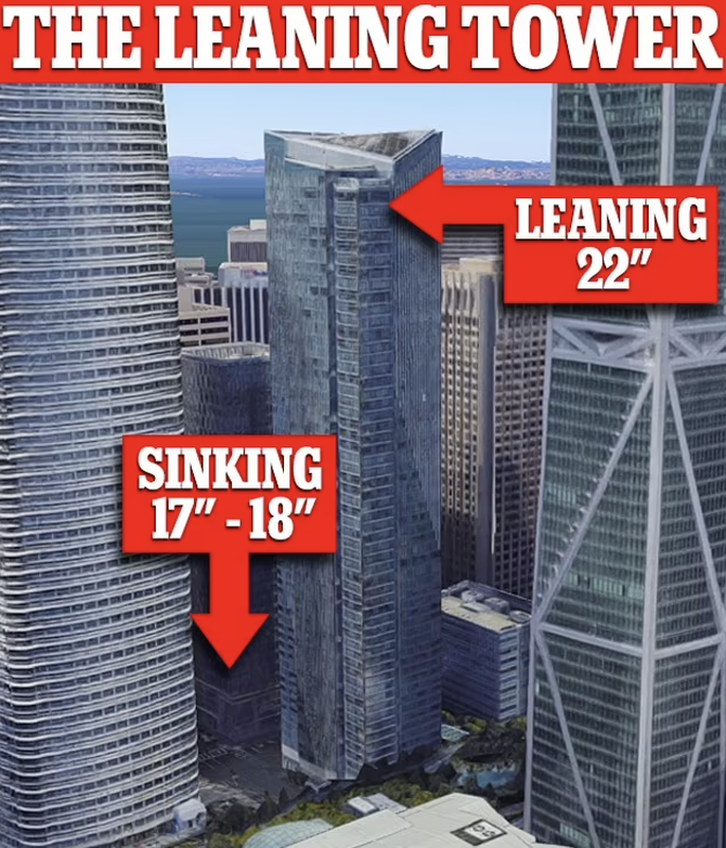
“The 49ers, as they came to be called, ditched their ships in the bay and hightailed it inland in hopes of striking it rich,” wrote SF crime columnist Bob Calhoun. “Many of the ships were sunk near the shore, covered in sludge, and used to form the highly unstable landfill that the 58-story Millennium Tower is sinking into today.”
Nicknamed the Leaning Tower,
the
billionaire’s dream-home-turned-nightmare was finally shored up in 2023. Due to cost constraints, the original plan to install 52 new supports was scaled down to 18. Which isn’t worrying at all.
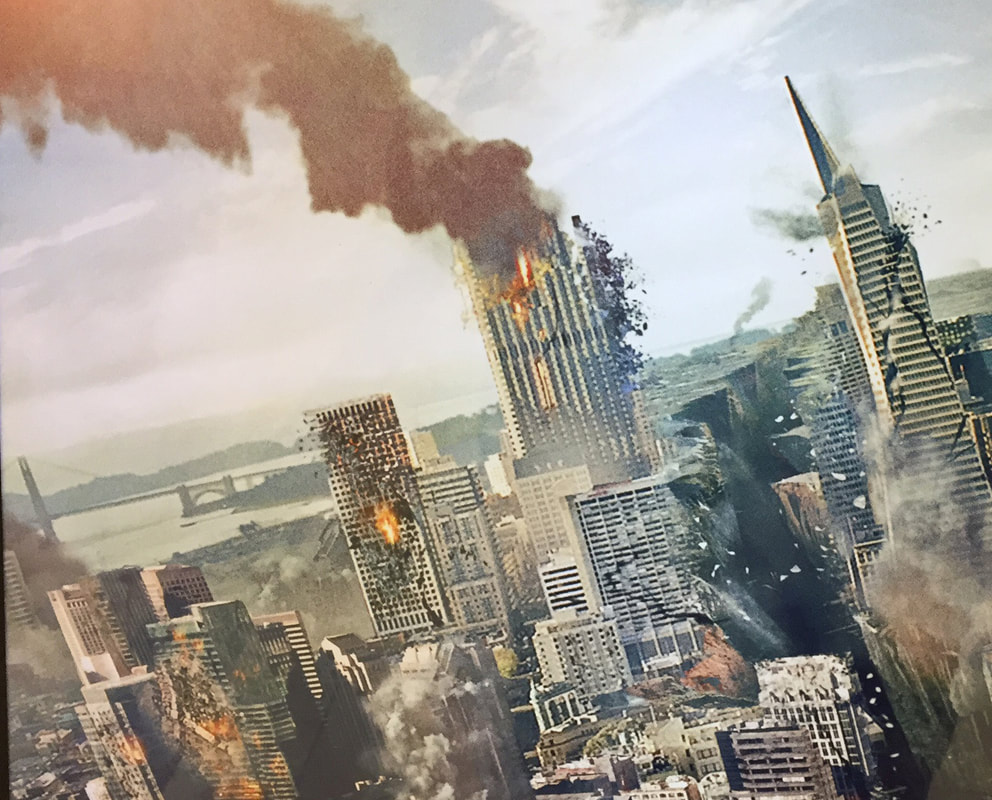
Like Millennium Tower, San Francisco is always said to be teetering on the brink of collapse. Last summer Newsweek reported, “Struggling with rampant homelessness, a drug crisis, surging crime, and several business closures, San Francisco is no longer the thriving city it used to be. Its decline in recent months has led some to say the city ‘is dying.’”
Dying? Let’s not get ahead of ourselves. People have been drafting SF’s obituary since five minutes after the gold rush.
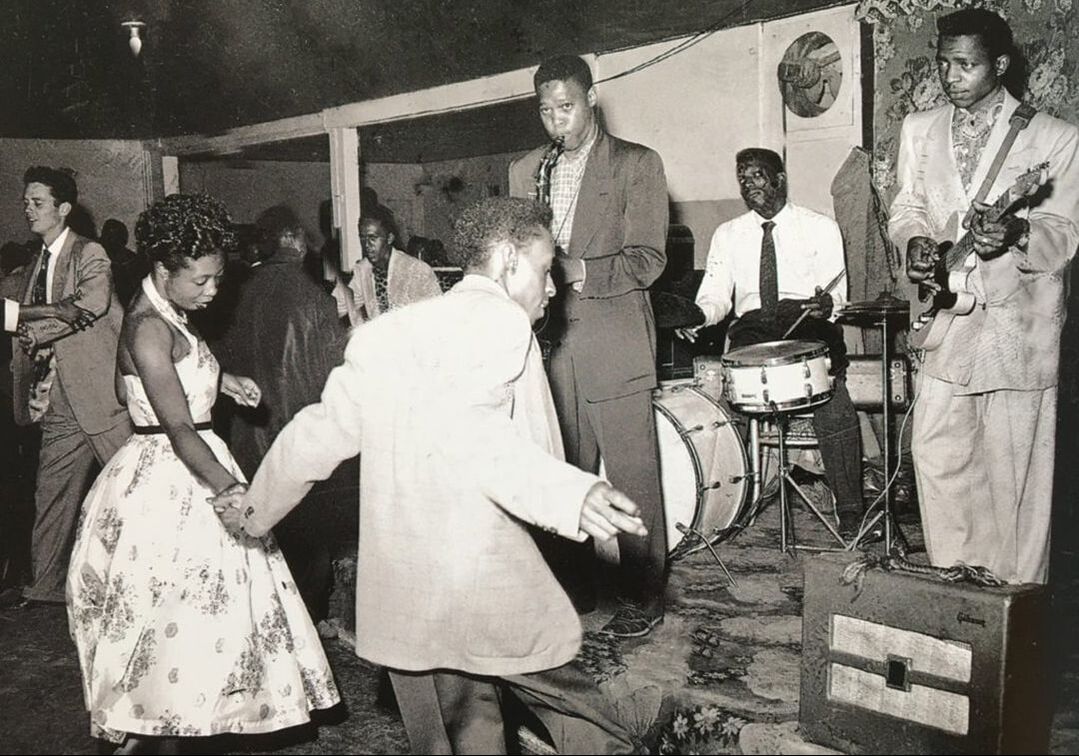
Bob Calhoun writes about how in the 1950s his mother used to love dancing at El Patio, a jazz club at Market and South Van Ness. When Bill Graham took it over in 1968, calling it The Filmore, and hiring the Grateful Dead and Santana instead of swing bands, Mrs. Calhoun mourned the downfall of San Francisco, “The hippies took it over,” she said, “and ruined everything.”
I’m hoping that, to paraphrase Mark Twain’s famous comment, this is just one more example of San Francisco’s imminent demise being greatly exaggerated.
There’s only one way I can know for sure. In the months ahead, Rich and I will frequently venture out to lunch in San Francisco, seeking offbeat places, cultural curiosities, great midday meals, and some assurances the city is still alive and kicking.
With our time in Seville winding down (for now; we’ll be back), I figured lunch at Bar Plata would provide an appropriate setting in which to discuss our half-baked plans for exploring San Francisco’s newest — and possibly wildest — incarnation.
Naturally we kept our eyes peeled for Russian mobsters and notorious flamenco dancers, but the crowd seemed cheerfully non-threatening. Will we find the same cozy atmosphere in San Francisco? Friends who live there say yes, and I remain hopeful. But of course, there are no guarantees.
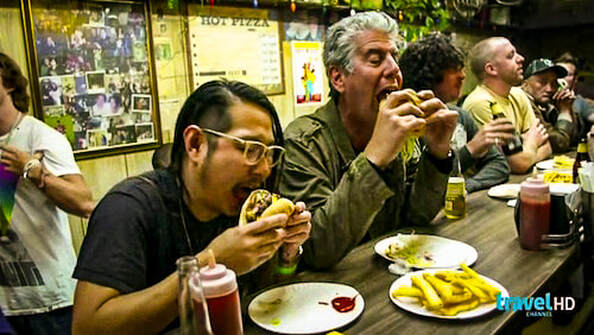
To me, that unpredictability is part of the fun. Anthony Bourdain said of San Francisco, “You go there as a snarky New Yorker thinking it’s politically correct, it’s crunchy granola, it’s vegetarian, and it surprises you every time. It’s a two-fisted drinking town, a carnivorous meat-eating town, it’s dirty and nasty and wonderful.”
And that’s what I call “a special atmosphere.”
SO WHAT HAPPENED TO FARROQUITO?
Outcome of the court case, seeing him dance (yes, there’s video)
WHO WAS BETTY SOSKIN?
An African-American Rosie the Riveter in WWII SF
WHY I’M TAKING THE NEXT TWO WEEKS OFF
First, I have to pack and travel to CA. Then I have jury duty. If the case doesn’t get dismissed (most do), my next post may be “Out to Lunch with a Jury of My Peers.” Watch this space for updates.
OUT TO LUNCH
This story is part of my ongoing series “Out to Lunch.” Each week I write about visiting offbeat places, seeking cultural curiosities and great eats. (
Learn more
.
)
WANT TO STAY IN THE LOOP?
If you haven’t already, take a moment to subscribe so you’ll receive notices when I publish my weekly posts.
Just send me an email and I’ll take it from there.
[email protected]
LIKE BOOKS?
Be sure to check out my
best selling travel memoirs & guide books
here
.
PLANNING TO TRAVEL?
Enter any destination or topic, such as packing light or road food, in
the search box
below
. If I’ve written about it, you’ll find it.
Leave a Reply