
Let’s face it, we all do incredibly foolish things on occasion. Back in the 1960s many of us spent years experimenting with dubious substances that makes me wonder, in retrospect, how any of us made it into the 1970s alive and with more than six functioning brain cells. And think about all the ludicrous risks travelers take nowadays to get a unique selfie.
Thank God we didn’t have selfies during the 1960s or the human race might have died out altogether.
Why would someone who is (presumably) fairly sane and possibly not even stoned suddenly decide to cozy up to a leopard or balance on a narrow ledge above a deadly drop? I believe it’s about transforming yourself from a dentist or short order cook or failing student into someone extraordinary — a symbol of bold adventure and derring-do.
Symbolic acts add tremendous richness and meaning to our lives. Placing flowers on a grave keeps a cherished memory alive. Accepting on an engagement ring represents commitment and (ideally) fidelity. Seville’s bullring proudly displays a statue of the legendary bullfighter Curro Romero depicted in skin tight pants that indicate he is exceedingly well endowed, an exaggeration used to signify his manliness. (Naturally this has given rise to countless jokes and selfies.)
Like Curro Romero’s trousers, the stature of many symbols is inflated out of all proportion. The 45th President once tweeted, “No one should be allowed to burn the American flag – if they do there should be consequences – perhaps loss of citizenship or a year in jail.” Really? Will that be before or after you overturn the Supreme Court ruling that that defined flag burning as a form of free speech protected under the US Constitution? I have no desire to burn a flag, but it’s comforting to know that, as a US citizen, my rights supersede those of a rectangle of cloth.
Not everyone agrees with the ruling, or about which rectangle of cloth is more important than our civil rights. In 2015, a group of Confederate flag supporters went on a wild, two-day spree through the suburbs of Atlanta, Georgia, drinking, brandishing firearms, and shouting racial slurs at African Americans. Eventually they burst into a little girl’s birthday party, holding the children and their parents at gunpoint, screaming racially charged death threats.
This week two ringleaders, Kayla Norton and Jose Torres, were sentenced to jail and permanently banished from Douglas County where the incident took place.
Watching Norton’s tearful apology to her victims, Rich said, “She’s sorry all right. Sorry she got caught.”
No doubt that’s true. But there may also be a part of her that is appalled to realize that she did, in fact, walk back to the truck, grab a shotgun, load it, hand it to Torres, and stand there screaming death threats laced with the n-word while he pointed his weapon at the terrified families.
How could she and her companions do that to eight-year-olds at a birthday party — or to anyone? Such acts become possible only when you stop thinking of people as ordinary individuals and start defining them as enemies who are less than human.
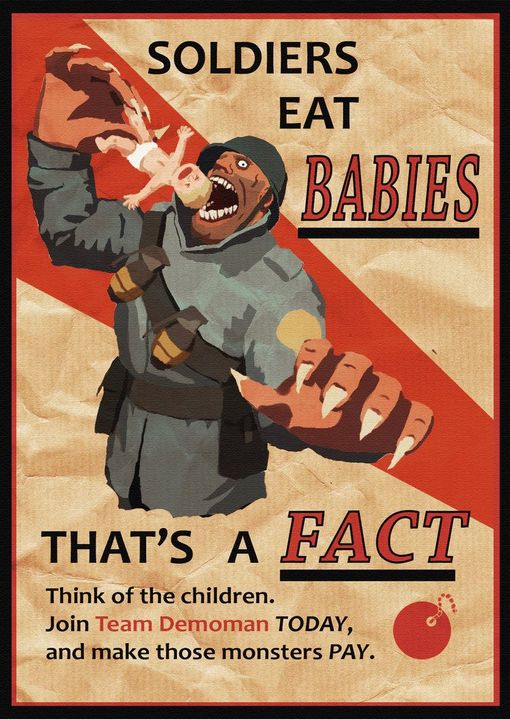
This happens whenever we go to war. We become driven by symbolic thinking and reason takes a back seat. Each side portrays the other as barbarians slavering to commit grisly atrocities against the innocent. The more outlandish the rhetoric, the easier it is to justify the war, encourage enlistment, raise money, bolster civilian morale, and strengthen the fighting spirit of our soldiers. Every war is positioned as the ultimate battle between good (us) and evil (them). And to do that, we re-define “them” as inhuman.
So what happens when you have a nation perpetually at war? If you count all the conflicts at home and abroad,
America has been at war 93% of the time since its founding in 1776
; we’ve had a total of just 21 years of true peace in our entire history. We live in a constant state of mobilization against the (ever-changing) enemy —which means we live in a permanent state of symbolic thinking, being told our side is fighting to save civilization from inhuman monsters.
I grew up during the Vietnam war, the first major conflict covered by nightly television news. It made my generation acutely aware that war is not glorious and can often be a moral quagmire.
Today we’re flooded with information about the world, and it’s difficult to know what to think, especially about other countries. That’s why I encourage people to go abroad and see for themselves what’s out there. The world is not, as the old maps pictured it, a few patches of familiar terrain surrounded by blank spaces marked “Here there be dragons.” It’s a vast and varied place filled with humans who are, for the most part, no better or worse than we are — and just as keen to take the perfect selfie.
YOU MIGHT ALSO ENJOY
THE ANXIOUS TRAVLER
THE OPTIMISTIC TRAVELER
THE INVISIBLE TRAVELER
Subscribe to my blog here
Buy my books on Amazon
Leave a Reply