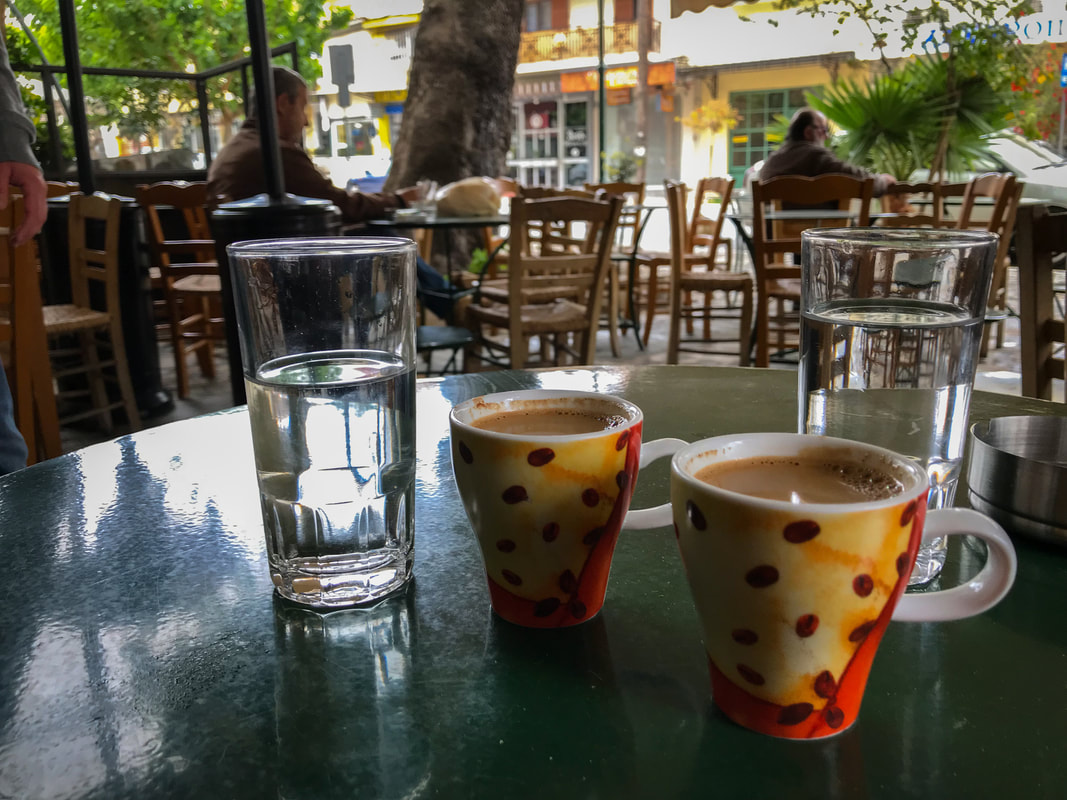
“This isn’t coffee,” Rich said, glaring into his cup. “It’s gasoline.”
“No, there’s definitely some coffee in it because I have grounds stuck in my teeth.”
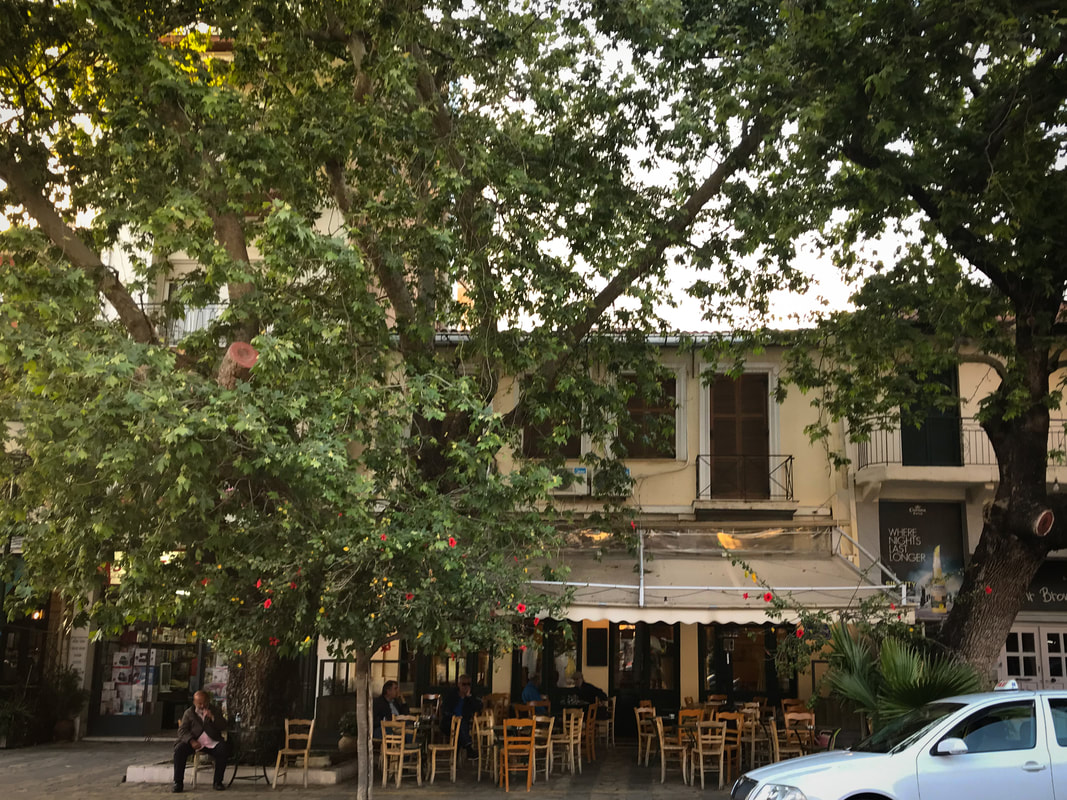
We set down the cups of revolting brew and stared around us at Kalamata, Greece: gloomy sky, empty street, silent men hunched over scattered tables under two giant trees. I could almost hear the blood from Rich’s leg wound dripping onto the paving stones underfoot. It was a low point in a day that had started with a setback and gone downhill from there.
We’d awakened that morning 50 kilometers to the south in Agios Dimitrios to discover the village was in the grip of a power outage and a
sirocco
. Fierce, sand-laden winds that blow up from the Sahara, siroccos turn the Mediterranean sky a gritty gray and (they say)
drive people mad
. During the Ottoman era, if you murdered someone during a sirocco, you got a lesser sentence due to extenuating circumstances. Rich and I managed not to go berserk, even when we realized without electricity we couldn’t make coffee.
The landlord of our rental apartment gave us a lift to the bus stop, conveniently located in front of the café run by Freda, widely known as the village’s most resourceful resident. She didn’t fail us now. Working with a car battery and a gas-powered burner, she produced French-press coffee for us and our friends, Jackie and Joel. Many of you know Jackie from
TravelnWrite
, her lively blog about expat life in Greece. After corresponding for years, we finally met IRL (in real life), and not only had she and Joel generously spent days showing us around, they came to see us off on the bus — a bright spot in the morning.
“Does the sirocco always knock out the electricity?” Rich asked.
“Oh no, this is a planned outage,” said Jackie. “They must be fixing something.”
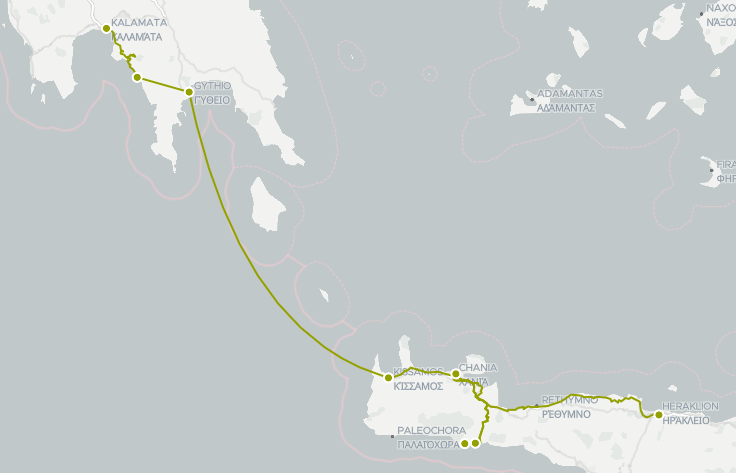
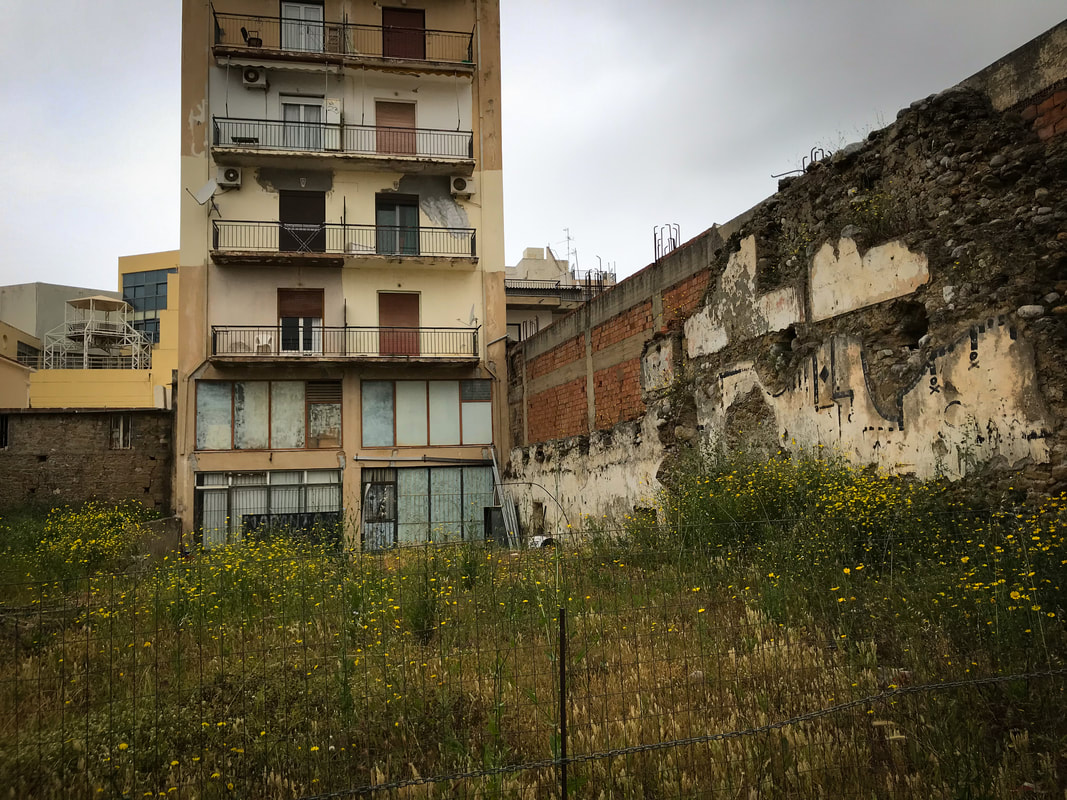
The outage and the sirocco extended all the way up the coast to our next stopping point, the city of Kalamata. After the picturesque charms of Crete and the rugged magnificence of the Mani Peninsula, our first glimpses — and frankly, our second and third glimpses as well — suggested that Kalamata was a soulless wasteland of shabby, crumbling concrete.
We were too early to check in, so our Airbnb hosts kindly directed us to their favorite café, just around the corner under a pair of huge trees. Stepping into the deeper gloom below the branches, Rich immediately walked into a low metal table, gashing his shin. As he hobbled to a chair and began sopping up the blood with his handkerchief, I ordered coffee — the only item on offer. They were likely heating the water with kerosene, which could account for the taste.
“I gotta tell you,” said Rich. “I am not warming to this town.”
Disinclined to linger at the café, Rich tied his handkerchief around the wound and we set off to reconnoiter. Hours of walking took us past closed shops, lightless windows, and a few shadowy restaurants serving coffee. Suddenly Rich’s sniffer went on high alert.
“Do I smell food cooking?” he said.
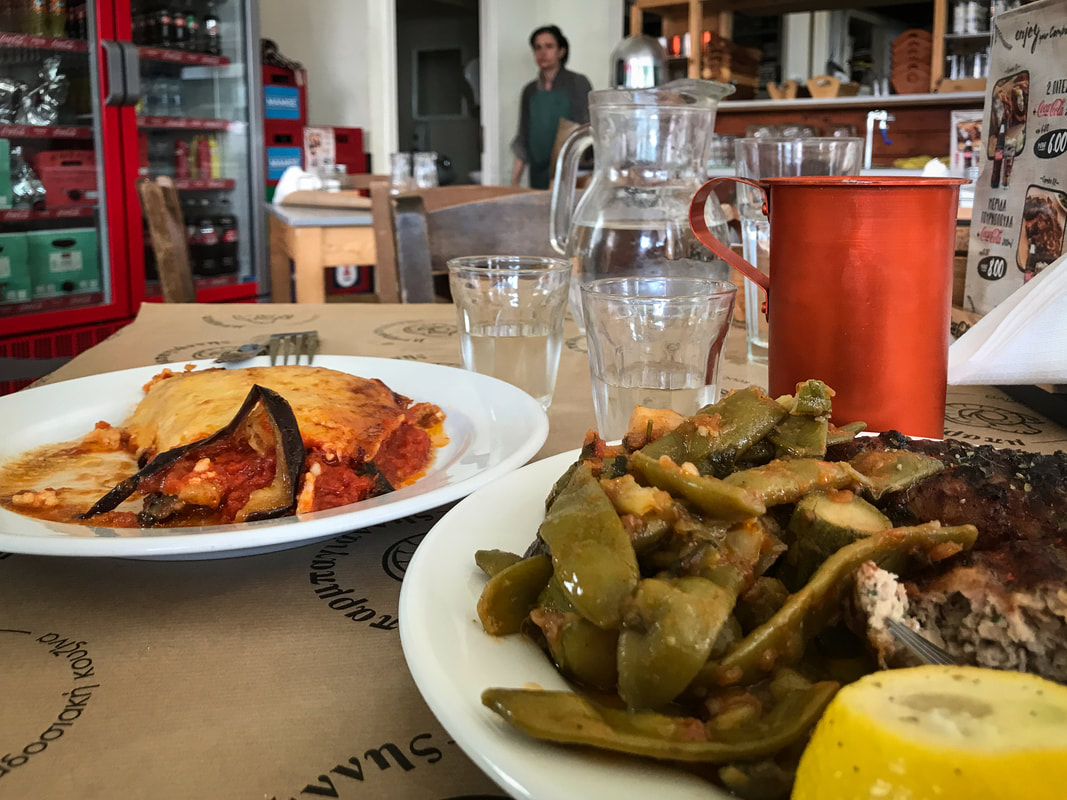
We followed our noses into the steamy warmth of a café, where a gas cooker had produced an array of hearty dishes. In a matter of moments we were seated before heaping portions of moussaka, green beans, and chicken “mincemeat.” We sighed with pleasure and tucked in.
Ten minutes later the lights came on and the sun came out. Leaving the restaurant, we found ourselves surrounded by bright, inviting shops and cafés with abundant charm and originality. Our apartment turned out to be even pleasanter than it looked in the photos. Rich grudgingly agreed the town might have some redeeming features.
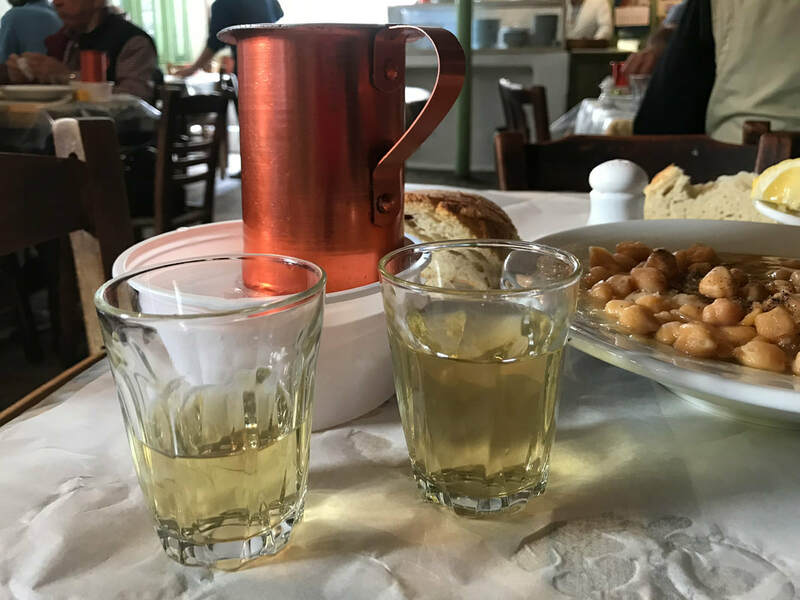
The next morning we took a food tour, and our guide, Fotini, introduced us to local characters as well as local cuisine. Tourists are relatively rare creatures in Kalamata, and everyone seemed delighted to spend time with us. The Economakos family gave us slivers of their famous salted pork and cups of homemade wine as they showed us a picture of the sausage plate that won first prize the 1999 trade fair. We nibbled and sipped our way through the morning, shaking hands, kissing cheeks, promising to come back one day.
Kalmata’s world-famous olives were mentioned only in passing, and I asked Fotini why there wasn’t more fuss about them. She shrugged. “When you’ve been eating something since ancient times, it is just a part of everyday life.” I asked if there were any special dishes we should try while we were in town.
“
Gourounopoula
,” she said. “Roast pork with plenty of skin and fat. Back in the days of the Ottoman empire, we used it to plan a revolution. When we had feasts, we of course had to invite our Ottoman neighbors. But being Muslims, they didn’t eat pork, so when we served
g
ourounopoula
, they stayed away. And we could plan our revolution, right under their noses.” Thanks to
gourounopoula
— and a few other factors, of course — the Greeks gained independence in 1829 after 400 years of Ottoman occupation.
Where we should try this famous pork? Fotini led me to the corner and pointed. “There. That café with the two giant trees.”
“No way,” said Rich.
“Oh, man up,” I said. “Let’s see if that little table is ready for a rematch.”
“I want a second opinion.”
When we asked at the tourist office, the woman at the desk sighed ecstatically.“Ah,
gourounopoula
,
” she said. “Yes, you must try it. The best is here.” She pointed at the map. “At Barbayiannis.”
We set off, hampered only by the fact most streets weren’t marked, and the few that were didn’t seem to match any of the names on our map. Eventually I noticed a window displaying the remains of a pig, with a severed head and a meat cleaver. We had found Barbayiannis!
I did a doubletake. “Hey, this is the place we had lunch the first day!” What are the odds?
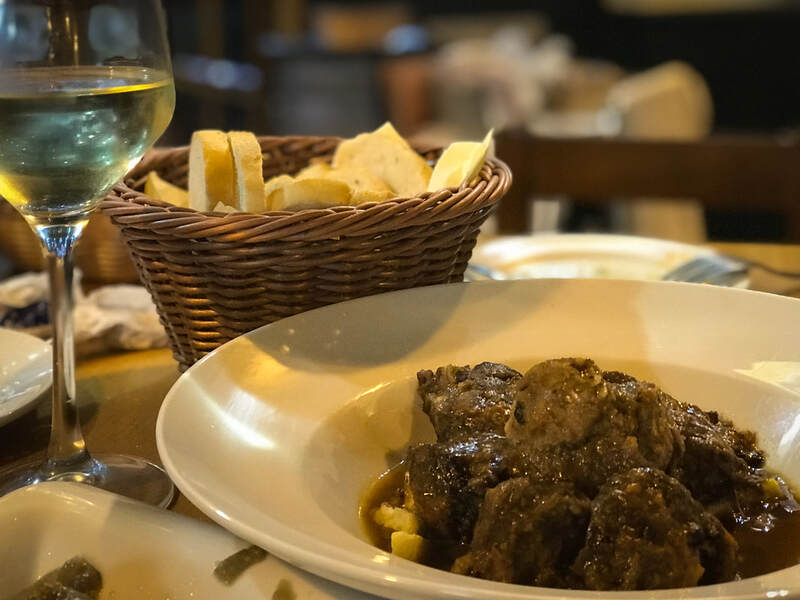
Gourounopoula
was comfort food at its finest: a crispy outer layer of roasted fat covering meat tender enough to cut with a fork. I didn’t even try to talk my way into the tiny kitchen during the lunchtime rush, but I did the next best thing and looked online for a recipe. Ideally you roast the pig whole on a spit, but when that’s impractical, this video shows how to create the same effect with a pork shoulder roast and a few other simple ingredients in your home oven.
“I can’t believe I’m saying this,” Rich told me. “But I actually think Kalamata is my favorite stop so far.”
“You’re just saying that because you’ve stopped bleeding and have a belly full of roast pork.”
“I rest my case.”
LEARN MORE ABOUT OUR MEDITERRANEAN COMFORT FOOD TOUR.
SIGN UP TO RECEIVE UPDATES AS WE GO.
AND SEND US YOUR COMMENTS BELOW!
YOU MIGHT ALSO ENJOY
PORK CHEEKS & OTHER OFFBEAT SPANISH TAPAS
SURVIVING WORST-CASE SCENARIOS
SIMPLY GLORIOUS GREEK WINES
Leave a Reply