I love the holidays in Seville, which is good, because here they last from December to early June. The attitude seems to be: Why skimp on the fun? While many of these holidays are based on Catholic religious festivals, their roots are far older, lying deep in way our most ancient ancestors celebrated of the turning of the year and the coming of spring, making their appeal universal. So wherever you live and whatever traditions you honor, there’s no reason you can’t party like the Sevillanos. And the fiestas are just getting started…
Christmas, December 24 through January 6
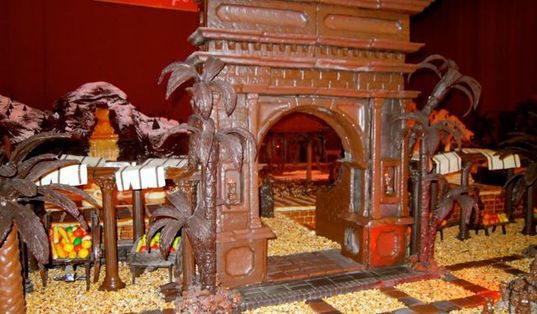
Nothing says “sweet Jesus” quite like an all chocolate Nativity scene with a waterfall and lake of honey and some white chocolate swans. Historically inaccurate? Looking more like Babylon than Bethlehem? Who cares? The Sevillanos love their Nativity scenes. And family gatherings. On December 24 they hold a big family dinner, but this is just the warm-up for the main event on January 6.
New Year’s Eve, December 31
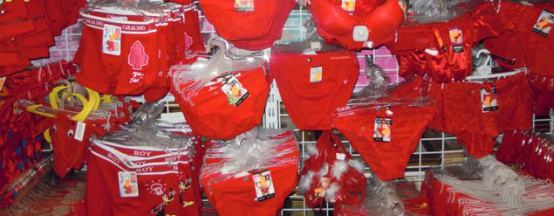
Want better luck in 2014? Then underneath your New Year’s Eve party duds, you’d better don red undergarments that you’ve received as a gift; they are sold everywhere in styles that range from nice to very naughty indeed. And at midnight, you’ll swallow one grape at each toll of the bell. This is harder than it sounds; be sure to peel the grapes ahead of time.
Los Reyes Magos (the Three Kings), January 5 & 6
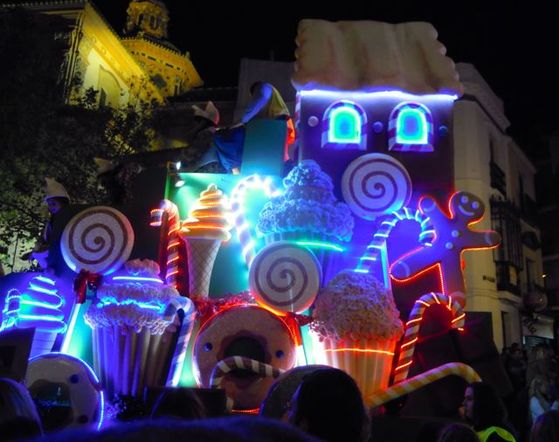
In Spain, the Three Kings bring gifts to good boys and girls on January 6th, and on the eve of that happy event, the Cabalgata (Cavalcade) sweeps through Seville, distributing 80,000 kilos (176,000 pounds) of candy from 33 glittering floats. No Cabalgata in your neighborhood? Try throwing candy out the window to your kids and/or friends; they’ll soon get into the spirit of the season!
Semana Santa, the week before Easter
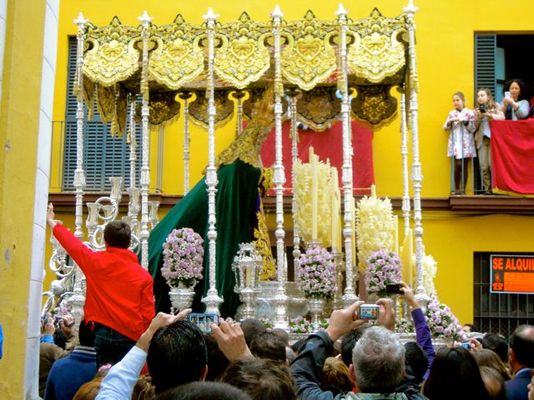
Every year 55 magnificent processions wind through the city day and night, with statues of a bleeding Jesus and a weeping Mary, and an entourage of nazarenos dressed in robes and conical hats (the ones that inspired the KKK outfits), making it pretty spooky around here, especially at night. For a homemade version of the festival, minus the hoods and the robes, see Cruz de Mayo below.
Feria de Abril, two weeks after Semana Santa
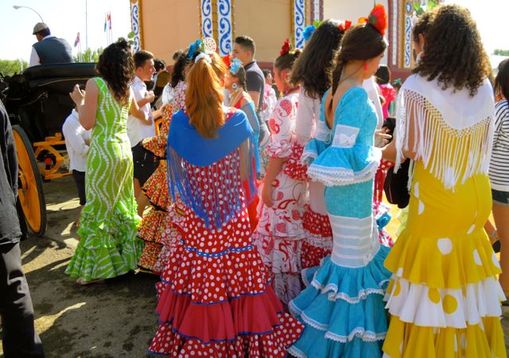
During this week-long marathon of all-night drinking and dancing, women dress up in eye-popping
trajes de flamenca
(flamenco outfits), long, skin-tight sheaths that erupt at the knee into cascades of enormous ruffles in vivid colors and patterns, mostly polka dots. No Feria in your town? Wear polka dots and stay up all night dancing and sipping
ribujitos
(very dry sherry mixed with a soft drink like 7up).
Romería del Rocío, held around Pentecost (49 days after Easter)
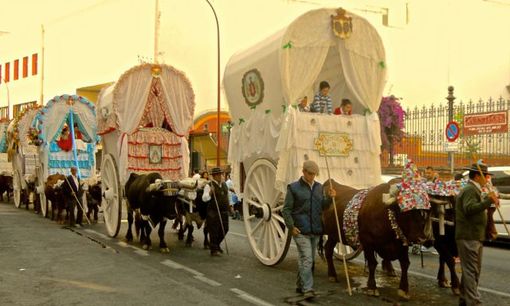
A pilgrimage to honor a sacred effigy of the Virgin in a vast wooded park, this fiesta involves walking or riding in an ox cart for days, wearing a looser style of the
traje de flamenca,
and partying under the stars late into the night. Don your polka dots, take a long walk in the country, than gather outdoors for cold beer and hot dancing.
Cruz de Mayo, May & early June
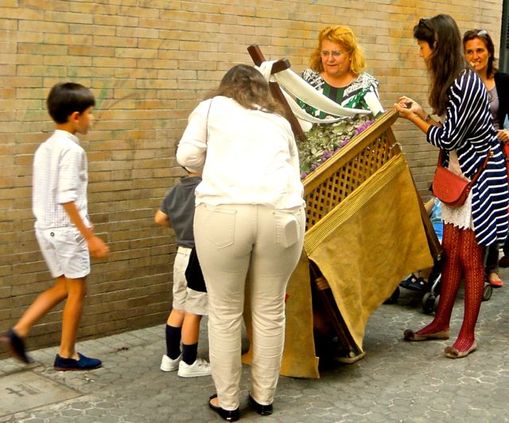
Now it’s the kids’ turn to stage processions, usually little home-made floats with a wooden cross carried by the neighborhood boys while the girls collect money to pay for the materials. If your kids don’t seem keen to try this, you can always revert to a Romería del Rocío party, which occurs around the same time.
With these holidays, Seville marks the entire transition from the shortest, darkest days of winter to the full blossoming of summer, from the dying of the old year to the coming of age of another generation of children. They believe that every day is something to celebrate, and I’m with them all the way on that. Cheers!
Leave a Reply