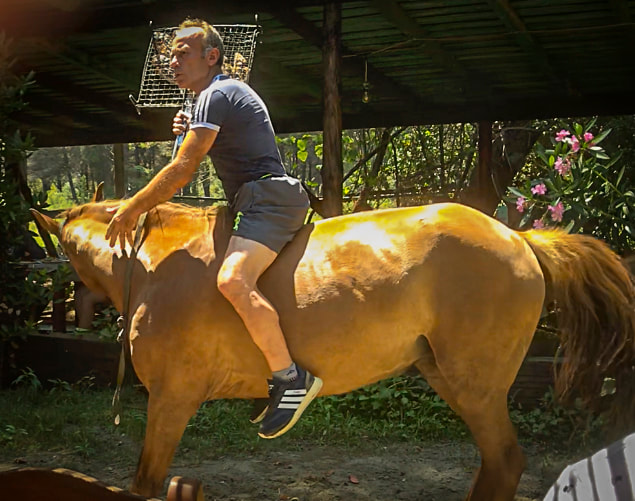
Four years ago, my husband — and I say this lovingly — became obsessed with an Albanian restaurant called Ali Kali.
“The owner brings in your food riding on the back of a trick horse,” he said. “Ali Kali means Ali’s Horse. It’s fantastic. We’ve gotta go.”
“I’m in, obviously. Where is it?” We were in California at the time, and I thought maybe this was the latest LA fad.
“On the coast of central Albania.”
“Oh good. So only 10,000 kilometers from here.”
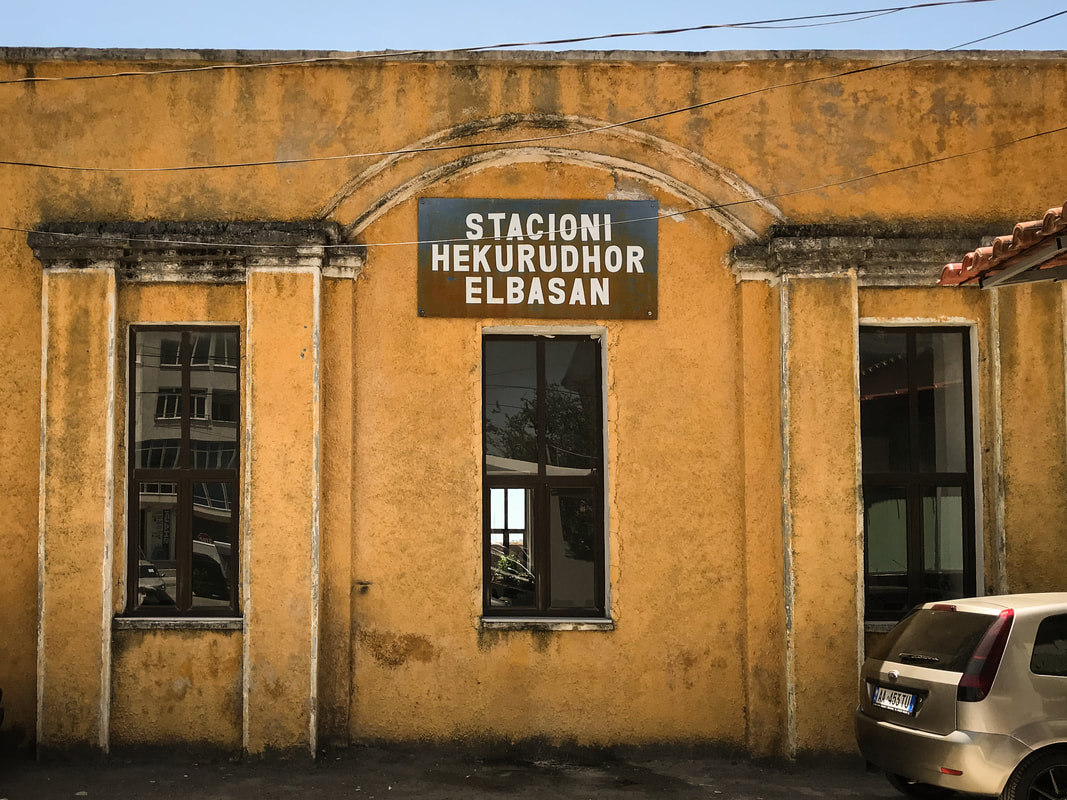
For us, getting there is half (often three quarters) of the fun. But I was just a teensy bit concerned about how we were going to navigate once we arrived in Albania. Trains are our favorite form of travel, but I’d read that their railway system was being dismantled bit by bit so the nation could devote more of its transportation resources to new superhighways. We soon discovered to our dismay that this was only too true, as demonstrated by these photos from the railway station in
Durrës
, the transportation hub of the nation
.
There was still one Albanian railway line in operation, so after
our visit to
Korçë
, we just had to figure out how to travel 77 miles to the town of Elbasan, where we could catch the 1:30 train to the port of
Durrës
, which would put us within a taxi ride of Ali Kali.
“The only way to get to Elbasan is by furgon,” Rich reported after an online investigation. “It’s a kind of unofficial minivan; you have to ask around and someone will point out the right vehicle. They won’t depart until all the seats are filled, however long that takes.” I knew from
our trip to Kosovo
that air conditioning would, at best, mean opening a window or door. Temperatures in Elbasan were predicted to hit 100.
Call us wimps, but we hired a car and driver from
a reputable service.
Even this relatively luxurious form of transportation had potential drawbacks. “The greatest risk most people in Albania face is on the roads, where traffic accidents are very frequent and the fatality rate is one of the highest in Europe,” our
guide book
observed helpfully. “Until a few years ago, Albanian roads were so bad that it was difficult to drive fast enough to kill anyone. Now, though, cars zip along newly upgraded highways that are also used by villagers and their livestock. There is no stigma attached to drink-driving and practically no attempt is made to check it.”
Yikes! Obviously we’d be lucky to reach Elbasan alive, never mind getting all the way to Ali Kali.
As it turned out, the standard of driving we saw was no more alarming that you’d find on, say, the New Jersey turnpike. Our driver, Reoland A., was professional, competent, and a thoroughly nice guy. So Rich and I were lulled into a state of tranquility that was abruptly shattered when we arrived in Elbasan to discover that the afternoon train had been cancelled. According to men in a nearby café, there weren’t enough passengers to justify the petrol.
Reoland (bless him!) ended up driving us all the way to
Durrës
, and by the time we arrived, he not only knew all about our
Mediterranean Comfort Food Tour
, but we’d arranged for he and his wife, Irmira, to join us at Ali Kali a few days later.
After four years of anticipation, I wondered, would the place live up to Rich’s expectations?
“Even better than I’d hoped,” Rich said happily.
Our expectations were far lower about visiting the capital city,
Tirana.
I’d read it was drab and utilitarian, relieved only by swaths of garish paint applied to concrete apartment blocks in a project designed to distract the eye from an otherwise the grim landscape. Spearheaded in 2000 by then-mayor and later prime minister Edi Rama, the paint project wasn’t universally popular, according to our guide book. “The colours and patterns became livelier and livelier, until even the more progressive of Tirana’s citizens began to complain that their city was starting to look like a circus.”
Once again, I beg to differ with the guide book (which to be fair was five years out of date). The moment I saw Tirana’s vibrant buildings, I fell in love with the whole wacky concept — amateurish execution, eye-popping designs, and all. To me, the zingy buildings reflect the city’s abundant energy and all-out determination to transform itself into a world-class city.
They seem to be making considerable progress. The highway between the port of
Durrës
and the capital is lined with gigantic, glittering corporate headquarters. The boulevards leading to Tirana’s city center are shaded by tall trees that hide some of the less fortunate architectural efforts of the past. Sophisticated bars, restaurants, and shops are springing up all over the downtown area. As for coffee houses,
in 2016, Albania surpassed Spain as the country with
the most coffee houses per capita in the world
.
The city has come a long way since the dark gray days of communist dictator
Enver Hoxha
, who ruled the country from 1944 until his death in 1986. He isolated his country from the USSR because he decided the Russians had become too ideologically slack, and from the rest of the world because it was too corrupt. His
Sigurimi
secret police
constantly spied on citizens, and the slightest infraction, such as listening to an Italian song on the radio, could land you in prison or a concentration camp. Part of Tirana’s makeover includes new museums that tell the story of those dark times, so that residents and visitors born in happier circumstances don’t forget the past and find themselves condemned to repeat it.
The museums are part of the city’s strenuous, ongoing efforts to attract tourists. It’s a work in progress. Officials have dubbed Tirana “The Place Beyond Belief,” which strikes me as the sort of ambiguous nickname that could easily come back to haunt them in later years. No matter, the city’s economy is in growth mode now, and residents and visitors are flocking to the glamorous new bars and world-class restaurants that have sprung up in the past few years. Reoland and Irmira joined us for a visit to
Ceren Ismet Shehu
, one of the area’s hottest new venues, on a hillside overlooking the city.
“I went to the UK and started as a dishwasher,” chef/owner Ismet Shehu told me with a grin. “I worked my way up to chef. Then two years ago I came home and made this restaurant for my family. I didn’t tell my mother until it was ready; I brought her here as a surprise.”
The appetizers included spinach
burek
, goat stuffed with quail eggs, layered
flia pastry
, cheese with blueberries, fig rounds, pink pasta stuffed with green cheese, yogurt dip, and more. The lamb, slowly simmered in milk inside a clay pot, was soft, succulent, and melting off the bone.
“Well?” I asked Rich afterwards.
“It was the best lamb I’ve ever tasted,” he said. “But you know what would have made it even better? Being carried in on the back of a horse.”
So that’s our new restaurant standard, my friends. From now on, equine presentation is the benchmark against which we’ll be judging all future dining experiences. I’ll let you know how they measure up.
UPDATE ON
OUR MEDITERRANEAN COMFORT FOOD TOUR
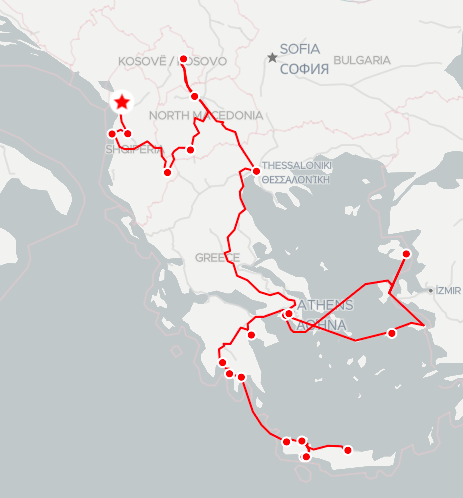
Days on the road: 82
Countries visited (so far): Greece, North Macedonia, Kosovo, Albania
Equestrian restaurants: 1
We left Tirana this morning and headed north to a remote village in the mountains. Stay tuned!
See all posts about the Mediterranean Comfort Food Tour.
See all recipes and videos.
If you haven’t already subscribed, sign up here so you don’t miss a single loony adventure or the next mouthwatering recipe.
YES! SEND ME UPDATES!
Thanks for joining us on the journey.
Leave a Reply