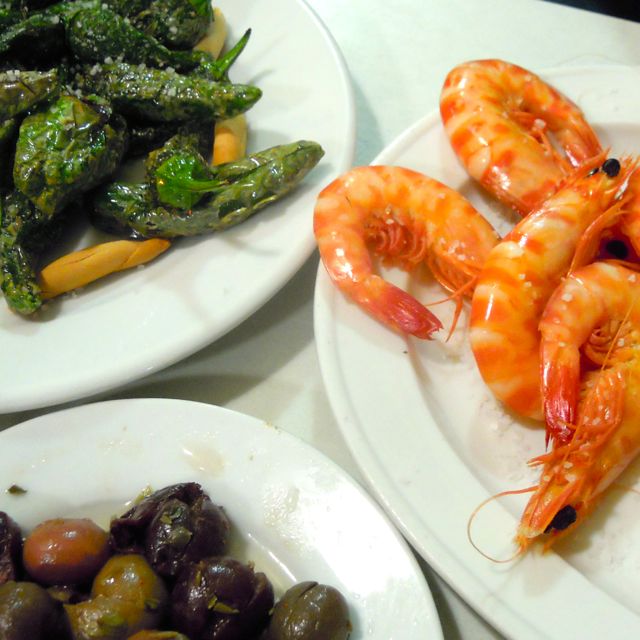
“You can’t buy happiness,” an American woman once told me. “But you can put a down payment on it.” If you’re looking for ways to invest in your own happiness, you’ll find it pays to focus on experiences, rather than things, according to San Francisco State University researchers. “The study,” reported
Science Daily
, “demonstrates that experiential purchases, such as a meal out or theater tickets, result in increased well-being because they satisfy higher order needs, specifically the need for social connectedness and vitality – a feeling of being alive.”
“By far the most important lesson travel teaches you,” observes veteran travel writer
Rolf Potts
, “is that your time is all you really own in life. And the more you travel, the more you realize that your most extravagant possessions can’t match the satisfaction you get from finding new experiences, meeting new people, and learning new things about yourself
.
” In fact, asserts Potts, “Time = wealth.”
For some, the luxurious sensation of having plenty of time to travel – on any budget, or practically no budget at all – can become habit-forming. “
It was exactly three days into my first trip back in 1999, as I celebrated the Millennium at Angkor Wat in Cambodia, when I became inflicted with an untreatable addiction to world exploration,” writes blogger
Wandering Earl
. “So addicted in fact, that the thought of returning home literally made me sick to my stomach. Therefore, without any other option, I made a decision to change paths in life. Instead of going home to follow my original goal of becoming a Sports Agent, I now embarked on a mission to transform myself into a permanent nomad so that I could continue my travels, and more importantly continue learning from those travels, for as long as possible. The only problem was that I had absolutely no idea what I was doing and I only had $1500 to my name.”
Like Wandering Earl,
Nora Dunn
had planned a very different life for herself. She was busy running a successful financial planning practice in Toronto when she had two car accidents in one week. “People said ‘the universe is trying to tell you something,’ but I was only annoyed at this diagnosis. ‘
What is the universe trying to tell me, for goodness sake? That I shouldn’t drive in the snow?! Get outta my way; I’ve got work to do
.’” It took a bout of walking pneumonia to make her finally stop and re-evaluate how well her life was working for her. She realized she hated going to the office and wanted to spend her time “traveling around the world, slowly. Meaningfully. But not just passing through; rather,
living
around the world.” She became The Professional Hobo, a perpetual nomad who writes about financially sustainable travel.
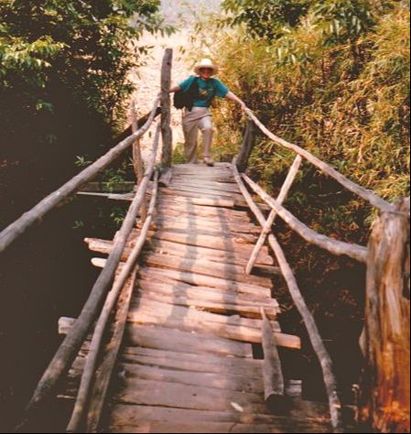
Me, crossing a Thai bridge
A nomad’s life on a shoestring budget isn’t for everyone; it’s certainly not something I’d chose on a permanent basis. But just thinking about it stirs longings for simplicity, authenticity, and the rapture of feeling alive – both at home and on the road. It inspires me to live and travel a bit more slowly and thoughtfully, relying a little less on money to smooth life’s rough edges, and being more openhearted with strangers, in the belief that most of them have a lot to teach me.
One thing I know for sure: Spending more on elaborate vacations isn’t likely to help me have richer travel experiences. “People still believe that more money will make them happy,” says Ryan Howell, one of the leaders in the SF State University study, “even though 35 years of research has suggested the opposite.” And you can take that to the bank.
YOU MIGHT ALSO ENJOY
TRAVEL BOOK REVIEWS
EXPLORING THE WORLD
THE NOMAD’S LIFE
THE EXPAT’S LIFE
INSIDE SPAIN
Leave a Reply