Is it me, or has modern life become eerily similar to an Addams Family episode? Our days are a dizzying mix of horror (“AI Goes Rogue!”), slapstick comedy (“Raccoon Rescued from Mayonnaise Jar”), and mystery (“Where did I park my car?”).
As for the Addamses themselves, they were always good company. “Bizarre as we appeared to be, psychiatrists who wrote about the show thought we were the healthiest family on the air,” said John Astin, who played Gomez Addams in the 1960s TV sitcom.
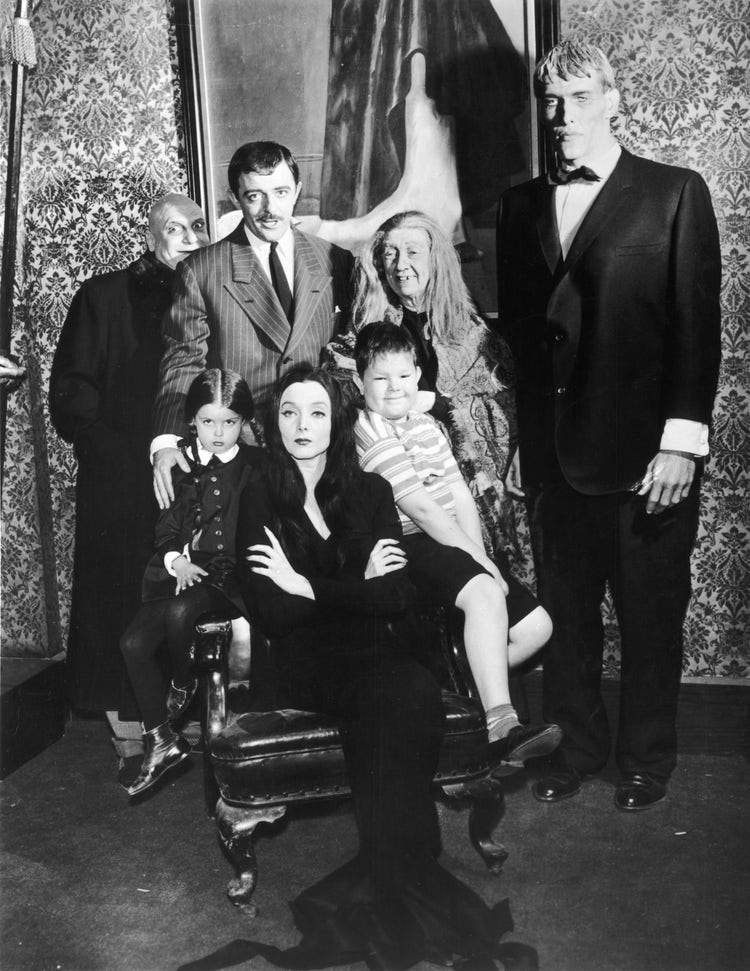
“Every other sitcom in the sixties ran on the same blueprint,” says a video short by QuinnKnows. “Father comes home from work emotionally checked out. Mother has dinner on the table; no identity outside the kitchen. Children are expected to be quiet, tidy, and normal. It looked perfect on the surface. Underneath it was a master class in suppression. Nobody said what they felt. Nobody was allowed to be different. And the marriage, if you could call it that, was cold, formal, and about as romantic as a filing cabinet.”
No wonder viewers were fascinated by Morticia Addams, a woman with strong opinions and a husband who went wild with passion whenever she breathed a word of French. Their two weird kids were nurtured and supported without judgement. They lived in community with Grandmama, Uncle Fester, Cousin It, Lurch, and Thing. “Nobody in that house was alone with their problems,” points out QuinnKnows.
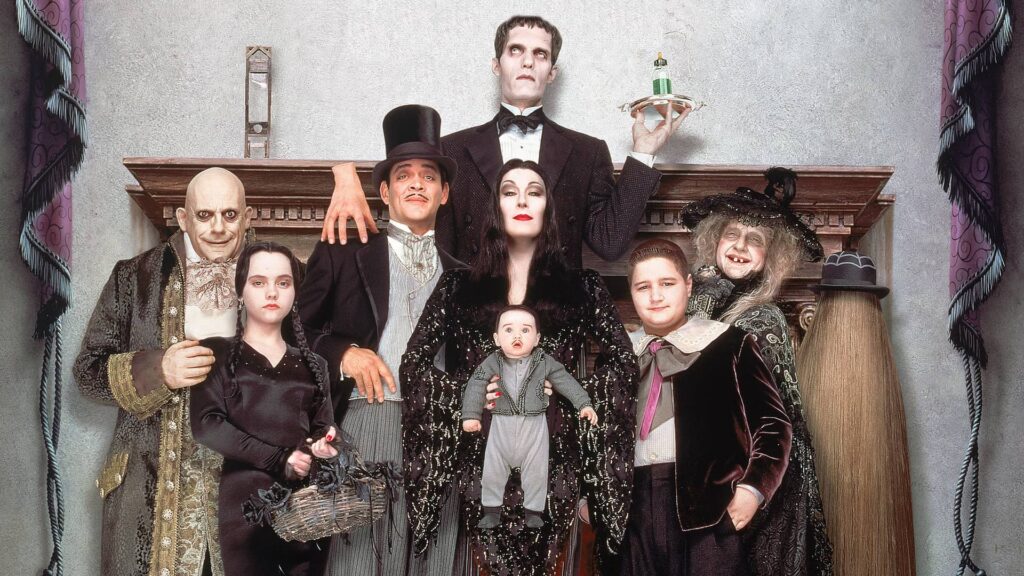
“One thing the show said is that it doesn’t matter what you’re like outside, it’s inside that counts,” said John Astin. “That’s why people who are disowned by society like the show so much.”
These days a lot of us are feeling disowned by society, isolated by differences, and bewildered by bizarre daily headlines. We have much to learn from Charles Addams’ devil-may-care misfits, who take it all in stride.
Appearing in The New Yorker from 1938 to 1988, these oddballs have been reinvented in the sixties sitcom, two feature films, an animated TV show, a comic book series, a musical, and the current Netflix teen hit, Wednesday. The actors may change, but the atmosphere remains creepy, kooky, mysterious, spooky, and altogether ooky (and yes, that’s a real word meaning “yucky”).
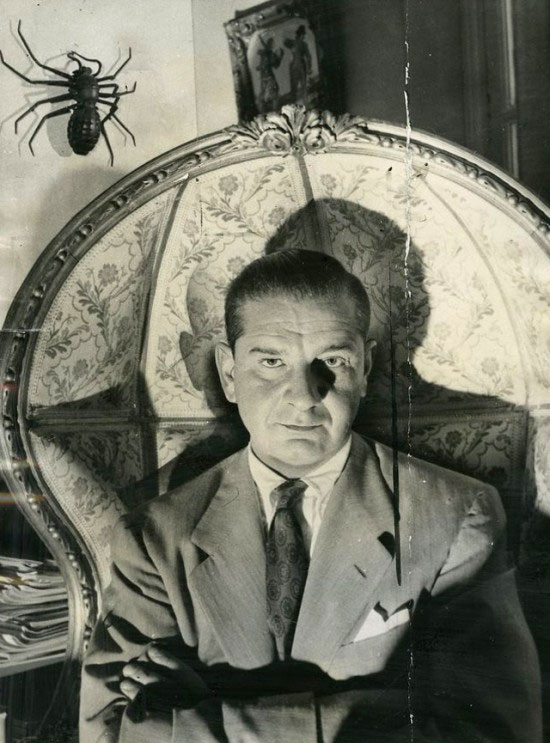
Addamses never hide their oddness; they flaunt it. They dress in black. Their macabre mansion overlooks Cemetery Ridge. Their 1938 Pontiac Silver Streak has the sinister opulence of a hearse, proving once again the truth of the manufacturer’s ad slogan, “You are what you drive.”
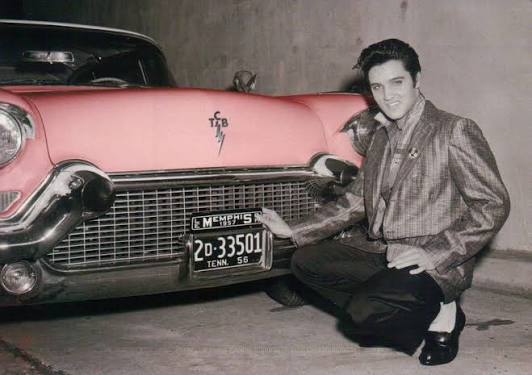
In the twentieth century, everybody’s cars proclaimed their individual identity, from my glamorous grandmother’s champagne-pink convertible to my mom’s big, blue, kid-packed Ford station wagon.
Today our vehicles reflect a shocking level of social conformity; 86% of American cars are white, silver/gray, or black. More than half are SUVs. And the vast majority are devoid of the flourishes (hood ornaments, fins, wood trim, two-tone paint) that made previous generations exclaim with delight, “Now that car is me!”
Our options may be narrower and duller, but America remains a dedicated car culture. In California, 93% of us rely on automobiles. So you’ll appreciate how shocked I was a couple of weeks ago, when my brother Mike announced that he was going to try living without a vehicle for two whole weeks while his car was in the shop for repairs.
“I’ve been very curious as to whether you could live without a car in the suburbs,” he told me. “Eventually, you know, we are not going to want to drive for various reasons. And the question is, what do you do? Does that mean you have to move somewhere, or is it possible to function here without a car?”
Mike and his wife, Deb, live in Palo Alto, the heart of Silicon Valley, so they had Waymo driverless taxis available as well as Lyft and Uber. Being retired, they didn’t have commutes to contend with, but Mike is a musician who needs to get to practices and gigs. The nearest food market is a mile away, roughly half an hour of walking each way; adding in the shopping and a bit of resting, they found a standard shopping expedition ran about two hours.
“I learned pretty quickly Lyft is definitely the cheapest for short rides,” said Mike. “Waymo is definitely the cheapest for longer rides, and the break point is somewhere around six to nine miles.” Then there’s the convenience factor. Waymo, being new and trendy, is in high demand, requiring a twenty-minute wait time; Lyft was at his door in two to three minutes.
Overall how easy was it? “The answer is: it’s relatively straightforward to function without a car. And I think it’s going to become easier and easier as robo taxis become more pervasive and hopefully the cost comes down. You’ve got a car that is sitting idle for 95% of the time, and it’s the second biggest investment you’ve got aside from your home. Economically it makes no sense to own a car.”
Mike calculates that even taking Lyft and Waymo frequently, by not renting a car he saved about $200 over the two weeks. How much would he save over an entire year? Even adding in ten days of car rental for special excursions, “You’d end up saving $3,000 or $4,000 a year.”
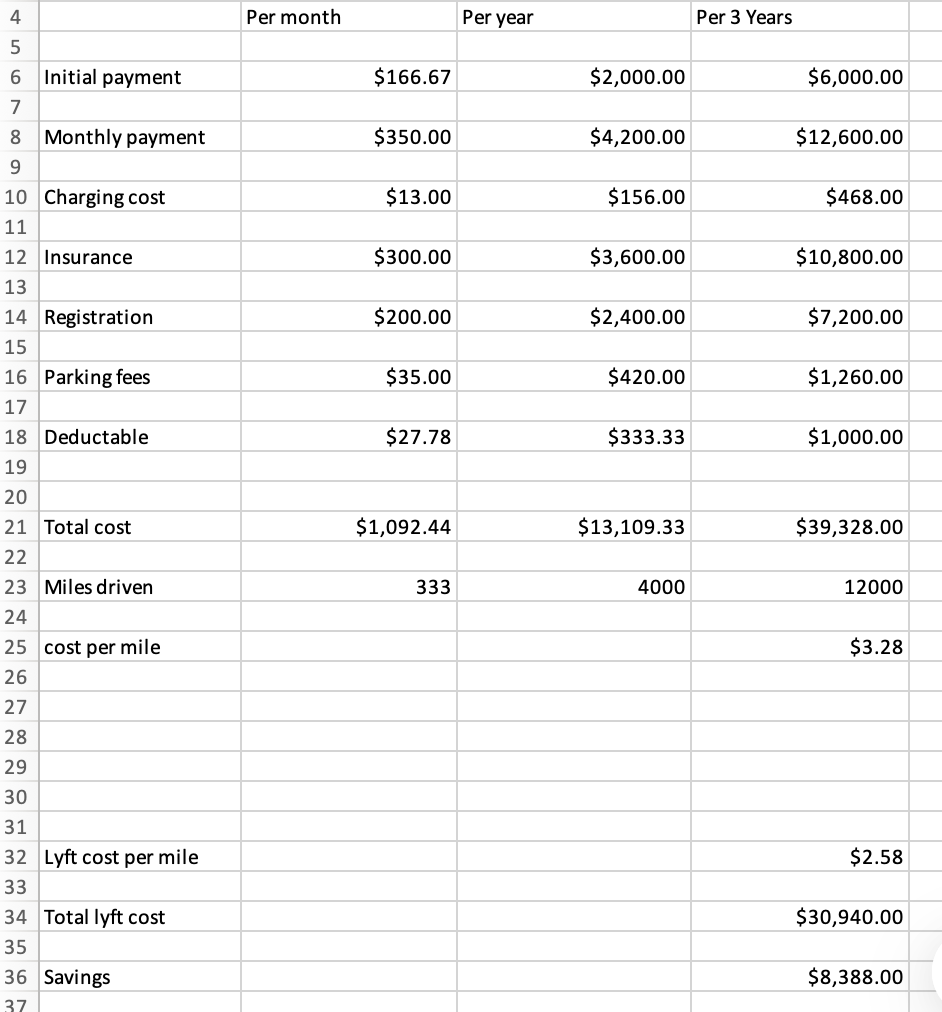
Mike’s a numbers guy; he kept a spreadsheet of all his costs. I’ve got tons more details if you want them. (You really don’t.)
“I was skeptical,” said Deb. She worried about needing a car in an emergency. Or even a non-emergency, like the day Mike was recovering from food poisoning (luckily not Cyclospora, just a 24-hour thing). Mike thought he might fancy a banana, at which point she would normally have jumped in the car and zipped over to the store and back in twenty minutes. But now she balked at taking a two-hour hike or paying $25 in Lyft fees.
“Expensive banana,” she observed. In the end, Mike decided to recover without fruit.
Deb and Mike will likely remain car owners for a while, and so will Rich and I. In fact, we’re shopping around now, as it’s past time to retire our 2008 VW. We’ll miss its bright red color, which tells the world we’re fun nonconformists who appreciate a vehicle that’s easy to find in crowded parking lots. We’ll never own anything as sumptuous as the Addams family’s monster Pontiac, but we’re keeping an eye out for a vehicle with personality.
Maybe one sporting a decal? Here’s something Morticia and Gomez would love.
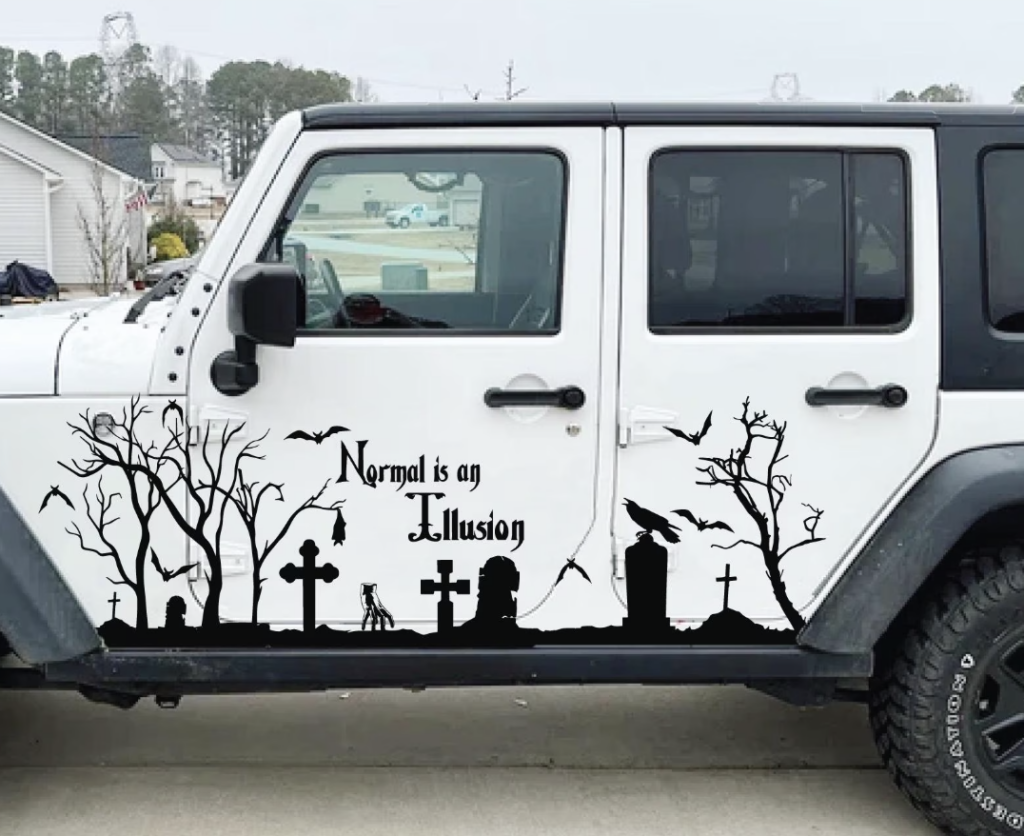
By refusing to conform to cookie-cutter societal norms in everything from clothing to cars, the Addams family has spent 88 years in the role of America’s favorite oddball neighbors. They are the best kind of bad influence — encouraging kids to think for themselves, making passion part of everyday life, and accepting weirdness as wonderful. As one Reddit comment put it, Morticia and Gomez “take tremendous joy in living their peculiar lives.” They remind us to embrace our own inner quirkiness and accept it in others. And that’s what I call solid family values.



Leave a Reply