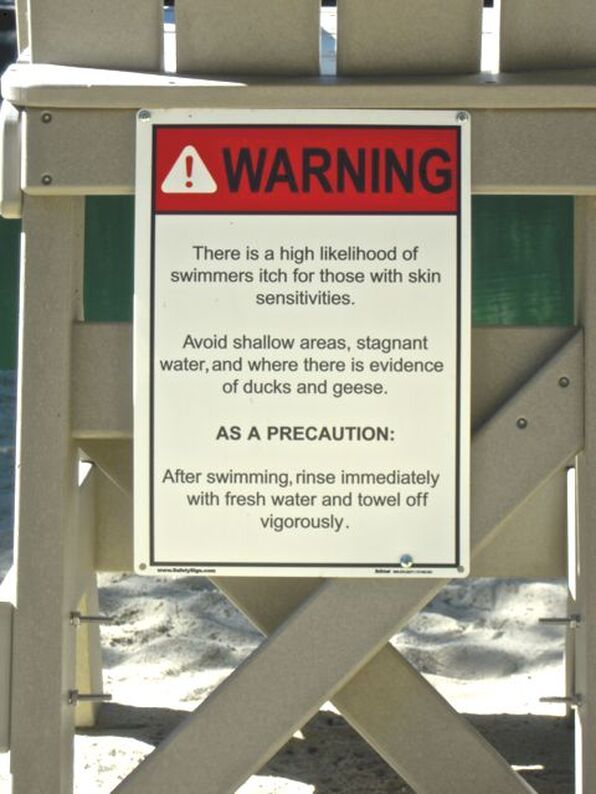
Last week, after a refreshing dip in the California lake where my family has vacationed for twenty years, I walked past the lifeguard stand and read this sign for the first time:
Wait, what?!?
I have all sorts of skin sensitivities, entered the lake through a shallow area (doesn’t everyone?), and practically had to step over a flock of foraging ducks to get to the water’s edge. There was no shower available, and it would be at least an hour before I could get back to my cabin and wash off. And come to think of it, my skin was feeling a bit prickly…
“Oh my God,” I said to my sister. “I’m getting swimmer’s itch. Did you see that new sign?”
“New? That sign’s been there for years. Nobody pays any attention to it.”
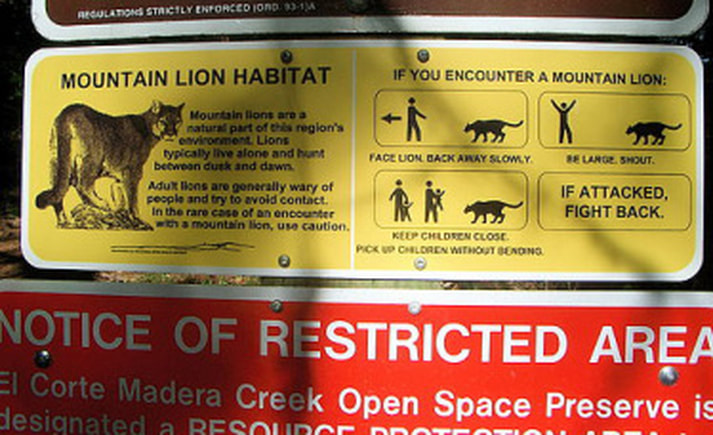
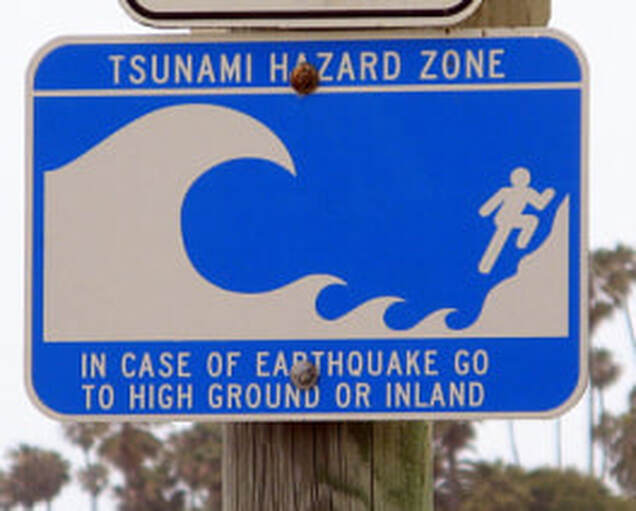
Whenever I return to my native California after a long sojourn in Spain, I am gobsmacked by the astonishing number of warnings in our everyday environment. In other, less litigious societies, you’re expected to know that coffee is hot, pavement is slippery when wet, and hair dryers and showers don’t mix. But in America, just about everything carries a warning. Here are a few of my favorite examples:
“Caution: The contents of this bottle should not be fed to fish.” —
On a bottle of shampoo for dogs.
“For external use only!” —
On a curling iron.
“Shin pads cannot protect any part of the body they do not cover.” —
On a pair of shin guards made for bicyclists.
“Do not use while sleeping.” —
On a hair dryer.
“Do not use orally.” —
On a toilet bowl cleaning brush.
“Warning: Do not use on eyes.” —
In the manual for a heated seat cushion.
“Do not use for drying pets.” —
In the manual for a microwave oven.
“May be harmful if swallowed.” —
On a shipment of hammers.
“For use on animals only.” —
On an electric cattle prod.
“Warning: knives are sharp!” —
On the packaging of a sharpening stone.
“Caution: Remove infant before folding for storage.” —
On a portable stroller.
“Beware! To touch these wires is instant death. Anyone found doing so will be prosecuted.” —
On a sign at a railroad station.
Obviously, it’s a miracle any of us are still alive, and thank God these public-minded companies are looking out for our safety. And yet, I can’t help wondering if all these alarming advisories do any real good. Besides the danger of fracturing your funny bone from laughing at their absurdity, the very frequency of these alarming footnotes on everyday objects makes it easy — even necessary — to ignore them. After a while, as my sister said at the lake, nobody pays any attention to them. Remember the famous case of the woman who successfully sued McDonalds after burning herself on their coffee? It turns out there
was
a hot-beverage warning on her cup – although, as her lawyers were quick to point out, the type could have been larger and the wording could have conveyed a more urgent sense of imminent danger.
While some printed cautions are highly appropriate, the overabundance of them sometimes leaves me with the uncomfortable sensation that all my household goods — and Mother Nature herself — could attack me at any moment. I realize that I won’t actually be any safer when I return to my warning-free apartment in Seville, but I don’t think I’ll be in any greater danger of swallowing a hammer or curling iron either. I have already made a mental note not to pour hot coffee on my lap in the morning. So the only things left for me to worry about are the lingering effects of the biohazardous lake and the brain fever I’m likely to get from trying
not
to think about all the dangers I’ve been warned about all summer.
Need more to worry about? Here’s
a list of cautions and warnings
about dangers you probably never suspected were lurking right in your own home.
Leave a Reply