“What a week!” a neighbor once told me. “Yesterday I pulled up at the curb by my favorite restaurant and hit the brake. Only it wasn’t the brake, it was the accelerator, and I shot forward — right through the wall of the kitchen. The owner, who’s a friend of mine, stuck his head out the opening and said, ‘I take it you want this order to go?’”
Some of life’s best and worst moments happen in cars. Contrary to what we see in the movies, not many of us — fewer than eight in 10,000 — are actually born in them. (And that’s a good thing; just ask Jia-Rui Cook who
gave birth in the cramped front seat of a Prius
.) For the rest of us, vehicles start looming large in our personal narratives the day we come home from the hospital. Like so many of my generation, getting a driver’s license was my most meaningful coming-of-age ritual. Buying my first car made me feel like a real grownup. And as for early romantic adventures — no, I’m sorry, those records are permanently sealed.
A 2019 study showed Americans averaged more than eight hours a week behind the wheel and — here’s the worrying part —
64% actually consider their car a friend
. Almost half reported crying when saying goodbye to a vehicle and 15% said they’d rather break a bone in their own body than see their car suffer a breakdown. Two thirds
service their car more often than they go to the dentist
. Science has a name for this type of obsession: objectophilia. Here in California, it’s so common we scarcely notice it any more.
LA-based automotive journalist Robert Ross says it all started a hundred years ago. “The automobile stood for more than freedom of movement and “Westward Ho!” exploration, of course, and still does. It was never merely a matter of arriving at Point B from Point A — one had to get there in style, whether cruising the boulevard or driving a getaway car… The motorcar has —over the course of a century — become
the accessory that defines its driver
.”
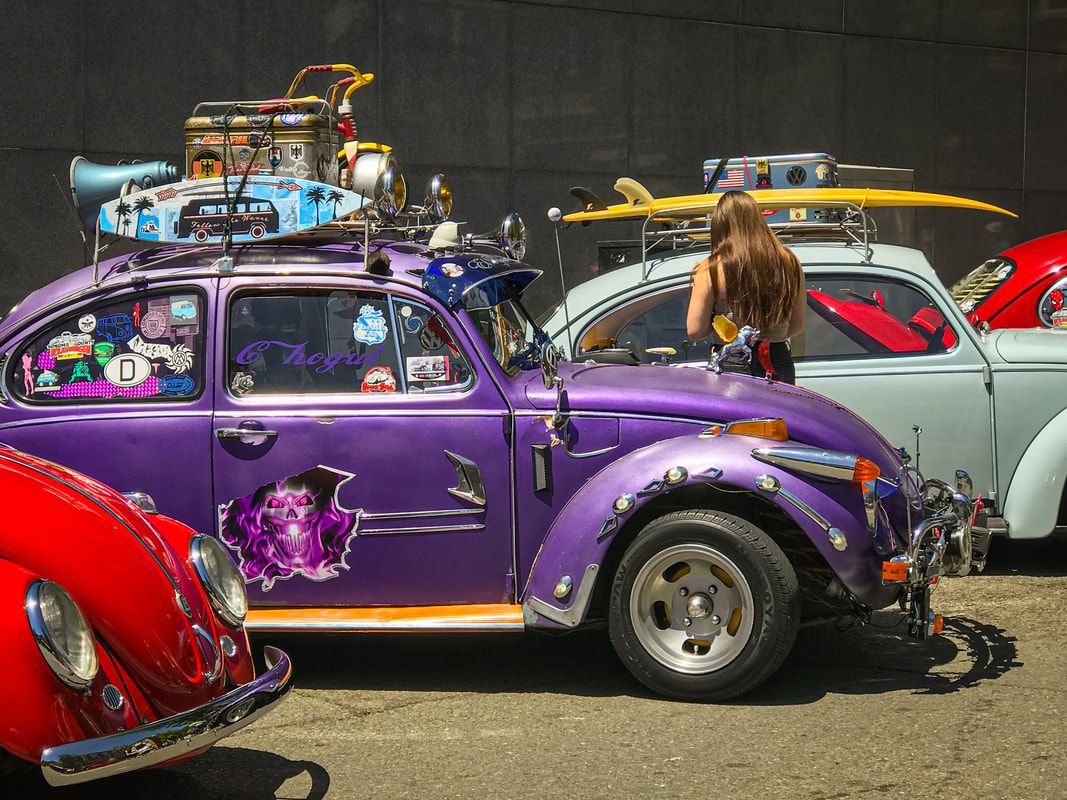
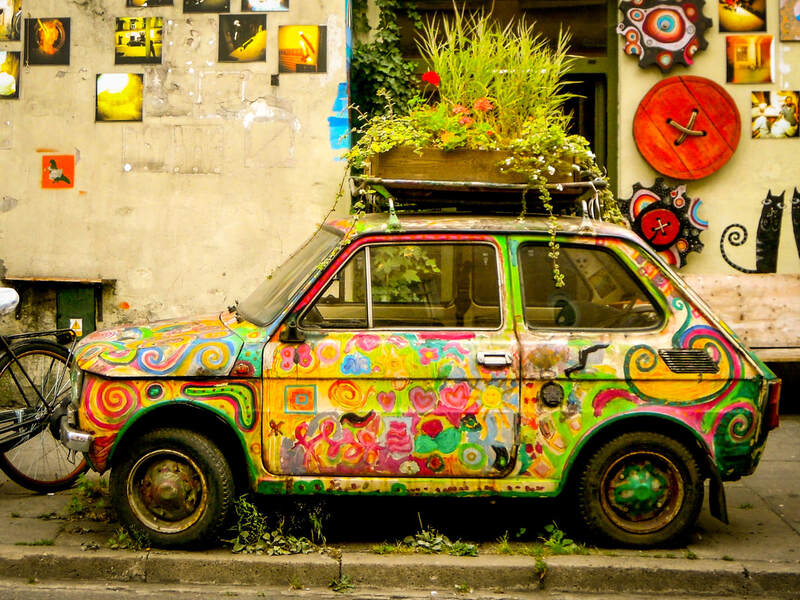
So how did the cars of earlier eras define us? Going by last weekend’s
May Madness Classic Car Show
in nearby San Rafael, those vintage vehicles were glorious technicolor statements to the world that we were bold, exciting people ready to go places and look life in the eye.
Nowadays, it’s easy to criticize these old gas guzzlers as the villains that helped destroy the planet. But modern cars have a lot to answer for as well.
“Considering the constant fatalities, rampant pollution, and exorbitant costs of ownership,” says
The Atlantic
, “there is
no better word to characterize the car’s dominance than insane
.” Vehicle pollution is damaging the environment and accounts for the premature deaths of 53,000 Americans a year. And then there’s the economic cost. “More than 80 cents of every dollar spent on gasoline is squandered by the inherent inefficiencies of the modern internal combustion engine.” Morgan Stanley calls it the “world’s most underutilized asset,” because it sits idle 92% of the time.
Dangerous, costly, inefficient … remind me again why Americans are in love with their cars?
“This ‘love affair’ thesis is,” says historian Peter Norton, “
one of the biggest public relations coups of all time
. It’s always treated as folk wisdom, as an organic growth from society. One of the signs of its success is that everyone forgets it was invented as a public relations campaign.”
That campaign’s voice was (drum roll, please) Groucho Marks, who launched it during a 1961 TV show sponsored by DuPont, which was heavily invested in General Motors. At the time, Americans were in an uproar over the expansive new interstate highway system destroying and disrupting neighborhoods — pushing “white men’s roads thru black men’s homes,” as some put it.
Groucho framed the story more romantically. The driver was the man, the car — he called her “Lizzie” — was the new girl in town, and their “burning love affair” was wedded bliss, albeit with a few challenges. “We don’t always know how to get along with her, but you certainly can’t get along without her. And if that isn’t marriage, I don’t know what is,” said the comedian, who was married and divorced three times.
Groucho’s broadcast “successfully helped seed two ideas that have been entrenched ever since: that
we’re bound to cars by something stronger than need
, and that people who challenge that bond are just turning up their noses at their fellow Americans,” said the
Washington Post
. That’s why our cities are friendlier to car traffic than foot traffic. And why, with the help of the auto industry, the
new crime of jaywalking was invented
, redefining pedestrians, rather than cars, as the menace to society.
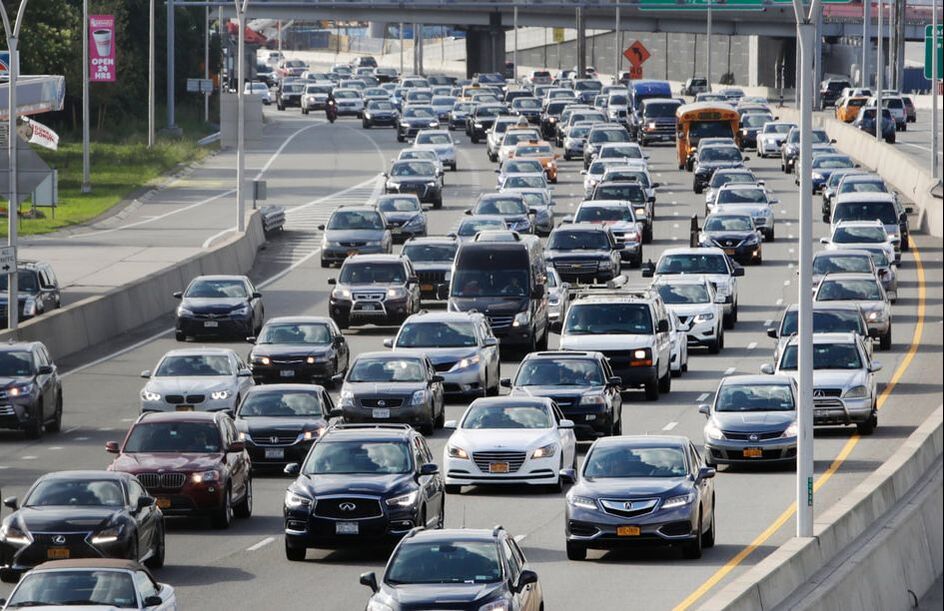
Except for dense urban areas like New York City, surviving without a car is really tough.
Public transit is woefully inadequate
. Studies appear to suggest Americans love automotive travel, but in reality, says historian Peter Norton, we put up with it because we have no other practical choice. “If you locked me in a 7-Eleven for a week, and then after the end of the week unlocked the door and you studied my diet over the previous seven days, then concluded that I prefer highly processed, packaged foods to fresh fruits and vegetables, I would say your study is flawed.” Some 69% of Americans say they like to drive, but compared to what? Walking the 25 miles to work?
Driving has lost much of its glamor and excitement. A 2019 survey showed 77% of our cars are white, black, or grey/silver. As one VW exec put it, “If you drove down an American street and looked only at the new vehicles, you might be forgiven for thinking you’re in
a black-and-white movie
.” Paint colors dimmed in response to the Great Depression and the 1970s fuel shortages, too. In sobering times,
flashy cars go out of fashion; nobody wants
to stand out.
Rich and I are bucking the trend. Twelve years ago we bought a flaming red second-hand VW, and I’m convinced it’s bright enough to be visible from outer space. In crowded parking lots it’s like a homing beacon; to date it’s saved me approximately 279,456 hours of tramping around muttering “Now where did I leave that darn thing?”
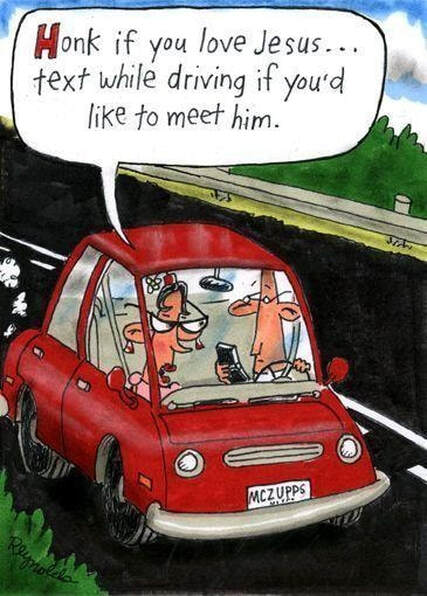
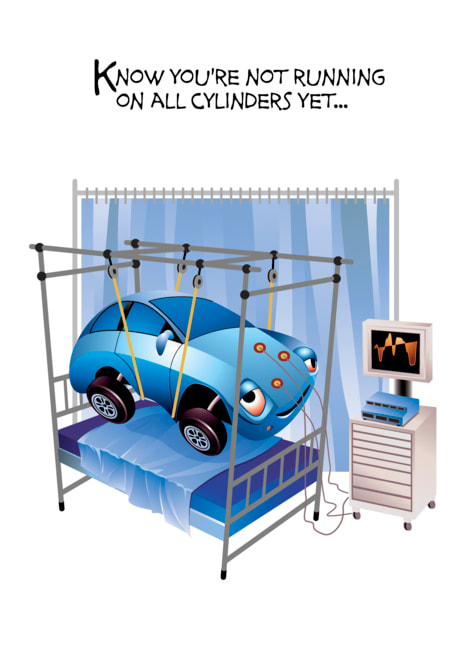
Last week, the VW had a tune-up that revealed some worrying developments, and this morning Rich drove it to a specialist for a more extensive, three-day treatment. Unlike those who would rather suffer a broken bone in their own body than see their car undergoing repairs, I’m actually looking forward to the time apart. In Seville I live vehicle-free and find I prefer the slower pace. But in case Rich starts feeling any separation anxiety, I’m keeping this card handy. I’m not sure whether it refers to him or to our ailing car; but then, does it matter?
How are you and your car getting along these days? Let me know in the comments below.
FYI:
I have a house guest coming soon, so my schedule is uncertain and I may have to skip posting this week.
YOU MIGHT ALSO ENJOY
WHY YOU SHOULD AVOID DRIVING IN EUROPE
HOW TO PACK EXTRA LIGHT
CREATING YOUR OWN FOOD TOUR OF ITALY
Well, that was fun! Want more?
Sign up to receive notices when I publish new stuff.
LEARN HOW TO GET FREE UPDATES HERE
I do my best with technology, but occasionally readers report snags when signing up for the blog or stop getting notices each week, usually due to spam filters. If that happens, send me an email and I’ll fix it.
[email protected]

Leave a Reply